
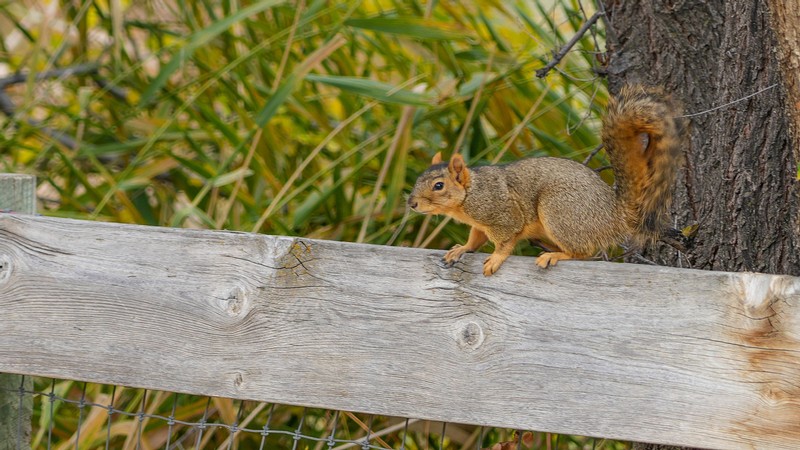
Gardeners and orchard owners across Utah face ongoing challenges from wildlife that can damage crops, irrigation systems and property.
According to Cory Farnsworth, Utah State University Extension faculty in Grand County, “nuisance animals” are generally defined as those causing damage to crops, livestock, or property and can include species such as gophers, raccoons, skunks, deer and birds.
“Some of these can be controlled without a license in Utah due to their high populations and potential for damage,” he said. “These include field mice, ground squirrels, jackrabbits, raccoons, marmots, striped skunks and coyotes. However, others, such as the Utah prairie dog, require special permits or must be managed directly through the Utah Division of Wildlife Resources.”
Though it may seem a humane choice, relocation of wildlife is generally discouraged and often illegal without proper authorization. Studies show relocated animals have low survival rates and frequently return to their original habitat. In addition, moving nuisance animals may only move problems to a new location.
USU Extension recommends using integrated pest management (IPM) strategies that combine multiple approaches. These include physical barriers such as fencing, habitat modification, trapping and targeted use of deterrents. For example, an 8-foot fence is often necessary to effectively exclude deer, while electrified mesh fencing can deter raccoons and opossums.
Trapping remains one of the most effective and selective control methods, particularly for species like raccoons, skunks and squirrels, Farnsworth said. Properly used traps can target specific animals while minimizing harm to non-target species.
Daily monitoring is essential for live traps to ensure humane treatment and compliance with regulations.
Footholds and killing traps have different rules and regulations. Footholds can be checked every 48 hours, while killing traps can be checked every 96 hours.
Generally, in a backyard setting, checking every day is best management practice, especially if there are pets nearby.
Farnsworth cautions against the indiscriminate use of poisons. Because many toxicants are non-selective, they can harm pets, livestock and humans if misused. It sounds obvious, he said, but read the label and follow the instructions. The label is the law regarding the application of any pesticide or rodenticide.
“Identifying the source of damage is another critical step,” Farnsworth said. “Many species of wildlife can cause fruit tree damage. Bears may break branches to reach fruit, birds can strip trees quickly, and voles can destroy root systems and bark. Understanding these patterns allows growers to choose the most effective control strategy. When it comes to wildlife control, the connection between observation and action is key.”
Utah residents are encouraged to consult local Extension offices or licensed nuisance wildlife control professionals for assistance with persistent problems. More information is available at extension.usu.edu/wildlife-interactions/.
Comments are closed.