
The setting
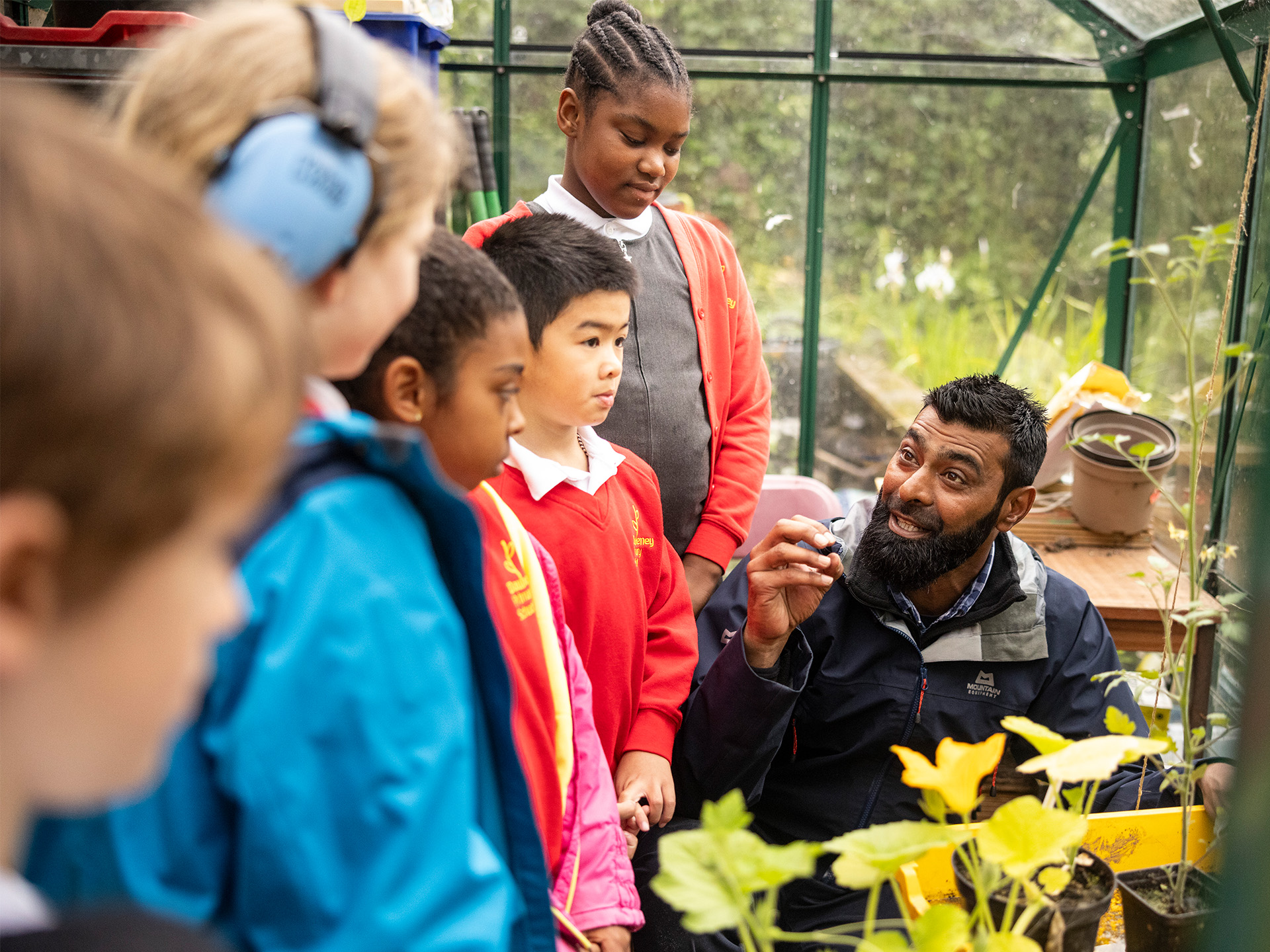
Brookland Junior School, a long-standing Primary PGCE partnership school, has worked closely with UCL to develop the school’s curriculum to incorporate school-gardening and growing. This work was part of a national research project involving schools and early years settings which sought to understand how they establish and sustain school gardening and growing.
From the outset of this research, the school had ambitious aims ‘to have everyone involved in gardening across the school rather than just a gardening club’ (deputy headteacher) as was historically the case.
The research partnership between the school and the university has acted as a powerful catalyst for change, with gardening moving from an extracurricular activity for the few to a curriculum for all. Through interviews, surveys, and ongoing dialogue with staff and pupils, the school developed a deep and nuanced understanding of the potential of gardening for learning. Early stages of the research surfaced excitement alongside concerns about integrating gardening into the curriculum.
The groundwork
A baseline staff survey revealed high levels of enthusiasm but limited confidence in gardening expertise. This understanding enabled leaders to work with the teaching team to address professional development needs through collaborative curriculum planning. They trialled practical gardening activities such as compost-making and vegetable bed preparation.
The approach built confidence across the staff team, reduced perceptions of gardening as something ‘extra’, and began to develop a culture where the potential benefits of gardening for children’s learning are understood, valued and curriculum integration feels achievable.
Curriculum integration
Teaching of the following newly written science-led curriculum units began in 2026 and will be reviewed by pupils and the teaching team and adapted accordingly ahead of next year:
Spring 1: Year 5 – Winter Wonder: Indoor planting, compost making, terrarium creations and planning for a Spring gardenSpring 2: Year 4 – Spring into Growth: Propagating seeds, exploring soil types to identify the best types of plants to grow in different environments, and making garden beds.Summer 1: Year 3 – Our Growing Garden: Pollination areas, biodiversity and wildlife zones, caring for the gardensSummer 1: Year 6 – From the Garden to the Table: Harvesting, growing and planting and moving from garden to plate (harvest to the school kitchen), future proofing the garden beds.
Teachers at Brookland articulate the wide‑ranging benefits of gardening and growing, from science and sustainability learning, to teamwork, wellbeing and sensory engagement, while pupils speak of the joy of being outside, the satisfaction of nurturing a plant and caring for a living thing. Whilst in its early stages, the school are already seeing a positive impact on pupil learning with the children involved in active and purposeful learning and classrooms becoming spaces for indoor growing alongside preparing the outdoor planting areas.
Comments are closed.