
I teach gardening, and whenever the lesson turns to weeds, I always remind my students, “There’s no Garden of Eden without weedin’.” While you can manually pull weeds from flower beds and vegetable gardens, hand-weeding or cultivating is not a viable option for lawns. They require chemical weed killers to eliminate unwanted plants that infiltrate the turf grass. The question then becomes, which is the best weed killer for lawns?
Most products sold to help homeowners control lawn weeds are designed to disrupt their metabolism by drying out their leaves or destroying their roots. What is most important when fighting unwanted growth in grass is to use a selective herbicide with a chemical formula that kills weeds but not the lawn. I tested seven options in my own yard and unearthed a few that not only work effectively but also deliver results in as little as a day. Properly apply them, and you should have the spring lawn of your dreams in no time.
Best weed killer for lawns in 2026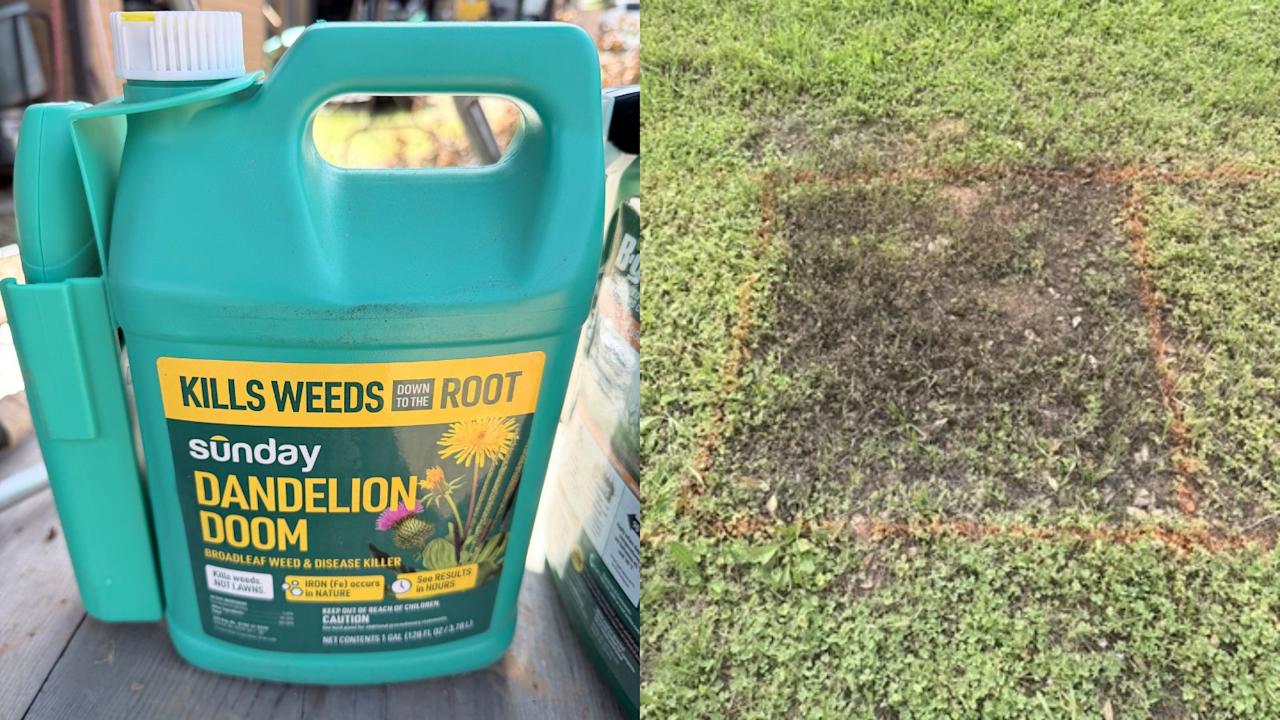
Daryl Beyers
Application type: Spray | Active ingredients: Iron HEDTA (Iron hydroxyethylenediaminetriacetic acid) | Rain resistance: Ready in 3 hours | Targeted plants/weeds: All broadleaf weeds, especially dandelions
Dandelion Doom lived up to its name, fully eradicating all the weeds, not just the dandelions, in my test plot. It wasn’t the fastest-acting weed killer of those tested, which may be due to the active ingredient, iron HEDTA, a mega dose of chelated iron that desiccates the plants and turns their foliage black before it shrivels and dies. Broadleaf plants are better at absorbing iron than grasses, so the dosage is such that the grasses are unharmed while the weeds are wiped out.
Because iron is a beneficial nutrient that turns all plant foliage green, Dandelion Doom may help your lawn green up in the spring. I like that iron HEDTA is an alternative to traditional chemical herbicides like 2,4-D and glyphosate. It has no reports of adverse effects following human exposure. Our test bottle came with a battery-powered spray nozzle, a convenient touch.
ProsPre-mixed and ready to sprayComes with a motorized nozzleKills weeds to the rootsMade without traditional chemicals …Cons… but may not be as effective as a resultTakes longer than traditional weed killers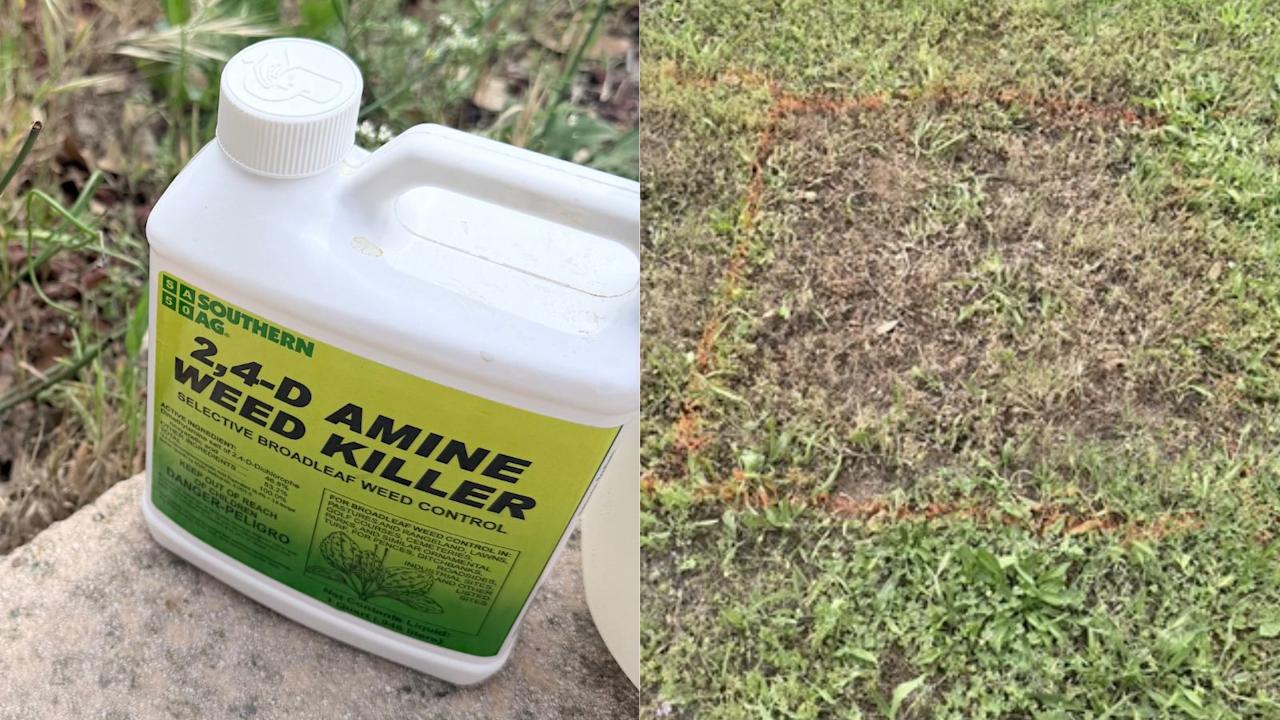
Daryl Beyers
Application type: Concentrate | Active ingredients: 2,4-Dichlorophenoxyacetic acid | Rain resistance: Ready in 6-8 hours | Targeted plants/weeds: All broadleaf weeds
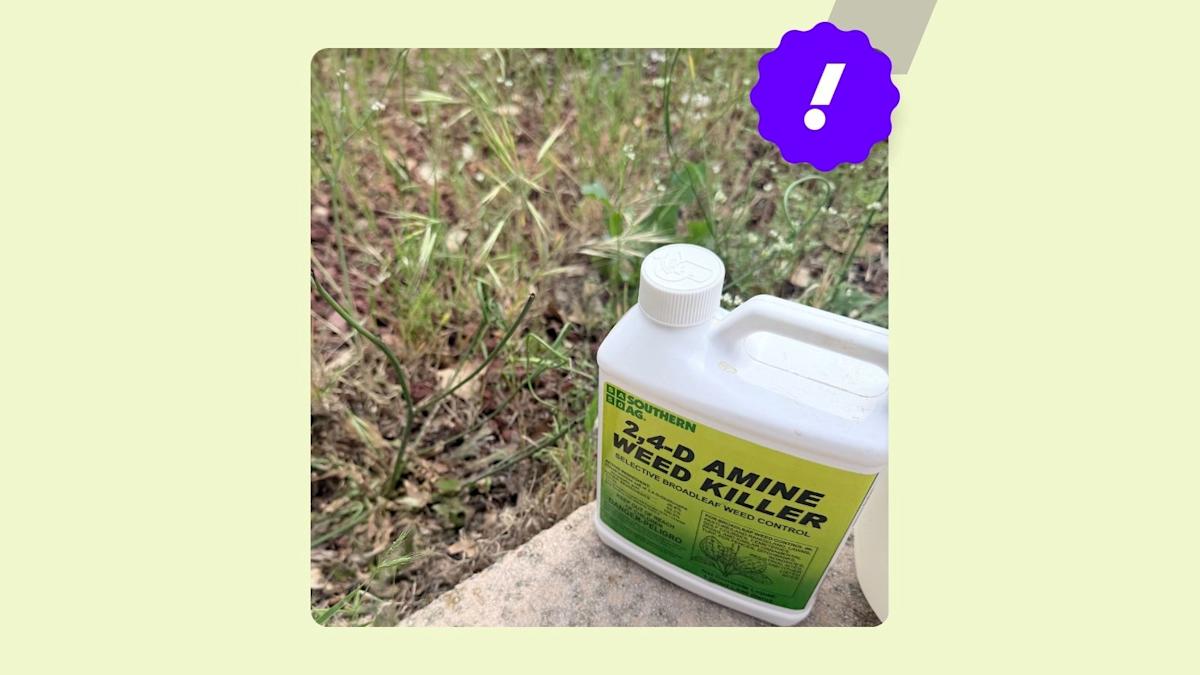
This is your grandpa’s weedkiller. The chemical 2,4-D has been used commercially since the 1940s, when it was found to kill broadleaf weeds while leaving grasses and grains unharmed. A very small concentration of what is ostensibly a growth hormone disrupts the weeds’ metabolism, killing them quickly. Just 2-3 teaspoons mixed into 5 gallons of water can treat up to an acre of lawn, making this a very cost-effective choice for weed control. At that rate, the 1-quart bottle we received for testing could treat up to 32 acres!
While this Southern AG product gets the job done, 2,4-D is a dangerous chemical and must be used with caution. As an old gardening expert preached to me long ago, when it comes to chemical herbicides like 2,4-D, the “label is the law.” Always read and follow the instructions carefully, wear protective clothing when spraying, and store it safely away from pets and children.
ProsKills weeds to the rootsCost-effectiveVery quick and effectiveConsMust be used with cautionRequires a separate sprayer 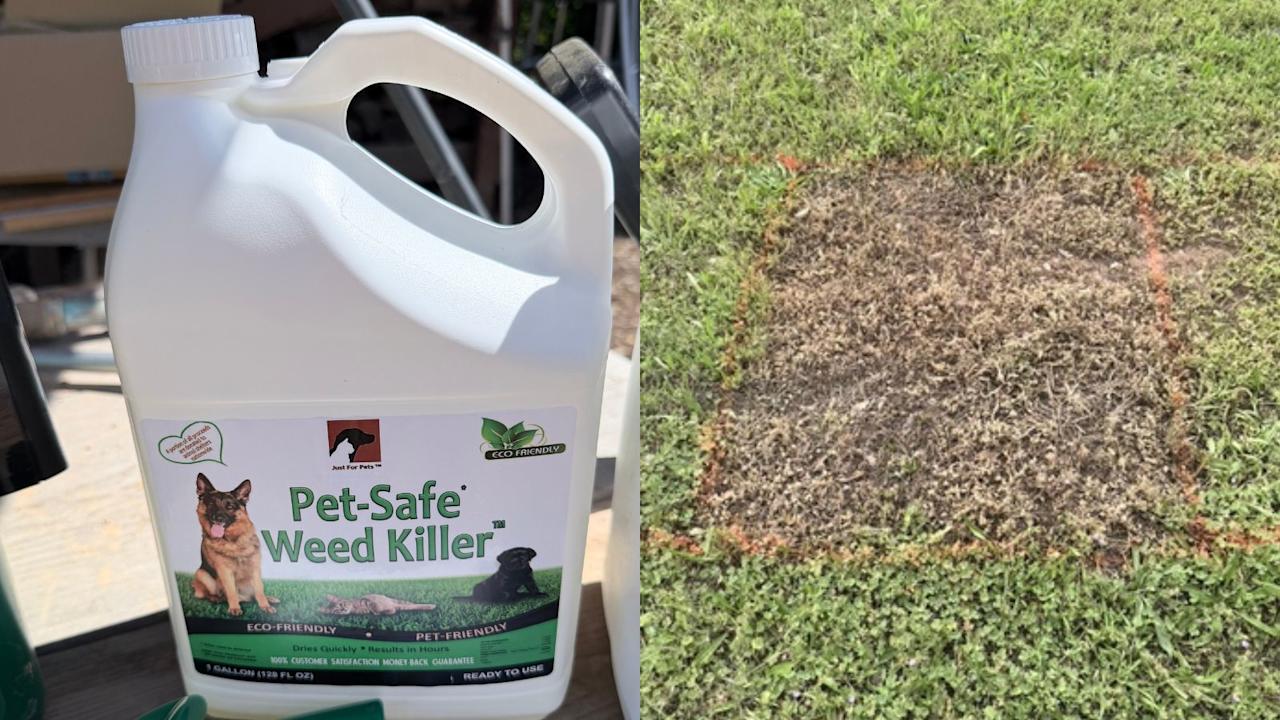
Daryl Beyers
Application type: Spray | Active ingredients: Sodium chloride, citric acid, clove oil | Rain resistance: No — apply only in dry conditions | Targeted plants/weeds: Kills all plants, not just weeds
This was hands-down the fastest weed killer for lawns of all those tested. However, it not only killed the weeds but also killed the lawn. Nonetheless, it deserves high praise for being pet (and human) safe while effectively wiping out weeds. Within an hour, the weeds in the test plot were turning black, and after just a day, they were toast. The same was true when I spot-sprayed a single dandelion growing in a crack in my pool deck. One spray was all it took.
Just for Pets Pet-Safe Weed Killer uses a combination of salt, citric acid and clove oil mixed in a vinegar solution to desiccate foliage quickly. It primarily affects leaves, not roots, so large established weeds may require multiple applications. I found the vinegar smell oddly appealing compared to the more pungent, chemical smell of the traditional herbicides. It reassured me that what I was spraying was safe for my family and me, though fatal to the weeds.
ProsSafe for pets Pre-mixed and ready to sprayComes with a spray nozzleFastest weed killer we testedPleasant smell (especially compared to competitors)ConsNot rain resistantCan also kill grass, so must be carefully appliedFactors to consider when choosing a weed killer for lawns
✓ Application type: Is the weed killer pre-mixed or a concentrate? While pre-mixed weed killers require less mess and fuss and usually come with a handy spray nozzle, concentrates are more cost-effective. A good trick is to buy a pre-mixed bottle with a spray nozzle that can be used later with concentrates.
Advertisement
Advertisement
✓ Active ingredients: There are basically three main types of herbicides: iron chelate-based (Dandelion Doom), 2,4-D-based (Southern AG, Spectracide, Ortho, Roundup) and simple table salt-based (Just for Pets, Green Gobbler). If you want to avoid traditional chemicals, skip anything that contains 2,4-D. Though the EPA says this herbicide “generally has low toxicity for humans,” there are concerns linking it to health risks, including cancer.
✓ Rain resistance: Is it rain-fast? Different weed killers are absorbed by plants at different rates, anywhere from within one to eight hours. The faster the active ingredients are absorbed, the less likely it is that a little rain or sprinkling from a garden hose will wash them off. However, I found that faster absorption doesn’t necessarily mean faster acting.
✓ Pre-emergent or post-emergent: This relates to the stage of growth the weed killer targets. All the products we tested were for post-emergent treatment, which means they work on actively growing plants. This is different from a pre-emergent, like crabgrass control, that kills weed seeds, not the weeds.
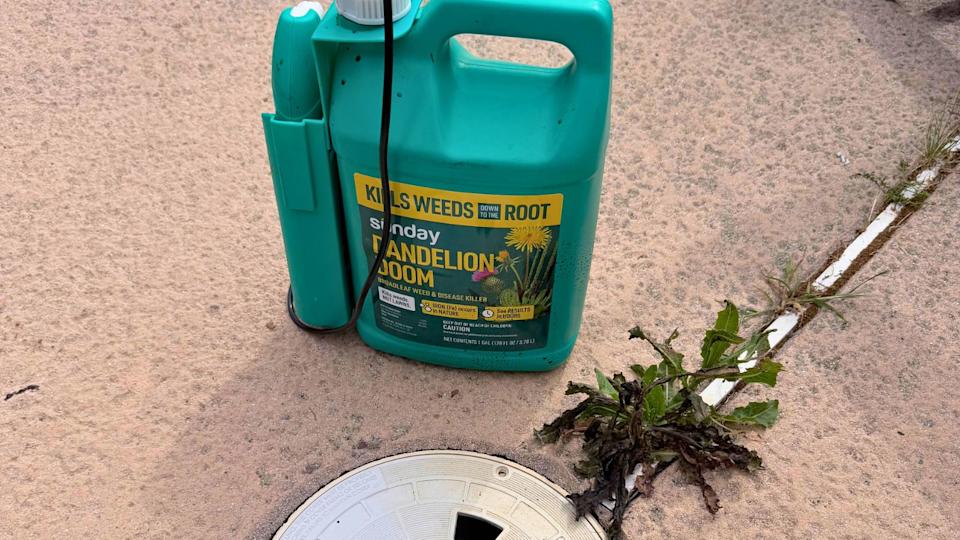
The dandelions growing in the cracks in my pool deck met a swift demise after a spot treatment with Sunday’s post-emergent weed killer. You can see the foliage turning black. (Daryl Beyers)
How we tested weed killers for lawns
I performed three different tests with each weed killer:
Advertisement
Advertisement
Patch test: First, I marked 3-foot squares on my lawn that were filled with weeds. I sprayed each patch of grass with one of the tested products.
Spot-treatment test: Next, I spot-sprayed healthy lawn to find out if the weed killer would harm the turf grass. If it did, I deducted points.
Single weed test: Finally, I spot-sprayed individual weeds growing in cracks around my pool deck.
I tracked the effectiveness of each product by checking the squares and spot sprays after the first hour, two hours and five hours and then after one full day, two days, three days, five days and a full week. The weather was sunny and warm for the first five days, then cloudy and rainy. The spot spray tests in the lawn were hit with lawn sprinklers in the morning on the day following application and each day thereafter, with no apparent effect on the test. The products I expected to harm the grass did, while those advertised as lawn-safe did not.
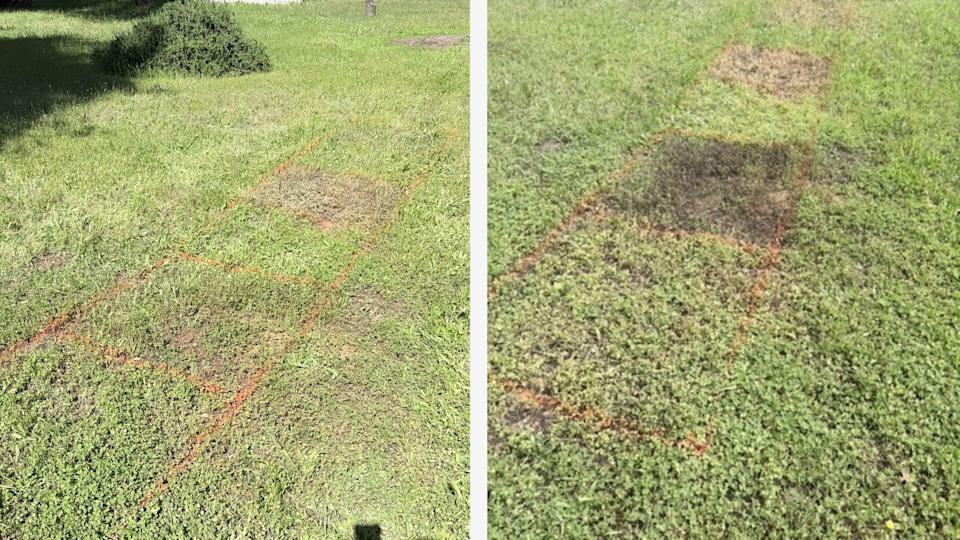
A side-by-side comparison of the weed killers, three hours after application (left) and five days after application. (Daryl Beyers)
Other weed killers for lawns we tested
Spectracide Weed Stop for Lawns: This popular 2,4-D weed killer failed to live up to its reputation. Even after a week, the test plot was still covered in weeds. This product is designed specifically for treating large areas, as the container must be attached to a hose to disperse the herbicide, which makes it less adaptable for other uses. I would use it on a lawn with minimal weeds just to keep up appearances.
Roundup for Lawns: This is a Roundup product without the controversial active ingredient glyphosate, a pesticide that’s under intense debate as a possible carcinogen. It didn’t damage the grass, and the bottle we tested was pre-mixed but didn’t come with a spray nozzle. I worked fine, but it took a few days to have any noticeable effect. It’s a good candidate for established lawns with few weeds.
Ortho Weed B-gon: Another 2,4-D product, Weed B-gon took a long time to show any effect and there were still a lot of weeds present in the test plot a week later. It doesn’t hurt the lawn, but it would require multiple applications to work best. There are better products than this one to choose from.
Advertisement
Advertisement
Green Gobbler Total Control Weed & Grass Killer: As a table salt-based herbicide, this product is safe to use around pets and people, but it didn’t work as quickly or effectively as our top pet-safe choice from Just for Pets. Nonetheless, I’m happy to see more “safe” herbicides available for purchase and would consider it a good option for general weed control, but not in lawns.
Weed killer for lawns FAQsHow do I kill weeds in my lawn without killing grass?
Look for a weed killer that’s labeled as specifically targeting broadleaf weeds as opposed to all plants, such as one that contains iron HEDTA. It also helps to stop weeds before they even have a chance to grow by focusing on your lawn’s health. The denser your turf, the less likely weeds will get a chance to establish. That means fertilizing and watering the proper amount and breaking out your lawn mower regularly. Keep your grass on the longer side, and always allow it to grow at least an inch before the next mow, so it grows deep, strong roots.
Is it too late to spray for weeds in the fall?
Early treatment is the key to attacking weeds with herbicides. Spray them as soon as they emerge in the spring. Smaller plants are easier to kill with less product. Spray in the morning so the active ingredients are fully absorbed during the day, but wait for the morning dew to evaporate before spraying.
Should you spray for weeds when it’s wet or dry?
If rain is forecasted, postpone treatment. A warm, sunny day with little to no wind is the best time to spray for weeds.
Advertisement
Advertisement
We received complimentary samples of some products and purchased others ourselves, but we reviewed all products using the same objective criteria.
Comments are closed.