
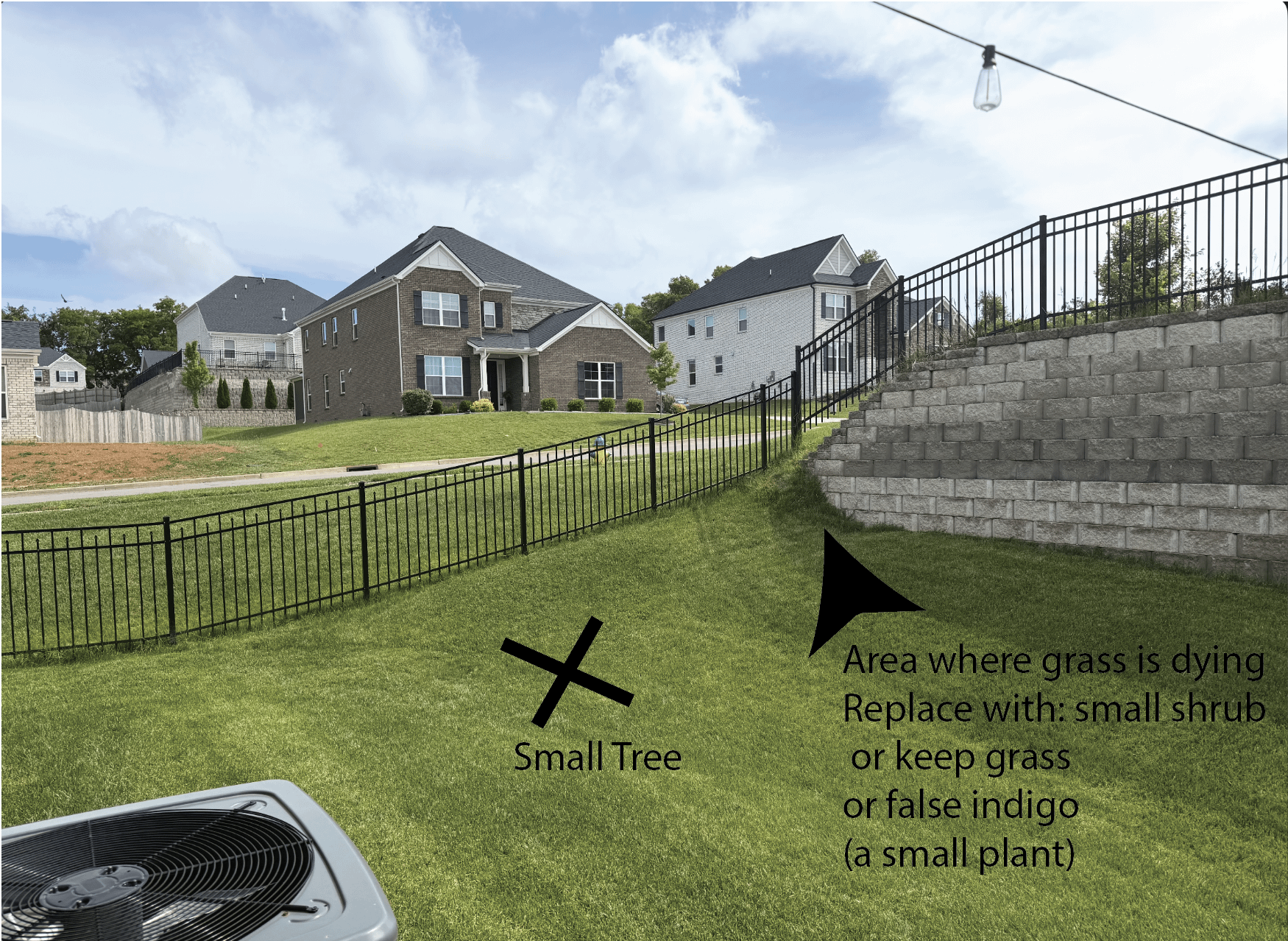
Hi all~
So, I'm trying to help my mom and dad landscape their outdoor area of their new home… you see where the retaining wall meets the grass and there is a little hill (attached photo). Well, all the grass is dying there. My father is convinced we need to keep grass there to help with the erosion but my mom wants to plant a tree there. My research has led me to believe that we cannot plant a tree there without risking damage to the retaining wall BUT I'm wondering if we can plant something like a small shrub or something like false indigo to help with the erosion, and meet halfway between my mom and dads wants. Separately im wondering if it would be okay to plant a tree farther down the slope so long as the tree is equidistant between the retaining wall and the house, and assuming the distance is half the total size of the mature tree (something like a dogwood or a small maple or something).
Any advice would be great!
by messi_desi
6 Comments
Something does need to be planted there to help with erosion but grass isn’t gonna cut it. This was likely grass seed laid as part of the sale process so take what you see with a grain of salt. The next year or so will be an important time to pay attention to sun, water, plant conditions through the seasons.
I’d make a planting bed out of the little curve from the first fence post we can see to the retaining wall. Use a hose to shape the edge of the bed while planning. A small tree like eastern redbud or even a viburnum, rhododendron, or oak wood hydrangea would be great as a centerpiece there, then you can plant either small flowering shrubs like azaleas and gardenias, woody herbs like rosemary or lavender, or ornamental plants like coneflower, false indigo, inkberry holly, etc in the bed with the tree. Some sun loving plants that like a drier soil would be great as there likely will not be a surface water sticking around.
When you make the planting bed no matter what you put, you can set your edging in, cover the grass in the bed with cardboard & wood or leaf mulch, then water the mulch lightly. This will allow for the soil underneath to turn more into planting soil, making a nice spot for your future plants to go into. May take a month or a full season for the grass in bed to die and the soil to be great for planting. You could of course plant right into this too then put the mulch around but you’ll have a bit harder time digging and weeding after.
Your mom and dad are both a little off base here. Grass is dying on that slope because water runs right off the steep pitch and running a mower over that angle just chews up the turf and causes more erosion. Planting a tree right against a segmented block wall is also a structural disaster waiting to happen because the roots will eventually push those blocks out of alignment. Your compromise is the exact right move. You need to strip that struggling grass and plant a solid mass of deep rooted shrubs or perennials like false indigo, creeping juniper, or fragrant sumac. You want to plant them in a sweeping connected mass so they lock together into a single root system that holds the bank and creates a clean visual flow instead of just scattering a few isolated plants.
Putting a small ornamental tree down at the X is a solid plan. A dogwood or a small maple will give you the vertical structure the yard needs without threatening the wall footing. Just make sure you plant it about fifteen feet away from the wall and the house so the canopy has room to breathe when it matures. Before you go drop cash at the nursery you should run that photo through the GardenDream web app. It lets you overlay different tree sizes and shrub masses right onto your exact yard so you can test the layout. It acts as a great blueprint to make sure your parents actually agree on the final look before anyone picks up a shovel.
I’d try to find a way to put a small curved wall in that corner to help reduce the size of the hill, and plant a shrub in it.
All depends what kind of tree you want to plant further from the wall. Smaller tree or evergreen shouldn’t be a problem.
You can build up the grade at the corner and give it a more gradual slope (ie 4h:1v) running along the front of the wall and then feather out. Just check there isn’t a drain poking through the face of the wall there, but there likely isn’t as it would be in the low side at the other end.
I’d keep it simple and focus on softening the wall with plants instead of overbuilding the space. Low-maintenance shrubs, native grasses, trailing plants, and mulch usually make retaining walls look much more natural and attractive.
Adding layered plants with different heights can also help hide the harsh look of the wall while improving drainage and reducing erosion. Many people in landscaping communities also recommend using native ground cover or wildflowers because they require less maintenance over time.
I’d say the arrow is a really good spot for a fig tree.