
This past Monday it was windy and as I sat on the deck in early evening maple seeds from a nearby silver maple tree were being blown all around me. These seeds are winged and their proper name is samaras, although they’re also called helicopter seeds because of the way they twist around in the wind.
Interestingly, these seeds are edible and highly nutritious. They’re reportedly high in antioxidants and proteins, they can be eaten raw or cooked, and they taste like peas or nuts. But while the fresh green pods are tender and sweet, the dark brown ones are bitter.
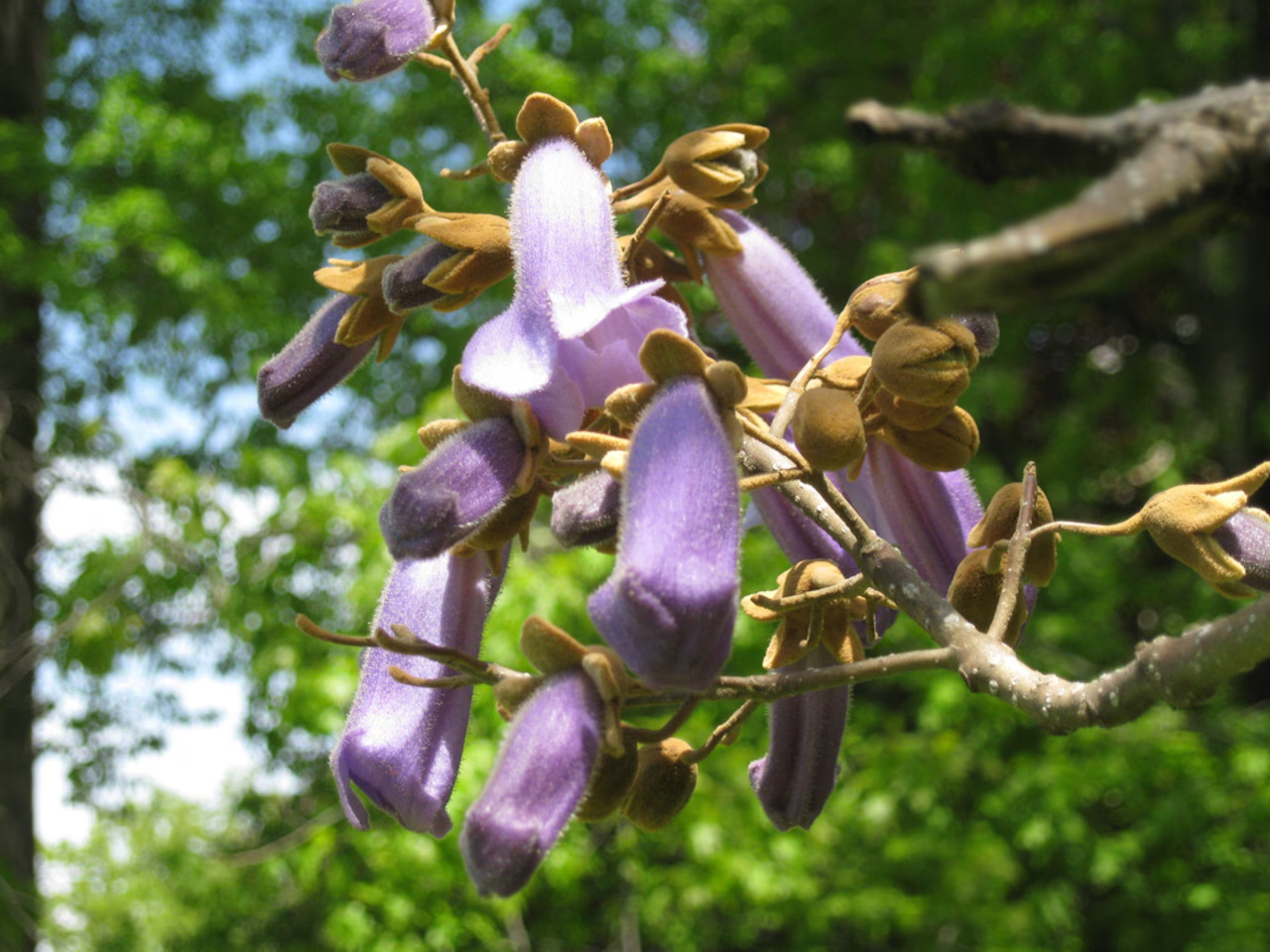
Occasionally, also landing on the deck were lavender-purple flowers of a paulownia tree. Commonly called the princess tree, this exotic from China has become so abundant in our area that it’s considered invasive. It grows fast and germinates just about anywhere because it’s tolerant of all kinds of soils.
Paulownia flowers are tubular-shaped and pretty, and they smell like vanilla when you get around a cluster of them. They’ve been used for medicinal purposes in China, and their vanilla scent attracts early bees.
The following day I walked around our fields and saw my first monarch butterfly of the spring. This is early for me because I don’t normally see one until much later in May.
The first dame’s rocket plants were opening in the fields that day, and soon there will be lots of them. This Eurasian invasive plant has pretty fragrant flowers of pink, purple or white, and is often mistakenly thought to be wild phlox. But dame’s rocket flowers only have four petals while phlox flowers have five.
Also now blooming in untended areas of the fields are mayweed plants. They have white daisy-like flowers, and they too are often misidentified. They’re chamomile members of the sunflower family that are often mistaken for Shasta daisies.
At one point on my walk I sat down on a rock and a male rose-breasted grosbeak landed in a tree above my head. These grosbeaks have just arrived back here from the Tropics or central South America and have come up here to breed.
The male rose-breasted grosbeak is an attractive black-and-white bird with bright red on its chest. It’s a bird that even people who don’t normally notice birds pay attention to. The female, though, is often overlooked because she’s brown and stripy.
One of the most interesting things about rose-breasted grosbeaks is that both females and males build the nest and take care of nestlings. Most birds leave nest-building and nestling care solely to the female.
If things go as they have for years here, I’ll be seeing rose-breasted grosbeaks until the young are out of the nests and they all begin migrating in August. And I always look forward to seeing them.
Comments are closed.