
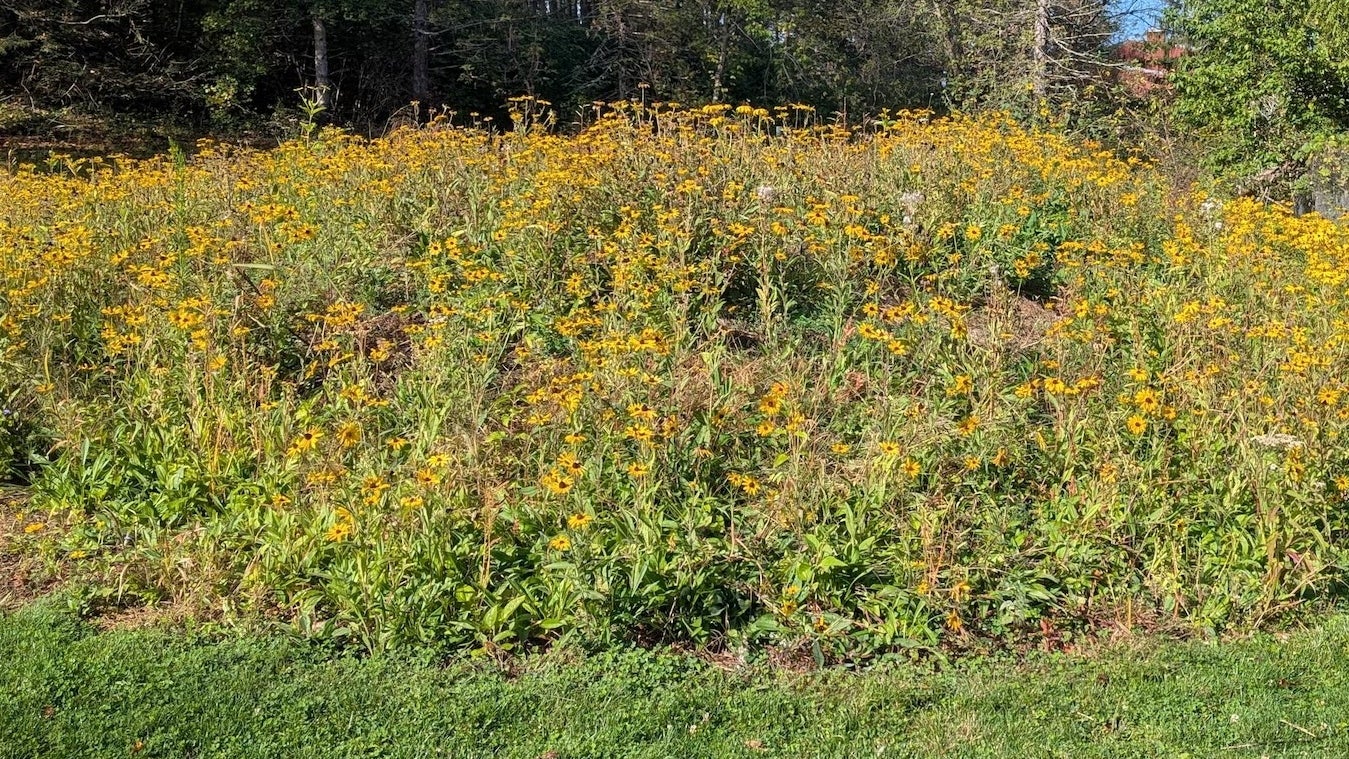
How much maintenance is involved?
Meadows require high maintenance during the first growing season to help encourage plant germination and keep annual weeds and woody plants at bay. After the first year, you will mow no more than once per year between October and March.
Lawns, on the other hand, take more routine and regular upkeep.
Does it matter how big my lawn is? Can I do a partial conversion?
You don’t need a Midwestern prairie to convert your lawn, Mummert said. Homeowners can convert a corner of their lawn, an area around their driveway or a single garden bed. Regardless of the size, converting your lawn will have a meaningful impact, Mummert said.
“If one person is planting a meadow or even just a few native lands, other people are going to notice it, and that’s what is going to inspire people to try it too,” she said.
Bunting said lawn conversion can also be achieved incrementally each year. Though having more sun is preferable, homeowners can replicate meadows with native woodland plantings on a shady lawn, he said.
How do I know what plants to get?
Different plants flourish in varying conditions, so it’s crucial homeowners determine whether their property is sunny or shady, dry or wet.
Homeowners can determine which seeds to purchase based on the conditions of their land, and by learning which eco-region they live in. Native seed suppliers and nurseries in the region can help you make the best decision.
“A lot of people consider native plants in this area anything east of the Mississippi River,” Bunting said. “But if you really want a meadow planting with maximum ecological impact then, say you live in Delaware County, you should be planting plants that are truly native to Delaware County.”
Residents can take it a step further by searching for ecotypes, which are seeds collected from plants growing in the area.
“That nuance is not so easy to do, because a lot of nurseries don’t carry ecotypes necessarily. However, that is a nuance that some of the native plant nurseries are starting to adopt,” Bunting said.
Most garden centers are knowledgeable about native plants, he said, and can offer advice on which plants flourish in the conditions of your property.
Diversity is key.
“The more kinds of plants you have, the more biodiversity you will have, and then by having that biodiverse meadow, you’ll attract more insects, more birds,” Bunting said. “Once you have more biodiversity, you’ll get native mammals, you’ll get native reptiles, you’ll get native amphibians.”
Comments are closed.