
BROOKINGS, S.D. – The McCrory Gardens Trial Report, issued annually by SDSU Extension and McCrory Gardens, helps South Dakotans choose flower varieties that do well in local conditions.
The top five annuals from the 2025 trials were: three types of petunias, a variety of lobularia flowers (sweet alyssum) and a variety of bidens flowers. Honorable mentions went to a variety of coleus, a variety of sweet potato vine and variety of lobelia.
Perennials’ top performers were a variety of achillea (yarrow), a heliopsis (false sunflower), an aruncus (goat’s beard) and a baptisia (false indigo). Honorable mentions went to a variety of sedum (stonecrop) and a nepeta (catmint).

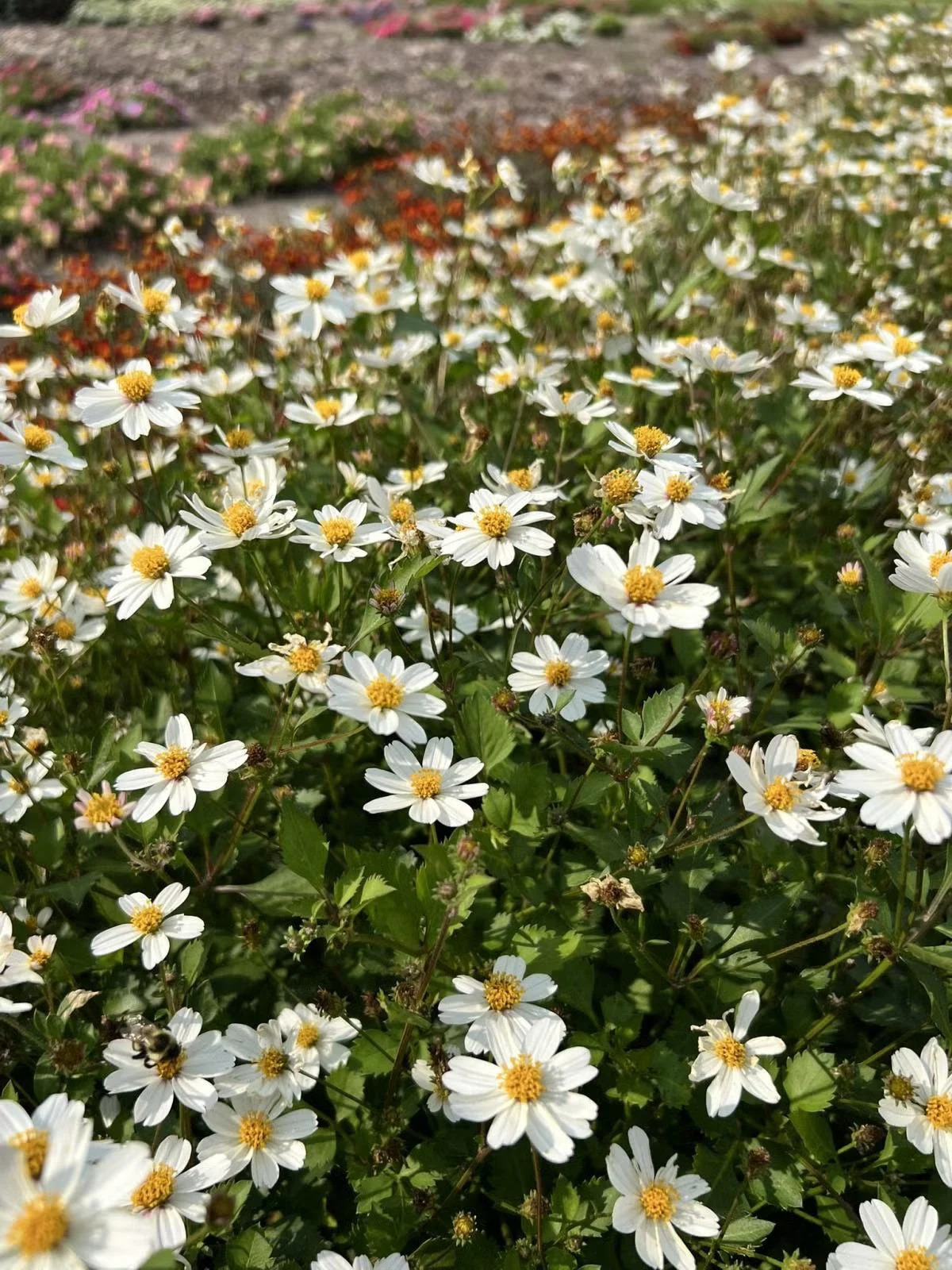
Campfire Marshmallow, a variety of bidens, was ranked one of the best annuals in the 2025 McCrory Gardens trial report.
“I think this continues to be a tool to help garden centers look closer at what they should sell or promote,” said Kristine Lang, assistant professor and SDSU Extension Consumer Horticulture Specialist. “More and more, I think our annual results are really going to speak to what can thrive in hotter gardens in South Dakota.”
While McCrory Gardens also hosts trials of trees, shrubs, and roses, the trial data in the 2025 annual report include 44 annuals and 32 perennials. The annuals were all grown in standard garden beds and the perennials are trialed for three growing seasons, experiencing two unique winters.
Plants were ranked based on uniformity, plant performance and flower abundance. The scores were assigned by one McCrory Gardens staff member and eight SDSU Extension Master Garden volunteers – four for the annual trials, and four for the perennial trials.
Lang said this was the trial’s second season of having Master Gardener volunteers assist as evaluators, and she praised them for going “all out” on data collection and detailed notes for each plant. Having more evaluators provides a more complete and objective final average for the plant evaluations, said Amy Knofczynski, a curator and horticulturist for McCrory Gardens.
“I was most impressed with our wonderful group of volunteer evaluators and caretakers for the trial programs this last year,” Knofczynski said. “It’s great to see more community involvement in the trial programs.”
Lang said looking at perennials over two winters helps determine how plants respond over time. This cycle’s trial saw an uptick in dead perennials, which Lang linked to the decrease in snowfall in the 2024 winter that impacted the 2025 plants.
“This is why we trial perennials over two winters so we can see the response if we have a winter with little snow coverage,” said Lang. “Especially for perennials, there is a lot that goes into overwintering success.”
Chris Schlenker, horticulture and grounds manager for McCrory Gardens, said McCrory Gardens has been a trial site for the All-American Selections Trial Program since the garden’s founding in 1965. David Graper, a professor emeritus of horticulture science at SDSU and former SDSU Extension Horticulture Specialist, expanded the internal annual and perennial trial program in the early 2000s by inviting companies and organizations across the U.S. to include their plants in the trials.
Companies that chose to participate in this round of annual and perennial trials were All-America Selections (AAS), Proven Winners North America LLC and Walters Gardens Inc. The data for AAS is collected and reported in a national database that McCrory Gardens and SDSU Extension evaluators contribute to, available on their website.
The rose trials are part of a program called A.R.T.S. (American Rose Trials for Sustainability), with results available on their website. Similar to perennials, roses saw significant plant losses during the latest trial cycle due to the dry fall and open winter in 2024-2025, according to Schlenker.
“Our trial site puts plants through some tough conditions. Those that survived truly indicate some tough plants capable of surviving in our occasional harsh climate,” he said.
Trees and shrubs are part of the NC-7 regional ornamental trials program run by the U.S. Department of Agriculture-Agricultural Research Service and are evaluated from 5-10 years.
“Each of our trial programs provides valuable data to plant breeders as well as consumers on how plants are performing in our part of the world and may perform in their own backyard,” Schlenker said.
Lang, Schlenker and Knofczynski, said they are pleased to continue the work of Graper and others with the trials.
“I always love suggesting the new upcoming varieties I see performing well in the trials to visitors, family, and friends,” Knofczynski said. “The trial programs are a great way to find out about newer varieties that not only grow well in our climate but also put on an impressive display.
The full results are available on the SDSU Extension McCrory Gardens Trial Report page.
For more information on the trials or how to participate, contact Kristine Lang, SDSU Extension Consumer Horticulture Specialist.
ANNUAL TOP PERFORMERS
Bidens Campfire® Marshmallow (Bidens)
Sweet Alyssum White Knight (Imp) (Lobularia)
Petunia Supertunia Mini Vista® Pink Cloud™ (Petunia)
Petunia Supertunia Mini Vista® Yellow (Petunia)
Petunia Supertunia® Hoopla® Vivid Orchid™ (Petunia)
ANNUAL HONORABLE MENTIONS
Coleus ColorBlaze® Wicked Witch™ (Coleus)
Ornamental Sweet Potato Vine Sweet Caroline Medusa™ Black (Ipomoea)
Lobelia Laguna® Royale Azure (Lobelia)
PERENNIAL TOP PERFORMERS
Astilbe Firefly Fuchsia (Astilbe)
False Sunflower Touch of Blush (Heliopsis)
Goat’s Beard Goatee (Aruncus)
False Indigo Grape Escape (Baptisia)
PERENNIAL HONORABLE MENTIONS
Stonecrop Rock ‘N Grow® Midnight Velvet (Sedum)
Catmint Chartreuse on the Loose (Nepeta)
This article originally appeared on Farm Forum: McCrory Gardens Trial Report aids in flower selection
Comments are closed.