
These questions and answers have been edited and condensed for clarity.
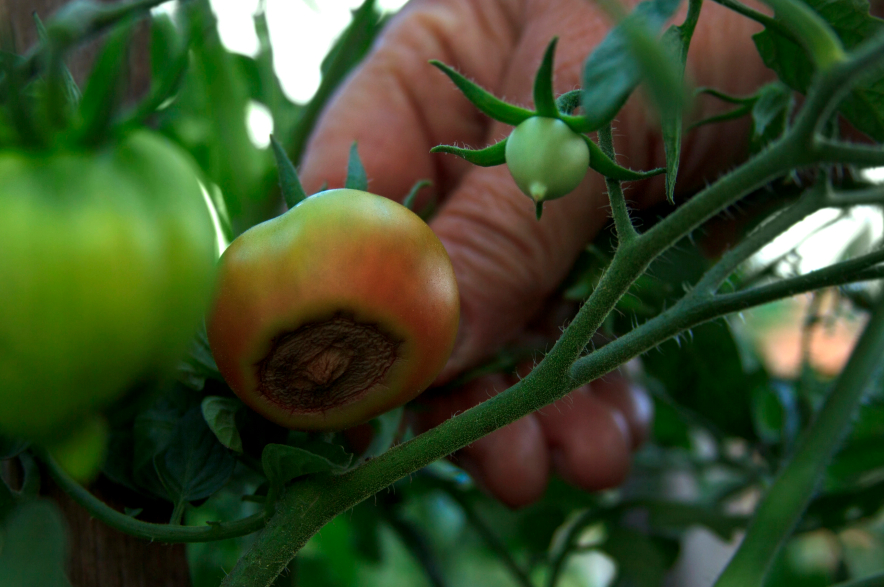
Q: How can I stop my tomatoes getting blossom end rot?
A: Blossom end rot is a calcium deficiency, but even more than that, it’s caused by the plants getting wet and then dry — inconsistent watering. Sometimes it is just weather, like when we have really hot, dry days, and then it gets cloudy and rainy for a few days. So that, in combination with the calcium deficiency, causes it.
Look for a tomato fertilizer with added calcium. You can use that on all your vegetables, but especially your tomatoes. Mix up a bucket of it, and once a week or once every two weeks give the plants a good water with that at the base of the plant.
Do it in addition to watering. So water lightly and then water again with fertilizer by hand. You can also get a slow-release fertilizer you mix in with the top of the soil in spring.
Adding a little bit of sulfur or aluminum sulfate to your soil to lower the pH to about 7 will help the plant take up the nutrients. If you have a really high pH, then your plants can have trouble. You can also add biochar to your soil.
Q: Can I snip the tops off my tomatoes that are getting leggy?
A: It depends on the variety. You can do some pruning on indeterminate varieties, but leave the top leader. Start pruning the side branches or even just pinch them out. That will slow the plants growing up and help them put the energy into the right parts which are going to produce fruit later.
To slow down tomatoes to stop them from stretching you can also start hardening them off now — putting them out during the day if you can. High heat will make them bolt a bit, so getting the plants into larger containers and also cooler temperatures will definitely help them slow down.
A zero phosphorus fertilizer can help, so make sure that you’re not using a 20-20-20 or something like that. Use something with a low second number, which is the phosphorus, because the phosphorus makes them stretch.
Q: I want to prepare a garden area that I’m not going to use. Is landscape fabric enough to keep the weeds down?
A: If you’re not going to put any plants in there at all then landscape fabric with a little
bit of mulch on top of it is all you need to do.
Q: When can I plant sweet peas in the garden?
A: Put them outside when the nighttime temperatures are sitting consistently around 2 to 5 C, but you can definitely put them out during the day, and bring them in at night now.
Once we get consistent temperature, if you decide to put them outside in a flower bed, just make sure you’ve got a blanket or a sheet or something you can throw on top of them if we’re going down below 0 C or close. Acclimatizing for three or four days is key.
Q: Can I move a 20-year-old Valiant grapevine?
A: If you want to move it, move it right now because they’re just ready to leaf out. Cut it back to about 12-18 inches off the ground, and then move them.
Q: How do I repair extensive lawn damage from voles?
A: Give it a good rake. If there’s some patches that don’t come up, just overseed it with a little bit of grass seed, and it’ll come back real quick.
Q: Can I split a rhubarb plant?
A: Yes, especially if it’s older and getting bigger. Replant them them at least three feet away from any structure. Just take your spade, cut straight down, and make sure you’ve got some eyes on them. You can even just leave most of the plant in the ground and just take some splittings off.
Q: When building a raised garden with pressure-treated lumber, if I leave like a two, two-and-a-half-foot walkway all the way around the outside, is that far enough away from the plants to not worry about any chemical leaching?
A: That’ll be fine. And you can also put a little bit of landscape fabric on the inside of those boards.
One difference between planting your vegetables in the ground and using a raised bed is that your watering habits have to be a little bit different. The soil’s going to dry out faster in a raised bed.
Q: Should I fertilize my asparagus now?
A: Asparagus thrives on neglect a little bit. It doesn’t require much in the way of nutrients. You could probably use alfalfa tea, that’s good on anything.
Q: When can I start fertilizing my evergreens and shrubs?
A: Start today — Mother’s Day — and quit about July 15 but you have to be able to turn the water on to water that fertilizer down. Where there’s still snow, it’ll be another week or so yet before you can do that.
Q: How do you start begonia bulbs from last year’s crop?
A: In the fall, decrease your watering and get them down just to the bulb form, and then you can harvest the bulb and put them into sawdust for the winter.
Begonias are quite a long crop. Start them at the end of January to end of February to get them blooming for that season. If you want to do it now, you definitely can try but you’re not going to have blooms until later in the summertime.
You could put them into a pot and start them indoors. They have what’s called a hip on them, the bulb looks flat and has almost like a divot in the top. You want that hip just to be sticking slightly outside the soil.
Keep the soil evenly moist, but not too wet, and make sure it’s well-drained. Give it some light, give it some heat with the soil, and it will start growing for you.
Q: What can I use to fertilize garlic?
A: Use an organic fertilizer, don’t use a high nitrogen one.Because garlic is a bulb, apply bone meal or alfalfa tea or alfalfa pellets, anything like that.
Garlic doesn’t really like the competition so make sure you’re weeding well around them so that it doesn’t have to compete with other plants.
Q: What do those numbers on fertilizer represent?
A: The first one is nitrogen, which gives green growth. Phosphorus is the second number helps root growth and stem strength. And then potassium, which is potash, is the third one.
Everybody thinks in Saskatchewan we don’t need to apply potash because we’ve got lots in the ground it’s a kilometre deep, not 12 inches.
Q: What fertilizer do you recommend getting maximum blooms on flowers in containers?
A: Do a 15-30-15 fertilizer. have sort of an even level on either side, and then you’re bumping that middle number up to get things to re-bloom.
Q: When do I spray a plum tree for bugs?
A: Spray them early with a dormant oil that’ll basically coat the trunk, and then if there’s any eggs in there, it just suppresses them. But it’s almost getting too late, the plum trees are starting to bud so you can’t spray them after that happens. You will have to wait until after they finish blooming.
Q: Is there any benefit to tilling wood ashes into the soil of a garden?
A: Never add a ton of anything in one big batch. Sprinkle some in or imix them in with your compos. Ash adds nutrient.
Q: When do I start fertilizing hydrangeas and what do I use?
A: Anytime now. Use a 30-10-10 because you will get blooms on your new growth. At the same time you fertilize — once every three weeks from now until about July 15 — add some aluminum sulfate, a cup sprinkled evenly all the way around the plant.
Q: What’s the best way to fertilize evergreen trees?
A: If you don’t have much irrigation around, then the best way to do it is to mix 30-10-10, and depending on the size of the plant, one gallon up to five gallons of water around the drip line of the tree, and then that takes it down to the roots right away.
If you’ve got a lot of them on a farm or something like that, you can use the Groundskeeper lawn fertilizer because it has sulfur in it. They like sulfur.
If you have overhead irrigation, you can also put the spikes in around the drip line of the tree as well.
Q: Is now a good time to split a huge salvia plant?
A: Let it grow up about six inches and then cut the top maybe about two or three inches, and that will help with bushing and branching. We plant ours in groups of three. Once one starts to finish flowering, I give it a trim, and I’ll let the other one bloom.
Read more:
Comments are closed.