
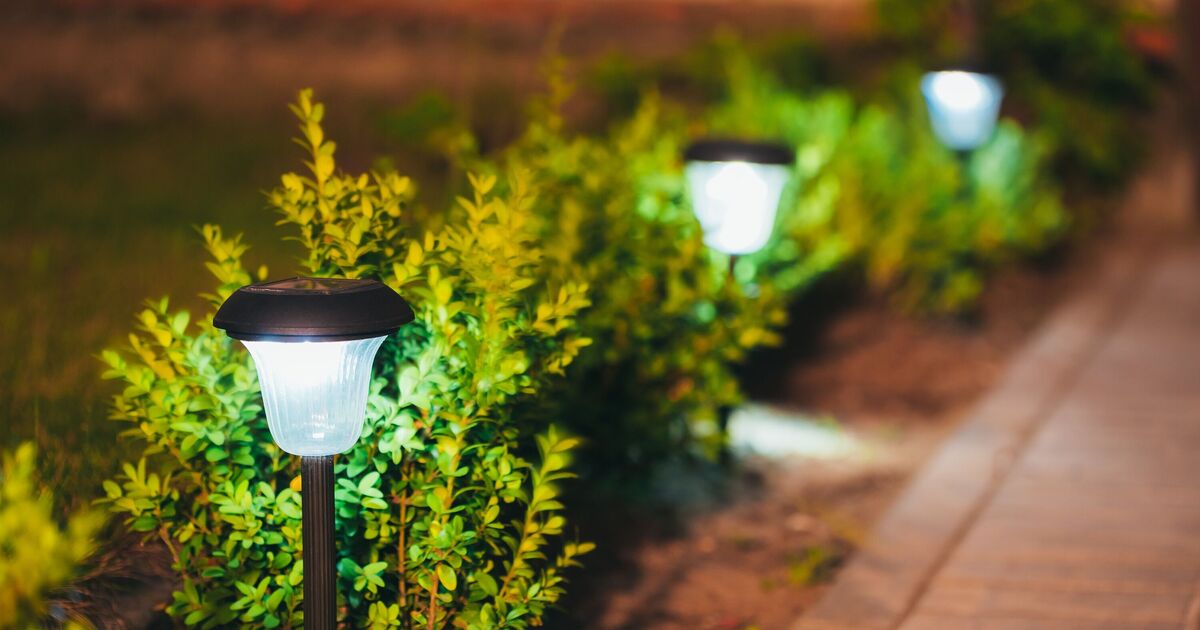
Solar-powered lights add life to your garden but you might often find them loosing their brightness. There’s one thing you should bear in mind as summer draws closer. These pretty lights make a great addition to your outdoor space, but even though they look great, they might not last as long as you hope.
Solar lights offer an eco-friendly, low-maintenance lighting solution and they’re a great way to add a new feature to your garden. The rechargeable batteries inside them have a finite lifespan and will eventually need replacing. They rely on these batteries to store the energy collected by their solar panels during the day. Over time, though, they will lose their ability to hold a charge, resulting in dim lights or ones that don’t work.
Depending on the quality of the battery and how much sunlight the lights receive, they may start to degrade after just two to three years of use, which can be frustrating, warns Garden Lighting London.
When the battery’s performance drops, you may notice that your solar lights either don’t last as long at night or fail to turn on altogether.
In order to get solar lights that work well, one person shared their advice on Reddit, they said: “I have bought many disappointing brands over the years that put out a pitiful amount of lighting, but I have recently been impressed with a few solar LED stakes that have a long, filament-type of LED/bulb casing.
“They seem to give off a lot more light than the ones with a tiny nub of an LED.”
Battery degradation is a major downside of solar lights, but they still offer several benefits. They are energy-efficient and keep electricity bills low since they rely on sunlight rather than power from the grid.
Not only this, but they are easy to install with no wiring or electrical work required, making them a hassle-free option for homeowners.
Solar lights also provide a sustainable and eco-friendly solution for lighting up your garden. In summer, they can make your outdoor space look great for any guests you may have.
But there are a couple of other things to consider, such as that they can be inconsistent in performance, especially in areas with limited sunlight.
There’s also an initial cost to good-quality solar lights that can be higher than traditional lighting options, and cheaper models may not last as long or provide adequate brightness.
To maximise the lifespan of your solar lights, it’s a good idea to invest in high-quality batteries and regularly check the solar panels for dirt or debris.
When the time comes to replace the battery, opt for the best possible replacement to ensure your lights continue to shine brightly for years to come.
You’ll likely be out in your garden much more as the weather gets warmer so making sure it looks its best is crucial.
Comments are closed.