
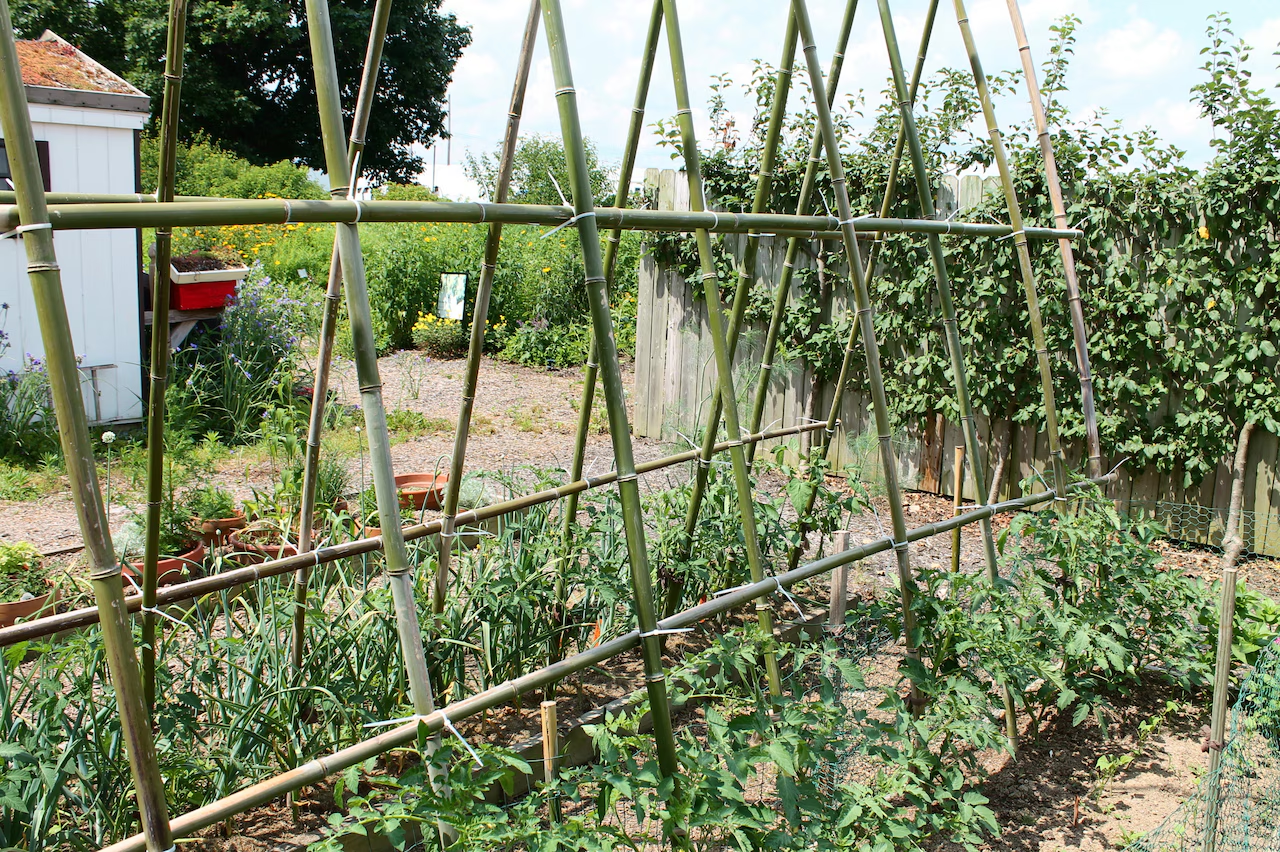
When a home gardener grows a vegetable, it’s more likely to be a tomato than any other choice.
Lots of high-value and tasty tomato plants will be going in Harrisburg-area soil these next few weeks as temperatures climb into their needed frost-free growing range.
Tomatoes can take up a fair amount of space, though, which is why most gardeners stake them.
“Indeterminate” varieties — i.e. ones that keep growing and producing until frost kills them — can easily grow six to eight feet tall in a single season.
Tomato plants can be left to sprawl over the ground, but besides taking up way more space, they pick up soil-borne disease faster, and their fruits rot easier when in contact with the ground.
Early tomato-growers quickly learn that tomatoes do better when their spreading vines were tied to a stake hammered securely into the ground.
Many gardeners still go with that method, using six-foot wooden tomato stakes that are sold in garden centers and big-box home centers.
The down side is that staking requires ongoing tying as the plants expand. And the ties have to be soft ones; otherwise, string or rope will cut into the stems.
Other gardeners opt for tomato cages, which are pyramidal metal cylinders that get rammed into the ground with the aim of containing the growing plants.
However, as rookie cage-users soon find out, the growing plants usually tip over these two- to three-foot corrals.
One solution is to stiffen the cages by securing them to stakes. Another is to piggyback two cages to increase the height and secure them with tall stakes.
Although that eliminates the need to tie individual stems, it’s more to buy and set up.
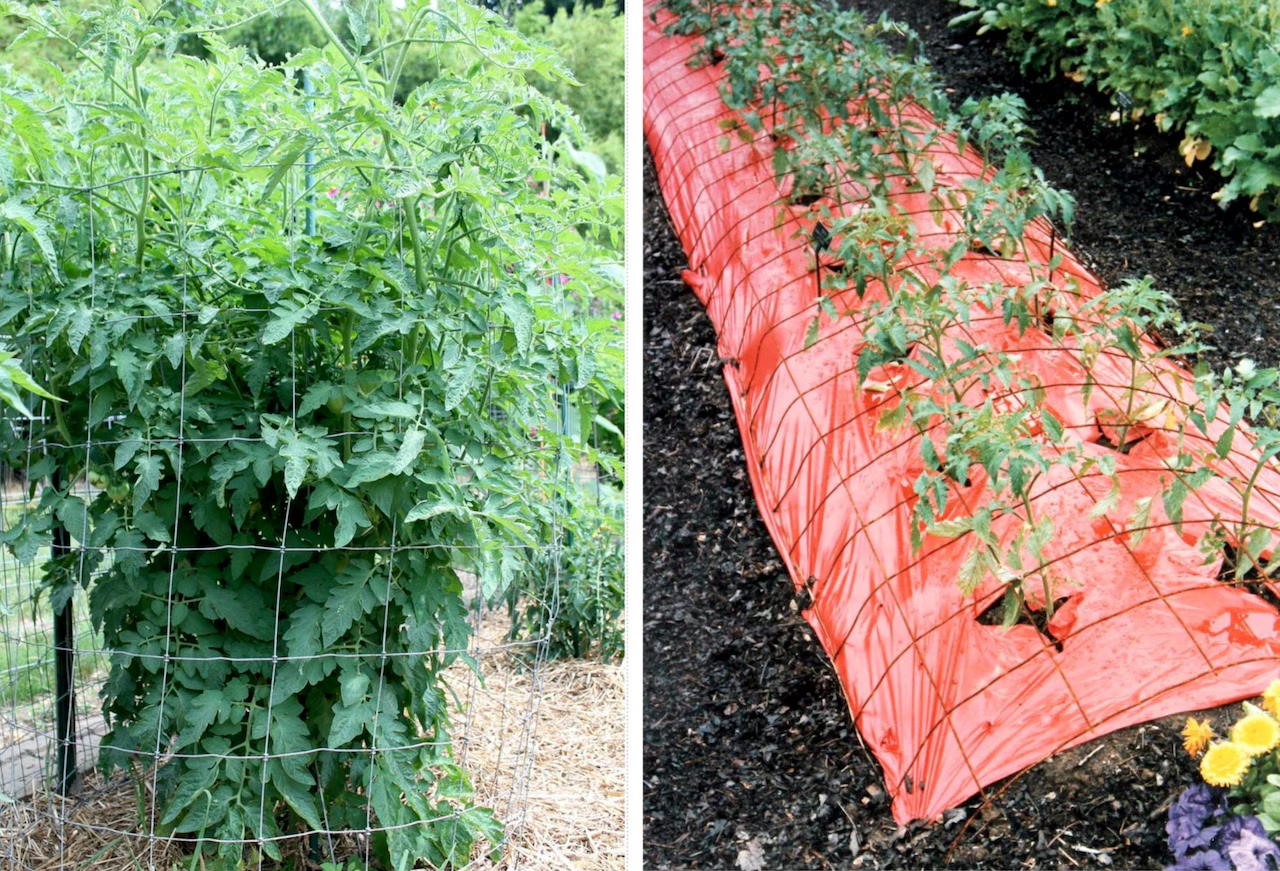 Corraling tomato plants with a cage, left, is the classic support choice, but a few gardeners grow their tomatoes in a dome supported by concrete-reinforcing wire. (Red plastic mulch is underneath the dome example at right.)George Weigel
Similar in principle is scrapping the cages and buying a roll of sturdy metal fencing with wide openings.
Gardeners who tomato-support with this method hammer two or three stakes into the ground and secure six-foot (or more) sections of fencing, which is wrapped around the stakes to create cylinders that are two to three feet across.
These are sturdy, and the growing vines can be tucked in and out of the openings for support without the need for tying. The stakes keep the cylinders from flopping over.
Another fence option that a few gardeners employ is laying semi-circular sections of stiff fencing over the ground horizontally so that it creates a sort of raised “dome” for plants to grow up into and over.
While those are easier to set up than staked cylinders, there’s more bending over to pick fruits, and some of the fruits can end up hanging underneath or on the ground.
Arguably the best option is the tomato “wall,” made out of heavy metal stakes (the ones that are usually green with a metal plate at the bottom) with metal fencing attached.
The same wide-opening fencing that’s used for cylinders can be used for tomato walls, or an even sturdier option is sections of cattle panels (usually sold in farm-supply stores) or sections of sidewalk reinforcing wire (grids that used in laying concrete sidewalks but not readily available in retail stores).
In each case, the idea is to end up with a wall in which you can weave the growing vines in and out but still be able to reach your hand through when picking or pruning.
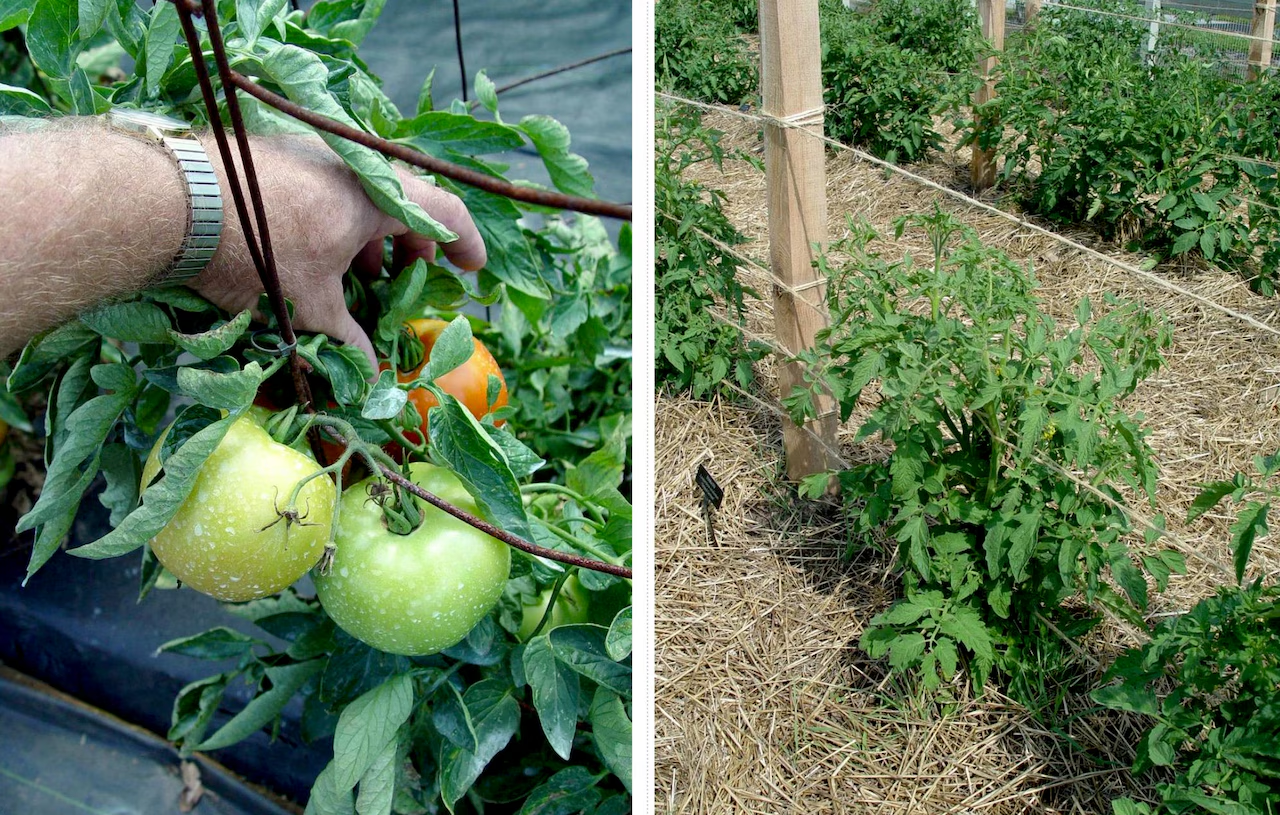 Tomato walls, left, should have openings large enough to reach a hand through to pick the fruits. And another way to support tomatoes is by the “stake and weave” method, shown at right.George Weigel
Walls can be erected to any length, which makes them especially useful where gardeners are growing more than a few plants.
At least one manufacturer makes a trellising system that does the same thing. The Vine Spine comes in a set of 12 galvanized panels (20 inches by five-and-a-half-feet tall each) that insert into the ground to make a sturdy wall, either zig-zagged or straight.
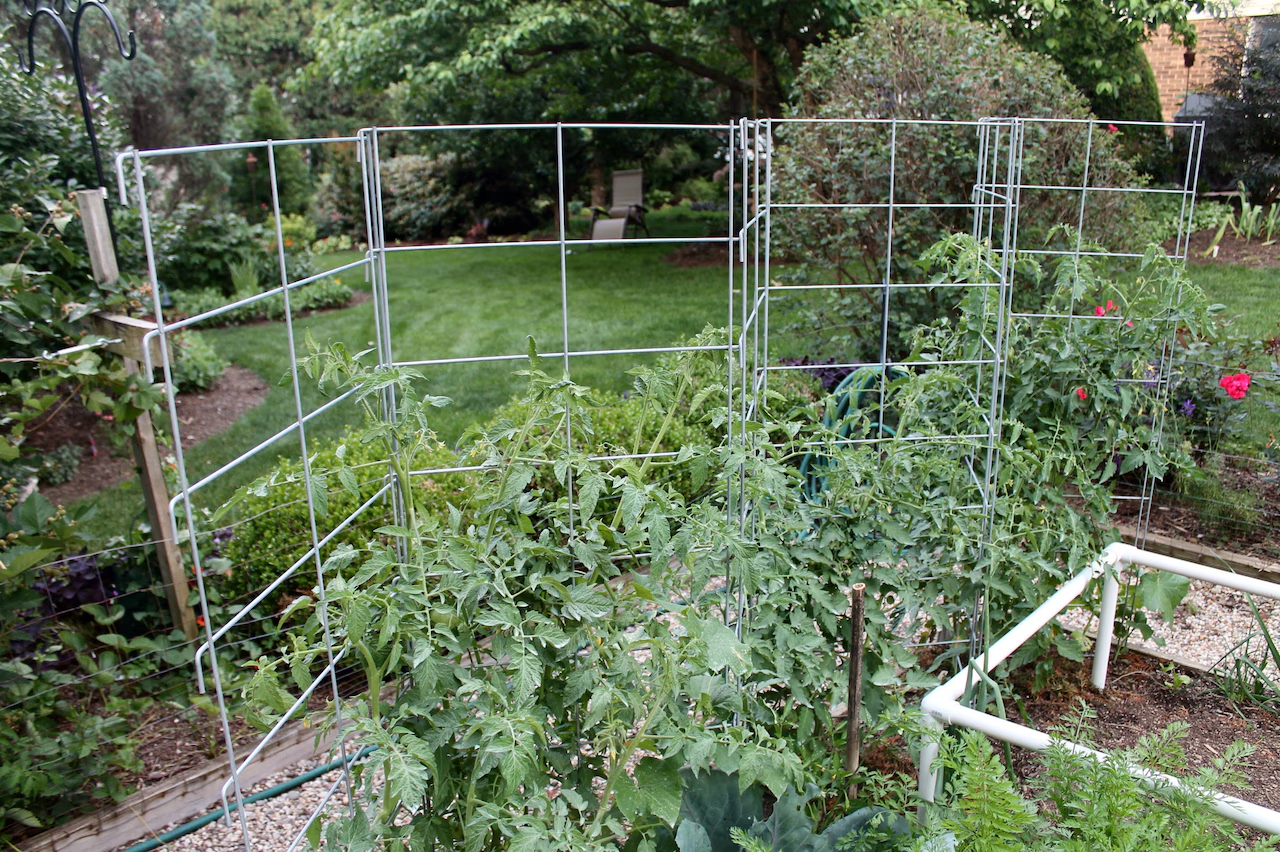 The Vine Spine is a system of interlocking, heavy-duty, wide-opening, wire panels.George Weigel
And a final variation is the “stake-and-weave” system that also uses wooden or metal stakes hammered about four feet apart.
Instead of attaching fencing, use jute or similar wide, soft material to weave inside one post and outside the next. Then reverse the pattern in the next round a few inches higher.
Keep adding layers of this woven support as the plants grow to keep the vines contained and growing up without having to tie each vine individually.
Comments are closed.