
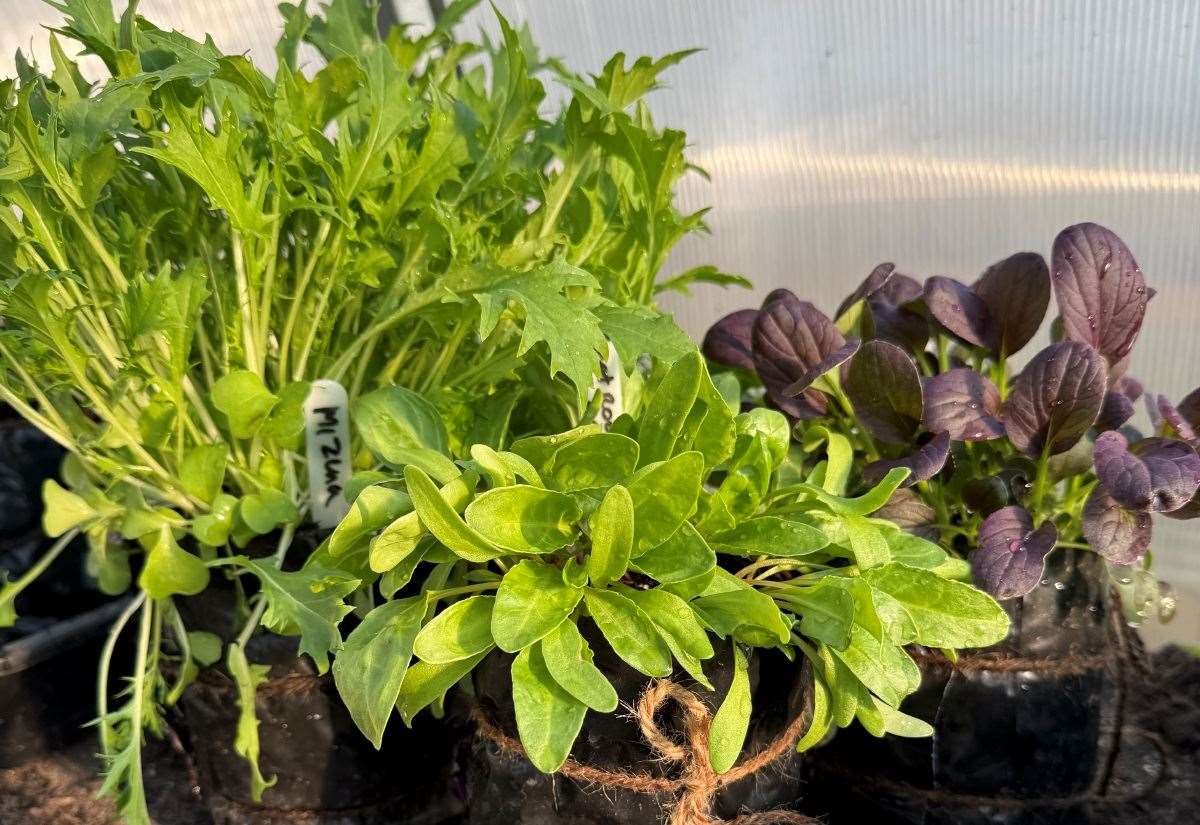
 Jamie has pak choi, beetroot and lettuce all growing in a greenhouse
Whether it’s carrots and parsnips sown directly into the veg plot, brassicas into modules in the greenhouse, or cosmos scattered into a cut flower patch, they all have one thing in common. They can’t be allowed to dry out.
Seeds are amazing little things when you actually stop and think about it. Inside that tiny seed is everything it needs to get going. There’s the embryo (baby plant), along with a tiny root called the radicle and a tiny shoot called the plumule, all neatly tucked away.
Before that young plant can make its own food from sunlight, it relies on a built‑in store of energy. This comes from either the cotyledons – the proper name for the seed leaves, the first little leaves you see popping up out of the soil – or from a starchy food supply packed inside the seed.
Making a seed coat helps to stop everything drying out
While it’s still inside the seed, the embryo is joined straight to these food stores by tiny, fine threads, so it just absorbs all the goodness it needs directly, bit by bit. It’s basically a ‘packed lunch’ that keeps the seedling going through those first few days of life, until it can stand on its own two feet and make its own food.
All of this is wrapped up in the seed coat, which acts like a tough protective jacket. It keeps everything safe from drying out, damage and disease, and it also controls when water can get in, helping to time germination just right.
When the conditions are right, with enough moisture, warmth and oxygen, the seed coat softens, and the whole process begins. The embryo wakes up, the root pushes down into the soil, and the shoot heads upwards towards the light. That’s the moment everything starts.
It’s easy to forget all of this when you’re scattering seeds along a drill or filling modules on the bench, but it does explain why this warm, sunny spell can catch people out.
That top layer of soil can dry out very quickly, especially in lighter soils or raised beds, and once a seed dries out after it has started the germination process, that’s usually the end of it.
So, as good as this weather feels, it does mean we need to stay on top of watering. Not drenching everything, but keeping a careful eye on moisture levels, especially with anything freshly sown.
A gentle watering with a fine rose, or even just checking the surface each day, can make all the difference between a full row of seedlings and patchy germination.
I’ve been reminding myself of that this week, going back over rows I’d sown just a few days earlier and giving them a light watering where needed. It doesn’t take long, but it’s one of those small jobs that really pays off.
It’s not just direct‑sown seeds you have to be careful with, either. Temperatures in the greenhouse can rocket as soon as that bright sunlight hits the glass. Before you know it, it’s like a sauna in there, which means your trays, pots and modules can dry out incredibly quickly.
So it’s just as important to keep an eye on anything under cover and make sure it all stays nicely moist. I saw a tip on social media a few weeks ago that I thought was well worth sharing.
It solves two problems we all come across this time of year in the greenhouse. The first is moisture, which we’ve just talked about, and the second is space.
If you’re anything like me, space in the greenhouse is at a premium right now. Trays everywhere, all full of seedlings, and when it’s time to pot them on into individual pots, suddenly you need even more room.
That’s where the seed snail comes in. I thought it was a brilliant idea. All you need is a strip of an old compost bag or something similar, about five inches deep and around 18 inches long. Lay it flat on the bench and add a thin layer of damp compost all the way along it.
Decide which edge is going to be the top, then sow your seeds along it, about an inch-and-a- half apart and half-an-inch down from the top. Once they’re sown, press them in gently and then roll the whole thing up like a Swiss roll.
When you get to the end, tie it with a couple of bits of string and that’s your seed snail. Stand it up in a tray and water from the bottom. I managed to squeeze six into one tray, which is basically six trays’ worth of sowing in the space of one.
You might be wondering if it actually works. It really does. I’ve got pak choi, beetroot and lettuce all growing happily out of the top.
And the best part is there’s no rush to pot them on. There’s enough depth and compost in there to keep them going for quite a while.
Don’t forget you can email me with any questions at: Jamieslittleallotment@gmail.com
Comments are closed.