
At this time of year, Master Gardeners are often asked questions regarding winter damage to lawns, trees and shrubs. Following are four common problems we are frequently asked to address:
Deer damage. Deer eat the flower buds and tender newest growth on many shrubs and young trees during the winter. This year those shrubs will have little or no flowering. The shape of the bush or tree may also be damaged, sometimes to the point that it may need to be replaced. Your only recourse is to lightly prune now, just to shape the plant, and to protect it next winter to prevent access to the deer. Dead spots in the lawn from snow mold, salt, pet urine, etc. Rake out as much dead grass as possible. Then flush the dead area deeply with a hose several times to neutralize the concentrated contaminants. Scratch the surface of the soil and overseed with grass seed appropriate for your lawn. Keep moist until grass germinates and establishes. Small animal damage. Rodents such as rabbits, mice and voles feed on the bark of shrubs at or near ground level during the winter. Stems and trunks that are girdled (bark eaten all the way around) will not recover and should be removed. The reason such stems will not recover is that all plant nutrients move upward from the roots in the vascular system just under the bark, and if the bark is removed in a complete circle, there is no way for nutrients to move above it. Winter injury to evergreens. Damage to the foliage of conifers usually occurs on the south, southwest, and windward sides of the plant. Arborvitae, yew, and dwarf Alberta spruce are especially susceptible to winter burn damage. If your evergreen has sustained winter injury, you may prune the damage out in mid-spring. Brown foliage is probably dead and will not green up, but the buds may grow and fill in the areas where you removed the dead foliage. If the buds also died, then prune the dead branches back to living tissue, fertilize the plant in spring, and water it well throughout the season. Next winter protect your susceptible trees or bushes with burlap.
Dear Master Gardener: Which azaleas and rhododendrons do you recommend? Do they grow well here?

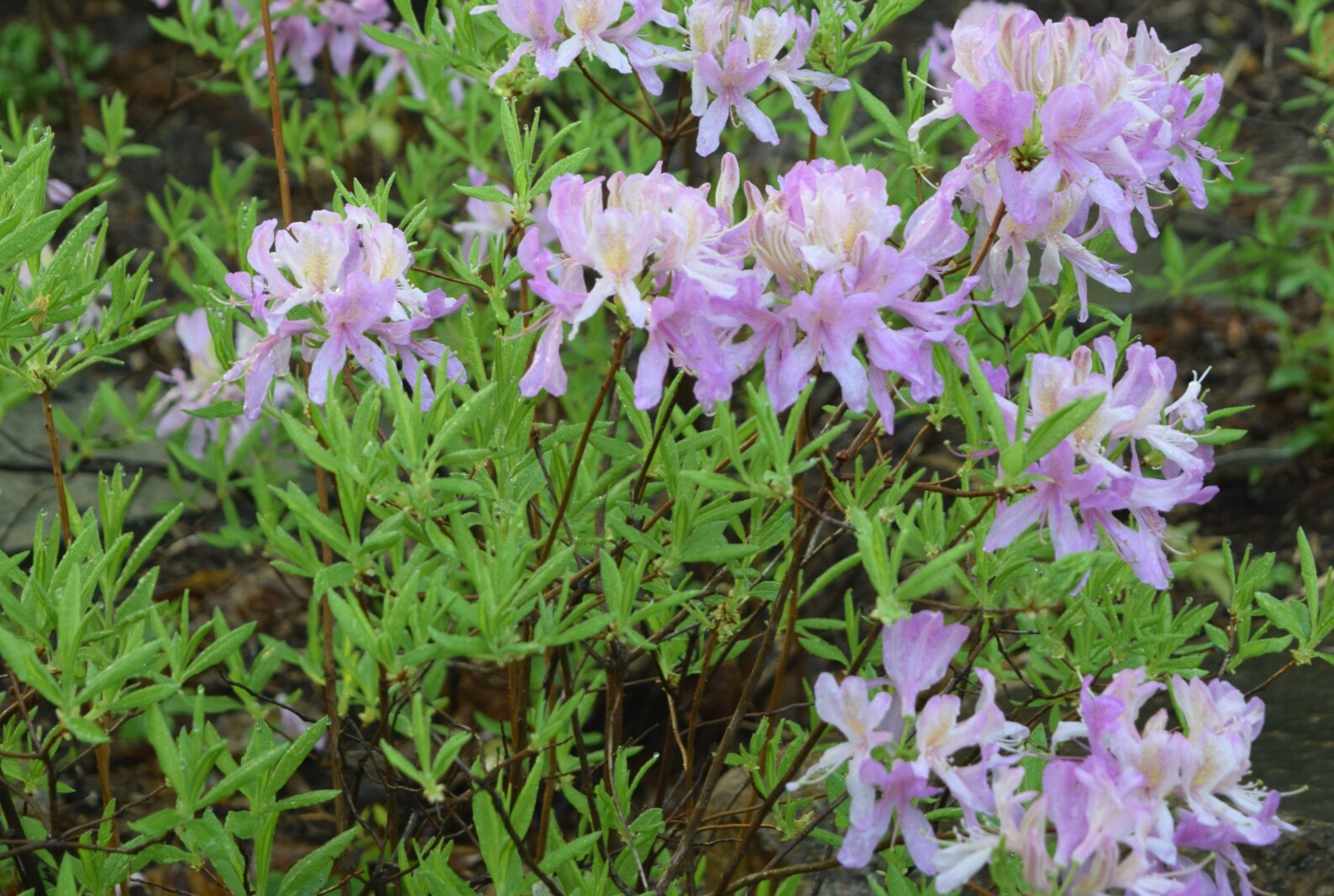
Azaleas hardy to northern Minnesota include Lilac Lights, Northern Lights, White Lights, Rosy Lights, Spicy Lights and, shown here, Orchid Lights.
Contributed / Jennifer Knutson
Answer: Rhododendron is the genus that includes azaleas and there are some gorgeous ones that grow well in the Brainerd lakes area. Ninety percent of your success growing rhododendrons and azaleas will depend on soil preparation. Like blueberries, they are acid-loving plants that need a soil pH in the 4.0 to 5.5 range. If your soil is more alkaline than 5.5, the plants will probably not grow very well. You can lower the pH of your soil by adding peat, sulfur or iron sulfate. Once established, you will want to apply an acid forming fertilizer in the spring before they bud to maintain soil acidity and supply nutrients. When you plant them, dig a shallow hole, loosen up the root ball, then plant it deep enough at or above where it was in the pot. Backfill around the plant with peat or a mixture of peat and the existing soil. Rhododendrons have shallow root systems and can dry out quickly, so they need a consistent moisture supply.
PJM Rhododendron is hardy to zone 3b (35 degrees below zero). It grows 5 feet tall and 4 feet wide and has lavender-pink flowers. The University of Minnesota developed the Northern Lights series of azaleas. Those that are hardy to zone 3b include: Lilac Lights, Northern Lights, Orchid Lights, White Lights, Rosy Lights, and Spicy Lights. Roseshell azalea, native to southern Quebec and the eastern U.S., is a parent of the Northern Lights hybrid azaleas. It has very fragrant white to rose-pink flowers and is hardy to 40 degrees below zero. Pinkshell azalea is a very hardy, lovely addition to a woodland garden because of its loose form.
Dear Master Gardener: I purchased a miniature rose at a grocery store about six weeks ago and transplanted it into a larger container. I am going to put it on my deck as soon as it is warm enough. It has doubled in size and looks healthy except for a white powdery substance all over the leaves. What is wrong with my rose and what should I do?
Answer: It sounds like your rose has powdery mildew, which is a common foliar disease of roses. It happens when airborne spores settle on a plant that is under environmental stress. Telltale signs are “white dust or powder” on the leaves and leaves that are curling or puckering. Treat powdery mildew on roses by pruning heavily infected foliage and/or applying a treatment of neem oil or a milk spray. I use a mixture of one part milk to nine parts water and spray it on the leaves. This treatment will probably have to be repeated every one to two weeks, especially on the underside of leaves, until you eradicate it. To prevent future outbreaks, make sure your rose has good air circulation and water at the base of the plant.
Dear Master Gardener: I was at a friend’s house and asked about a shrub he has that I’ve never seen before. He said it is a New Jersey tea shrub. What can you tell me about it?
Answer: The New Jersey Tea (Ceanothus americanus) is a native shrub found in upland prairies and savannas. It is low growing and rounded in shape and typically doesn’t get taller than 2 feet in Minnesota. It is suitable for a traditional landscape, wildlife garden, or on a steep slope. If planted 2 to 3 feet apart they can form an attractive low hedge. The plant has glossy leaves and in mid-summer is covered with showy clusters of white flowers. Not only are the flowers beautiful, but they attract a wide array of pollinators, including bees and butterflies. New Jersey tea thrives in rich, well-drained soil and the deep tap root makes it very drought tolerant once it is established. Plant it in full to part sun. It blooms on new growth, like an herbaceous perennial.
On a historical note, it was quite popular during the Revolutionary War period to use the leaves as a substitute for imported tea. In addition, the Minnesota Chippewa used the roots mixed with water to treat a cough.
You may get your garden questions answered by calling the new Master Gardener Help Line at 218-824-1068 and leaving a message. A Master Gardener will return your call. Or, email me at
umnmastergardener@gmail.com
and I will answer you in the column if space allows.
University of Minnesota Extension Master Gardeners are trained and certified volunteers for the University of Minnesota Extension. Information given in this column is based on university research.
Comments are closed.