
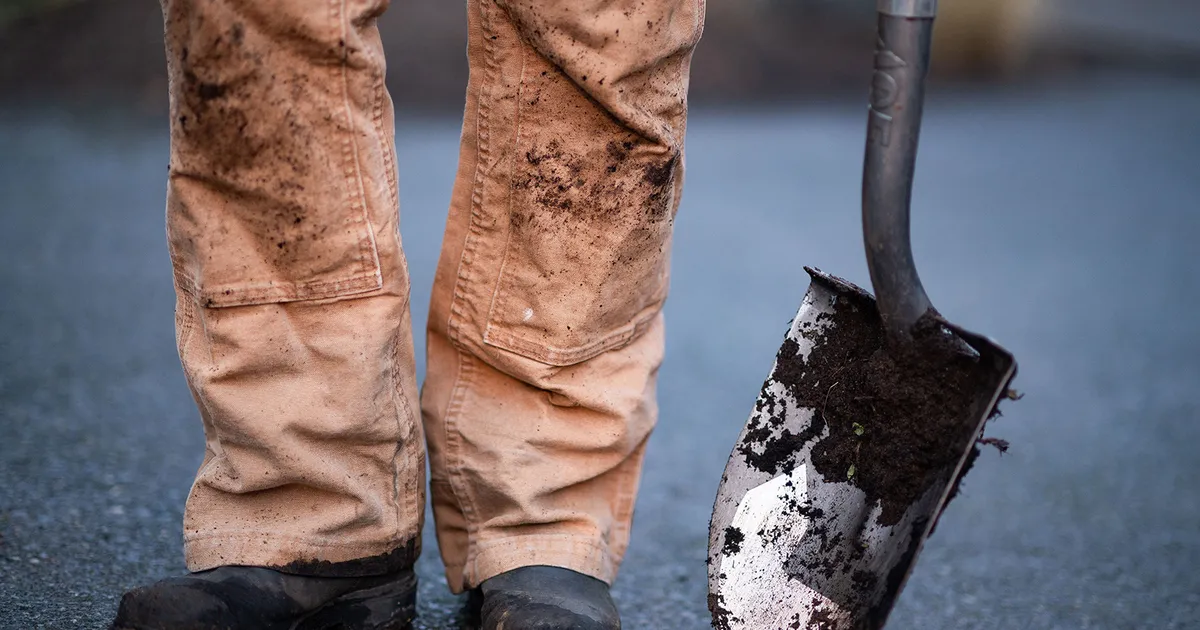
Spring is upon us, and like winter-weary groundhogs, many Seattleites are emerging from their dens and heading for their gardens. But what are we wearing? An old tee and ratty sweats might suffice to mow the lawn or plant a few perennials, but if you’re a Gardener with a capital G, it may be time to consider leveling up your gear.
“Having a dedicated outfit empowers you to stay outside and be comfortable all day,” says Ian McCutcheon, the general manager of the landscaping company, Plant People NW.
According to McCutcheon, getting a good set of gardening clothes can not only protect your body, it can change your entire gardening experience.
Allow for full movement
Kate David, a landscape designer and garden content creator, thoroughly agrees.
“When you’re dressed for the work at hand, you can be more successful,” says David. “The right gear is so crucial to be more productive and satisfied.”
For David, that frequently means heading outside in one of her many pairs of seasonal overalls. She favors styles from Duluth Trading Company and Dovetail Workwear, but suggests that gardeners try on several brands to find the right fit for their body type. When shopping for overalls, she says to look for elastic in the straps, a gusseted crotch to allow for deep squats and flexible, reinforced knees.
“I can’t be bothered with knee pads. I need freedom of movement,” says David. “I love a reinforced knee like nobody’s business.”
McCutcheon falls more pro-pads on the knee-coverage spectrum and recommends strap-on pads or a kneeling mat you can move with you while you work. For a less bulky option, he suggests putting pads into the knee pockets found on carpenter pants from Carhartt and other workwear brands.
Cover up!
Whether you opt for overalls or pants, David suggests wearing full-coverage bottoms and long-sleeve tops year-round to help protect yourself from branches, weather and insect bites.
“I’m a major proponent of coverage,” says David.
McCutcheon says covering your arms in the summer can actually help keep you cooler. He prefers natural materials like linen and cotton, but says button-up fishing shirts by Columbia is a good synthetic option. For year-round comfort, he opts for wool because it breathes well and wicks moisture. McCutcheon loves Pendleton shirts, but recommends scouring thrift stores if new wool is outside your budget.
McCutcheon does not recommend lightweight materials for pants because they don’t offer enough protection. Instead, he opts for canvas carpenter pants, but admits he’ll occasionally wear Patagonia climbing shorts, “if it’s really hot weather and I’m not around thorny plants,” he says.
Hope for sun, prepare for rain
While many outdoor activities only require a thin raincoat, McCutcheon says good, thick rain gear is important for wet-weather gardening. While he generally prefers natural materials, he says heavy rain may necessitate synthetics.
“It actually does keep you more comfortable to be covered in plastic,” he says.
For synthetic options, McCutcheon recommends the professional rain gear from the commercial fishing brands, Grundéns and Guy Cotten.
“Look for clothing made for people who work in the trades,” he says.
For lighter rain, McCutcheon invested in a waxed canvas tin cloth hat and jacket from local heritage brand Filson for its durability, breathability and water-resistance.
“It’s expensive, but it lasts for years,” he says. “Good gear is worth spending money on.”
Gardening footwear
When it comes to gardening footwear, a lot can depend on fit, preferences and the weather.
“There’s no perfect pair of gardening shoes,” says David.
That being said, David tends to reach for her Blundstone boots much of the time. She has a pair with an insulated lining for colder weather and a lighter pair for the rest of the year.
McCutcheon also favors slip-ons, particularly the Romeo boot from Georgia Giant, an affordable option he says is a frequent pick for landscapers. If you’re up for a splurge, he recommends boots from Portland brand Danner.
For extremely rainy, muddy days, David and McCutcheon are both fans of BOGS. McCutcheon also likes wellies from The Original Muck Boot Company and David likes Xtratuf.
McCutcheon sticks with boots year-round, but David opts for a breathable sneaker during the hot summer months. She says trail-runners are particularly good for traction on unstable surfaces, but doesn’t favor any particular brand.
“I’m going to trash them, so I just go to Nordstrom Rack for whatever they have,” she says.
No matter what footwear you source, David says it’s important to try them on in person before you make a purchase.
“With clothing there’s wiggle room, but I always try on hats, boots and gloves,’’ she says.
Protection from the elements
Whether it’s raining or bright and sunny, a gardener’s first line of defense is a hat. McCutcheon opts for his Filson tin cloth hat in the cooler months and a good straw hat or cap for summer.
David, who describes herself as a “pale NW girl,” recommends SPF-rated hats with solid, wide brims that protect your face, ears and neck. For both sun and rain hats, she says it’s better to find a style that fits well than to get one with a string, which can get caught on branches while you work.
Key accessories
Like footwear and hats, no pair of gloves can fit every gardening situation. David says that realistically, every gardener needs three sets of gloves for garden and yard work.
“I dress my hands for the occasion,” she says.
For everyday use and fine work, David suggests inexpensive Gorilla Grip gloves, while McCutcheon favors Atlas. If you’re actively digging, using a wheelbarrow or lifting heavy pots, David recommends leather work gloves. For pruning, she says you really want gauntlet gloves, which feature extended cuffs for added protection.
“Just make sure every pair fits your hands and feels comfy,” she says.
In addition to gloves, McCutcheon suggests getting a belt and leather sheath for a Hori Hori (soil knife) and pruners.
“Every gardener should carry a Hori Hori knife,” he says. “It’s invaluable.”
The joy of gardening
While it may seem indulgent to some to have a dedicated garden outfit (or three) and accessories, David says it’s a great investment in your physical and mental health.
“We care for ourselves as we care for our gardens,” she says. “It’s a symbiotic relationship. The happier we are, the happier our garden is.
Cedar Burnett: is a Seattle-based freelance lifestyle writer. Read more at cedarburnett.com.
Comments are closed.