
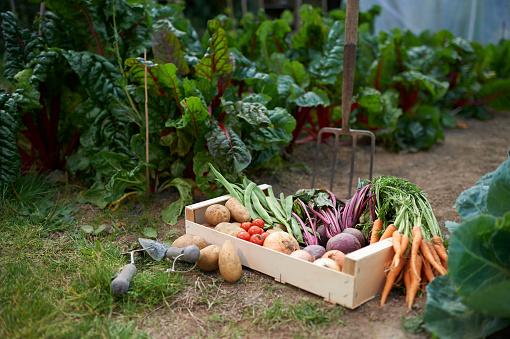
Vegetables
Sow broad beans before mid-May, to stand through the winter and bear crops in early summer.
Renowned for their hardiness, broad beans are a favourite vegetable with many southern gardeners, as not only do seeds germinate in cold ground but the plants prefer heavier soils.
The soil for broad beans should be well drained and enriched with plenty of compost. Phosphates, supplied by adding bone dust or superphosphate, will encourage healthy growth. Apply lime at 50g per sqm some time before sowing in acid soils.
Tall broad bean plants need to be supported, and they can provide excellent windbreaks for tender spring crops. Site the rows where they will be useful shelter for the likes of lettuce, outdoor tomatoes and French beans.
Sow in double rows, 20cm apart, with the seeds 10cm apart and 5cm deep. Sow a few extra seeds to transplant into any gaps.
If you are growing red-flowered or other heritage broad beans and want to save seeds, be aware that they will cross-pollinate with other broad beans within bee-flying distance and may not breed true.
Flowers
Gladioli should be lifted this month, even if the tops still look a bit green. Lift them and trim the tops, but do not cut them off completely. Put the corms in paper (not plastic) bags on which the colour or variety is written and hang in a cool, dry place to ripen. When the foliage is completely dry, it can be removed and the gladioli stored in boxes or paper bags, but that is not essential.
Hyacinth bulbs should be planted in rich soil with some bone dust added to promote bulb growth. Do not delay if you want spring blooms.
Snowdrops and crocuses can be planted for a spring display, too.
Tulips give good results when planted later in autumn than other bulbs. They like a rich soil, with fine river sand under each bulb to improve drainage.
Hardy annuals, biennials and perennials can still be planted for late spring and summer displays but, as with bulb planting, it is important to get on with it.
Sweet peas may still be sown in pots or boxes under shelter.
For those serious about their sweet peas, trenches for them can be prepared now. Make them 1m wide and two spades deep. Mix garden compost, autumn leaves, seaweed, stable manure or other organic material into the subsoil. Replace topsoil, enriched with bone meal or superphosphate and crushed limestone (50g per m each). Sweet pea plants already growing can have the centres taken out of their growing points to encourage branching from the base and the formation of several leading shoots.
Annuals sown earlier for spring flowering can be thinned as soon as they can be handled, leaving 5cm divisions. Further thinning is necessary as the plants become larger until they are finally 20cm or more apart.
Chrysanthemums which have finished flowering should be cut down to within 15cm of the ground to encourage growth from the basal shoots.
Dahlias left in the ground from year to year usually produce the earliest blooms, but unless your garden is very sheltered this is not recommended, because hard frosts can kill the tubers, turning them to a slimy mess. Lift them carefully and store in damp sawdust for the winter under shelter, ideally in temperatures between 2degC and 5degC. If you leave dahlia tubers in the ground, pile extra soil over them or cover the ground with bracken or scrub. Make a note on the calendar to lift them in early October and replant single pieces with a bud attached. These will produce stronger plants, bearing larger blooms.
Fruit
Fruit trees will start appearing in nurseries soon, and many garden centres supply a list of what they will be stocking. If you want particular varieties, it pays to get in early as popular types go quickly.
That applies particularly to double and triple-grafted apples, pears, plums and apricots.
Check which fruit trees need pollinators and choose accordingly or you may be disappointed with the performance of your tree.
Comments are closed.