

Hand pruners for small cuts
“I don’t think any gardener should be without a pair of hand pruners,” said Roger Davis, an outdoor landscape manager at Longwood Gardens in Kennett Square, Pennsylvania. He clips his pruner sheath to his belt first thing every morning and reaches for it as many as 50 times throughout the day.
The most popular model among the pros I talked to was the Felco 2 bypass pruner, also a longtime Wirecutter favorite. This spring-loaded set is durable, repairable, and easy to squeeze. Davis has had the same pair for 27 years. Colin Kirk, an outdoor garden manager at the New York Botanical Garden, has lost more pairs than he’s broken.
Guest pick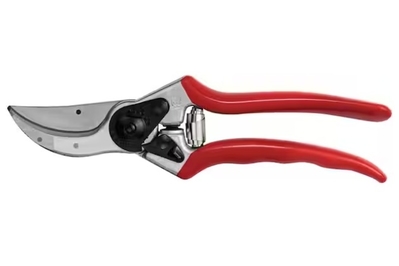
This was the most-recommended set of pruners among the pros I talked to. Not everyone used it, but everyone respected it.
Everyone respects the Felco 2, but it’s not what everyone uses, at least not all the time. The crew at the Huntington Gardens in San Marino, California, mostly uses the lighter-weight Okatsune 103. Brinkman prefers Bahco pruners for their handle shape and larger jaw. At the Desert Botanical Garden in Phoenix, most of the staff favors Corona pruners. And when Kirk’s team needs to cut delicate stems, they usually reach for the smaller Felco 6. All are variations on the same basic design, with slight adaptations that suit the specific needs of each location.
Pruning saw for bigger cuts
Once a branch gets to be about an inch thick or larger, or there are dozens of smaller, densely packed branches that need to be taken back in a short time, horticulturists usually switch from hand pruners, which are better for snipping, to a pruning saw.
Everyone I spoke to who uses a pruning saw regularly prefers Japanese-style blades. They cut as you pull, which makes them more precise and comfortable than push saws, which require more force and a thicker blade to work well.
Guest pick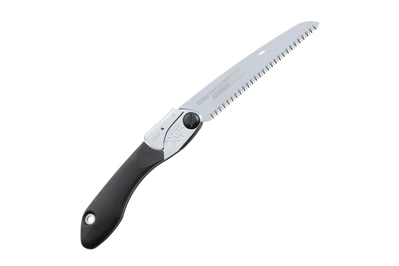
Different bushes and branches call for different saws, but the 170 mm Pocketboy version is a great start. Horticulturists tend to love Silky models in general.
Silky drew the most praise of any brand, on account of its exceptionally sharp and durable blades. The 170 mm folding Pocketboy with a straight, medium-tooth blade is a particularly popular choice from the Silky roster. (We recommend the shorter, 130 mm Pocketboy in our guide to carpentry saws, and it would also work for gardening.)
Scott Grimshaw, another staff horticulturist at the Arnold Arboretum, keeps a Pocketboy saw in his bag. But when I met him, he was slicing branches off of a twiggy blueberry bush with a teeny ARS Hana Kamachi bonsai saw. He also showed me the long, narrow 300 mm Silky Tsurugi, which he uses to reach deep into dense bushes, in between the tangle of branches.
Scott Grimshaw, a horticulturist at the Arnold Arboretum, was carrying three different pruning saws in his tool bag when I met him, each one best-suited for slightly different jobs. Liam McCabe/NYT Wirecutter
Other favorites include the beefy, non-folding Silky Gomtaro saw, the curved Silky Gomboy for tree work, and the less expensive but still precise Okatsune 105 Blanca.
Soil knives for digging in the dirt
A soil knife — also known as a weeding knife or a hori hori — is essentially a shallow trowel with a serrated edge, and it’s the all-in-one digging, scooping, and weeding tool of choice for most of the pros I talked to. This is one category where there’s no clear consensus on the best models, probably because the tool is pretty simple.
Soil knives are essentially a combined trowel and root saw. Brinkman said that even cheap, plastic-handled models like this one by ZenBori will get the job done. Liam McCabe/NYT Wirecutter
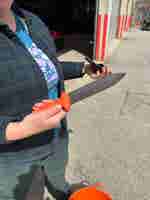
Kirk has used the same wood-handled $60 Barebones Hori Hori for about a decade, and most of his team uses a $30 plastic-handled model from A.M. Leonard (though the shipping costs raise the price considerably, unless you’re making a big purchase). The crew at the Huntington Gardens use a wood-handled Nisaku knife, which currently costs a little more than $20. The Arnold Arboretum’s Brinkman showed me a $20 ZenBori Soil Knife in that starter kit, and she said it’s basically just as effective as pricier models.
Guest pick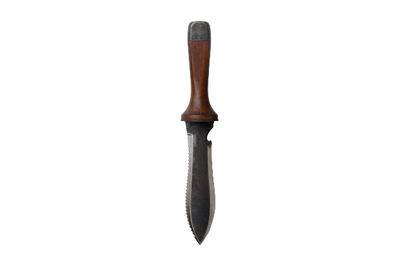
A favorite at the New York Botanical Garden, this soil knife has a smooth, contoured wood handle and phenomenal durability.
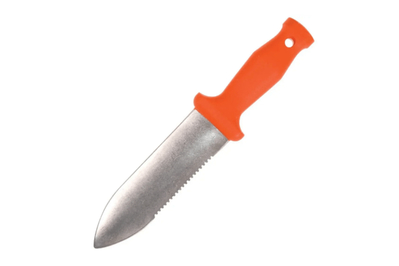
Any full-tang soil knife will do, and this simple plastic-handled model comes recommended by the staff at the Arnold Arboretum.
One thing they all had in common is a full tang: The tool is a single piece of metal, running from the tip of the trowel all the way through the base of the handle. This makes the tool much less likely to snap or bend when it’s working at something stubborn.
Buckets for hauling soil and clippings
For carrying away clippings, most of the pros I talked to use trugs, which are big, flexible buckets with handles. Nobody seemed too particular about the brand, though the Gorilla Tub (formerly known as Tubtrugs, and also a Wirecutter gift pick) came up in a few conversations, and those orange trugs I saw at the Arnold Arboretum in Massachusetts are made by Tuff Stuff.
Guest pick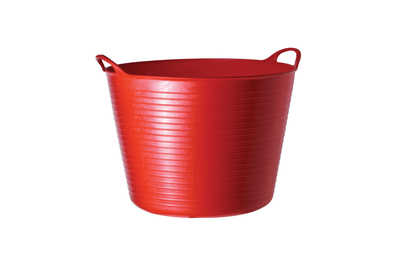
This big, flexible bucket with handles is a horticultural staple, useful for hauling soil, mulch, clippings, and even small amounts of water.
Davis said that he actually prefers to reuse old 15-gallon tree planters because they last longer in the elements; I also saw a few big stacks of these piled up at the Arnold Arboretum next to the spare trugs.
The team at the Desert Botanical Garden, on the other hand, mostly uses hand carts or wagons rather than buckets. There’s plenty of hard ground for easy wheeling, and doing so is not as exhausting as carrying full buckets around in the high heat. Depending on the size of your own garden, you might take this route, too.
At the Huntington Gardens, the 20-gallon Catchy Can is the clippings collector and soil hauler of choice. It’s basically a trash can with one flat side, which makes it especially handy for sweeping up leaf litter and tree trimmings.
Guest pick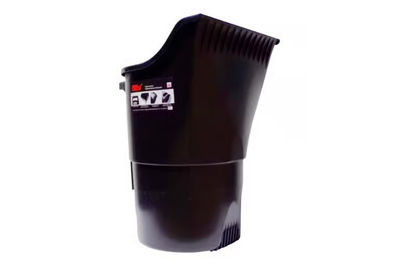
Essentially a trash can that can lie flat on the ground, this is the bucket of choice at the Huntington Gardens. It takes some of the hassle out of sweeping up leaves and branches.
Gloves for grip and protection
Most pros keep a few different sets of gardening gloves in their kit. The right pair depends on the weather and the type of plants you’re tending, plus personal preference, as we’ve found in our own glove testing.
Brinkman’s preferred pair of warm-weather work gloves is the Showa Atlas 300s, which other pros mentioned as a great grippy, breathable option. Liam McCabe/NYT Wirecutter

Showa Atlas gloves are a great grippy, breathable option for warm weather, said both Brinkman and Kirk. But in colder weather, their teams might switch to thicker pairs from L.L.Bean, Wonder Grip, or Kinco.
Guest pick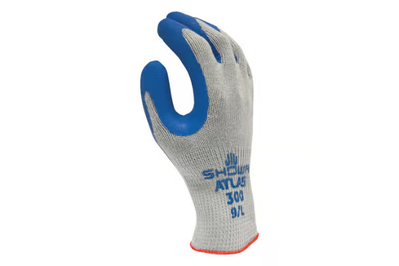
The pros at Boston’s Arnold Arboretum and the New York Botanical Garden favor these gloves in warm weather.
And at the Desert Botanical Garden in Phoenix, home to the one of the world’s largest and oldest collections of cacti, the primary goal is to avoid getting jabbed. So the staff often shield themselves in puncture-resistant ThornArmor gloves by HexArmor. The gloves are thick enough that you can just pick up a cactus by hand, said assistant director of horticulture Angelica Elliott.
Guest pick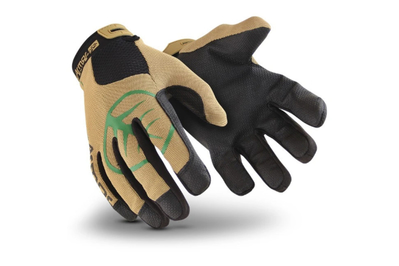
These puncture-resistant gloves are indispensable for the staff at the Desert Botanical Garden.
Comments are closed.