
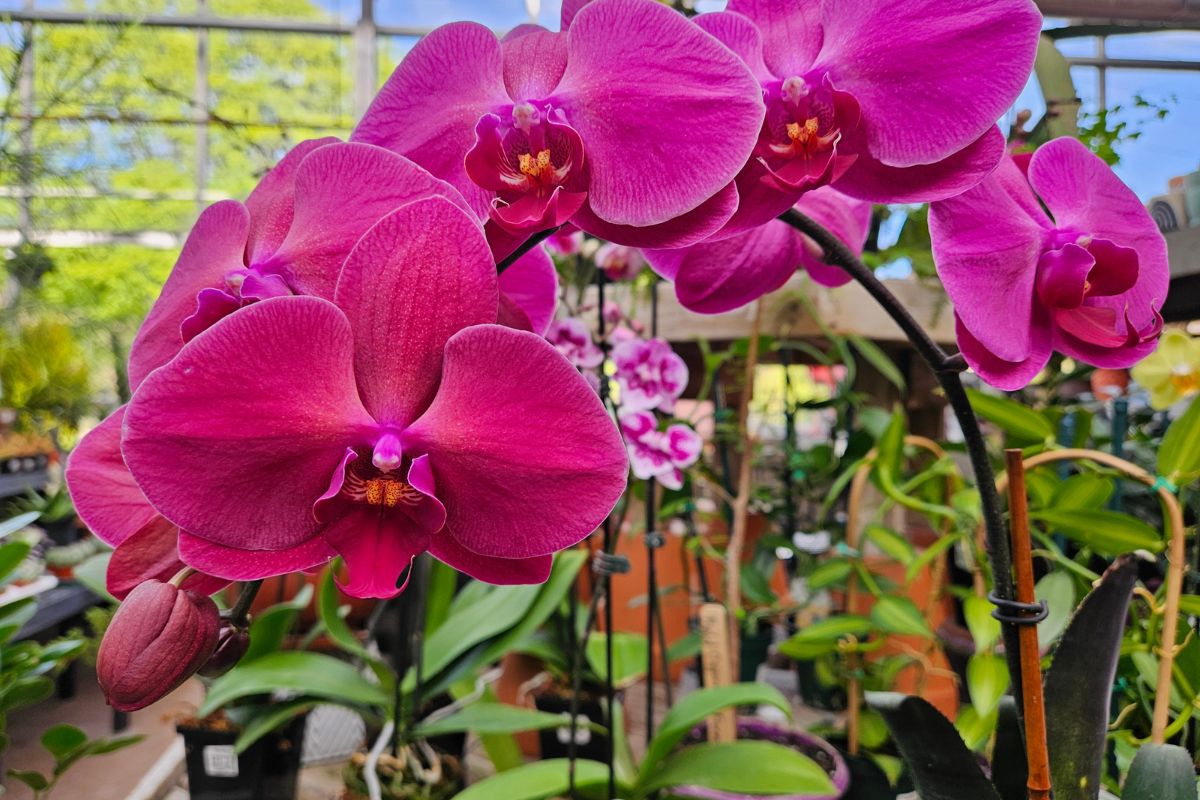
Ah, Mother’s Day is Sunday, May 10. This holiday coincides with the bursting flowers of spring. A bouquet would be nice, but flowering plants continue to bring joy for weeks and then again when coaxed into re-bloom. There are many gift choices from low maintenance to, well, garden maintenance. Consider an orchid, wind chimes, hummingbird feeder, flowering hanging baskets of annuals, or a flowering tree to delight the moms in your life.
If you can’t narrow it down, a gift card to a local garden shop or garden center gives the flowering gift and the fun of picking out something special. And a really special treat would be the offer of “garden maintenance” to clear the weeds from a flower bed or vegetable garden. You can forward this article to someone who needs to know.
Be sure to consider what animals or small children will be in the house of your recipient. Some plants can cause stomach upset or worse, poisoning. The ASPCA has posted a list of plants that could cause problems to dogs, cats, and horses. Before making a choice, review this list of plants that may cause mild to more severe stomach problems.
If you give a tree or perennial, like flowering cherry or a trellised clematis vine, offer to plant it! As a reader of this column, you probably know, but here is a refresher.
For any new plant, water the plant in the pot thoroughly and let it soak in while you dig the planting hole. Make the planting hole twice as wide but the same depth as the root ball. Mix compost with the soil from the planting hole. Water the hole and wait for it to drain before placing the plant in the hole. Place the plant ensuring the its soil level is even with or a bit higher than the surrounding soil level. Back fill with the soil and compost mix. Water the hole again to fill air pockets. Tamp down the surrounding soil and add more if needed. Create a berm on the surface at the edge of the root ball to make water pool up around the edges. This will help the plant grow into its new location. Water the plant again.
Some more activities “to give” for Mother’s Day would be:
Use straw or salt marsh hay to suppress weeds in vegetable gardens. This works best when the garden is weed-free to start. First, weed the beds, then spread the mulch. Straw and salt hay allow water to quickly seep into the soil and away from fruits. The straw or hay can be worked into the beds later to provide more organic carbon and structure to spent garden soil. Salt hay makes a great mulch because the seeds need saltwater to germinate! So, fewer weeds.
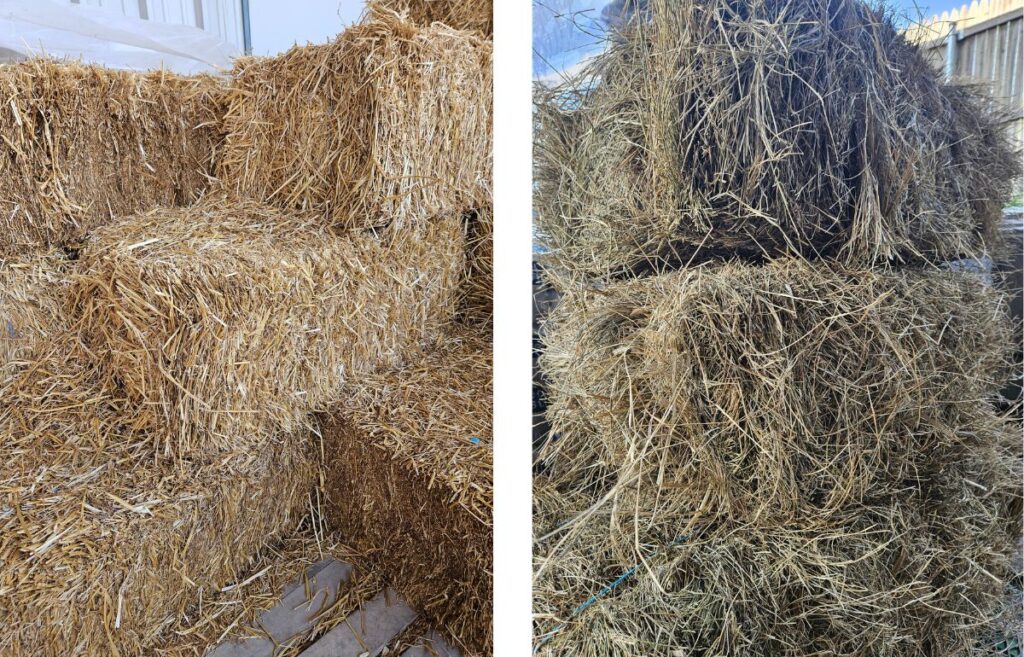 Straw at left is less expensive and a fine mulch, especially for protecting grass seed prior to germination. However, weeds may sprout from straw. Salt hay, right, also available in bales makes a great weed-free mulch for vegetable gardens. Bales are roughly the same size.
Help harvest rhubarb by pulling off stems rather than cutting. Grab a stalk just below the leaf blade and gently pull down, then twist. The leaves are not edible, but the stalks can be chopped and worked into a delicious tart pie. Use the leaves as mulch in paths to reduce weeds.
Discover native plants that are new to you but not to Mother Earth. Plant some native choices to feed pollinators. Packera obovata, or golden groundsel, forms a rosette on the soil surface and will keep invasive perennials out. The pretty 12-inch-tall stems with aster-like yellow flowers feed early bee pollinators and hosts the northern metalmark butterfly larvae.
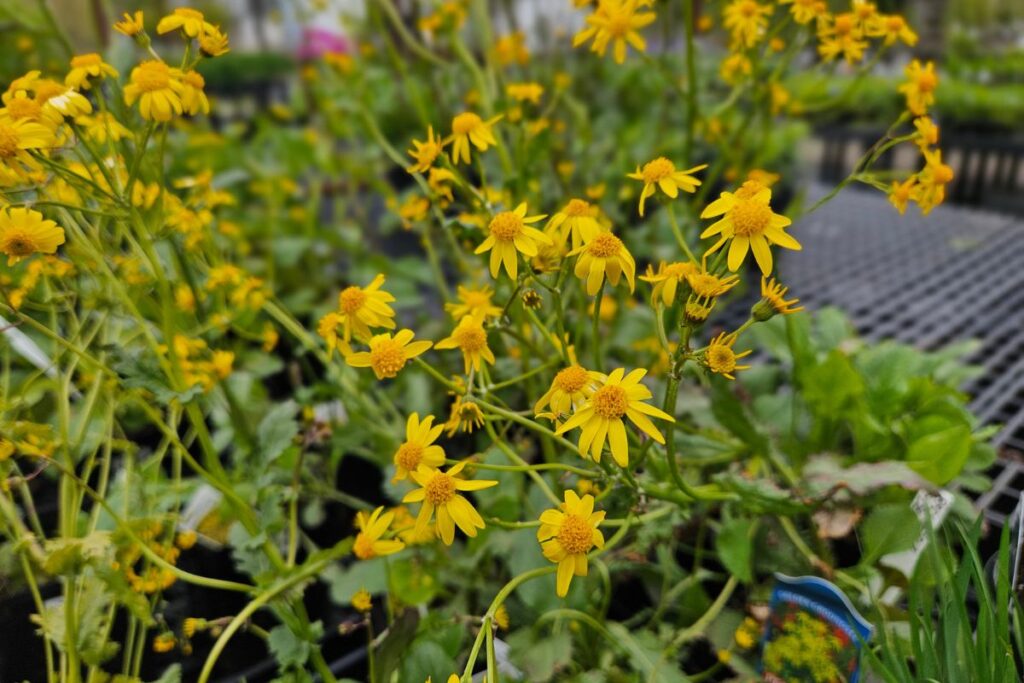 Explore native plant options like Packera obovata.
For moms with smaller gardens or patio containers, invest in a colorful dahlia. Some dahlia have been started early to bloom in time for Mother’s Day. Choose single flower types to make the pollen more accessible to bees. Then, put in your calendar to dig up and store the dahlia over the winter to rebloom next year. Or be lazy and don’t!
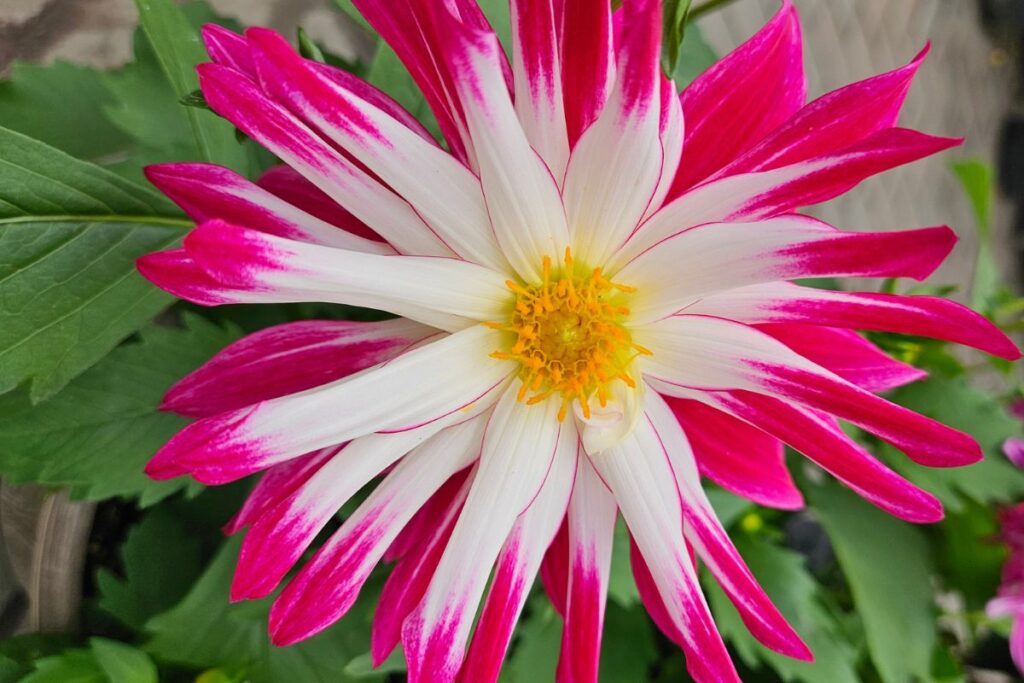 A single dahlia flower means the center disk of pollen is fully accessible to pollinators, and it will attract a pollinator more than a fluffy double flower.
Last weekend was so windy and cold, I barely planted my violas before I retreated inside. I started seeds indoors of marigolds, basil, tomato, peppers, and lavatera. These should germinate within a couple weeks and be ready to move slowly outdoors in June. Because they take so long to mature, the pepper plants will go into pots that I can move indoors in late summer.
Outside this weekend, you could plant more broccoli or cabbage. If you wish to try sweet corn, start an early crop now, but keep under row covers to keep the soil warm and marauding birds out.
If you can’t quite manage all the garden tasks for mom this weekend, maybe just take a lazy walk with her through the woods and marvel at the latest spring wildflowers.
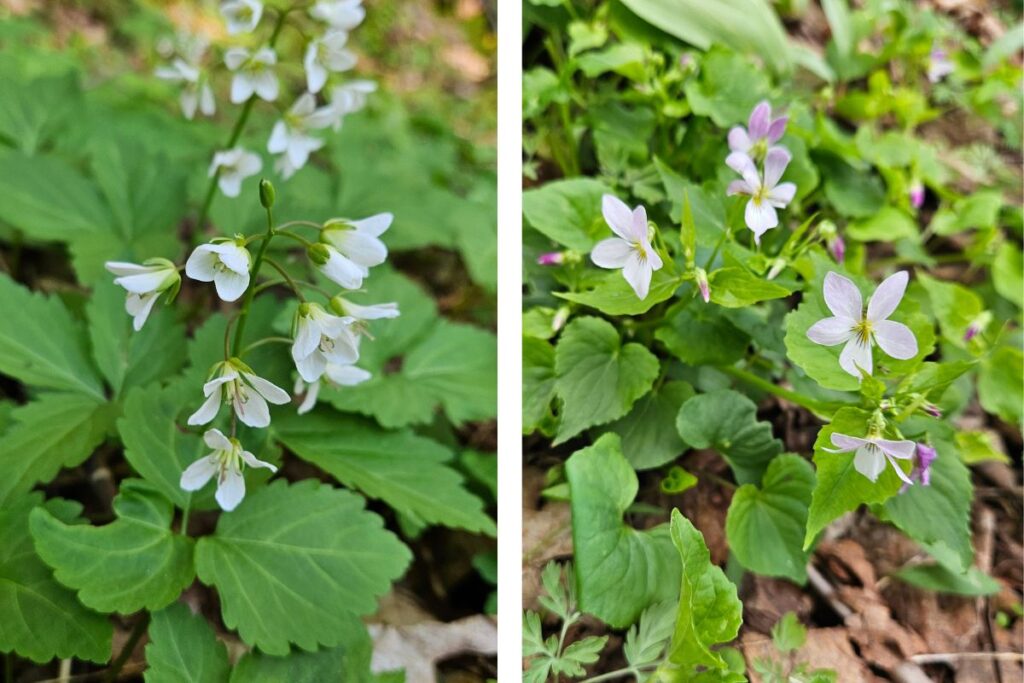 Enjoy the latest spring wildflowers in our local woods and keep adding some to your shady garden nooks. Cardamine diphylla, two-leaved toothwort, has four petals per flower and is on the left. Viola canadensis, Canadian violet, has five petals per flower and is on the right.
I call myself the Lazy Berkshire Gardener because I don’t want to work too hard in my gardens. I want to enjoy them. I find it easier to observe my landscape and let the compost happen, the water pool up, or daisies to self-sow. I look for ways to do the minimum task for the biggest impact. For example, mulching is better than spraying and much better than weeding all season. I look for beautiful, low-maintenance plants that thrive in or at least tolerate my garden conditions. Plus, I am willing to live with the consequences if I miss something.
Comments are closed.