
 5 min read
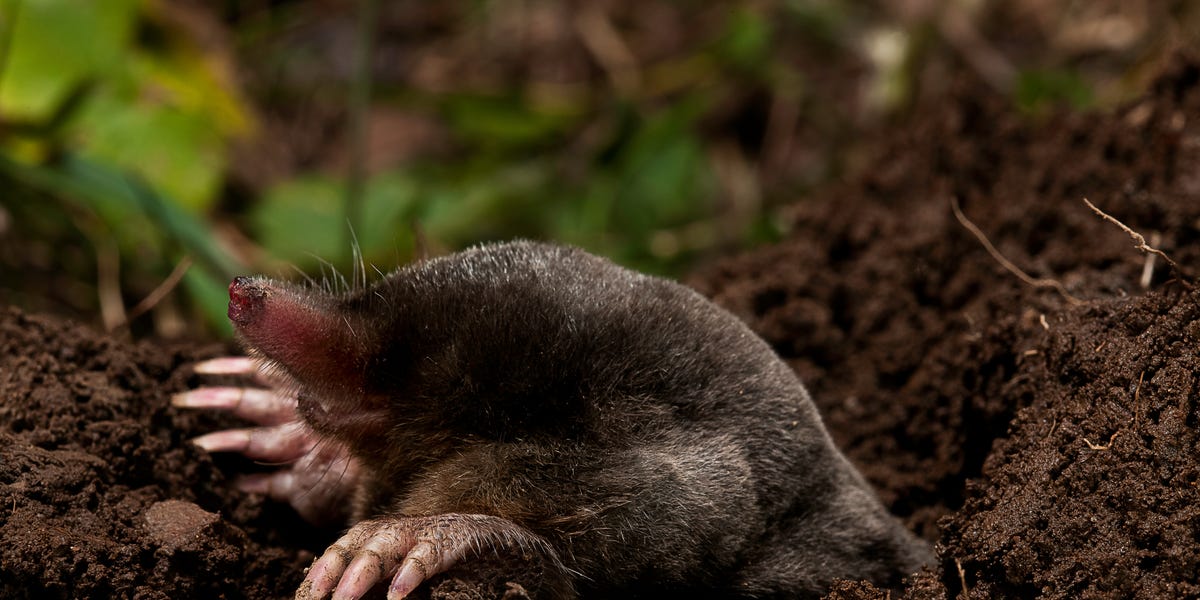
If you own even a small plot of land, you’ve more than likely encountered some moles in your yard. While it’s rare to spot a mole physically, they leave a lasting impression—or should we say damage—on your lawn. “Moles are identified by raised surface ridges and volcano-shaped soil mounds in turf or garden beds,” says Lorna Bravo, a horticulture expert and a master gardener coordinator at UF/IFAS Extension Broward County. “Fresh activity is indicated by loose soil pushed up recently along the tunnel system.”
While moles can negatively impact your yard’s appearance and aesthetic due to their tunneling and mound creation, they can also damage your grass. “Moles damage the roots of grass and plants by removing the dirt underneath them,” says Jamie Nichols, VP of Operations at Arrow Exterminators. “This causes the plants and grass to lose support, which can lead to their death.” While most of the damage typically done is aesthetic, it’s understandable that you might be seeking ways to get rid of moles to maintain your yard’s appeal and overall health.
Luckily, there are several simple actions you can take to get rid of moles in your yard. We chatted with horticulture specialists as well as wildlife and pest control specialists to learn more about ways you can deal with moles in your yard right now. That said, many of the experts we interviewed note that mole control isn’t an easy fix, and often requires regular, frequent maintenance—sometimes with the help of a professional—to ensure these small furry mammals are deterred from making a home in your yard. Below, read on for some ways you can safeguard your yard against moles right now.
Remove Food Sources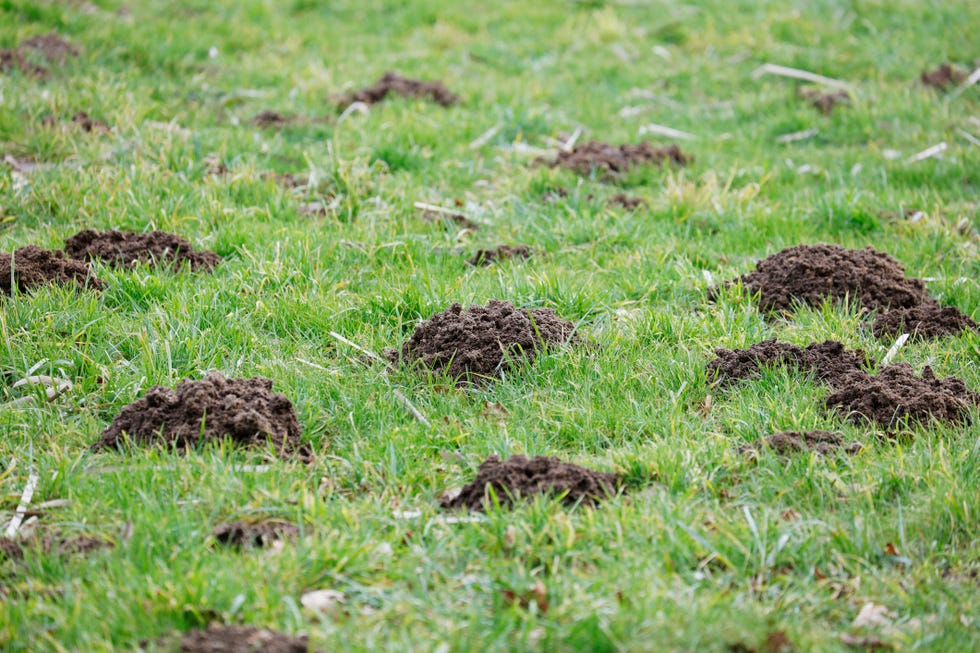
Christophe Lehenaff//Getty Images
Linda Langelo, a Colorado State University extension and horticulture specialist, notes that moles most often appear in yards in search of food, most notably earthworms and insects. With this in mind, Nichols explains that one of the best ways to keep moles out of your yard is to remove the food in the soil that tempts them to visit. While you likely will need to commit a lot of time to see results with this method, “removing food sources drives moles away naturally,” he explains, and adds that you can typically do this with worm and grub control granules.
Build a Fence
If you’re willing and able to invest a lot of money into your mole control efforts, Stephen M. Vantassel, vertebrate pest specialist for the Montana Department of Agriculture, notes that building a fence can help keep moles out of the grass and soil in your yard. “I would suggest, probably going down two feet,” he says. “Maybe you could get away with 18 inches, but you’re going to have to have that fence come up at least six inches out of the ground, because moles will cross on the surface of the soil. That would have to be the perimeter of whatever property you wanted to protect, and then [you would] have it galvanized so it would last a while.”
Use Mole Repellent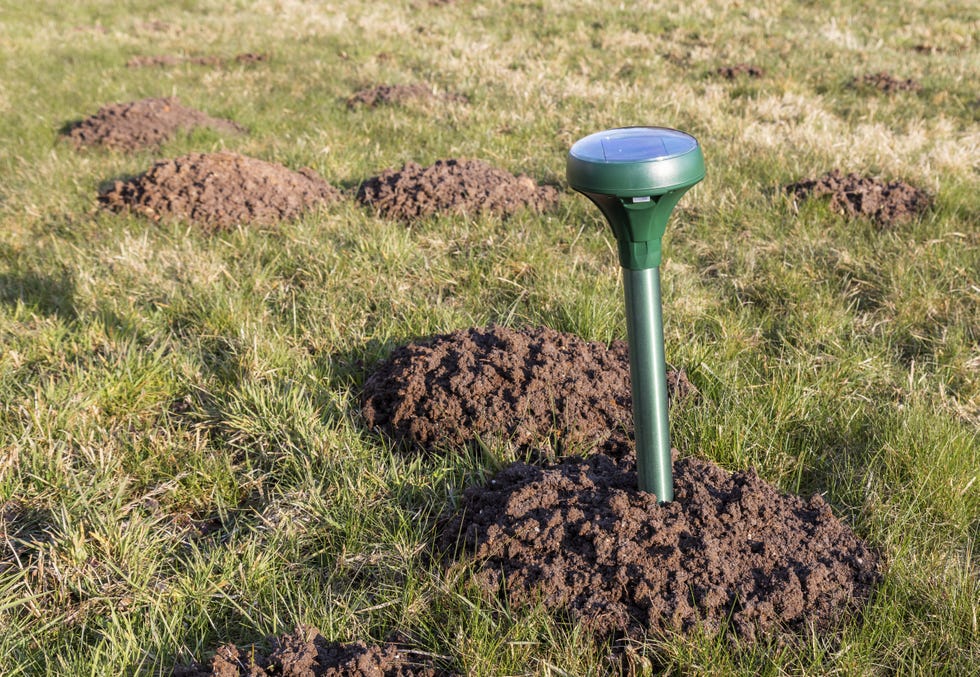
imageBROKER/Robert Jank//Getty Images
Roger Dickens, technical services manager and bird & wildlife control expert at Terminix, explains that there are a couple of mole repellents on the market you can purchase to help get rid of moles in your yard. “[A] walk behind or ride-on spreader will work for this method as well,” he says.
While the mole repellent you opt to use is your choice, Vantassel emphasizes the importance of using products certified by the Environmental Protection Agency (EPA), regardless of how desperate you may become to eliminate these mammals from your yard. “No one should ever be using something that’s not registered by the EPA because some of these things are potentially dangerous, like gasoline,” explains Vantassel. That said, Castor oil can be an option, as can ultrasonic stakes that can deter moles from coming around.
Compact Your Soil
Since moles move through soil, you’ll want to do what you can to prevent them from passing through, which is why Dickens recommends compacting soil. “Renting or contracting a ride-on soil compactor to compact the lawn has shown some success,” he says. “This method tightens the space between the soil particles and becomes difficult for the mole to move through.”
Water as Needed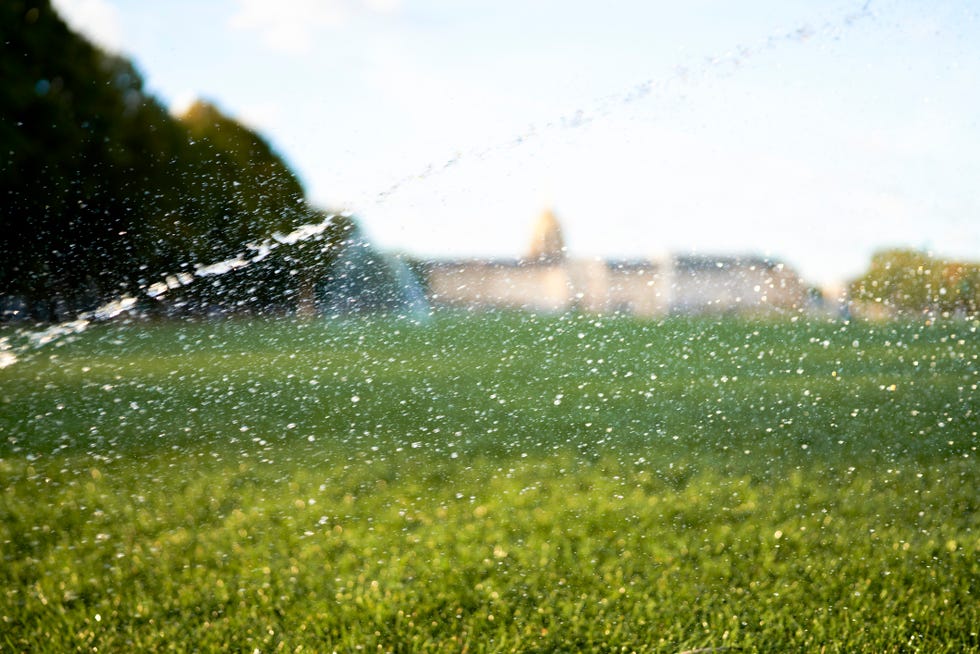
aire images//Getty Images
If you’re currently watering your grass on a schedule, Beth R. Bolles, a horticulture educator at UF IFAS Extension Escambia County, encourages switching to a water-as-needed regimen instead. “When people complain of their burrows, it’s almost always after a solid rain,” says Jeffrey White, MS, BCE, owner of White Mantis Consultants. Essentially, you want to avoid overwatering your soil, as too much water makes it easier for moles to move around, and also generally brings worms (and moles) up to the surface.
Keep Your Lawn Healthy
Even though this might seem obvious, White advises keeping your lawn as healthy as possible for your best chance of getting rid of moles. While it’s not a guarantee that doing this will prevent moles, he notes that it’s one of the better actions to take. “[You can] use fertilizers, make sure the soil doesn’t have bald spots in it, and make the soil as compact as possible with the root structure,” he says. “I can tell you that most of the time that I have seen mole burrows, they have been in yards that aren’t very healthy.”
FAQs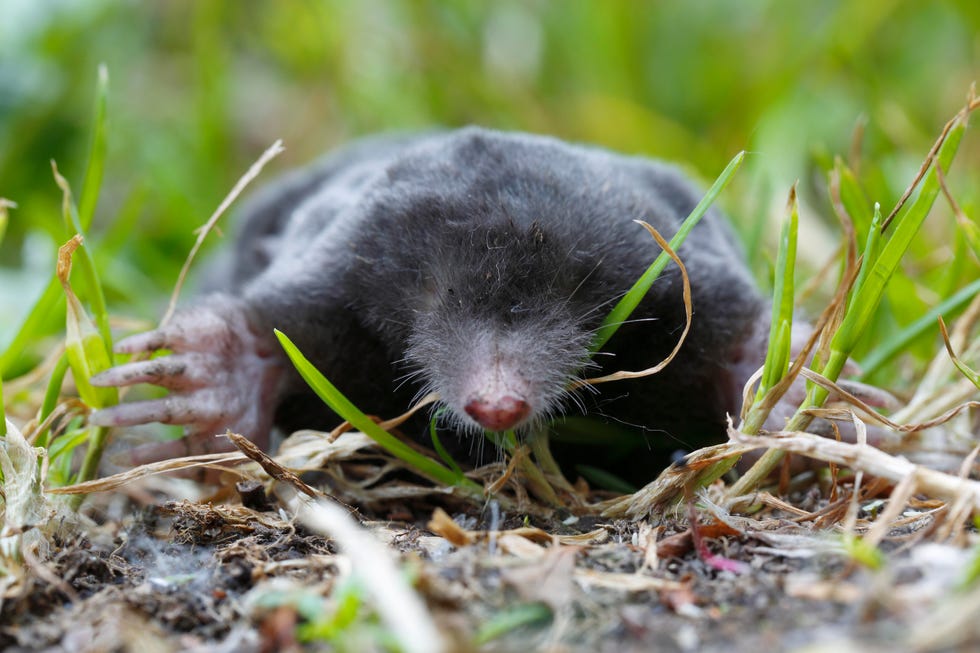
imageBROKER/Volker Lautenbach//Getty Images
Will Dawn dish soap get rid of moles?
Our experts note that Dawn dish soap will not work to get rid of moles. “Don’t use any product not labeled for landscape use to try to manage an animal or insect,” says Dickens.
Should I stomp mole tunnels?
Jason Burkhart, current managing director at Critter Control and a former wildlife removal specialist, notes that you should not stomp mole tunnels, as you run the risk of potentially hurting any present moles. Furthermore, Dickens adds that since the mole tunnels will eventually collapse by themselves, there is really no need to do so.
What time of day do moles come out?
According to Dickens, it is rare that you will see a mole come out from above the ground to the surface level. That said, “they are most active in the early morning and evening in a soil that has moisture,” says Bolles.
Follow House Beautiful on Instagram and TikTok.
Comments are closed.