
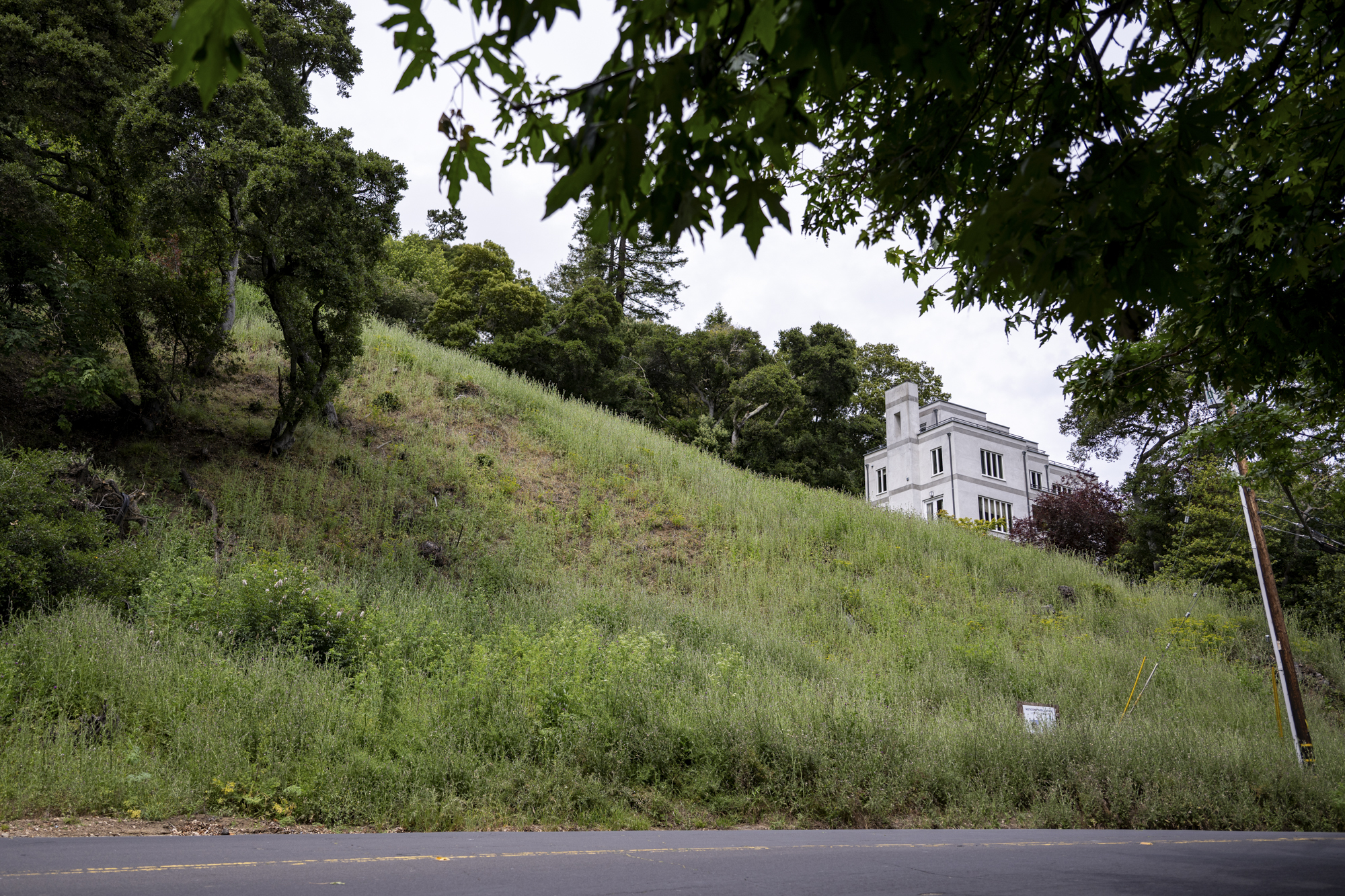
“We are called ‘Oakland’ for a reason,” Ramachandran said during the meeting. “ We have less than 4,500 oak trees in this city right now, because of the destruction and development over the decades.”
The April hearing drew over a dozen members of the public to the podium.
Among them was Saumitra Kelkar, a biologist and science educator whose Instagram posts about the removals have garnered thousands of views. He said the native oak trees in the city’s hills create a unique microclimate that holds onto moisture and resists burning.
“This was a natural shaded fuel break, which was going to severely impede the ability of a wildfire to travel through that area,” Kelkar said. Now that the trees are gone, he said, it’s going to be“much easier for a much faster fire to burn much hotter, and cause a lot more destruction.”
Kelkar, who recalled coming to the location as a college student to forage for edible mushrooms and spot native wildlife like salamanders, said it was “gut-wrenching” to revisit the site in advance of the April hearing.
”Even if Matthew Bernard is required to reforest that entire hillside, it’s going to take decades or centuries for the populations of [wildlife] to actually return,” he said.
Public works staff determined the fine based on species and the diameter of the tree stumps.
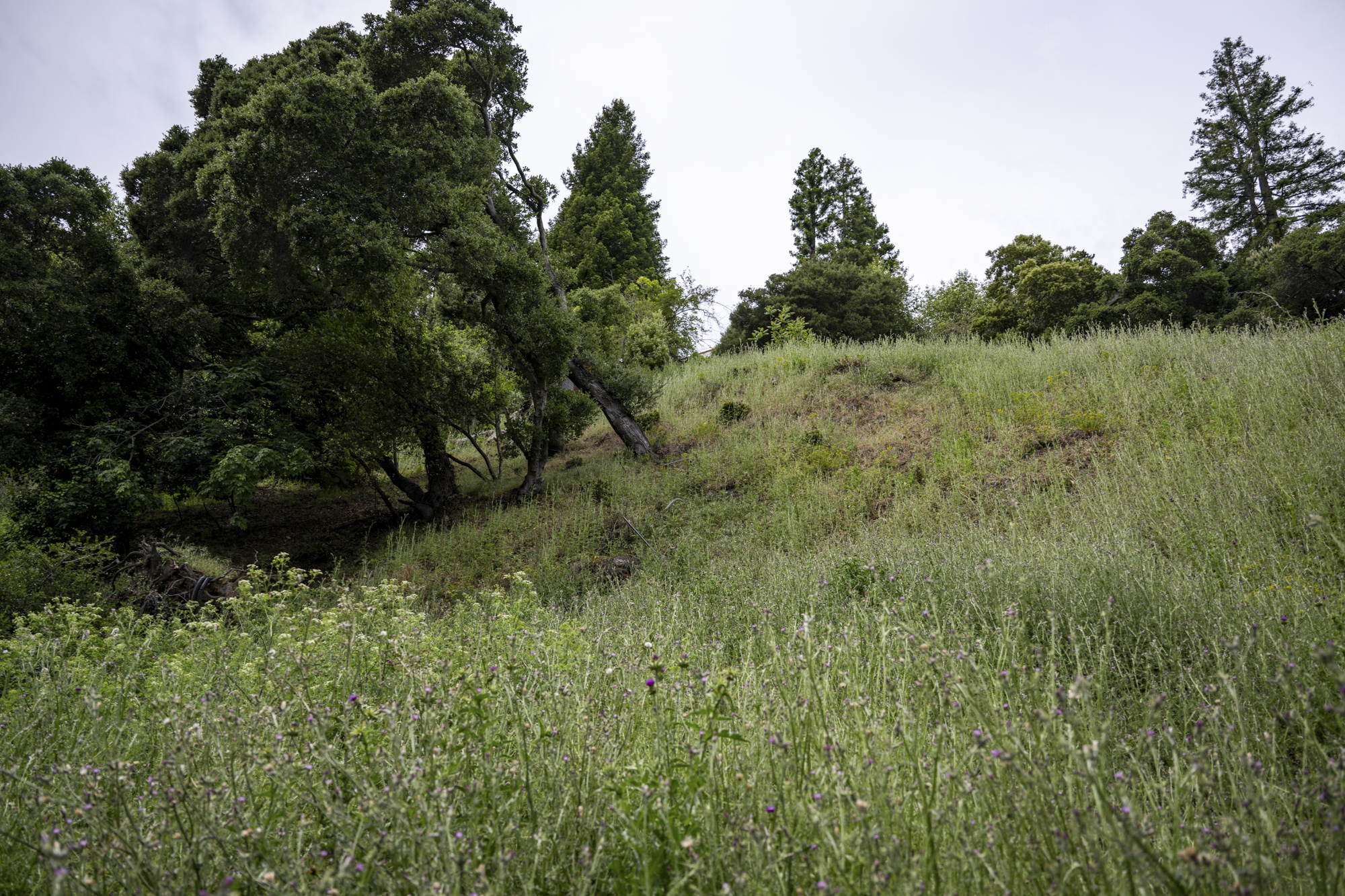 A property on Claremont Avenue across from Garber Park in Oakland on May 4, 2026. (Beth LaBerge/KQED)
Bernard and Warner would also be responsible for compensating the city for costs. The trees felled included several in a neighbor’s yard, and one on government-owned land.
Almost all of these were native trees. City laws prevent these plants from being cut down within city limits based on size and species, even on private property.
The city does permit the removal of protected trees for construction, but documents from the city’s Public Works department show that the couple did not complete the required process before beginning to remove the trees.
Ramachandran told KQED that since the meeting, she’s received a flurry of messages from constituents responding to what happened. She said that out of the hundreds of messages received from Oakland residents, “not a single email, not a single phone call, not a single DM, not a single text message” favors “anything less than the full fine” for Bernard.
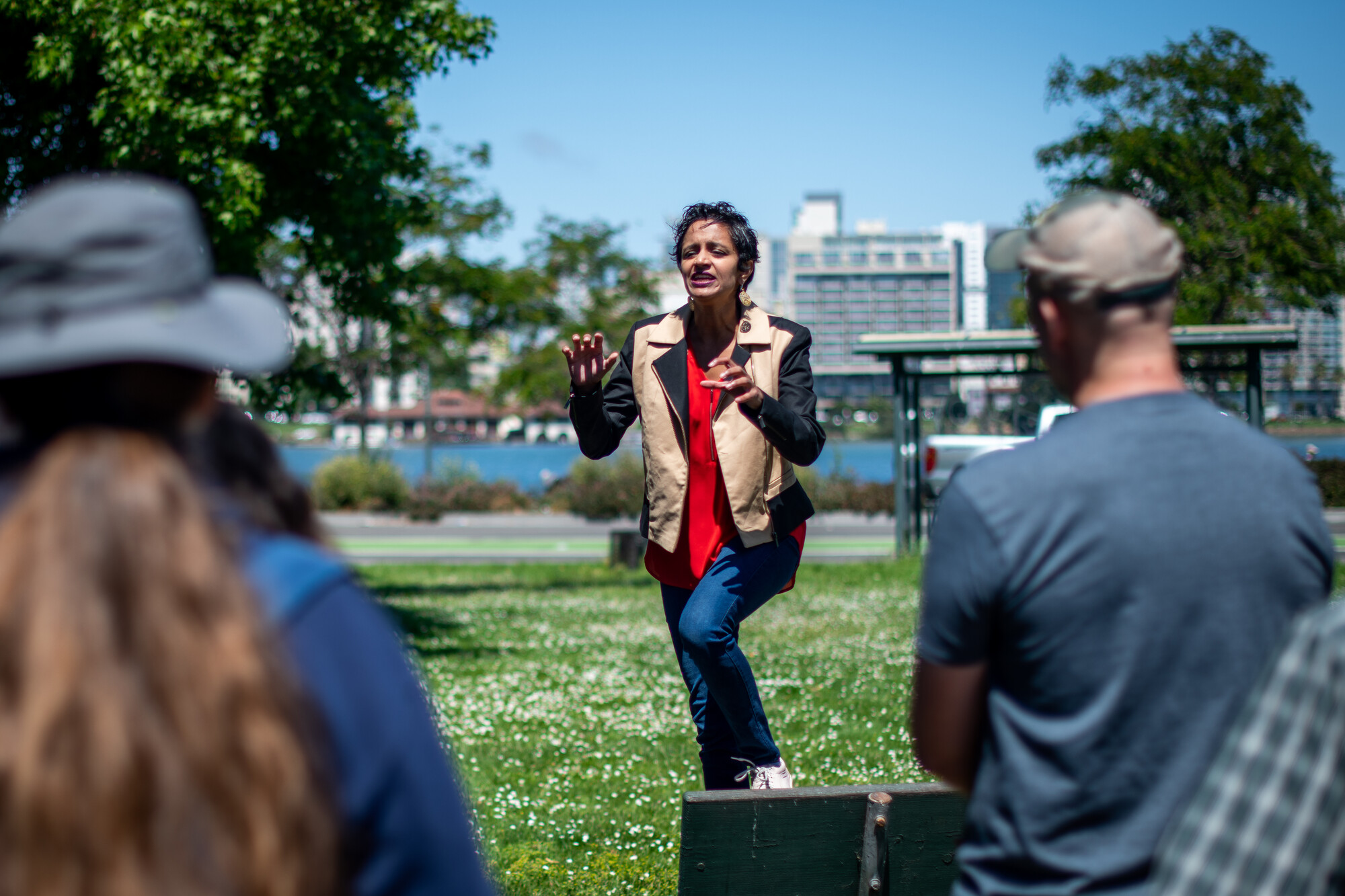 Janani Ramachandran speaks with campaign organizers in Oakland on June 26, 2021. (Beth LaBerge/KQED)
Bernard and Warner declined KQED’s requests for interviews.
But during the April hearing, Bernard told the council that he and Warner did “everything in [their] willpower” to follow the law in the plan to develop the property. Ramachandran was not convinced.
“This was a knowing violation of our Tree Protection Ordinance, and we need to comply with our existing law and fine him the amount as recommended by city staff,” she told KQED.
During the hearing, Fife pushed back on whether the tree protection law was being enforced fairly.
Fife asked, “Why a Black man should be the first to receive consequences for things that white people have been doing for centuries,” referring to the region’s history of racial segregation based on legal measures, like redlining.
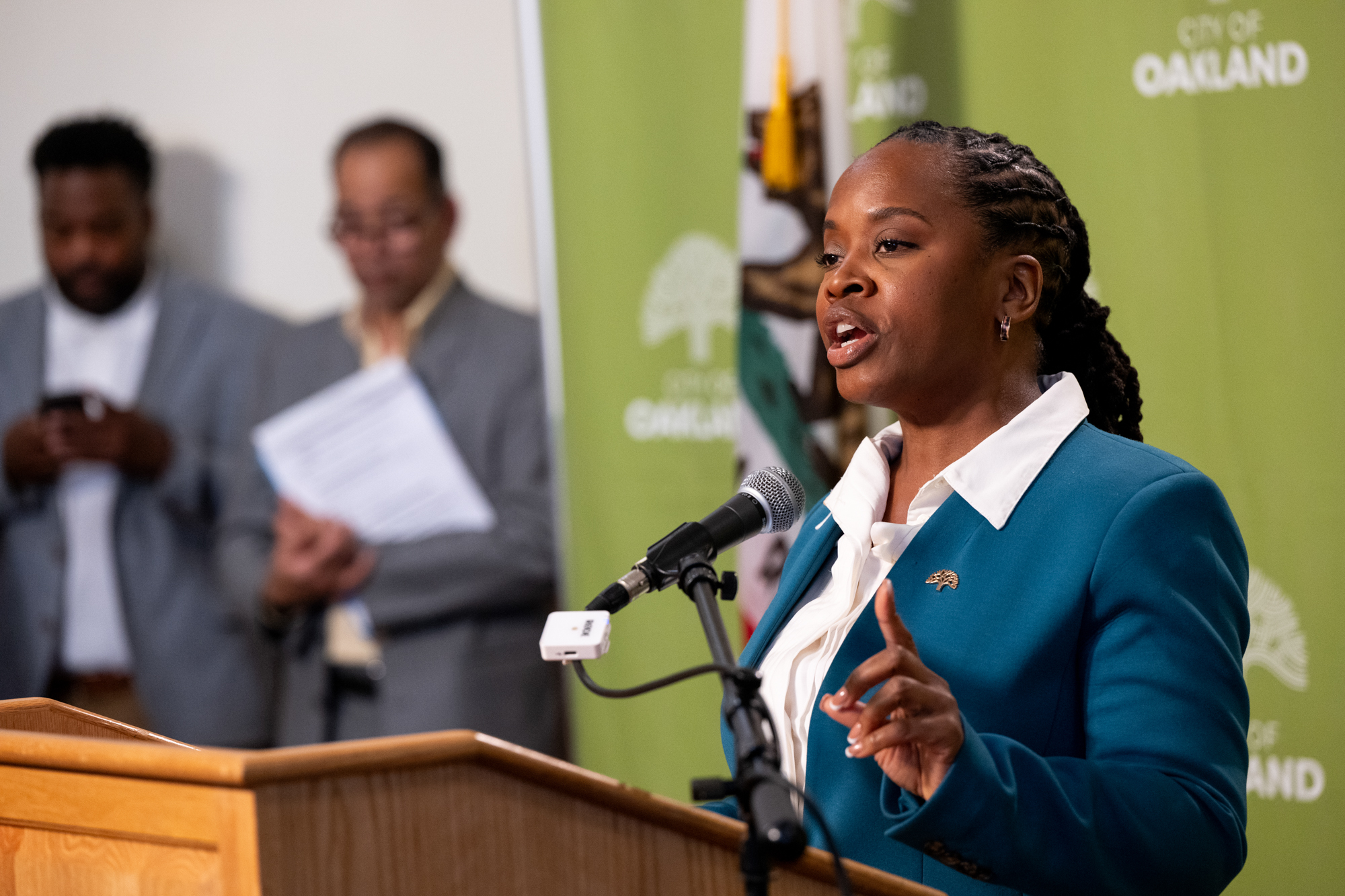 Councilmember Carroll Fife speaks during a press conference at Oakland City Hall in Oakland on Aug. 14, 2025, condemning President Trump’s recent remarks about Oakland. (Beth LaBerge/KQED)
Bernard is a Nigerian immigrant. Earlier, his partner, Warner, had alleged to the council that when they initially purchased the property, other residents in the neighborhood had made racist comments and threats to Bernard.
“I did not want to bring up race, but goddamn it, it is a part of what we’re discussing,” Fife said, though she clarified that she did not agree with Bernard’s actions.
Fife was not available for comment before publication.
Comments are closed.