Reposting this since automod removed my comment for not having a flair lol.
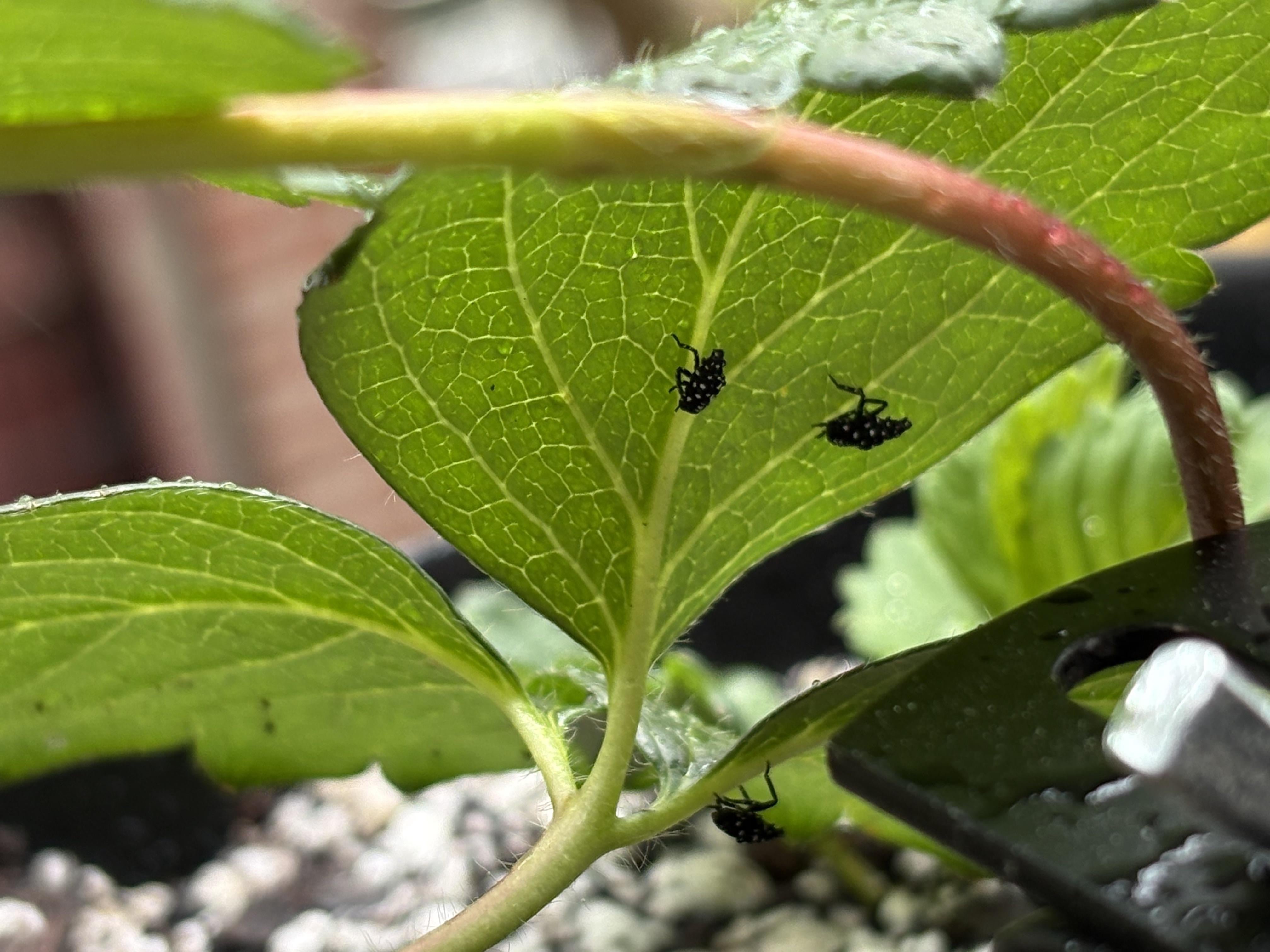
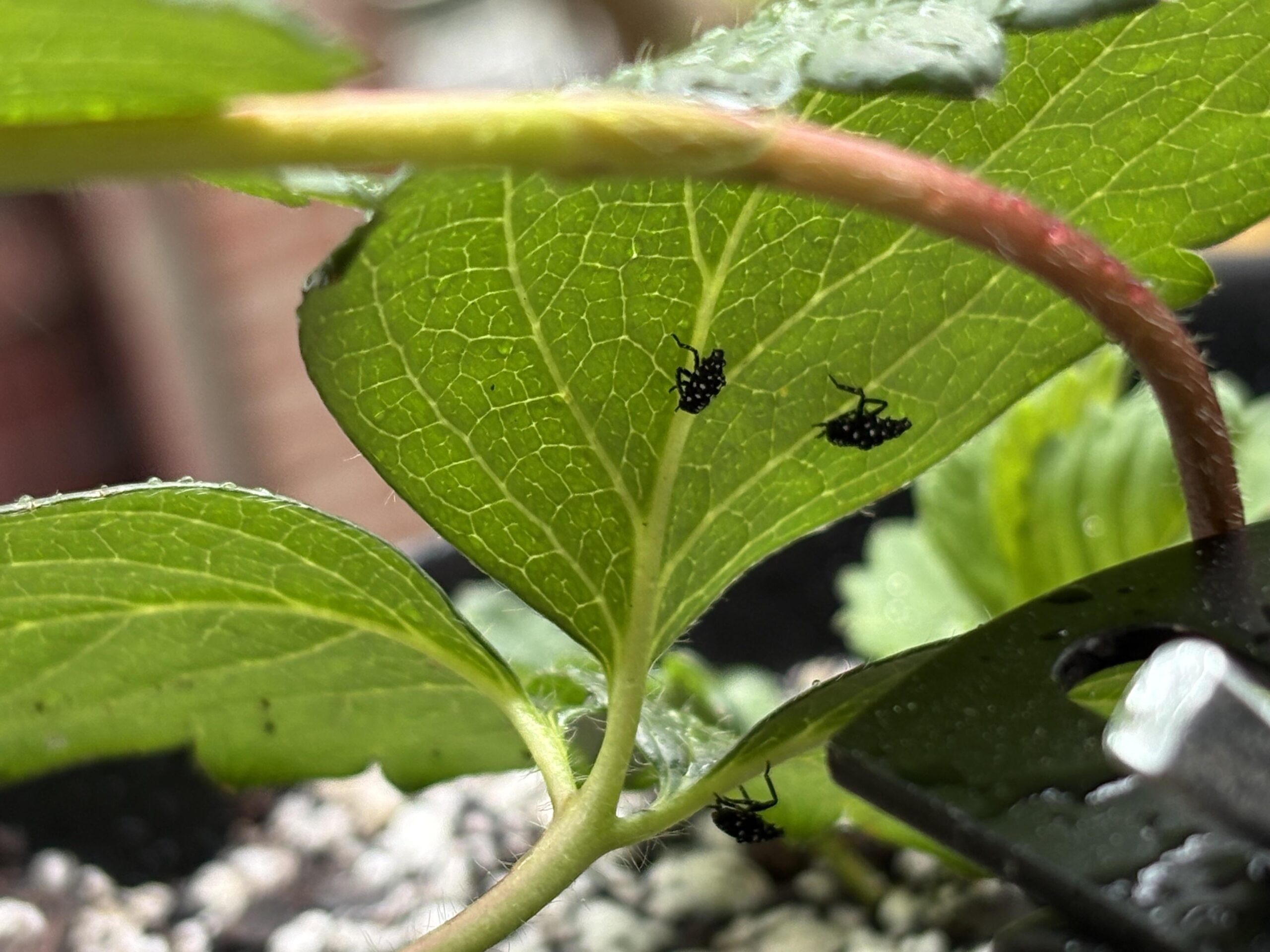
As others have said, spotted lanternfly nymphs. At this stage, they cant really feed on mature trees, but they can and will feed on herbaceous plants like strawberries and some smaller shrubs like roses. Once they’re mature, they’ll feed on ailanthus (tree of heaven), red maples, and a few other trees with high sugar content. The only pesticides that kill them are some pretty harsh ones that aren’t food safe and also kill pollinators. You can try to squash them, but theyre fairly quick and its unlikely that these are the only ones on your property. There have been some solid studies done that shows a decently high mortality rate when milkweed is planted near host plants of lanternfly as they feed mostly indiscriminately and milkweed sap is toxic. You can weigh your options, but unfortunately, you cant completely get rid of them.
FriendlyEngineer
In my area, these have a Kill On Sight order
CitySky_lookingUp
Spray with insecticidal soap, grab with duct tape, torch with flamethrower (okay that one MAY be a bit extreme) but please get rid of them!
There are also traps you can make to catch them on the trunks of trees, if you discover more on your property. Not sticky traps (which trap other bugs) but something these guys walk into and can’t leave. Plans available via google. 🙂

8 Comments
Where are you located? Those look an awful lot like juvenile lanternflies, in which case – *squish them.* Horrible invasive things.
baby lantern flies. they are sap suckers but only really do damage in larger numbers
Agreed. Spotted lantern fly juveniles. Squash with haste. This article has a good reference photo at the bottom: [https://www.fws.gov/story/stopping-spotted-lanternfly-its-tracks](https://www.fws.gov/story/stopping-spotted-lanternfly-its-tracks)
Lantern fly. imo attack w great force
Reposting this since automod removed my comment for not having a flair lol.
As others have said, spotted lanternfly nymphs. At this stage, they cant really feed on mature trees, but they can and will feed on herbaceous plants like strawberries and some smaller shrubs like roses. Once they’re mature, they’ll feed on ailanthus (tree of heaven), red maples, and a few other trees with high sugar content. The only pesticides that kill them are some pretty harsh ones that aren’t food safe and also kill pollinators. You can try to squash them, but theyre fairly quick and its unlikely that these are the only ones on your property. There have been some solid studies done that shows a decently high mortality rate when milkweed is planted near host plants of lanternfly as they feed mostly indiscriminately and milkweed sap is toxic. You can weigh your options, but unfortunately, you cant completely get rid of them.
In my area, these have a Kill On Sight order
Spray with insecticidal soap, grab with duct tape, torch with flamethrower (okay that one MAY be a bit extreme) but please get rid of them!
There are also traps you can make to catch them on the trunks of trees, if you discover more on your property. Not sticky traps (which trap other bugs) but something these guys walk into and can’t leave. Plans available via google. 🙂
kill those mo-fos