
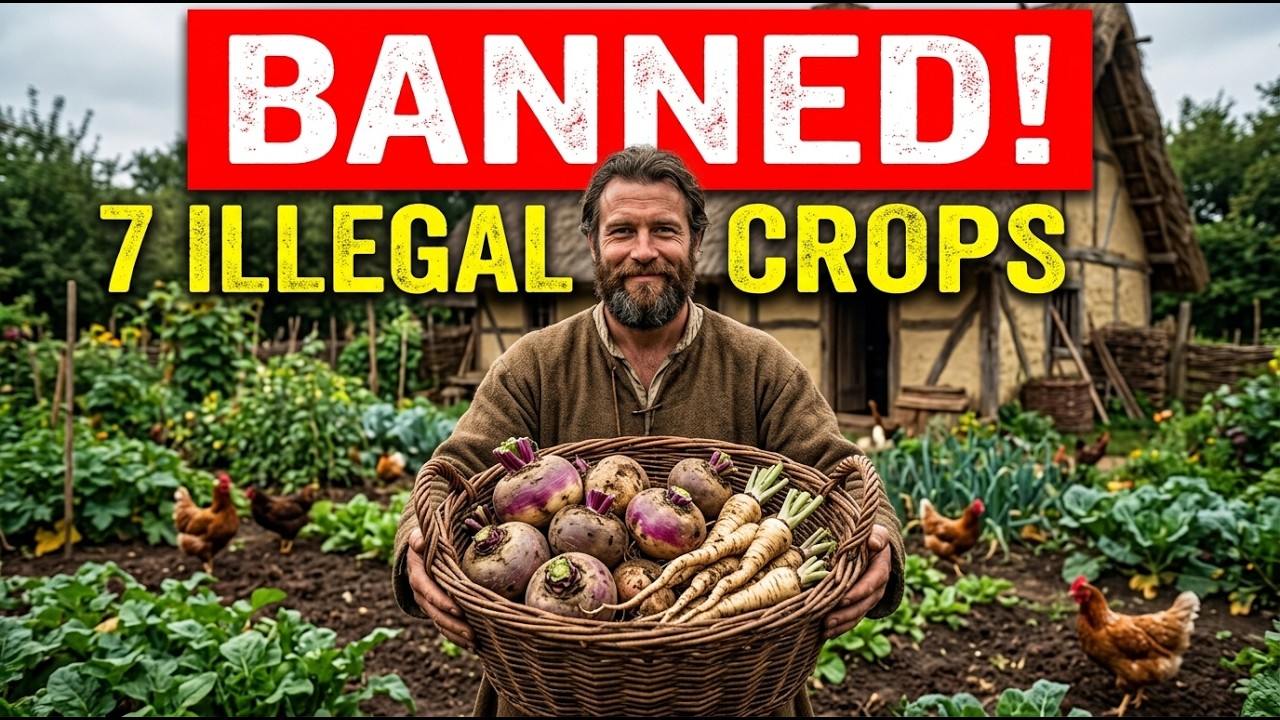
7 Forgotten Medieval Vegetables Better Than the Supermarket
Walk into any modern supermarket, and you will find a genetic bottleneck: about 40 distinct vegetable species. But a 14th-century medieval kitchen garden cultivated between 80 and 120 completely different species.
We didn’t lose half of our vegetable diversity because the old plants stopped being delicious or nutritious. We lost them to the industrial supply chain. The modern food system selects for uniform shape, mechanical harvesting, and cold-storage shelf life. It completely ignores complex flavor, “metabolic interest,” and deep nutritional density.
In this video, we explore 7 forgotten, old-world vegetables that failed the industrial filter—and why they are vastly superior to the bland supermarket equivalents that replaced them. We look at perennial plants that compound their yields over decades, wild weeds with staggering antioxidant profiles, and the specific heritage seeds that we must protect from commercial extinction.
In this video, we uncover:
Skirret vs. Parsnip: The complex, cluster-rooted, prebiotic powerhouse that was sacrificed purely for “harvest geometry.”
Alexanders vs. Celery: A wild, myrrh-scented winter aromatic that feeds a depleted February body better than cold-chain Spanish celery.
Good King Henry vs. Spinach: Why planting a perennial green that gets better over 5 years destroys the logic of annual baby spinach.
Orache vs. Chard: The self-seeding, deep magenta pottage-thickener that the modern supply chain cannot control.
Rampion vs. Radish: The sweet, nutty, two-season root that fueled the fairy tale of Rapunzel.
Sea Kale vs. Sprouting Broccoli: A coastal brassica that takes two years of patience to establish, yielding decades of the finest forced spring shoots.
Sow Thistle vs. Rocket: Why the “weed” you pull out of your garden has a better vitamin and polyphenol profile than the expensive rocket rotting in plastic in your fridge.
The supermarket has 40 vegetables. The medieval garden had 120. It’s time to reclaim the specific intelligence of seasonal eating, plant heritage seeds, and let the soil do the work.
If you believe in preserving the lost survival skills, heritage seeds, and traditional knowledge of the old world, hit that LIKE button and SUBSCRIBE to join the journey.
Chapters:
0:00 – The Illusion of Supermarket Diversity
2:15 – The Industrial Filter (Why We Lost 80 Vegetables)
4:30 – Skirret vs. Parsnip (Flavor & Prebiotics)
7:20 – Alexanders vs. Celery (The February Harvest)
10:10 – Good King Henry vs. Spinach (The Perennial Advantage)
13:15 – Orache vs. Chard (The Self-Seeding Pottage Leaf)
15:40 – Rampion vs. Radish (The Rapunzel Craving)
18:25 – Sea Kale vs. Sprouting Broccoli (Coastal Mineral Depth)
21:50 – Sow Thistle vs. Rocket (The Wild Plant Advantage)
25:00 – How to Grow These 7 Vegetables
28:30 – The Importance of Heritage Seed Networks
31:15 – The Old World Way
forgotten vegetables, heritage seeds, medieval kitchen garden, skirret, sea kale, good king henry plant, alexanders plant, foraging for sow thistle, orache, rampion root, perennial vegetables, historical cooking, permaculture garden, off grid food production, self sufficiency, traditional gardening, old world way, medieval history, growing heritage vegetables
#HeritageSeeds #ForgottenVegetables #OldWorldWay #MedievalHistory #Permaculture #PerennialVegetables #SelfSufficiency #Homesteading #KitchenGarden
We begin with a look at a supermarket’s array of fresh vegetables and then shift to a chef preparing organic vegetables, highlighting the importance of healthy eating. The video then shows how to grow a garden, featuring a girl gardening and providing practical gardening tips for your home garden. From farm to table, discover the journey of your food and how you can cultivate your own produce.
1 Comment
Get the script in line with the photos please. Got fed up with loads of photos of parsnips and turned off to watch something else.