
 3 min read
The unlikely evolution of Katharine Rayner’s spectacular five-acre garden in the Hamptons is a testament to what can be achieved through years of devotion and eternal optimism, giving credence to Russell Page’s famous sentiment: “Gardens are an expression of faith and the embodiment of hope.” Without a master plan or pesticides, and inspired by her visits to legendary estates in England, Italy, India, and Iran, the philanthropist has transformed a forest of black pines into an enchanting folly.
Rayner rented Woody House, originally the guest quarters of a grand estate owned by Pan American World Airways founder Juan Trippe, for eight years before purchasing the cottage, along with 12 surrounding acres, in 1988. She and her late husband, William, a former magazine executive and painter, were charmed by the house’s simplicity and its setting on a windswept isthmus between the Atlantic Ocean and a saltwater lagoon.
 Tria Giovan
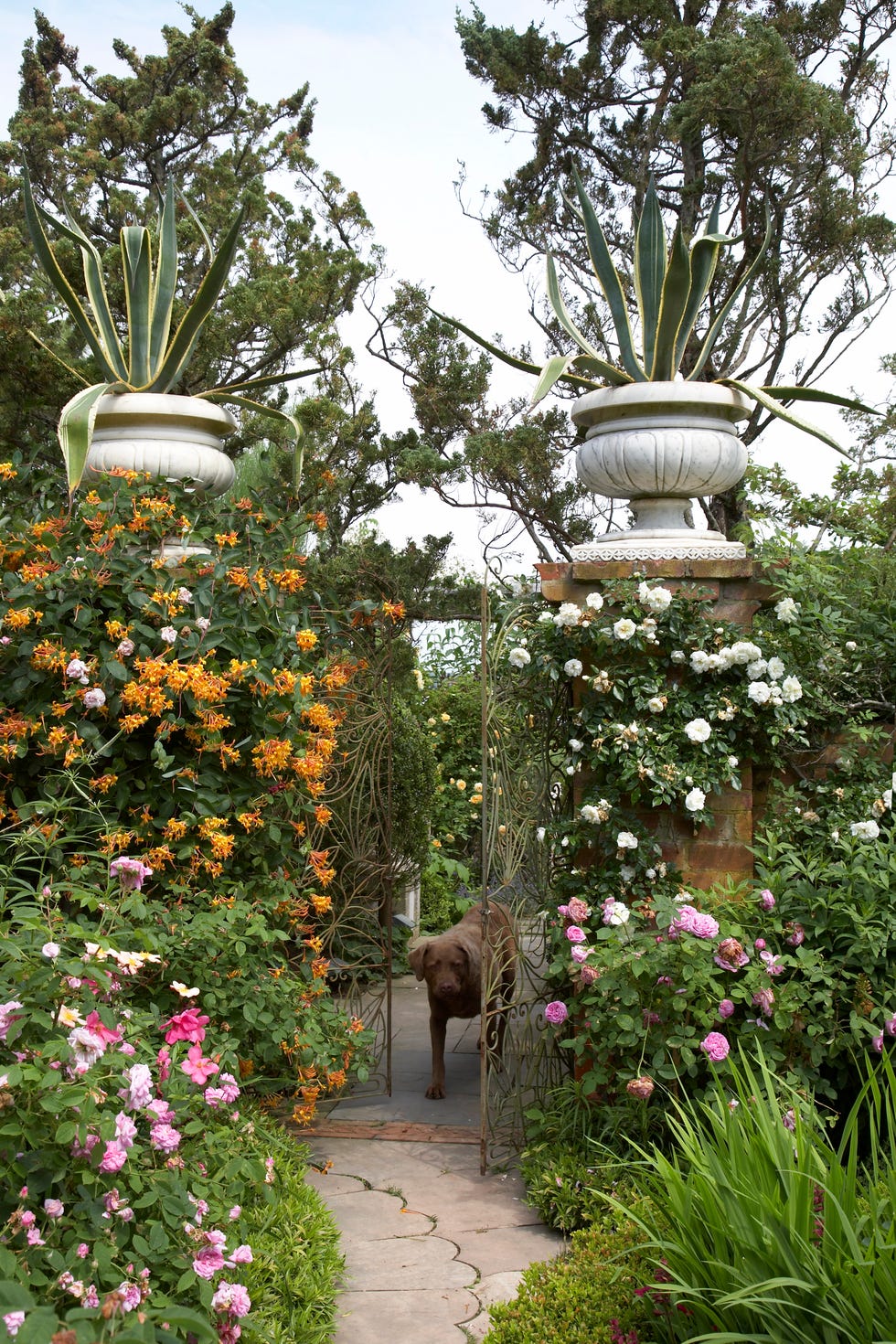
Head gardener John Hill’s Chesapeake Bay retriever, Olive, enters the butterfly-patterned gate. Honeysuckle and Parmentier roses climb the pillars. The urns were purchased at auction.
Rayner was raised with a steady supply of aesthetic fodder: her mother, Anne Cox Chambers, spent years creating her own marvelous garden at her home in Provence, Le Petit Fontanille. For years, Rayner traveled the world, taking mental notes and creating bonds with a circle of gifted artisans and gardeners. The late garden designer Ryan Gainey, who espoused the idea of a garden as an extension of a house, “really got me going,” she says.
At Woody House, visitors ascend to the front door via a series of slightly pitched whimsical garden “rooms” strung together by winding paths. A revolving gate leads to the White Garden, where the garden beds—reminiscent of Vita Sackville-West’s Sissinghurst Castle in England—overflow with bleeding hearts, foxgloves, Japanese anemones, and roses. To protect her plants from wind and salt-air exposure, Rayner borrowed another idea from Sissinghurst, creating a series of garden rooms enclosed with walls of dense yews and boxwoods. The garden has been organic since its inception, an idea that was ahead of its time in the late 1980s.
 Tria Giovan
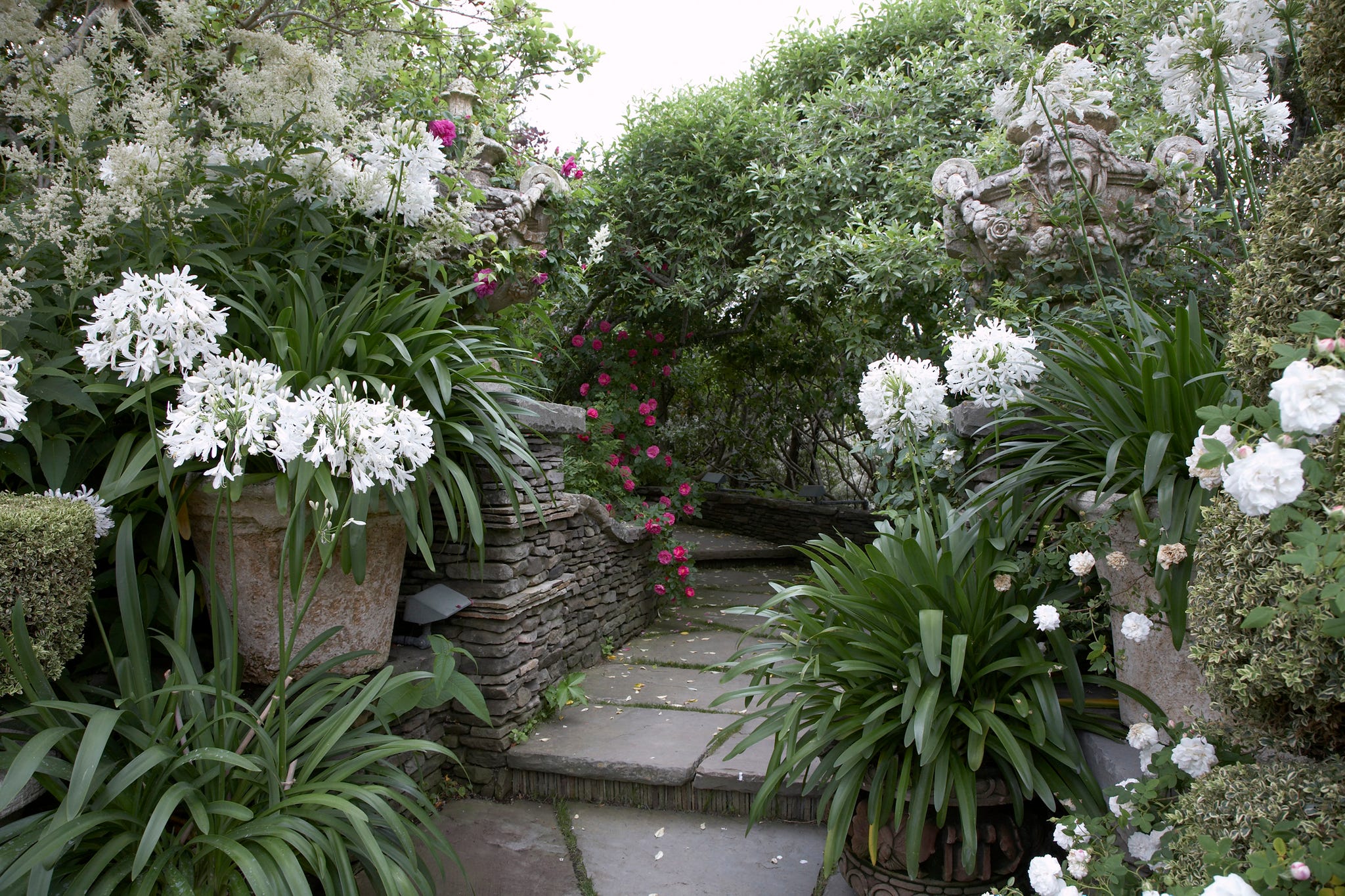
An arbor of espaliered pear trees provides shade with elaborate yew hedges. A garden path includes stone walls inspired by Gertrude Jekyll’s designs.
A Mediterranean-inspired path runs past an oak arbor, where an Arts and Crafts–style fountain pays homage to the iconic horticulturist Gertrude Jekyll. In the dreamy Mughal Garden, plantings are based on the 16th-century memoirs of Babur, founder of the Mughal Empire, and a narrow canal filled with water lilies and lotuses culminates in a Persian-esque pavilion surrounded by a profusion of roses. “I buy blue roses, David Austin, Abraham Darby, Bobby James, and the ramblers and scramblers,” Rayner says. “I love the intensity of the colors.”
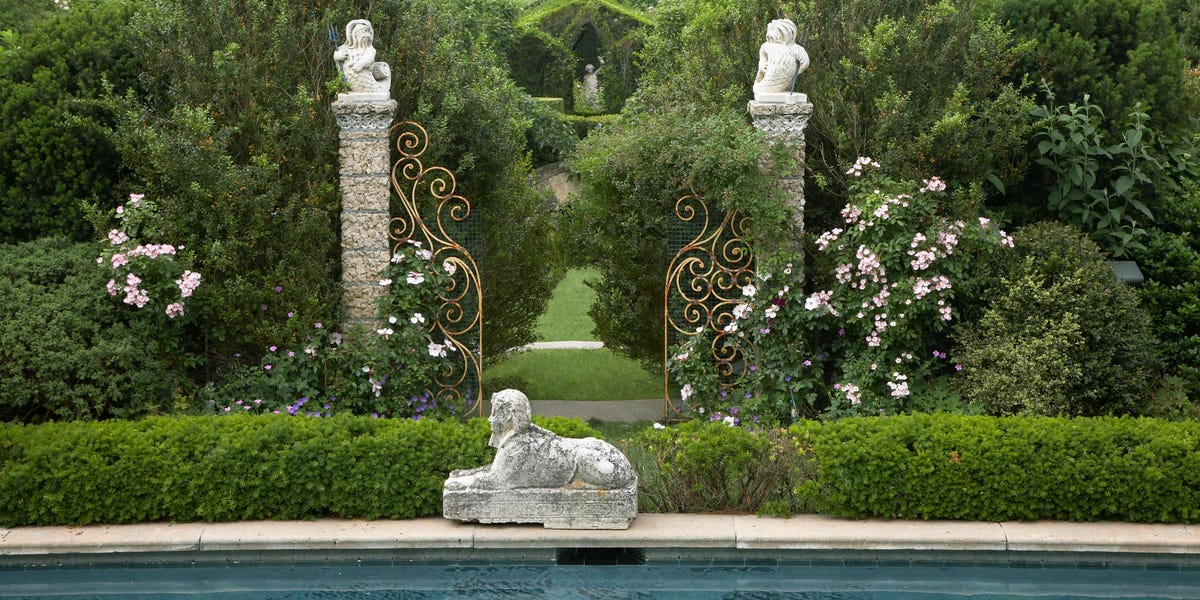
The most recent addition to the property is the pool garden. “The Rayners are happy swimming in the ocean, but this extends the season,” says architect Pietro Cicognani, who has been helping with the house and grounds, both of which were featured in Out East: Houses and Gardens of the Hamptons.
Out East: Houses and Gardens of the Hamptons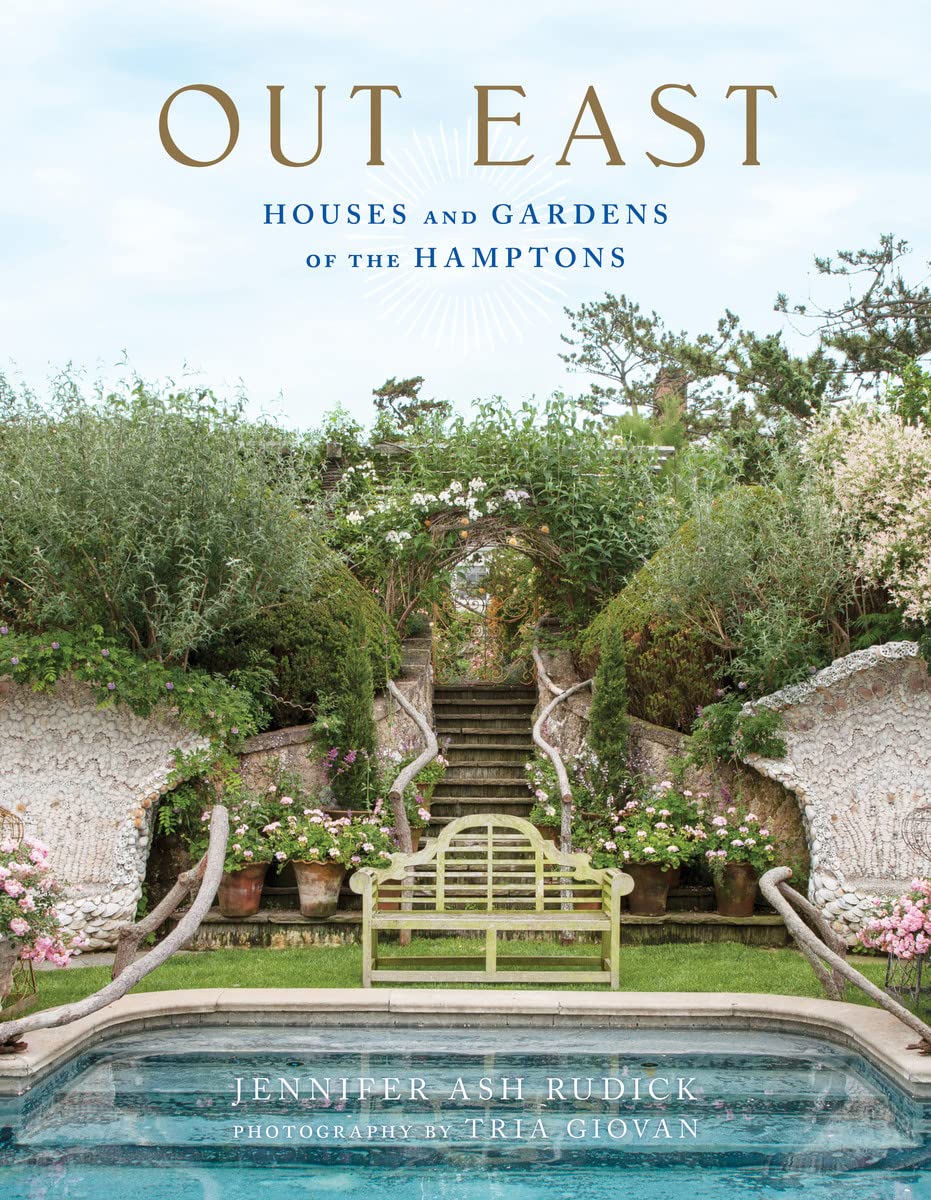
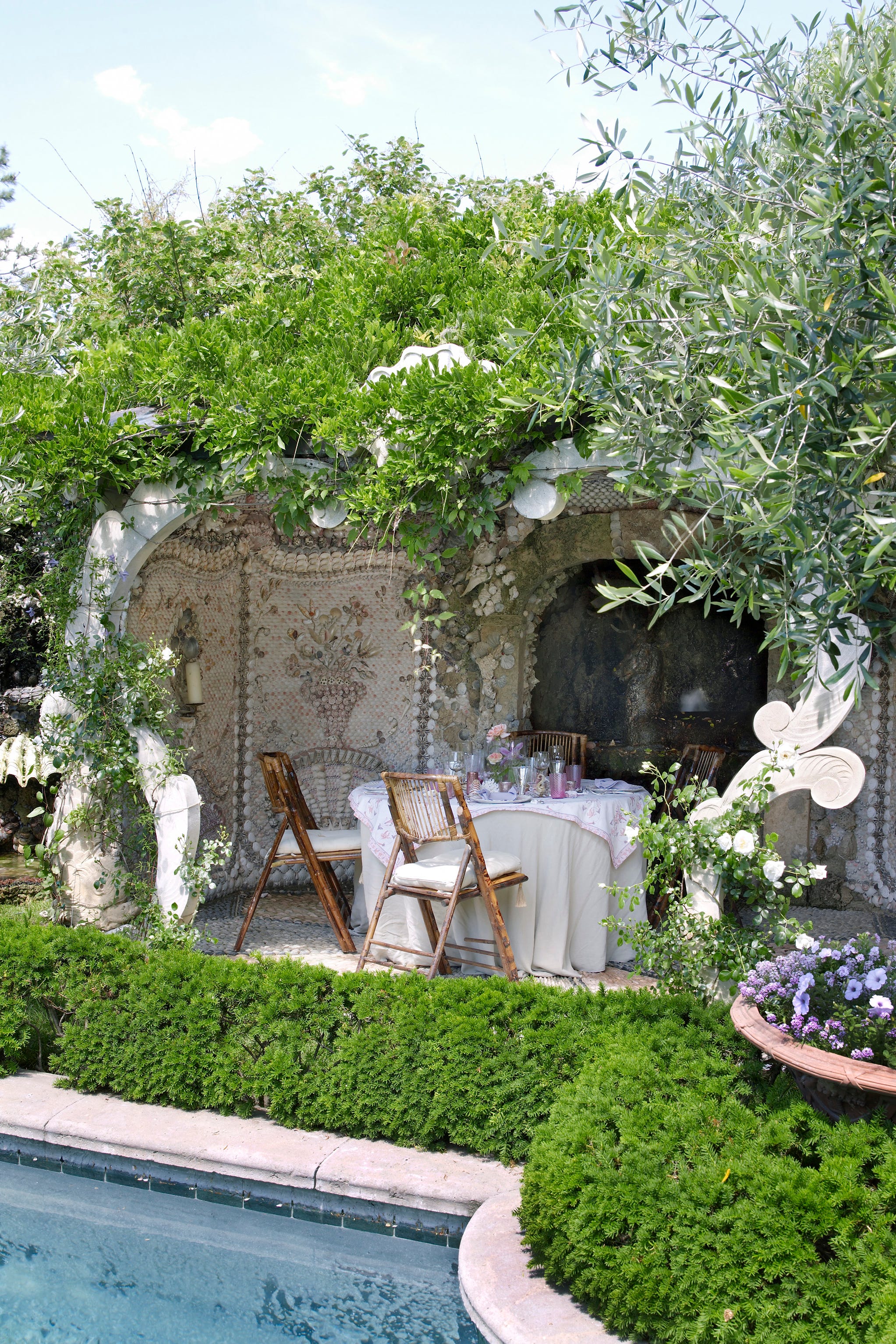
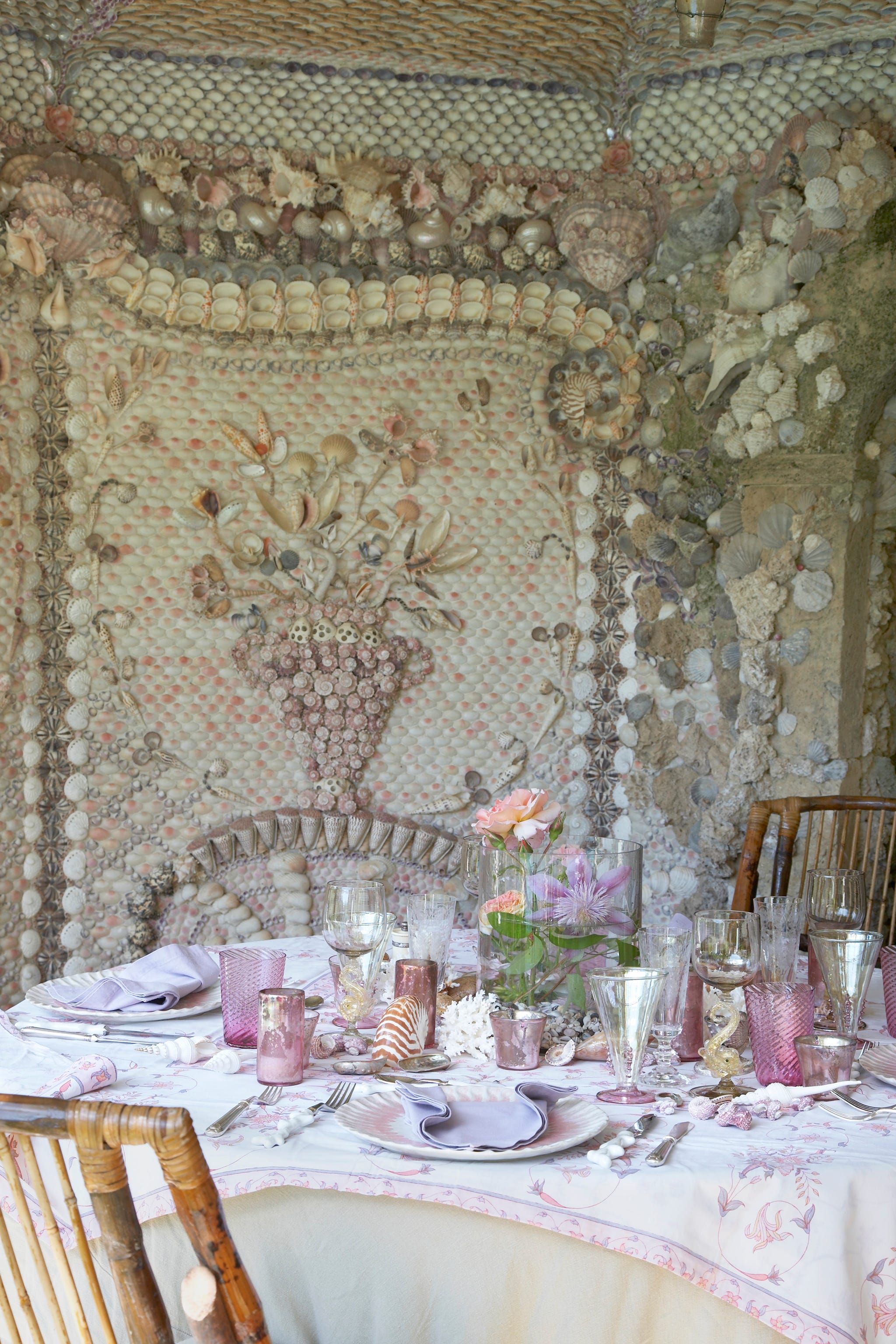
Nearby, sculptor Simon Verity and his partner, architect Martha Finney, created a fanciful grotto based on Florence’s Villa Medicea di Castello. Constructed using tufa, seashells, quartz, and limestone, the handcrafted folly trickles with water and dazzles at night.
 Tria Giovan
A table is set for a summer lunch by the pool.
 Tria Giovan
Sculptor Simon Verity and architect Martha Finney fashioned a fanciful grotto from tufa stone, seashells, and quartz.
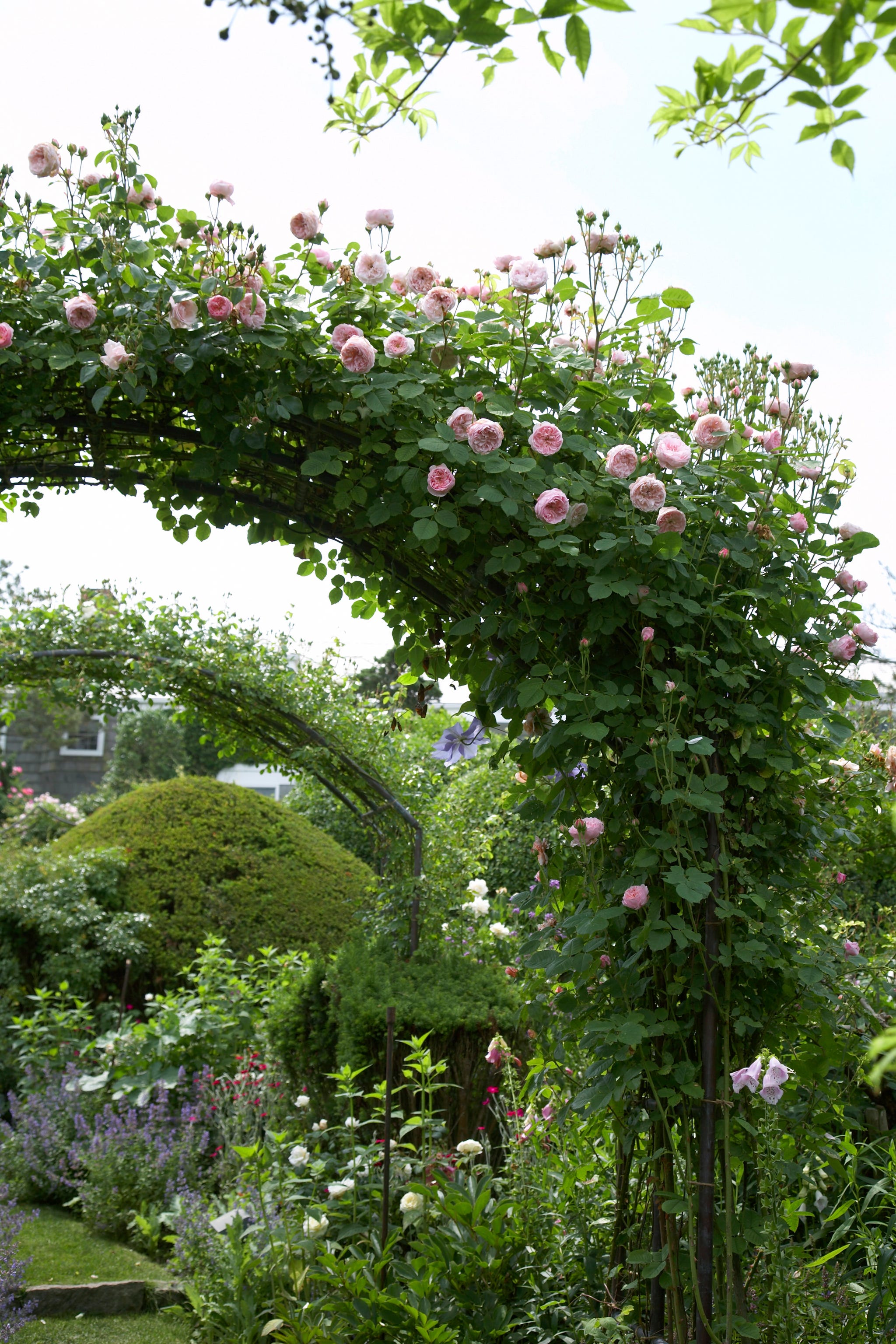
There are countless other delights, including a pear tunnel featuring espaliered fruit trees and purple clematis, a Hoops walk blanketed with five kinds of roses, and a dog garden featuring sculptures of the family’s beloved pets. Indeed, the dogs roam freely throughout, chasing butterflies, rabbits, and birds like finches, doves, and plovers. “You think you’re at the symphony sometimes,” says John Hill, the head gardener. Purple martins nest in houses that the former bay keeper, Kevin Miller, made from dried gourds. When trees blow over in storms, their branches are fashioned into handrails. “We work with Mother Nature here,” says Hill, referring to the elements and, perhaps, also to this garden’s visionary creator, Katharine Rayner.
Pool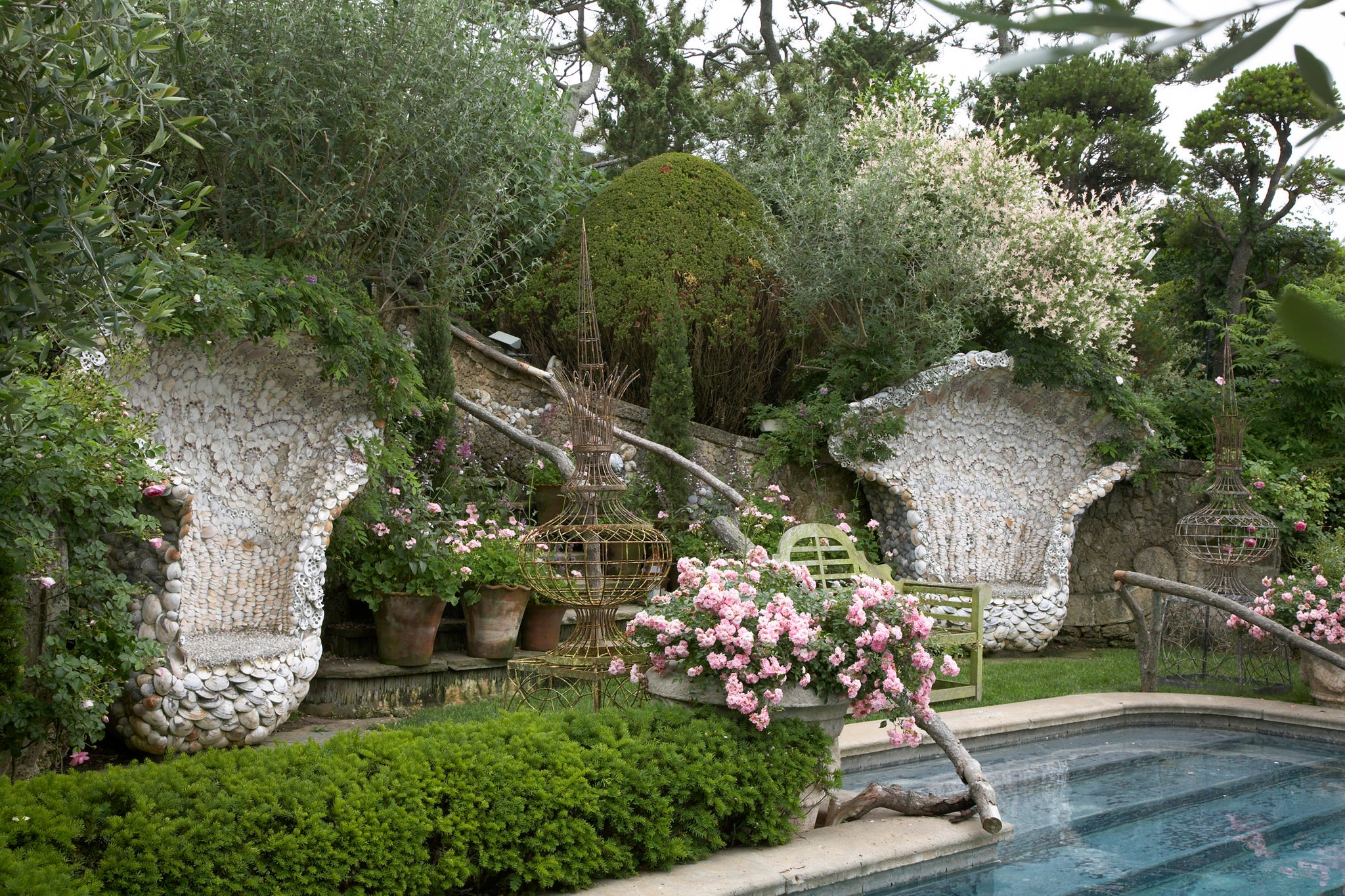
Tria Giovan
Fantastical shell chairs reign over the pool area. An Edward Lutyens–style garden bench is positioned at the base of a stairway leading to the Mediterranean Garden. Handrails here and throughout the property are crafted from fallen tree branches collected after storms.
Tria Giovan
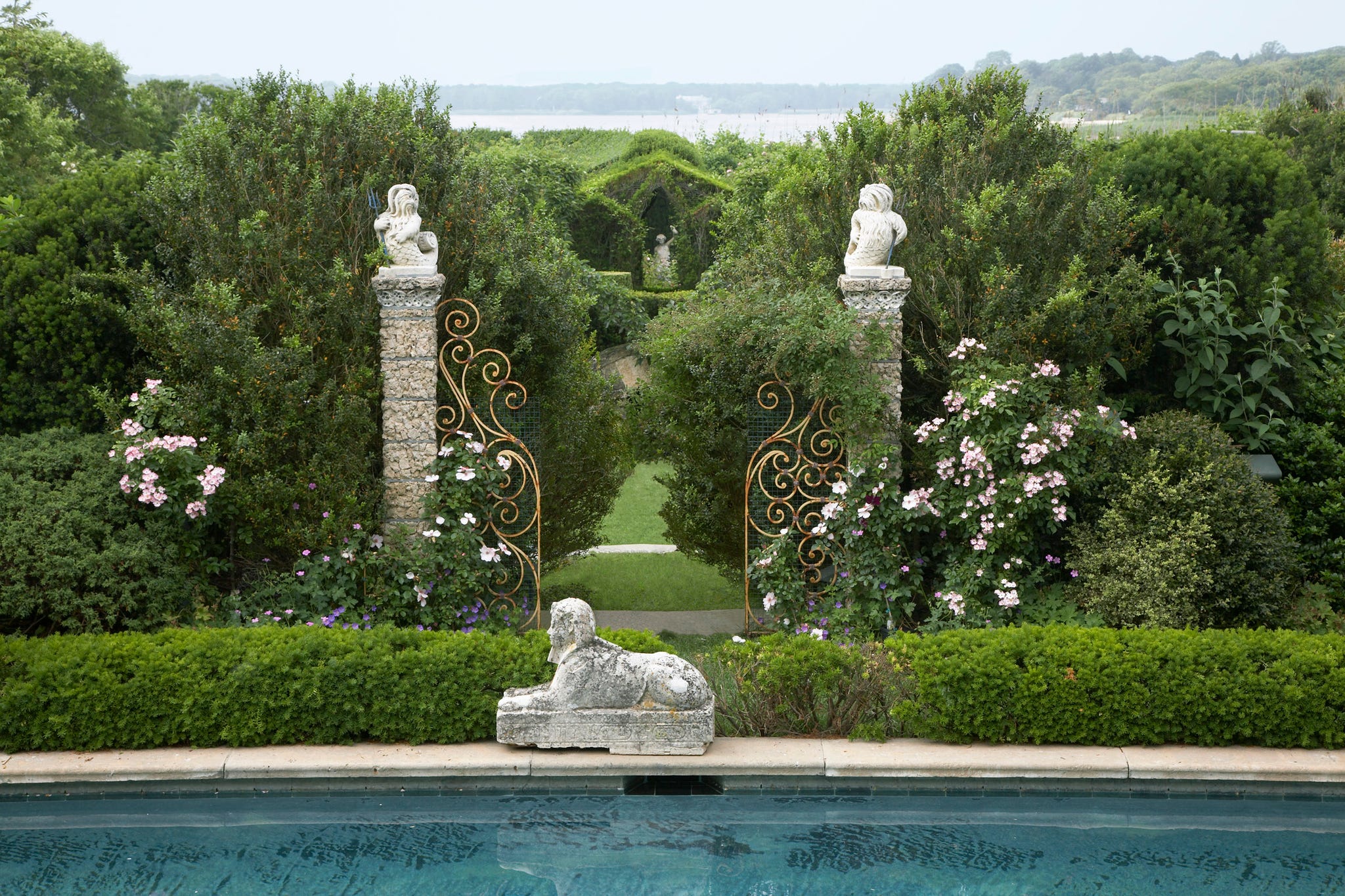
An overview of the gardens, looking toward a coastal lagoon, reveals a combination of structure and whimsy.
Mughal Garden + Hoops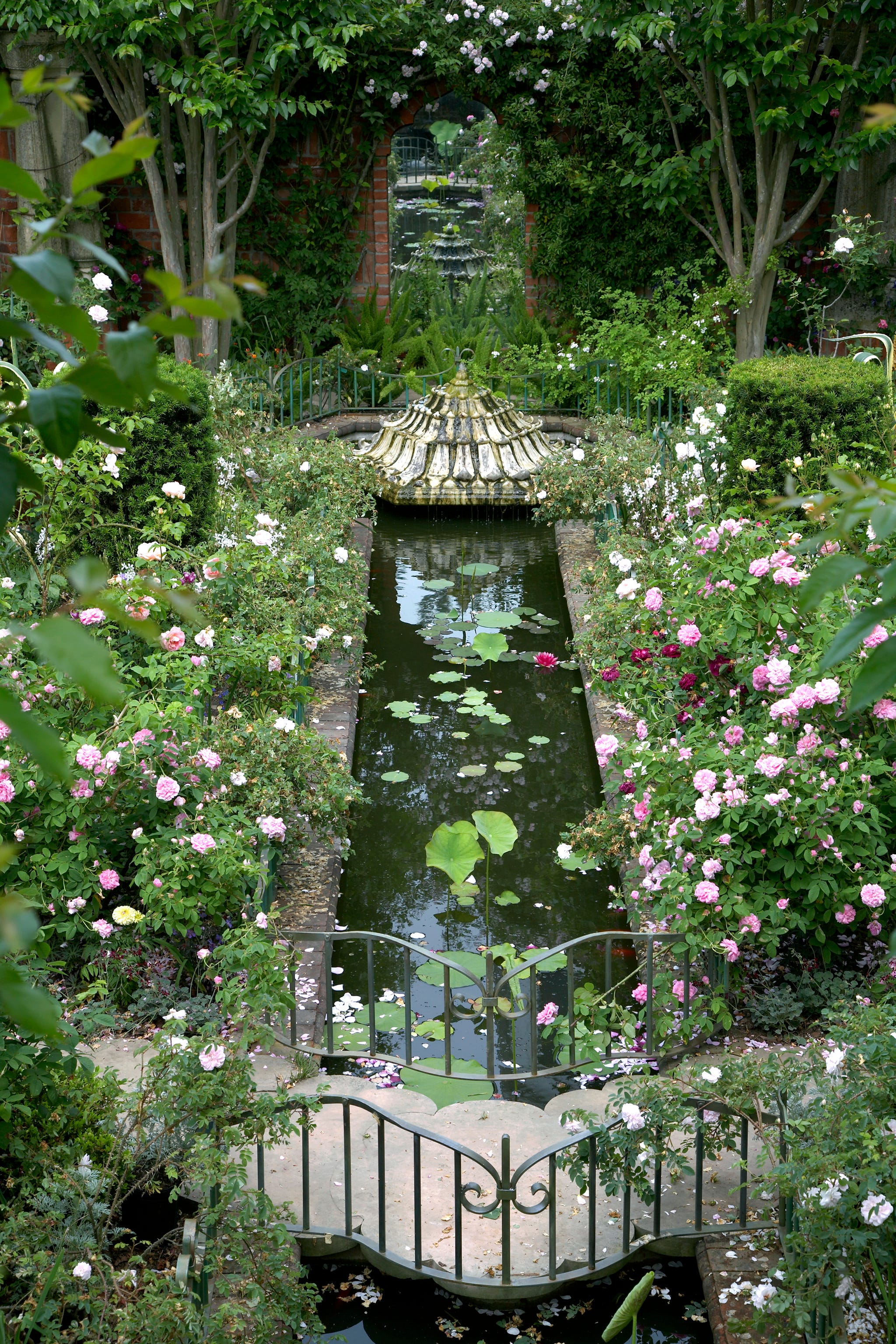
Tria Giovan
Tria Giovan
Left: A small bridge in the Mughal Garden spans a pond filled with water lilies and lotuses.
Right: The Hoops—a series of arbors covered with roses—evoke Claude Monet’s gardens at Giverny.
Fountain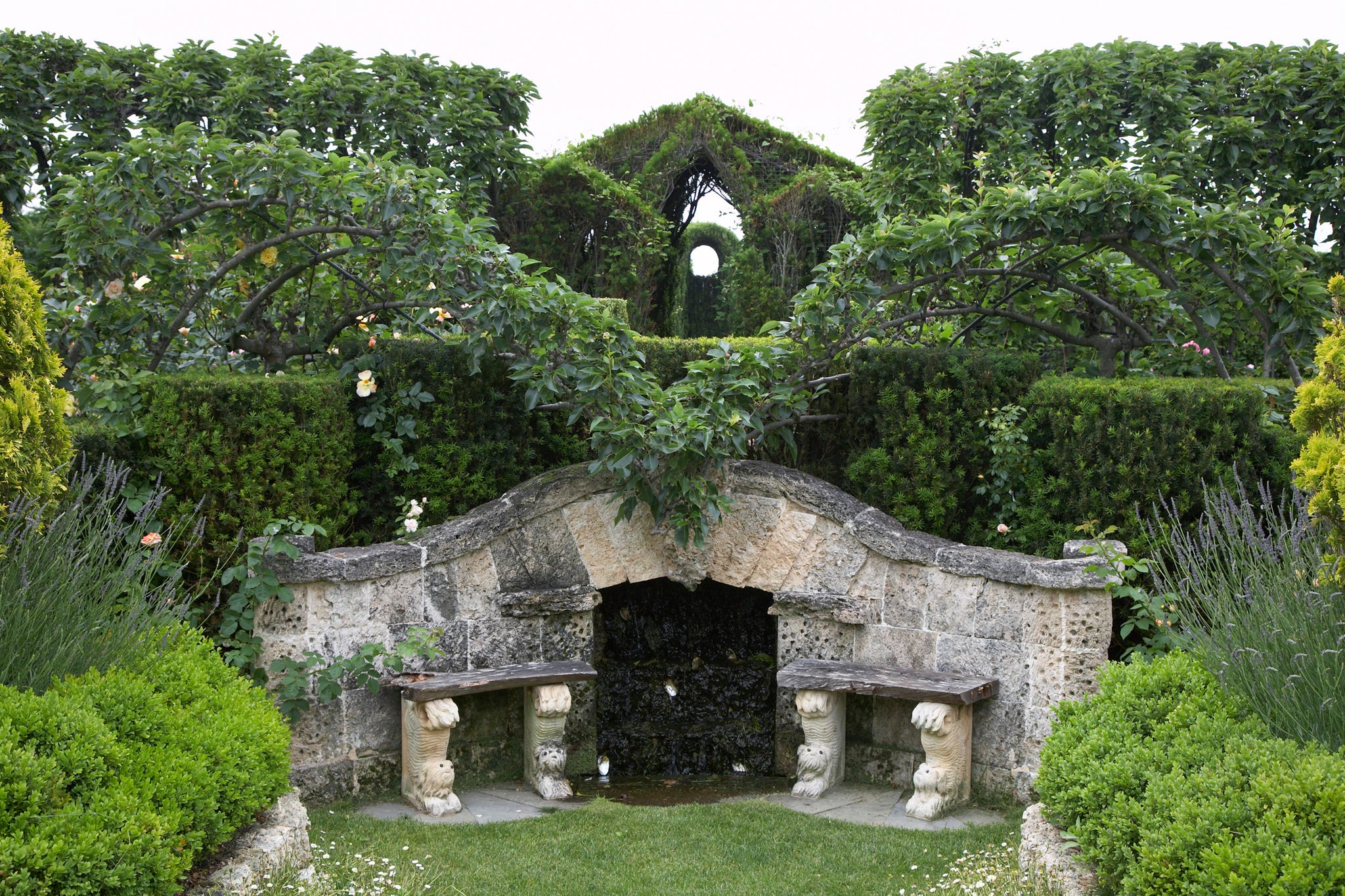
Tria Giovan
A curved tufa-stone fountain in the Italian Garden incorporates oak benches for reflection.
VERANDA Design Society Gold
This article originally appeared in the July/August 2017 issue of VERANDA. Photography by Tria Giovan; Written by Jennifer Ash Rudick
Comments are closed.