
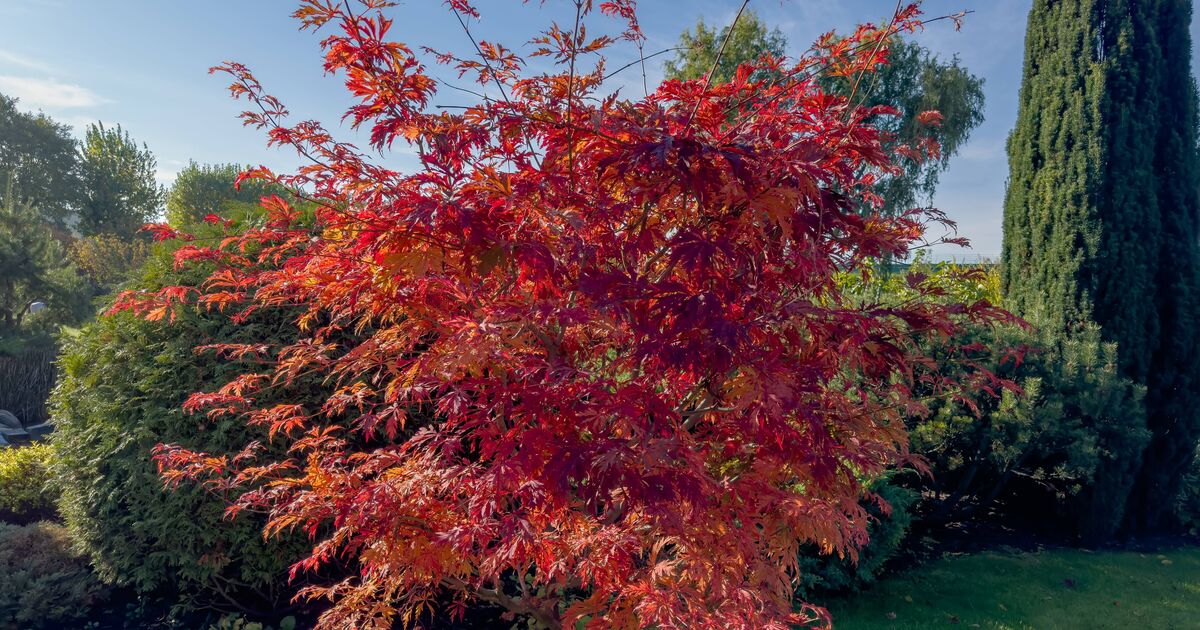
Celebrated for its deep crimson foliage with purple undertones, the Japanese maple is perfectly suited for introducing drama and colour to your garden. Beyond its striking shape and hue, the appeal of growing a Japanese maple lies in the fact that this compact, slow-growing tree is well-suited to smaller outdoor spaces, as it won’t rapidly outgrow your garden, and it’s remarkably straightforward to maintain.
It requires no full sunlight and can thrive in a simple container or planted directly in the ground. However, as summer draws nearer and temperatures begin to climb, there are several Japanese maple tasks worth attending to, according to the gardening specialists at Herter Nursery. They said, “Whether you bought a young Japanese maple tree or a mature tree, proper care will “help it burst into vibrant foliage” and “keep it looking beautiful all season long”.
1. Pruning
According to the pros, spring is “the best time to lightly prune” your Japanese maple.
At this stage, it is advisable to concentrate on removing dead or weak branches to enhance airflow, as well as crossing or overcrowded branches that may cause damage as they develop.
It is essential to avoid heavy pruning in early spring, as it can stress the tree. Instead, hold off until late spring to shape it as required.
2. Mulching
A fresh layer of mulch assists in retaining moisture, regulating temperature and preventing weeds from establishing themselves around your Japanese maple.
By preserving moisture and keeping roots cool, mulching proves invaluable in supporting the overall health and vitality of your trees. Apply a two to three-inch layer around the base of the tree, but avoid heaping mulch directly against the trunk, as this can cause rot.
The three best materials to use as mulch are shredded bark, wood chips and pine needles.
Over time, organic mulch breaks down and may need to be replenished. Check the mulch layer regularly and add more as needed to maintain the recommended depth.
3. Watering
Spring weather can be unpredictable, making it essential to keep a close eye on soil moisture. Japanese maples prefer moist, but not waterlogged, soil. The experts warned: “Overwatering can harm the roots, while too little water can cause stress.”
When watering these trees, check soil moisture by inserting your finger one to two inches into the soil and water thoroughly once or twice a week, depending on rainfall.
Aim to water in the morning to allow the roots to absorb moisture before the day’s warmth sets in.
Comments are closed.