
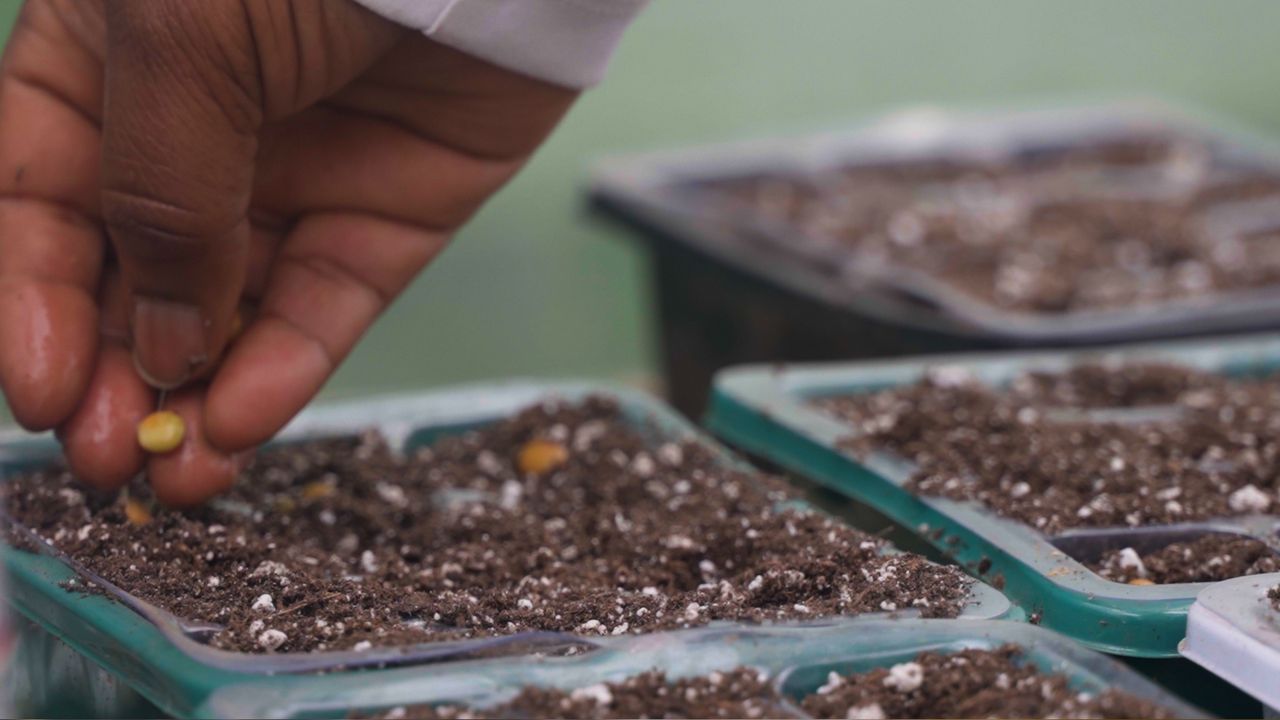
CLEVELAND — When Ebonie Randle founded the Shalom & Tranquility garden in the Old Brooklyn neighborhood of Cleveland six years ago, she did not know how difficult it would be.
What You Need To Know
Because of stagnant funding and regulatory burdens, the Summer Sprout program has become less effective over the years
Cleveland has allocated $250,000 of general funds to increase the budget of the beleaguered Summer Sprout program, hoping to revitalize it
“It’s been an extreme transformation from what it was to what it is,” Randle said, explaining that before the garden moved in, the land was used as a dumping ground.
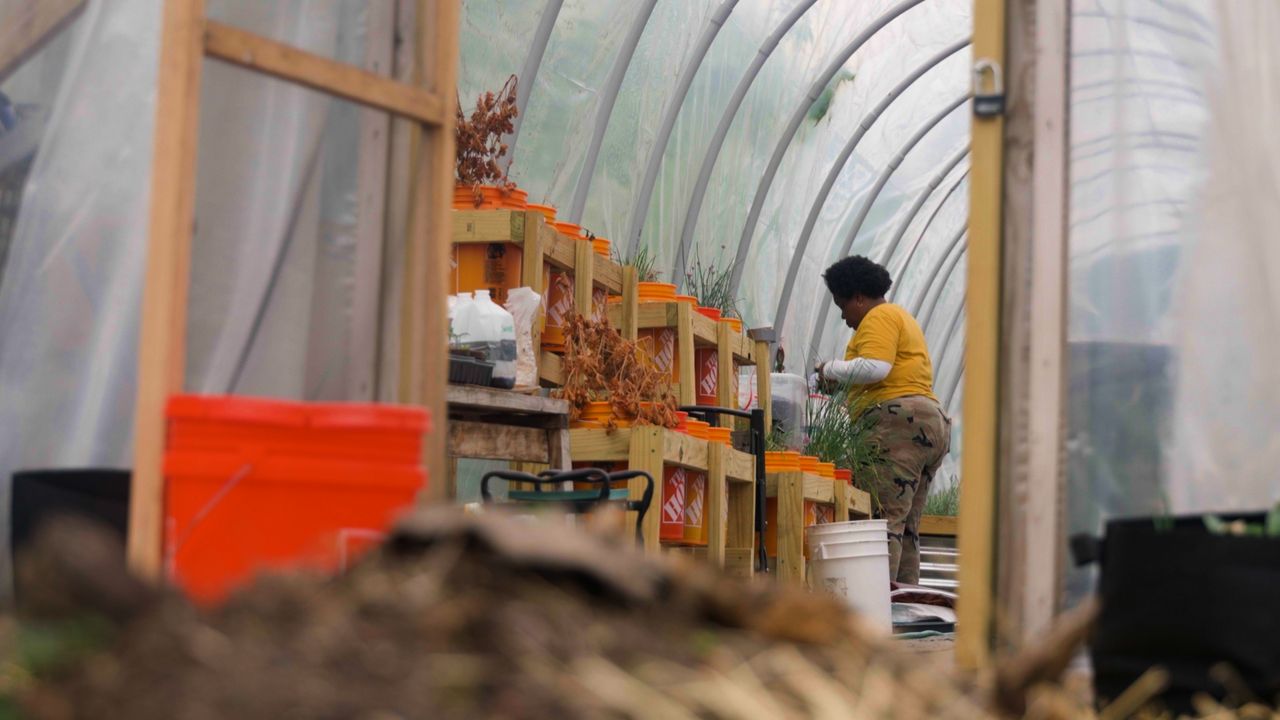
Ebonie Randle in the hoop house at Shalom & Tranquility Garden in Old Brooklyn (Spectrum News 1/Corey O’Leary)
High costs, hard labor and long hours were required to get the garden off the ground.
“It takes a lot, it takes a lot,” Randle said. “It has taken cultivating relationships and not just within Brooklyn Center, but throughout the city.”
Now, she says the garden has built relationships within the community and established itself. To her, the benefits of the garden are clear.
“We are very intentional about using this garden, not just to grow the garden but to educate, unify, and improve,” Randle said. “People feel safe getting to know one another. Once upon a time, we didn’t know one another, and now we have a once-a-month community meal here from May through October. And the neighbors just come and we break bread together.”
The garden welcomes volunteers and teaches children how to grow food. Randle says that the produce they grow is distributed into the surrounding community.
Randle thinks the gardens are beneficial to the neighborhood, and the Cleveland City Council looks like it agrees. For the first time, they have allocated $250,000 of city money to supplement the Summer Sprout Program, which aims to support community gardens that grow produce.
The goal is to increase food resilience and promote healthy eating habits.
“They work with gardeners to supply everything from soil to seeds and starters to raised beds to tiling services, anything that a community garden might need,” said Zainab Pixler about the Summer Sprout program.
Pixler is the Local Food Systems Strategy Coordinator for the City of Cleveland. The program, which started in 1976, is a federally funded program and is run by the Ohio State University Extension.
However, because of stagnant funding, Pixler admits the program has been less effective over the last few years.
“In recent years, especially given we’ve had financial constraints as well as management capacity issues, the program just hasn’t had the investment that is needed to be able to thrive the way that it did back in the ‘90s and 2000s,” Pixler explained.
This has led to a decline in community gardens throughout the city.
Pixler says that at the peak of the program there were 190 gardens in Cleveland. Now, she estimates there are around 75 active ones.
In 2026, Cleveland is providing $250,000 to Summer Sprout on top of $116,783 in federal funds. That results in a roughly $180,00 increase in funding for Summer Sprout from 2025 to 2026.
“We’re expecting future years to be exponentially smoother and more impactful for our partners,” Pixler said.
Pixler says this money from the city won’t have the same red tape the federal funds have, easing bureaucratic pressure on the program.
“There’s a ton of reporting, particularly with soil testing and lead requirements, that has put a burden on both the university and the Ohio State University Extension.”
In late April, Mayor Bibb and other Cleveland officials, including Pixler, held a town hall with gardeners who use the program. Their goal was to listen to farmers to learn how they could help revitalize the program.
“He said he wanted to apologize to all the urban farmers and gardeners in Cleveland because the city has dropped the ball. I just literally started crying,” said Tanya M. Holmes.
Holmes is an urban farmer who runs Ka- La Healing Garden in Cleveland’s Fairfax neighborhood. When she started her garden 16 years ago, support from Summer Sprout was pivotal.
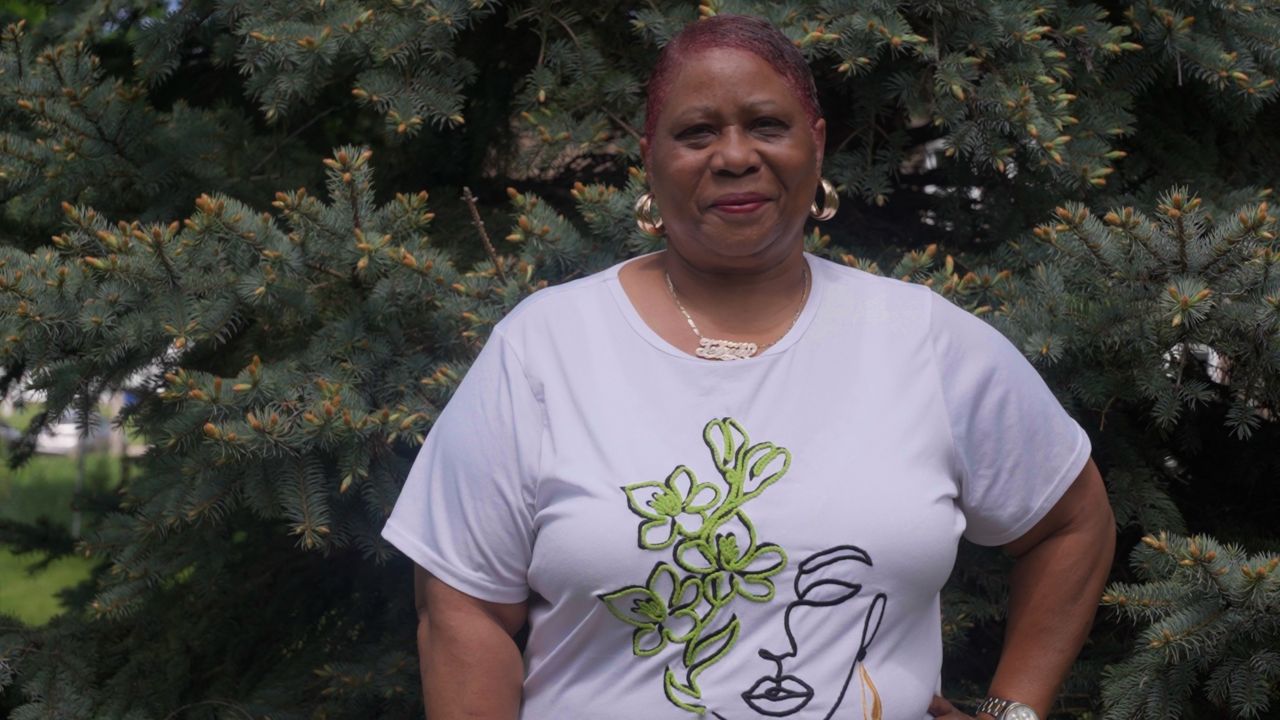
Tanya Holmes at Ka-La Garden and Healing Center (Spectrum News 1/Corey O’Leary)
“Everything I did, I started there,” Holmes said, recalling classes she took through the Summer Sprout program that taught her about compost, rain collection and weed control.
But since then she’s noticed a reduction in their services, with more residents coming to her for help. To her, she’s optimistic about the increased investment.
“We change neighborhoods,” Holmes said. “Property values go up. The community stays cleaner. The community is more connected.”
Holmes says the recent funding increase has made her optimistic about the future of Summer Sprout. She hopes officials can follow through on their promise to support more urban farms and gardens.
“We can’t depend on the grocery stores to give us the food that we need, that is going to keep us healthy,” Holmes said.
Comments are closed.