
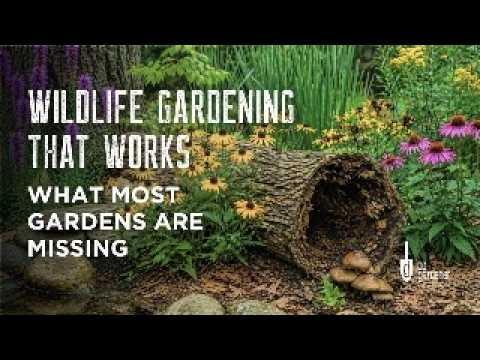
Most of us have heard the message by now – plant native plants, and you’ll support wildlife.
That’s true. But it’s only part of the story.
In this episode, I’m talking with Shaun McCoshum, author of Natural Habitats and Wildlife Gardening: Inviting Nature into Your Backyard. His book is all about using ecology as your guide to turn your space into a thriving habitat for pollinators, birds, and other wildlife.
And what I really appreciate about Shaun’s approach is that he takes this beyond just plant selection. We get into what’s actually missing from most modern landscapes and how to start thinking about your garden as a complete ecosystem.
We talk about:
• Why native plants are just the starting point
• The difference between “wildlife-friendly” and true habitat gardening
• How to support insects, birds, and amphibians year-round
• Why tidiness can work against nature and what to do instead
• Simple ways to add shelter, water, and soil diversity
• How quickly wildlife responds when you make these changes
No matter where you’re gardening, there’s something here you can put into practice right away.
If you’ve ever wanted your garden to feel more alive, this conversation will definitely get you thinking differently.
📘 Get Shaun’s book: https://amzlink.to/az0wBFjJkjP0I
CHAPTERS:
00:00 Welcome and Guest Intro
01:58 Sean’s Journey to Ecology
04:06 Why This Book Matters
06:31 Habitat vs Wildlife Friendly
09:15 Mindset Shifts for Gardeners
11:49 Beyond Native Plants
16:29 Keystone Plants and Quick Wins
18:28 The 50 Degree Rule
25:10 Rethinking Tidy Gardens
29:44 Change Laws Not Just Yards
30:53 Leaf Litter Food Web
33:20 How Much Leaf Cover
35:07 Soil Health Reality Check
38:58 Can Backyards Be Natural
41:49 Water In A Drought
45:49 Small Spaces Big Impact
48:38 Quick Wins And Water Hacks
53:44 Rapid Fire And Final Takeaways
Follow joegardener® on:
https://www.instagram.com/joegardener/
https://www.facebook.com/joegardenerTV
Growing a Greener World Episodes: @ggwtv
My Online Gardening Academy™ on Teachable: https://organicgardeningacademy.com/
📬 Subscribe to my email list for weekly organic gardening tips and podcast reminders in your inbox: https://joegardener.com/subscribe-joe…
And if you enjoy deeper conversations about organic gardening, ecology, and practical ways to grow smarter, be sure to subscribe to this channel.
39 Comments
Love the tips and this great interview. The water sources make such a big impact! I have a terra-cotta saucer on the ground under perennials that is my resident toads “summer swimming pool” I get so excited when I see him sitting in it. I removed all the gravel in my beds years ago…insane project, but truly magical what has happened over the last 8 years. The impact good soil has on all creatures! Plants naturalize, I live in the suburbs so I have to mindful of my neighborhood, but I think if it as curating now.
Excellent podcast! Thank you for hosting him.
Love this! 💚
I started planting native plants in my 4+ acres back in the 90s but had a lot of trouble finding them. Then I was busy with work and family. The past 5-6 years I’ve gotten more serious about natives again but it’s much easier to find native plant nurseries now so I’m adding perennials as well as shrubs and trees. 😁 Unfortunately, I also have way too many invasives. 😑 So I’m also working on that. 🥵
Lots of good info here. One of the best things I ever did was to leave a couple of big logs and some leaf piles in the backyard. I have tons of fireflies and all kinds of insects that are not seen anywhere else around my suburban neighborhood.
What an awesome conversation, thank you so much! I'm ordering Shauns book this week and look forward to it 🌞
Love this! Remember: Leaf layer, not litter. 😉 I would love to grow food (used to have raspberries); however, my neighbors hire a company to apply bifenthrin as a perimeter spray. 😪
I know you're not supposed to walk through your garden, but sometimes I have to. Would it be better to install stepping stones to walk on?
I love listening to your show as I’m gardening. So much knowledge and inspiration! This episode was very timely as I’m in the process of doing exactly as Shaun recommends—using a down spout to maintain a wildlife pond. I’ve searched extensively and researched a lot of ponds but I’ve only seen one example of this set up. I purchased the book so I can learn about this practice and even more about habitat creation. I was particularly interested in the ways we need to create disturbance and manage our gardens. Thank you for always having such brilliant guests. I’m a better gardener and land steward for learning from them.
I've turned my whole suburban backyard into a wildlife oasis. 99% of what I plant or do is for wildlife, not me.
I put in a pond, and within 6 months I had frogs living in it. I've seen up to 11.
I planted a pawpaw and within 2 weeks had a zebra swallowtail.
I planted Dutchman's pipevine and that season had pipevine caterpillars.
I could give you countless more examples.
I only got interested in gardening because i want to help save as much life thats left as i can but i feel like i will take too long to learn to be able to be helpful. I feel so much like my small garden will make too small of a difference and it is too late. I won't give up, but it feels painful knowing it may be too little too late.
Nesting material was hanging out of the bluebird box. I removed it. One day later, the bluebirds had built a new nest for a second brood. Last year, my two boxes housed 9 new bluebirds. This year, I may have that many again. 🦋
Joe that was a fantastic guest. I will rewatch this episode to make sure i haven't missed all the great tips.
Love the idea of leaving wood pieces in the garden.
I will stay tuned for more great guests
Joe, the look of pure joy and interest in your face as you listened to Shaun was delightful. My garden is a little feral amongst the very manicured yards of our HOA. I have created a home to many kinds of critters and will continue to do so. I feel like we have done " enough" to this land at the it's time we start giving back. Thank you for this amazing content.
This is phenomenal!
Hello from South Wales UK. I am trying to create a garden full of natural habitats. Learning as I go along, but having the best time. I loved this conversation. When I talk about either water or long grass in my garden I always get comments from people in the US (and elsewhere) about the dangers of providing habitat for mosquitoes or ticks. How would you guys respond to that?
So inspiring! Going to buy his book and hope it will be relevant for the UK.
I was told I keep a messy yard cause I let my grass grow longer and don't kill clover or dandelion😂good thing i don't care what the neighbors say
Excellent discussion! I'm an experienced native plant gardener and wildlife habitat creator – and I learned a lot! Ordering Shaun's book right now….
Of course there are natural cycles of climate change, but it’s being exacerbated by purposeful weather manipulation. It needs to STOP.🌷🪺🌻🌷🦋/🌬️🌪️💦💨…..so sad. I try to keep learning & being aware of what I can do to support beautiful nature. Thank you for the valuable information.
I'm a gardener. I so appreciate this approach. It asks the right questions in a way that deliver solutions that are practical for nature🦝. Thank you. (And I'll order the book now!)
Listening from a Montréal QC suburb (zone 5B)
I have been implementing such methods for the past 3 years. Can’t get enough of this topic.
Would really appreciate more recommendations/ visuals on how to make wildlife-friendly gardens pretty.
House sparrows are out competing our local Eastern Bluebirds.
Thank you for spreading this knowledge! I am new to all of this and as soon as this show ended, I canceled my weed application for my grass and flower gardens. I have alot of work to do, but I am looking forward to the challenge!
Oh my goodness. I love this man's intro!!! 🥳🥳🥳
I can’t seem to purchase Shaun’s book on arid climates. Can we purchase it directly from him somehow?
Incredible talk. I wish more people would hear it and actually listen. Thank you.
Rose 🌹 lovers– You can pair roses with members from the alium of the family (chives, onions, ornamentals) and still support pollinators while growing tasty food. Plus your roses may derive some benefit from being planted next to the alliums.
I wonder if the author has ever worked with state agencies for creating pollinator corridors or utilizing road strips for groundwater management and or pollinator habitat?
56:00 double standard bull s***. You just admitted that the Indians encouraged and brought in all the bison. Europeans also brought in their own bison. They are called cattle. The murderous and ravenous natives that lived here before Europeans changed the landscape to suit them. New natives killed them and changed the landscape again and then new natives killed them and changed the landscape again and then Europeans came and changed it once again. Europeans are the only ones we like to label as evil. All the others we call good. We are self-loathing morons.
Authentic and deep subject knowledge is not something you can take for granted when buying a non fiction book these days. The market has been flooded with books that seem to be just cut and pasted tidbits grabbed without understanding from much more in-depth older books. The resulting text is shallow, lacks context, and is often outdated or just flat wrong. So getting a recommendation like this is very useful to me.
Ethan Tapper, I will have to look him up.
Stick piles! Didn’t know I was doing the right thing!
How can I create a happy space for raccoons? They want to move into our attic. We have a wooded plot that is pretty big considering it’s Chicago with lots of oak trees that are a couple hundred years old. But our winters get really cold.
So pleased I happened on this video. A lot of these if not most of these principles surely apply globally with a few tweaks to suit local ecological diversity and native species and plants. Hope so, because i’m not an America!!
Great presentation. I noticed that the biggest tree we have is a Norway maple. It's beautiful, but birds don't nest in it, they just land and move on, and their leaves don't get eaten. The Vine Maple native has lacey, almost completely disintegrated and eaten 😊 leaves, hummingbirds, bushtits, chickadees and lesser goldfinches necter on it, and we have seen a difference in numbers of birds increasing as we add native plants 😊. We pulled out English ivy and Russian blackberries that covered the garden, and as many invasive non-native plants as pop up. 8 years years along, we keep learning 😊. Keystone plants, stumperies, open areas for the 70% of ground dwelling bees, the pond has been dug, birds baths front and back, lose the lawn, make a rock garden, apply Miyawaki method, rain gardens, pollinator meadow 😊, yellow porch lights to save moths, leaving bracken and all stems for the completion of the life-cycle. So much to do 😂😊, birds were where we started 😂
I bought a house in 2020 adjacent to woods that had been taken over by buckthorn and honeysuckle. I removed what I could around the edges of my yard, and did just one 30 foot by 4 foot strip of natives (Michigan) – purple coneflower, wild bergamot, mountain mint, and a few others. They were COVERED with insects by the second year, COVERED, and I saw a clearwing moth for the first time, which was simply magical.
I plan to add more every year. I have a huge organic vegetable garden, which is my first passion, but seeing these insects in such vast quantities was the most inspiring thing I've ever seen in my years of gardening.
I tell everyone that we have to put the oaks back into Oakland!
Thanks!
Loved every minute of this. Thank you both for your excellent work!!!