
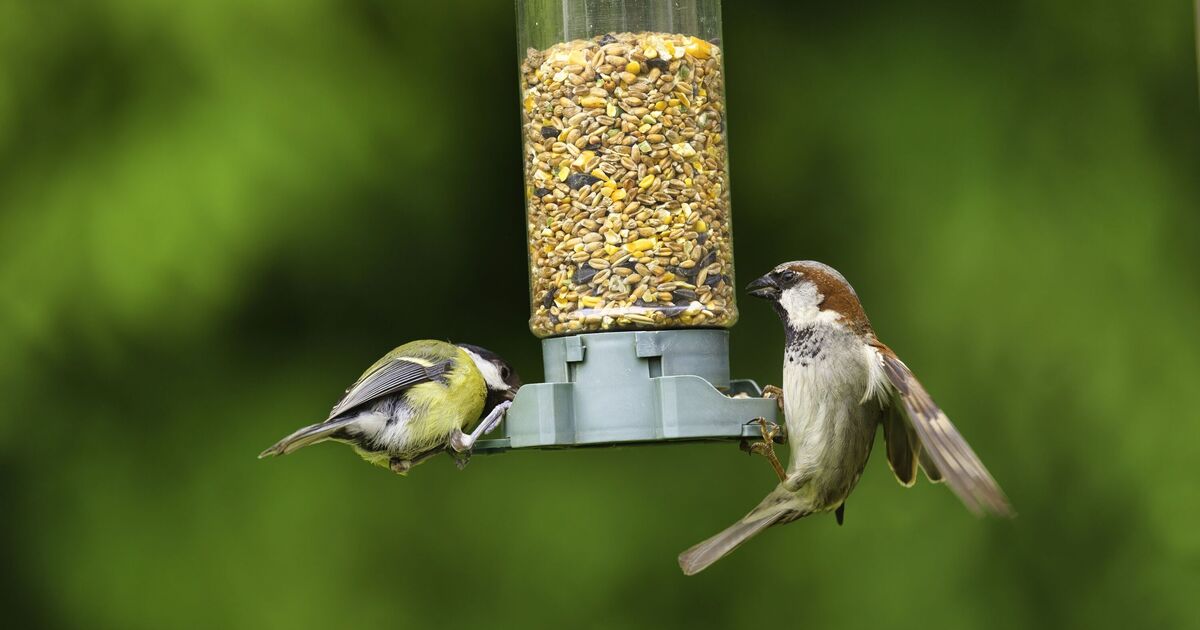
The Royal Society for the Protection of Birds has issued an urgent warning to stop feeding seeds to garden birds from May 1. The bird charity has issued new rules that took effect on Friday, May 1 and will remain in place until October 31.
The RSPB has warned gardeners, bird fans and amateur ornithologists alike to stop feeding birds seeds or peanuts from May 1 to October 31. The charity is concerned that feeding seeds and peanuts to birds in the spring and summer months, as well-meaning as it is, is actively spreading diseases.
It says birds have seen a ‘worrying decline’ in British gardens, thanks in part to a disease called trichomonosis.
The ‘highly contagious’ illness can spread where birds gather in large numbers, such as at bird feeders.
It pointed to evidence that greenfinch numbers have collapsed by 65% since 1979.
It is asking people across the UK to stop putting seeds or peanuts out for birds – but small amounts of suet, fatballs or mealworms is okay, the charity stressed.
The RSPB said: “Research has shown a worrying decline in some of our much-loved garden birds due to a disease called trichomonosis. This is a highly contagious disease and can spread where birds gather in large numbers such as at bird feeders.
“Greenfinches, for example, have dropped by over 65% in the last three decades – and you may have seen this decline yourself. Back when the Big Garden Birdwatch started in 1979 Greenfinches were at number seven in the top ten birds seen. This year they were down to number 18.”
It added: “The latest RSPB guidance is to feed birds seasonally and safely to avoid the spread of disease. You can do this by cleaning and moving feeders weekly, changing the water in water baths daily and avoiding the use of flat-surfaced feeders such as bird tables. It’s also recommended you pause the provision of seeds and peanuts between 1 May and 31 October.
“Stopping the spread of disease is a challenge we can’t tackle alone. By taking these simple steps to feed seasonally and safely, we can all help protect the future of our birds.”
Comments are closed.