
For The Union-Tribune
May is the transition time. Spring blooming plants settle into summer, peach and plum trees hint at the coming harvest, pomegranate flowers swell at the base, promising a plentiful fall crop. Watering and fertilizing are critical garden tasks.
Vegetable gardens
There’s still time to start seeds for summer vegetables, flowers, and herbs. Enroll in my “Strong Starts” online course to learn the best, easiest, and most successful way to start seeds and grow your garden. Learn more at nanstermangardenschool.com/easy-seed-starting.
If you’ve already started seeds, plant them into your garden just as soon as night temperatures stay reliably above 50 degrees — not before.
What to plant now:
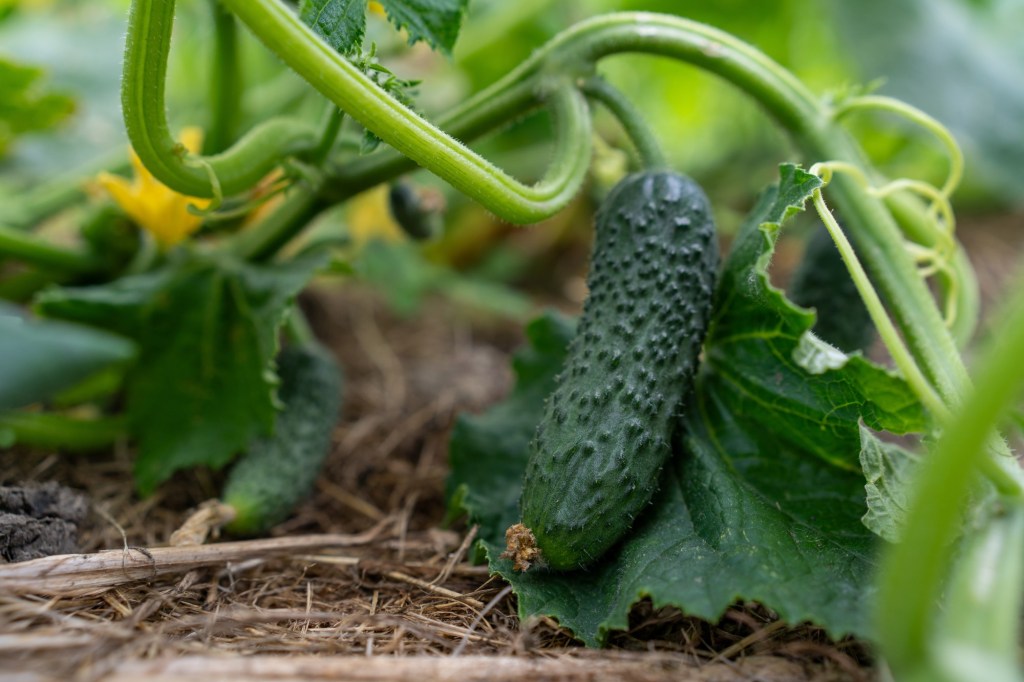
• From seed: cucumber, squash (winter and summer), pumpkins, melon, carrots, radishes, beans, cilantro.
• From seedling or start seeds in containers to transplant in six weeks: tomato, okra, basil, marigolds, eggplant, tomatillo, peppers.
When you buy seedlings, buy the smallest seedlings you can find. Skip large seedlings and don’t ever buy plants that already have fruits and/or flowers. These plants are already too old. Younger plants establish better and grow into larger, healthier, more vigorous plants that produce far more.
Since our native soils have very little organic matter, plan to grow vegetables in raised beds — either free standing or on the ground. If you don’t have room for raised beds, use half whiskey barrels, EarthBox or similar planters with a large volume of growing medium.
Building and planting your first on-the-ground raised beds? Here’s how: bit.ly/BuildRaisedBed.
Fill on-the-ground raised beds with a topsoil mix — not with potting soil, not with planting mix, nor with any of the bagged raised bed mixes. Use a topsoil that is at least 40% organic matter (compost). Add in a generous dose or worm castings and organic granular vegetable fertilizer. Mix in to the top few inches using a hand trowel; never rototill.
Fill pots, freestanding raised beds, and whiskey barrels with good-quality potting mix. Do not use planting mix or “dirt,” and don’t use cheap potting mix. Your plants only grow as well as the quality of their growing medium.
Whether you plant into raised beds, containers, or directly in the ground, don’t incorporate leaves, branches, stems, twigs, plastic bottles, gravel or anything other than topsoil (for raised beds) or potting mix (for pots and containers). Layering different materials creates a “perch” layer that prevents soil from draining. Your plants can literally drown. It’s a simple matter of physics. Plus, as branches, leaves and so on decompose, the soil will sink too low to support your plants.
Renew last year’s raised beds and pots by topping them with several inches of compost plus worm castings and organic vegetable fertilizer. Mix in to the top few inches using a hand trowel, do not rototill.
Irrigate raised beds with Netafim Techline EZ inline dripline, with emitters spaced 6 inches apart. Before you plant, lay out the irrigation in a series of straight lines, set 6 to 8 inches apart. Add a shutoff valve and a flush valve to each garden bed.
GIVE PLANTS SPACE. Seedlings grow into much larger plants than you expect. Overcrowded plants never reach mature size. Instead, they form a giant, jumbled jungle — the perfect condition for killer molds, mildew and other problems, too. Here’s what to expect:
• Tomato: 3 to 6 feet wide and 6 feet tall
• Pepper and eggplant: 2 to 3 feet wide and tall
• Pumpkin and melon: vines up to 30 feet long in every direction
• Zucchini: 3 feet across
• Cucumber: vines 3 to 4 feet tall
• Basil: 2 feet tall and wide
Growing in containers:
• A 15-gallon nursery can, or a half whiskey barrel accommodates one indeterminate tomato plant or two determinate tomato plants, or two eggplants, one squash plant or three basil plants, four cucumber plants, or two pepper plants. Tomatoes need cages, cucumbers need a trellis.
• A 5-gallon nursery can is big enough for two eggplants, two basil plants or two pepper plants. Five gallons is too small for tomatoes, squash or vines.
• A 5-gallon bucket with holes drilled in the bottom can support one tomato or two eggplants or three basil, or two pepper plants, one squash or two cucumber plants.
• Grow bags are useful on a temporary basis, or if you rent where you garden. They are made of geotextile fabric, renowned for its water permeability. For gardeners in arid climates like ours, however, that permeability means that water wicks away, making it hard to keep potting mix damp enough to support plants. One option is to set your grow bags in a kiddie pool — hard sided is best. Keep the pool filled with a few inches of standing water at all times. Add some Mosquito Bits granules to keep mosquitoes from breeding in the water.
Practice crop rotation. Grow tomato, pepper, eggplant and tomatillo plants in half of your bed(s) this year, then in the other half next year. These plants cousins are all vulnerable to the same “bad” soil viruses, fungi, bacteria, etc. Alternate them with annual herbs, root vegetables, flowers, okra, beans, or other plants that are not in the tomato family. Continue to rotate plants between beds every year.
To prune or not to prune tomato plants? Experts say there’s no reason to prune and many reasons not to. Contrary to legend, pruning does not increase production (why would it? Leaves power the plant, so when you remove leaves, you limit fruiting power).
Overpruning leaves fruits exposed to sunburn. Instead, remove selective branches from the center of the plant to ensure good airflow and avoid mildew. Use your fingers to break off the branches. Wash your hands between plants so you don’t spread diseases from one plant to the next.
Fruit trees
Stone fruits, apples, pears, figs, pomegranates, pineapple guava, persimmon and other summer and early fall fruits are developing now.
Thin marble-size apples, pears, persimmons and stone fruits to just one fruit every 5 or 6 inches along the branch. As hard as thinning might be, if you don’t fruit, your trees will produce many tiny fruits and overweight, broken branches.
Water apples, pears and stone fruits deeply and regularly through the growing season. Fertilize with organic, granular, all-purpose fruit tree fertilizer. Follow label directions.
Water figs, pomegranate, and pineapple guava deeply but just once every few weeks. Mulch but don’t fertilize.
Peach leaf curl causes stone fruit leaves to curl and pucker, even on trees sprayed with fungicide and horticultural oil last winter. Peach leaf curl is caused by a fungus that thrives in humidity (another reason to stop using overhead spray irrigation). Once it shows up, there’s no treatment. Plan instead to spray next winter.
Pick summer fruits as they ripen and before critters get them. Pick up fallen fruits and set traps for rats.
Continue watering and fertilizing citrus and avocado. Water deeply under the entire canopy to wet the trees’ vast network of surface roots. Run the water a long time to reach deep roots.
Pale colored trails through citrus leaves are usually the tracks of citrus leaf miner. Do NOT cut off the leaves. Cutting off those leaves makes things worse. Why? Pruning stimulates new growth, and those new leaves are leaf miners’ favorite, so the problem will only get worse. Leaf miner does not reduce fruiting.
Bananas and other subtropical fruits are the thirstiest fruiting plants. Water once a week or more. Water deeply each time. Fertilize regularly and mulch thickly to keep moisture in the soil.
Don’t make the mistake of planting citrus trees (or any other tree) into lawn. Their water and fertilizer needs are very different and lead to fruiting failure. Instead, plant citrus and avocado into their own beds, including a dedicated inline drip irrigation zone. Mulch.
Ornamental plants
Nurseries feature plants when they look prettiest, but that’s not the time to plant them. Take a walk through your neighborhood. Photograph and take notes about plants blooming now. Add those plants to your garden in fall, starting with small plants that are not yet in bloom.
Inland, finish planting drought tolerant shrubs and trees now, including natives. Those planted between now and November face extreme heat stress in addition to normal transplant shock — a deadly combination. Continue planting in coastal gardens.
Deadhead roses and spring perennials to encourage more blooms. Always cut at a branching point. Never leave a stub.
Replace your lawn with a “meadow” of natives like clustered field sedge (Carex praegracilis), native bent grass (Agrostis pallens), and blue grama grass (Bouteloua gracilis). Check SoCalWaterSmart.com for turf rebate programs before you remove your lawn.
Non-native lawn alternatives include succulent dwarf carpet of stars (Ruschia nana) and silver carpet (Dymondia margaretae).
Pests
Plants are never perfect — they aren’t supposed to be. They grow many leaves to make sure that they survive hungry critters. A few holes in plant leaves aren’t a problem. Just ignore them.
Spray off whiteflies and aphids using a sharp stream of water with a Bug Blaster hose end nozzle. The critters’ soft bodies can’t withstand the impact of the spray. Repeat every few days for several weeks to interrupt their reproductive cycle.
Eliminate ants to control aphids, mealy bugs and scale. Ants “farm” these bugs by moving them around the garden and harvesting the sweet “honeydew” they excrete. It is the perfect ant food.
Protect new plants by planting into gopher baskets. Line the undersides of raised beds with hardware cloth. Catch tunneling gophers with GopherHawk traps.
Fungus gnats in house plants are pesky but don’t damage plants. Give your plants an outdoor vacay now that it’s warm at night. Native predators will take care of the gnats for you.
Got slugs? Slugs, snails, and roly polies abound after the wet winter. Sprinkle Sluggo or Sluggo Plus into garden beds to kill them. Check plants at night for tell-tale slime trails.
Manage water
Prepare for a dry summer. It could be a challenge, so stick to your water conserving ways.
Turn on your irrigation system now if you haven’t already. Water ornamentals only when the soil is dry, once every week or two or three. Vegetable gardens need regular water — two or three times a week.
Keep moisture in the soil by adding a a 3- or 4-inch-thick layer of insulating, coarse wood (NOT BARK) mulch, leaving some bare sunny spots for ground dwelling native bees. These bees are important pollinators in gardens and for native plants; they rarely sting.
Use rock mulch for succulents, wood based mulch for non-succulent ornamental plants, straw (not hay) for vegetable gardens.
The goal of irrigating is to wet roots, so water long enough to get water down to the root zone — with drip irrigation that could take an hour or two. Stick your fingers down into the soil to be sure it is wet as deep as the roots go. Wait to water again until the soil dries out.
Run irrigation before 6 a.m., before peak weekday water demands. Drip can run at night but not overhead spray. Spray wets leaves and in the cool hours, leaves are susceptible to deadly molds and mildew.
Houseplants
Get ready to put your houseplants on summer vacation. Once overnight temperatures stay above 60 degrees, most houseplants can stay outside in a brightly lit but shaded spot — under the canopy of a tree, patio cover or eaves.Learn more about houseplants: “Happy Houseplants” is one of many topics of my on-demand course posted at nanstermangardenschool.com/courses.
Sterman is a garden designer, journalist and the host of “A Growing Passion” on public television. She runs Nan Sterman’s Garden School at waterwisegardener.com.
Comments are closed.