
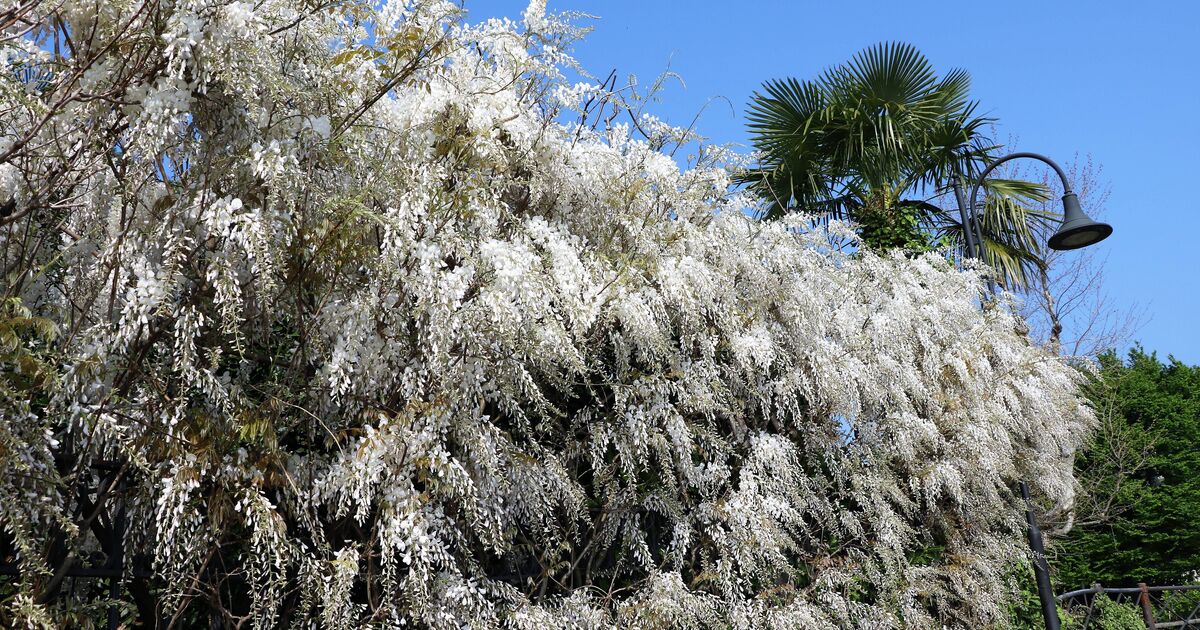
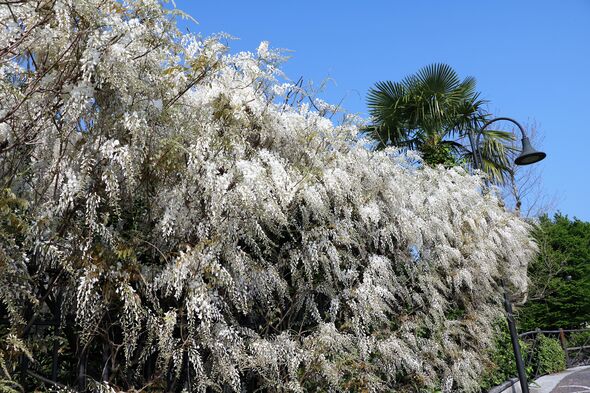
Get a second flush of blooms in summer from your wisteria with this simple gardening tip (Image: ClaraNila via Getty Images)
Wisteria is a stunning plant that can transform any garden with its beautiful purple shades. However, it transpires that purple isn’t the only colour wisteria produces; you can also cultivate magnificent white blooms for your outdoor space.
Referred to as wisteria alba, a Japanese variant of the flower, gardening expert and TikTok creator Ish highlighted that this variety is even more impressive, as it can flower twice annually, unlike traditional wisteria, which blooms once. Ish said: “And an even special thing about this is it doesn’t just flower once a year, it flowers twice.” Wisteria alba is a slow-growing flower, but once established after two or three years, it becomes an “incredibly vigorous” plant.
READ MORE: Gardeners urged to put tray of water in garden this weekend
READ MORE: UK households urged not to feed garden birds 2 foods from May 1

Tomato feed can help encourage a second flush of flowers during summer (Image: Getty Images)
It can achieve growth of one to three metres annually, reports The Mirror.
To encourage the flowers to bloom, ensure they’re situated in a location that receives ample sunlight. However, the secret to achieving larger and more impressive wisteria alba blooms is incorporating tomato feed, according to Ish.
Once buds begin appearing on the plant, apply a small amount of tomato feed to the soil weekly for approximately four weeks. Ish said: “As a result, with a high potash feed, it encourages these flowers to get even bigger and even more abundant, so it’s absolutely amazing.
“And if you want that second flower, what you want to do when these are done is wait for all the flower spikes to finish, cut them straight off at the base and then give it a really good fertiliser with some manure or some slow-release feed at the bottom.
“Leave it for a few months, and around about summertime, you’ll get that amazing second flush of flowers.”
Should your wisteria already have buds forming, you can stimulate flowering by applying tomato feed once a week for four weeks. Ish explained that tomato feed works to raise potassium levels in the soil, encouraging the blooms to open.
Ish noted in a previous video: “Tomato feed massively increases the yields of flowers and vegetables. So, it’s a little secret weapon for you.”
Tomato feed contains high levels of potassium, which promotes flowering and fruiting, strengthens plant resilience against disease, and maximises yields. It’s not only beneficial for wisteria, but is equally well-suited for those cultivating tomatoes, peppers, cucumbers, and other flowering plants in the garden.
Beyond its potassium content, the fertiliser is also packed with a wealth of additional nutrients, including nitrogen, phosphorus and magnesium. Nitrogen promotes healthy foliage growth, while phosphorus supports root health, and magnesium and sulphur contribute to overall plant vitality.
A further advantage of using a high potash fertiliser is the added protection it provides against plant diseases and environmental pressures. When it comes to pruning wisteria alba, it is advisable to do so in late winter, around January to February, to keep growth in check.
Comments are closed.