
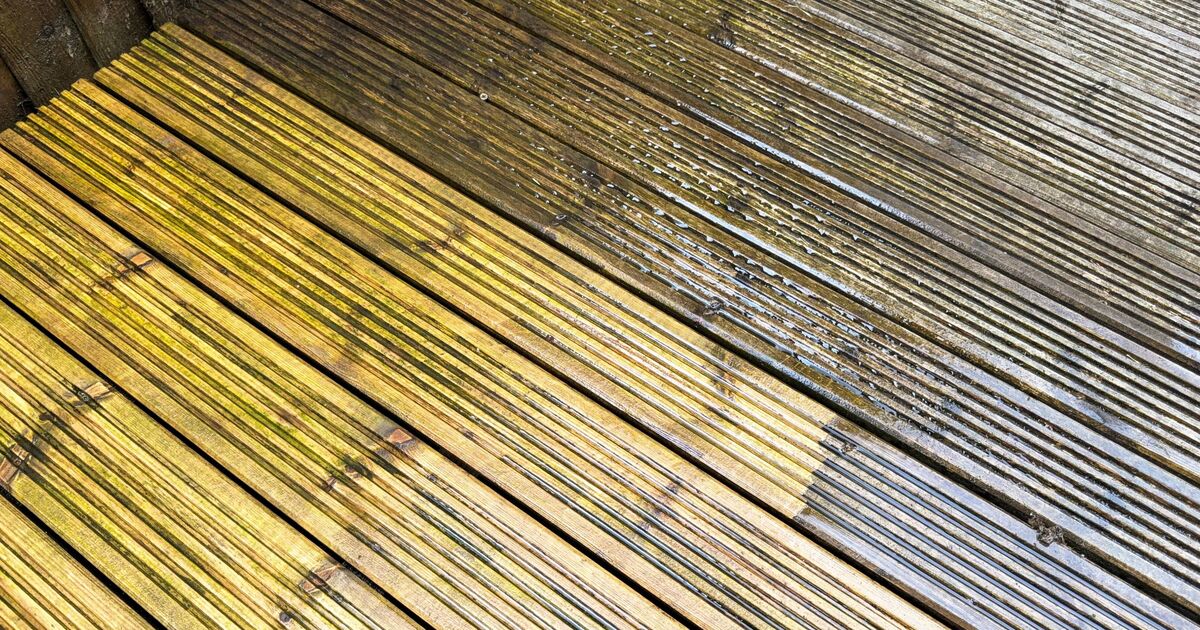
Keeping your decking clean is essential as summer approaches. Winter’s harsh conditions can take a serious toll on wood’s appearance, leaving yours looking shabby.
When wood is exposed to rainfall, algae and mould can form rapidly, leaving surfaces looking grimy. Rather than splashing out on a specialist decking cleaner, which can be costly and contain harsh chemicals, experts suggest there’s a straightforward and natural alternative that gives equally impressive results with minimal effort. The professionals at Gardening Etc have identified some of the most effective methods for tackling stubborn stains.
One of these is bicarbonate of soda, a household cleaning staple that’s likely already sitting in your kitchen cupboard, which can be purchased for as little as 65p from supermarkets.
How to clean your decking
There’s no need to invest in a pressure washer to achieve a spotlessly clean deck. Simply grab some bicarbonate of soda and sprinkle it generously across any areas requiring attention.
Alternatively, you can combine it with a small amount of water to form a paste, if you prefer
Whichever approach you choose, use a stiff-bristled brush and work the bicarbonate of soda into the wood for several minutes.
This non-toxic solution is especially effective at eliminating stains, as it’s abrasive enough to gently lift marks from surfaces without causing any damage.
It also helps in breaking down dirt and grease while neutralising unpleasant odours. Carry out this task on a dry day and allow the mixture to settle for a couple of hours before washing it off with a hose. Chris Bonnet from Gardening Express says this will “lift away” any stains and leave the decking looking as good as new.
As another option, a combination of water, white vinegar and washing-up liquid can also be very effective. This is an equally powerful solution for tackling stubborn stains and is especially well-suited to removing mildew that develops after prolonged exposure to moisture, making it ideal for post-winter use.
Chris explained: “Once the vinegar solution has sunk in, scrub the area with a brush until you see results. This method may have to be repeated a few times to achieve a thorough clean.”
Comments are closed.