
Traditionally, winter is the time for gardeners to dream and scheme about all they’re going to accomplish in the next growing season. This winter, while blizzard after blizzard pounded the windowpanes, I got lost in front of the fireplace by looking over the images from a trip to England last May. It’s the same technique I used in the dentist chair not long ago while getting a root canal. In times of great stress, I dream of gardening, picturing garden ideas in my mind.
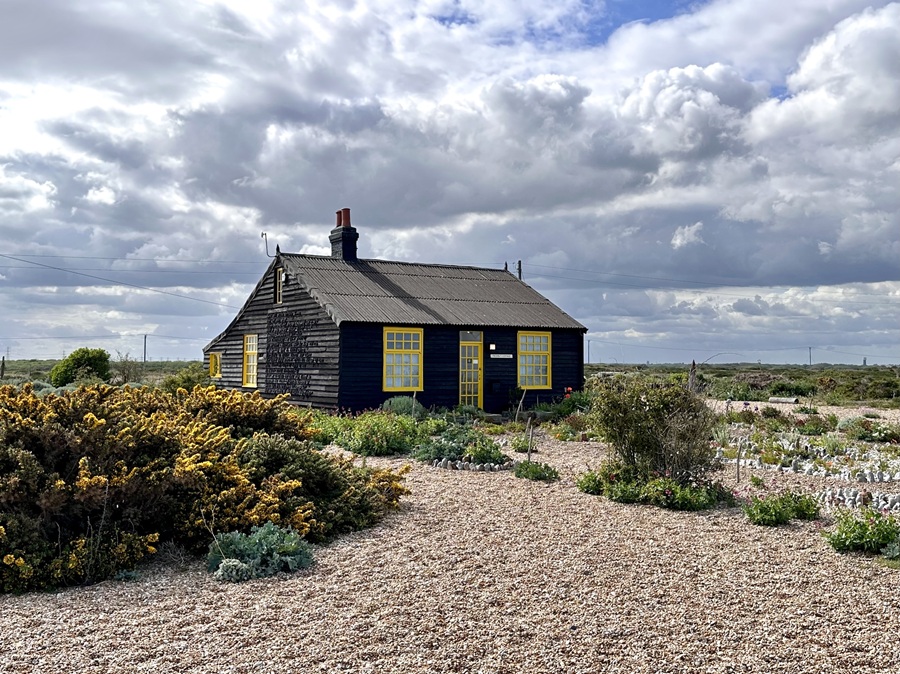 Derek Jarman’s seaside garden sits on a deep layer of beach pebbles on the Kent coast in southern England. (Photos by Stephen Orr)
You may think that those lucky Brits can grow anything. It’s true that they are blessed by much milder weather than we have because of the warming effects of the Gulf Stream (for as long as it holds out with climate change, that is). But the English are seeing changes to their “normal” as well. When we visited during the first two weeks of May, it hadn’t rained for weeks, and the weather was unseasonably warm. We experienced only one short rain shower during our time there. Even though this past winter was one of the wettest in recent memory, their summer weather is becoming hotter and drier. So British gardeners are hopping on the dry gravel and sand gardening trend in a big way.
Two of horticulture’s original gravel gardens were made by Brits: Beth Chatto’s garden in Norfolk and the late filmmaker Derek Jarman’s garden in Dungeness. We could not make it to Chatto’s garden on our trip, but I was determined to make a detour from London to the atmospheric setting on the Kent coast, which I first admired in the filmmaker’s 1995 book, Derek Jarman’s Garden.
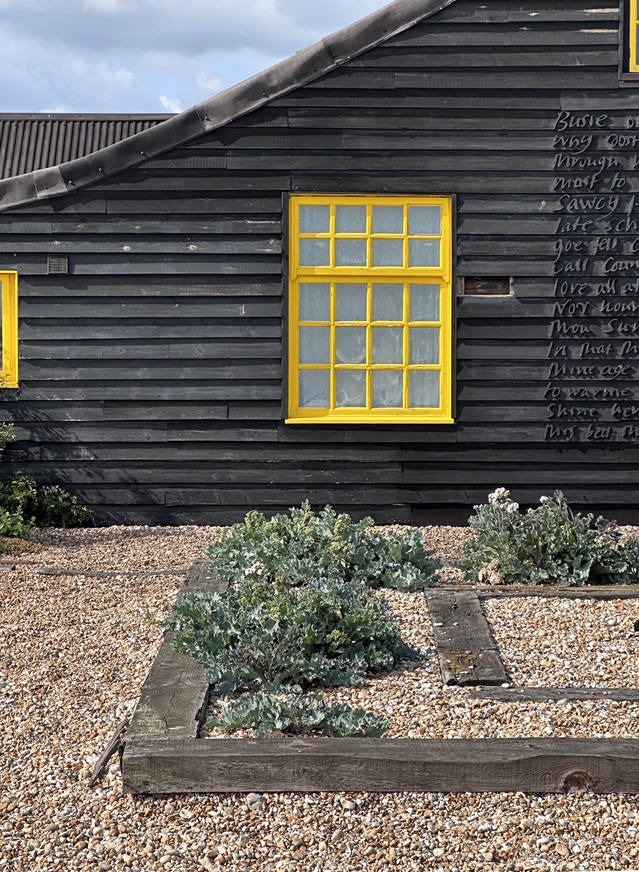 Begun in 1986, the garden is influential around the world for its simplicity both in design and materials.
The stark seaside landscape reminded me of Outer Cape Cod, though Jarman gardened not in our idyllically soft sand but in shingle (the British word for pebbled beaches). The small garden’s plantings are purposely sparse, allowing space between wind-sculpted clumps of maritime perennials and wind-whipped California poppies.
Jarman also masterfully used found objects like beach flotsam and driftwood to create garden sculptures that possess an austere authority reminiscent of Dame Barbara Hepworth or Constantin Brâncuși. The effect is otherworldly and somewhat eerie, especially with a large nuclear reactor looming right next door.
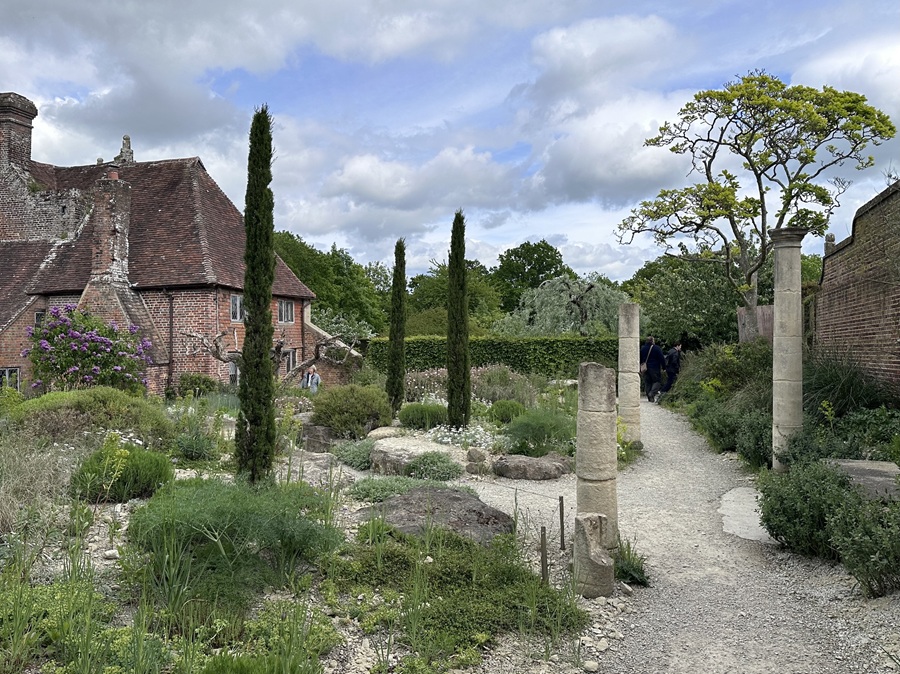 Sissinghurst may be most famous for its roses and lush herbaceous flower borders, but in 2021 a new dry Mediterranean garden opened there that reflects the U.K.’s changing climate. (Photos by Stephen Orr)
As we made our way over to Kent, the landscape became more lush, leafier — and tonier. Sissinghurst is world-renowned as a bastion of English gardening style made famous by Vita Sackville-West in the 1930s. But even here there is a something new: a dry garden. A formerly neglected walled area was originally intended to be a dry rock garden that evoked the Greek island of Delos, which Vita and her husband, Harold Nicolson, had toured. They never made the garden happen, but in recent years landscape designer Dan Pearson was engaged to resurrect the concept.
Delos inspired my continuing work on my own gravel garden in several ways. It reminded me to use large stones as accents. (Sissinghurst actually boasts antiquities from the Greek island in its garden.) So, I am saving the rounded pieces of granite I find while digging in my beds, recognizing that they were rolled here from Maine by the Laurentide Ice Sheet 18,000 years ago.
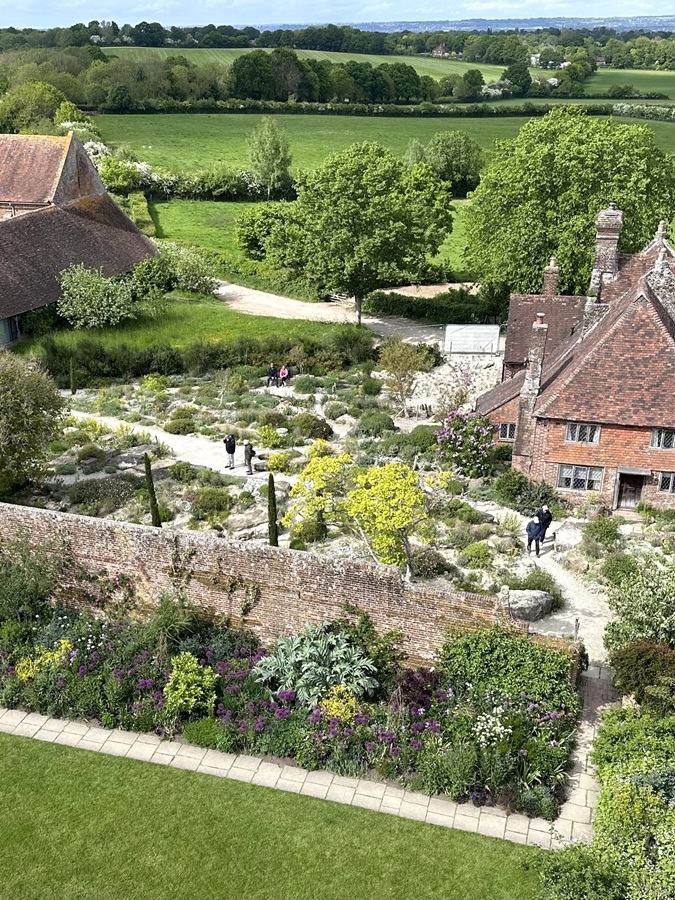 Sissinghurst’s Delos garden seen from the castle tower.
I also admired Delos’s use of vertical accents in the garden design, though I’ll be using spire-forming plants like verbascum and hollyhock instead of Hellenic columns in my Truro garden.
As much as I love living here, sometimes going for months without venturing beyond the Orleans rotary, travel undeniably offers fresh perspectives. Newly reminded of last year’s trip, I can’t wait to see what ideas pop up for my flower beds once spring — at long last — is truly here.
Part two of this story, to appear in a subsequent issue of the Independent, explores gardening for wildlife and the unconfined style of British gardens.
Comments are closed.