
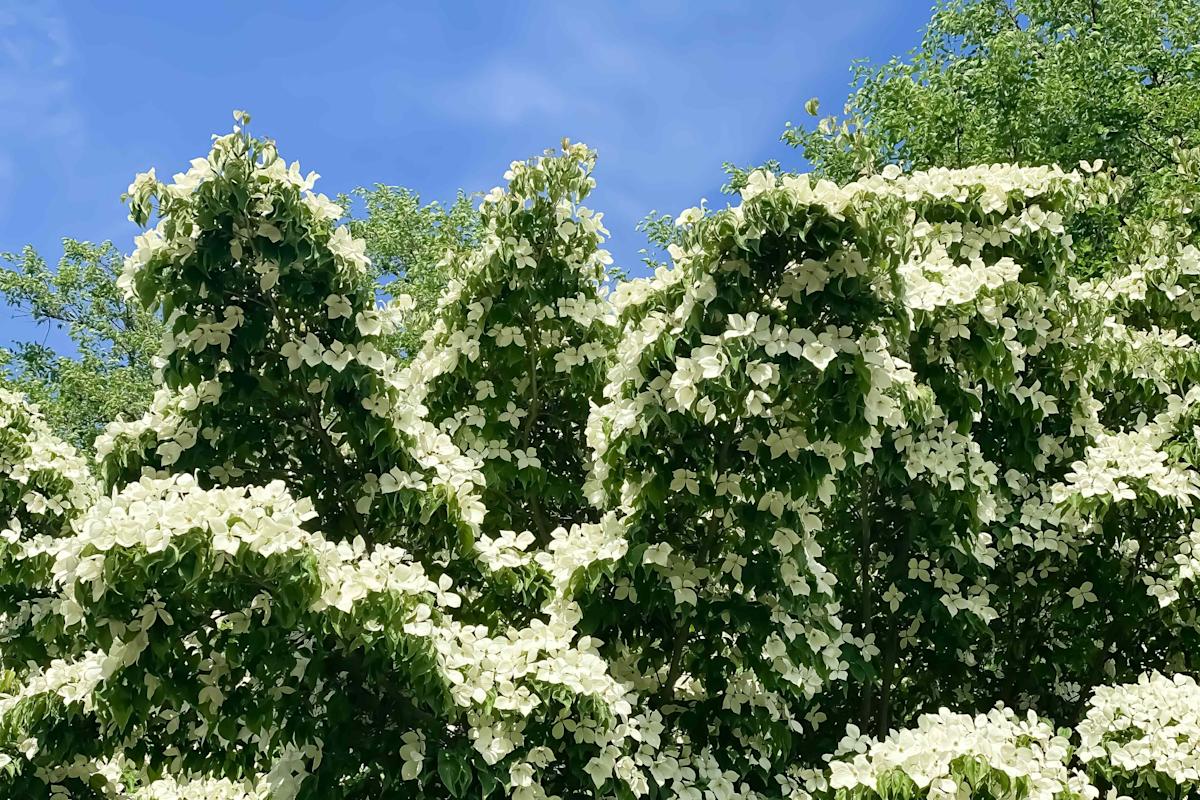
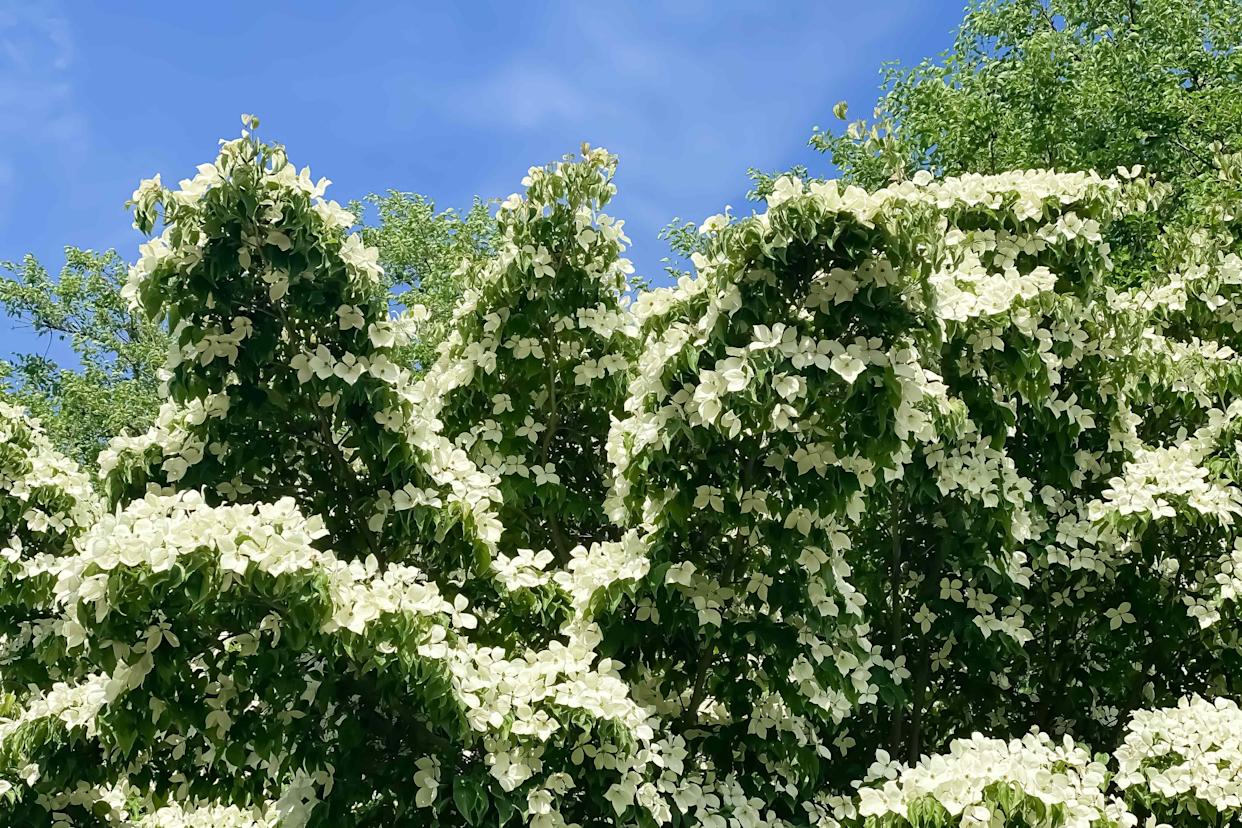
Credit: Catherine McQueen/Getty Images
Key Takeaways
Dogwood grows about 1–3 feet per year, with dense branches that provide privacy and flowers and berries that support birds and pollinators.
Gray dogwood is a species with quick coverage and lower maintenance, while red-twig cultivars require annual pruning for best stem color.
Plant in spring or fall, give full sun to partial shade, and keep soil consistently moist during the first growing season to support strong, steady growth.
Unfortunately, complete privacy in the backyard rarely happens overnight, but the right shrub selection can speed up the process. Some hearty plants fill in gaps relatively quickly and, as an added bonus, create a more wildlife-friendly space.
We asked garden experts to share their favorite fast-growing shrub that pulls double duty with thick foliage that blocks the neighbors and attracts birds, bees, and other beneficial pollinators. They all love dogwood (Cornus) and explain why this genus works so well. Here are the ones to take a chance on and how to plant them for the best results.
Meet the Experts
Matthew Swart, horticulturalist at Frederik Meijer Gardens & Sculpture Park
Matt Tutt, head gardener and founder of Aguacateros
Related: We Asked Gardeners Which Fast-Growing Groundcover Is the Easiest to Maintain—and Their Answer Was Unanimous
The Fastest-Growing Shrub for Privacy
Fast growth is only part of the equation when choosing the right privacy shrub for your yard. According to the garden experts we spoke to, dogwood earns a top spot for its widespread coverage, rapid growth, and pretty foliage that changes with the seasons. “Dogwood grows typically about two to three feet per year, eventually reaching six to nine feet in height and width,” says Ana Herrera-Ruiz, director of buildings, gardens, and grounds at Tudor Place. The plant comes as either a shrub or a tree and includes several species that vary in growth rate.
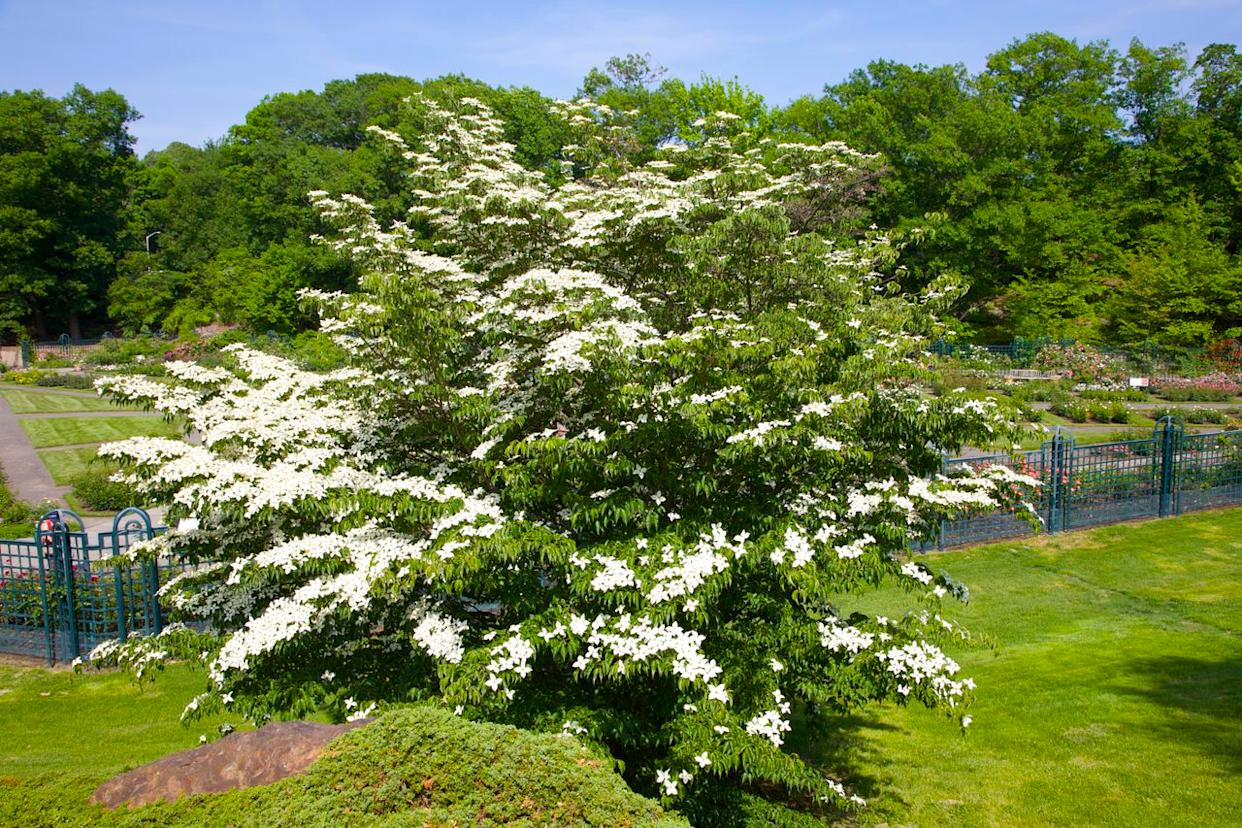
A blooming dogwood (Cornus x rutcan ‘Constellation’)
Credit: Barry Winiker/Getty Images
Matt Tutt, head gardener and founder of Aguacateros, assures us that, despite being such a broad genus, dogwood is typically considered a fast-growing shrub. “It won’t be the fastest growing shrub out there, but it will be fast enough to provide ample privacy.” He notes that cuttings will grow significantly slower than nursery-bought plants. “Cuttings are quite a severe way to grow a new plant, so they need time to recover and put out new growth.” In general, though, dogwood’s steady growth and dense branching make it a reliable choice for privacy.
Common dogwood species include red-twig, flowering, cornelian cherry, alternate-leaved, and gray. One expert gardener we spoke to insists on the gray version in his yard. “Gray dogwood (Cornus racemosa) is a thickly branched shrub and can grow one to two feet per year in full sun,” says Matthew Swart, horticulturalist at Frederik Meijer Gardens & Sculpture Park. “At maturity, it tops out at six feet but can reach 12 feet in optimal soil and light conditions.”
The gray version spreads by root suckers, forming a low-growing natural hedge that immediately provides privacy through the growing season. The flowers are quite striking, too. “White flowers bloom from May until June on the tips of branches,” Swart says. “In the fall, it is adorned with small white berries that contrast nicely with smoky purple foliage. They are relished by migrating birds.”
The choice between species isn’t always straightforward, and you’ll want to balance how quickly you want coverage with the look and how much maintenance you want to take on.
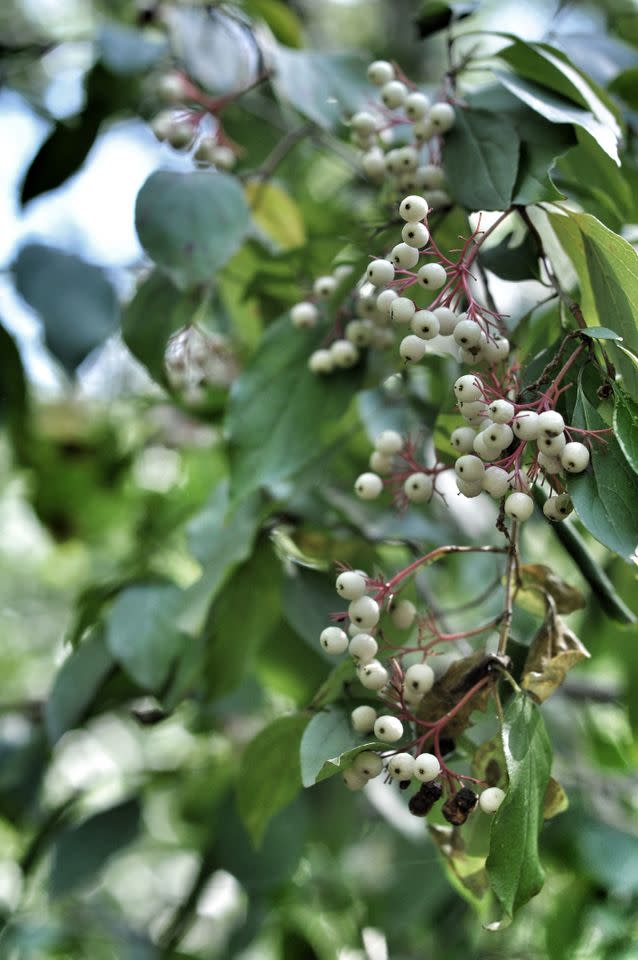
Berries on a gray dogwood shrub
Credit: S / Getty Images
Top Species and Cultivars
As far as species go, the red-twig options tend to provide the fastest visual payoff. “My personal favorite is the Red Osier Dogwood (Cornus sericea), as it has a stunning red color on its stems,” says Tutt. “It reminds me a bit of willow. But a primary benefit of dogwood is the berries, which will be enjoyed by birds and other wildlife.”
Within each dogwood species, there are many cultivars, and gardeners rarely depend on just one. “Popular cultivars include ‘Arctic Fire’ (Cornus sericea) with a more compact form and ‘Cardinal’ (Cornus sericea) that stands out for its vivid red stems,” says Herrera-Ruiz. “‘Ivory Halo’ (Cornus alba) has stunning variegated foliage.”
Gray dogwood has more muted reddish-gray stems, which could appeal to you more, but you won’t have many options. “There are actually no cultivars in production for gray dogwood, as it is often overlooked by red-stemmed varieties,” he says. “However, they can normally be found at nurseries with a native plant section and online.”
Some of Swart’s other favorite species of dogwood include:
Alternate-leaved dogwood (Cornus alternifolia): Comes as a tree or shrub and has a horizontal branch pattern, giving it a layered, tiered look that is architecturally striking.
Cornelian cherry (Cornus mas): Not actually a cherry but a dogwood that can be grown as a shrub or a tree. Unique among dogwoods, it has yellow spring flowers and large red fruits.
Flowering dogwood (Cornus florida): Technically not a shrub, but it grows into a small tree with large, white eye-catching “flowers” in spring. The inflorescence “flowers” are actually modified leaves called bracts surrounding a much smaller flower.
Blooming and Planting
Once you’ve picked a favorite, timing your planting makes a big difference in how well it establishes over its first year. “For best results, I recommend planting these in the spring or fall, as they bloom in late spring and are followed by berries,” says Herrera-Ruiz.
But if you miss that window, Swart says it’s OK to plant in early spring as long as it’s before May (any time after this increases mortality rates). “Gray dogwood can also be propagated from rooted or unrooted cuttings,” says Swart. But, as mentioned earlier, cuttings will slow down the expected growth rate per season.
As long as you get them in the ground soon enough, you should be able to enjoy blooms relatively quickly. “Most of them will be blooming in the springtime,” says Tutt. “I noticed I already have a few flowers that have been out for several weeks.”
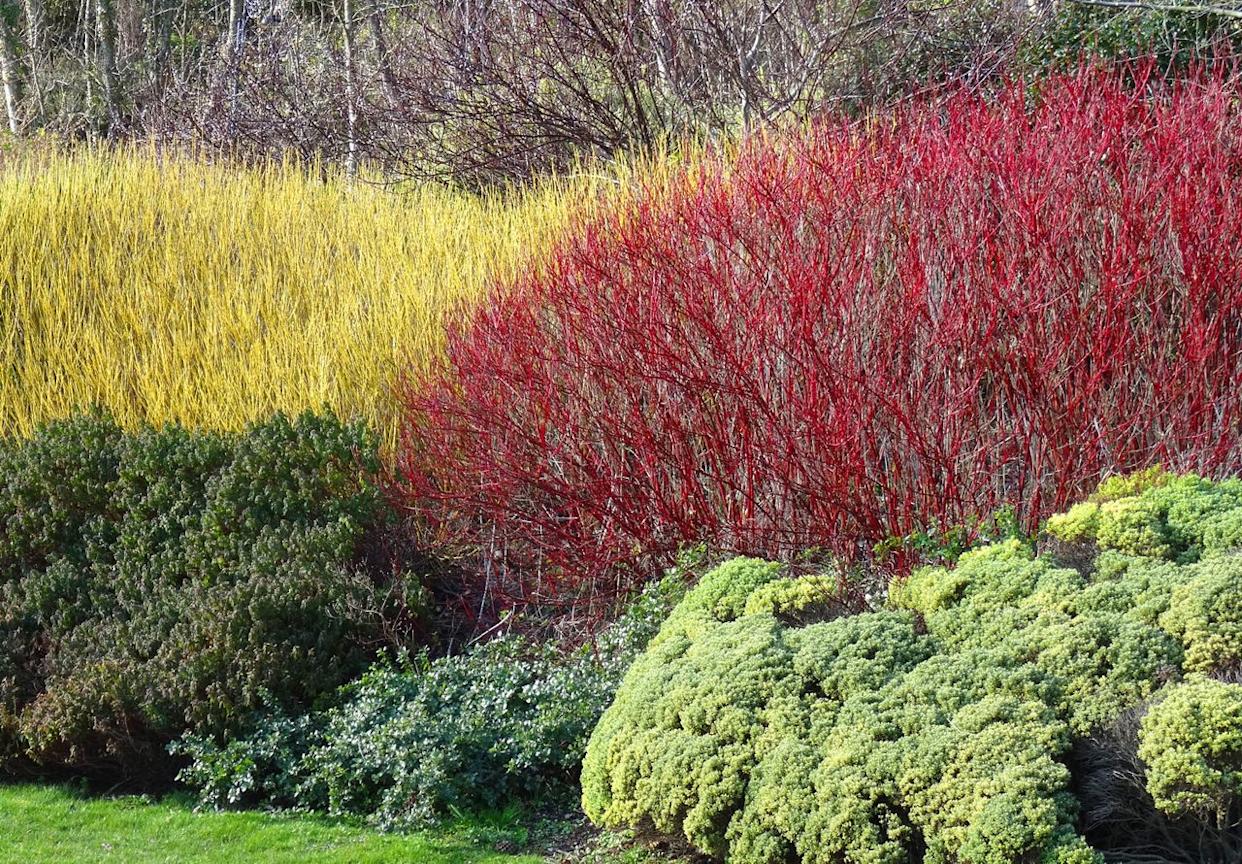
Yellow-twig and red-twig dogwood shrubs
Credit: mtreasure / Getty Images
Best Care Practices
Dogwoods are relatively low-maintenance, but some varieties will need pruning, and all types will benefit from adequate moisture and proper placement. “In terms of care, these shrubs thrive in full sun to partial shade,” says Herrera-Ruiz. They also prefer consistently moist soil (you’ll need to water regularly during the first growing season) and benefit from annual pruning “to keep those signature red stems looking their brightest.” Tutt recommends planting them in a spot that isn’t too windy, but otherwise, they shouldn’t be too difficult to maintain.
If you needed another reason to go gray, Swart tells us that gray dogwood requires much less maintenance than red-twig dogwood because it doesn’t need rejuvenation pruning. “They are surprisingly adaptable to all soil types, from clay to sand, and can grow in light levels from full sun to part shade,” he says. “There are no serious insect or disease problems, and they are tolerant of poor soils and urban pollution.” The final bonus: They’re also deer-resistant. Ultimately, you’ll need to decide whether you prioritize bold color or a more low-maintenance, natural-looking privacy hedge.
Read the original article on Real Simple
Comments are closed.