
 3 min read
Above: In the living room of a Southampton guest cottage, designer Clive Lonstein paired an antique grandfather clock with a Philip and Kelvin LaVerne cocktail table, Louis XVI–style chair, sofas newly upholstered in Dedar fabric, and a handwoven wool rug by Beauvais.
Clive Lonstein distinctly recalls the first time he poked around the 1950s guest cottage on his clients’ Hamptons estate nearly two years ago. “It had a very calming sensibility, almost like stepping back in time,” he says. Still, the shortcomings were hard to ignore: despite its setting amid sprawling gardens, the ranch-style retreat suffered from shadowy interiors, eight-foot ceilings, and undersized windows. “It had character and charm—but the original architecture was horrible.”
With Labor Day approaching, the New York–based designer believed there was just enough time for a swift yet intensive renovation before the next high season. What followed was a down-to-the-studs overhaul that ultimately sparked a dialogue between past and present. Such juxtapositions are familiar territory for Lonstein, a Studio Sofield alum and a former VP at Tiffany & Co., who founded his namesake firm in 2016. His recent work ranges from a boldly reimagined Colonial Revival in Litchfield County to his own minimalist loft in a prewar Manhattan high-rise.
 Frank Frances Studio
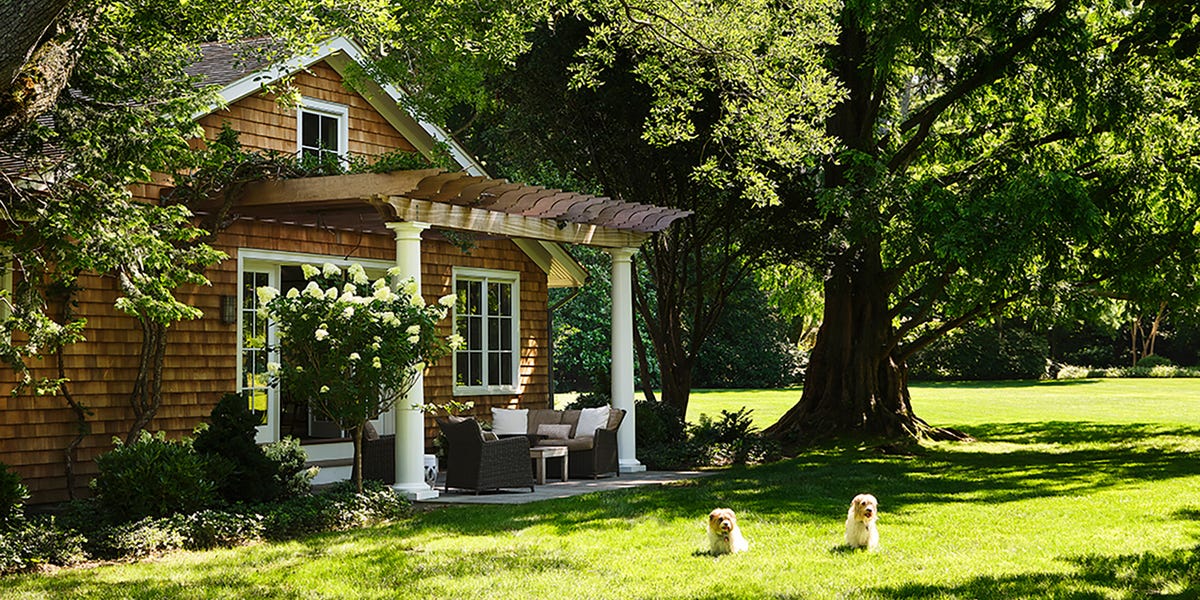
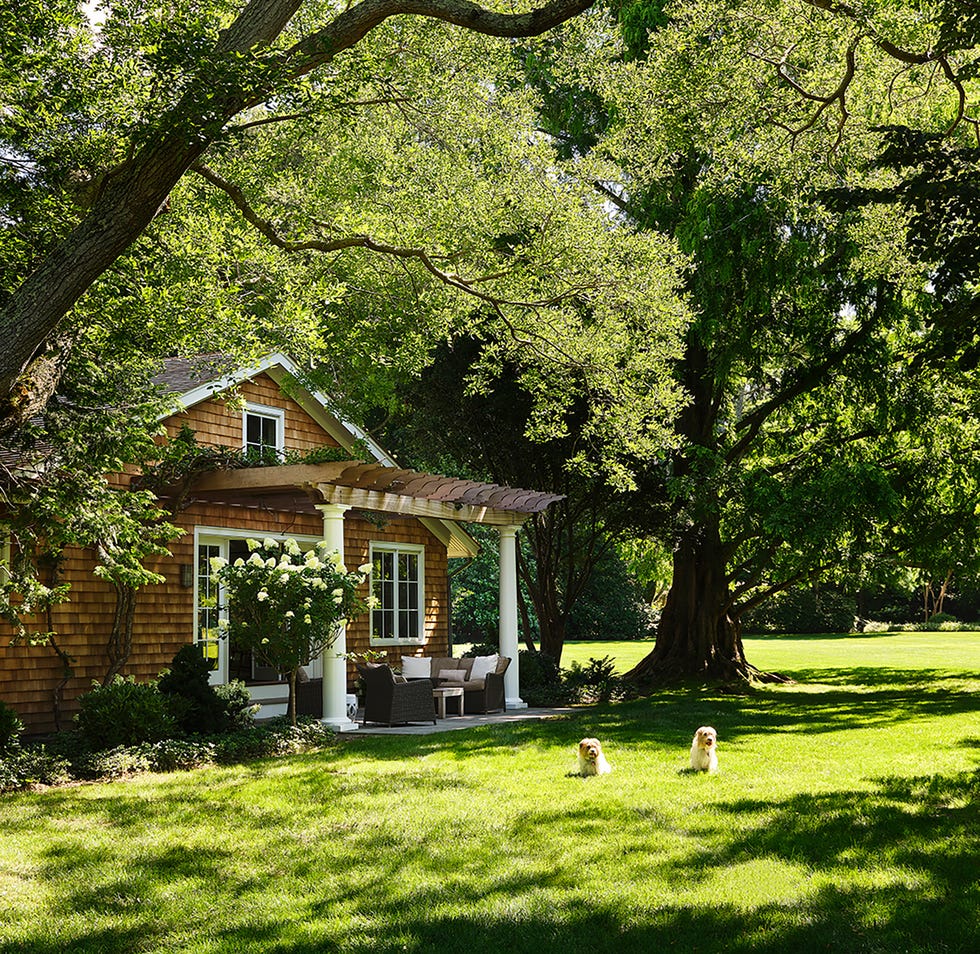
During the renovation, Lonstein added a window above the trellis to give the living area a boost of sunshine. The shingle-clad cottage dates to the 1950s and is set amid gardens and towering trees.
In Southampton, the initial goal was to preserve the four-bedroom house’s idiosyncratic spirit while infusing it with a sense of relaxed elegance. “One thing that served as inspiration was the idea of a European country cottage,” Lonstein says. That meant eschewing beachy tropes in favor of interiors layered with the clients’ existing antiques, alongside newly sourced vintage pieces and bespoke designs.
 Frank Frances Studio
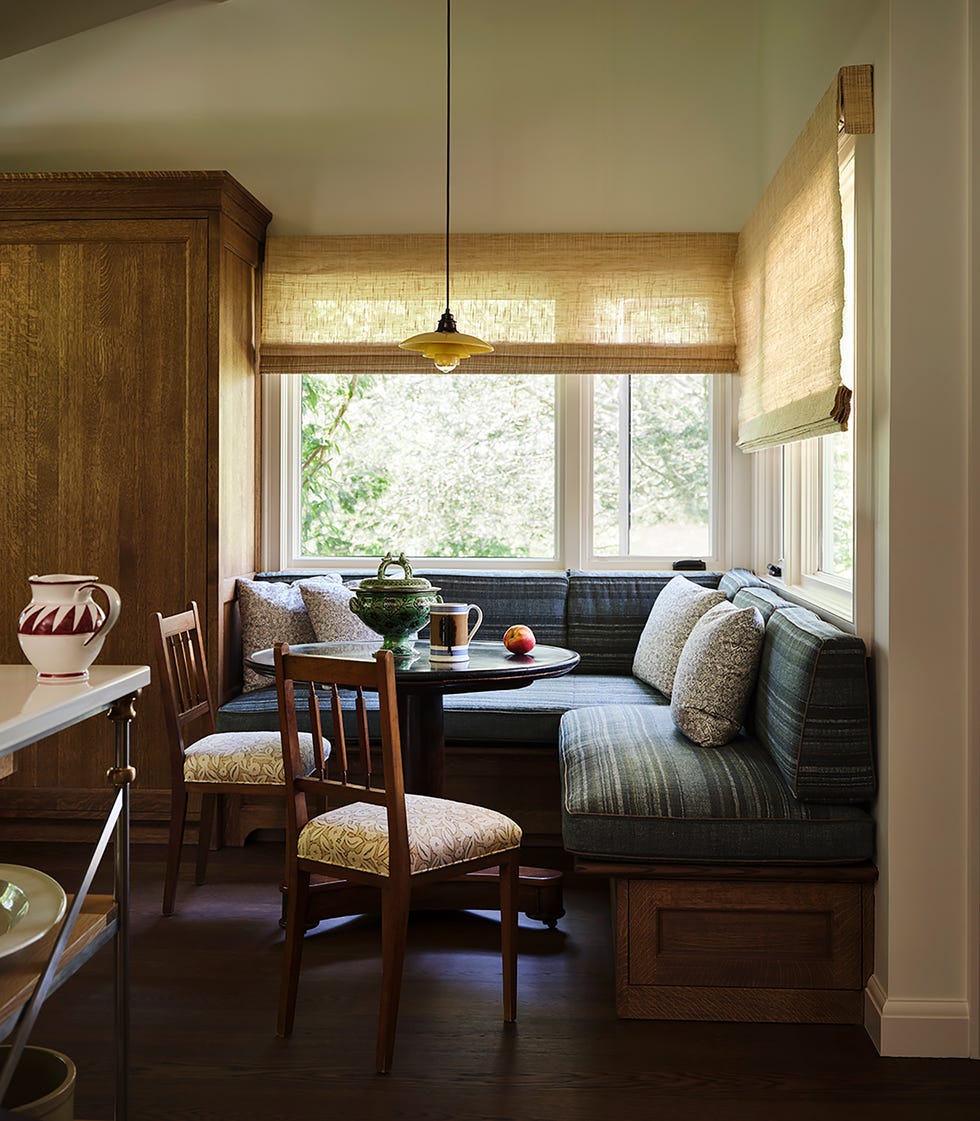
“Everyone loves a banquette,” says Lonstein, who created a breakfast nook in a light-filled corner just off the kitchen. The bench is clad in a striped linen from Mark Alexander, while the Roman shades are by Hartmann&Forbes. Lonstein sourced the 1930s Poul Henningsen pendant from 1stDibs; the table and reupholstered chairs were in the clients’ collection.
The first order of business was addressing the lack of natural light in the low-slung structure. To that end, Lonstein and his team undertook a series of thoughtful architectural interventions, including raising the roof and reworking the floor plan. “Every room now has a cathedral-style ceiling, which is really helpful in a single-story house,” he explains. Additional windows—including one above the front door—usher in much-needed light.
Lonstein also reimagined the layout, creating a central kitchen, dining area, and living space. “It’s antithetical to what I would normally do in a traditional cottage like this,” he says. “There was something compelling about turning the main room into a large, loft-like space, but articulating it through a country-cottage lens.”
 Frank Frances Studio
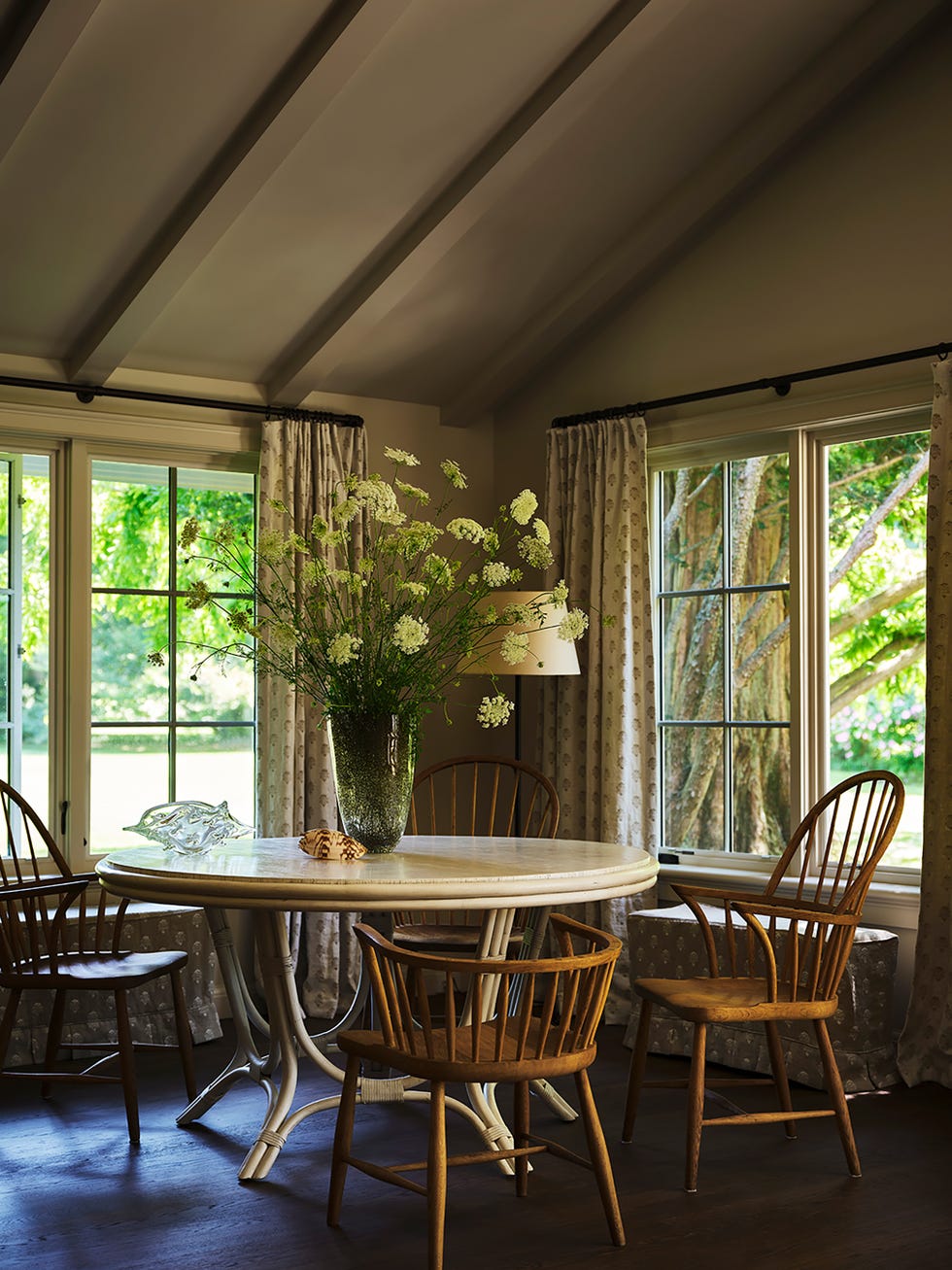
The dining room gets a dose of Danish modern charm with a suite of wooden Frits Henningsen chairs from 1stDibs that encricle an Aero Studios table. Both the curtain fabric and bench upholstery are from C&C Milano.
This soaring space exemplifies Lonstein’s layered approach to decoration, seamlessly blending the clients’ existing treasures—among them an antique screen acquired at auction from the estate of Doris Duke—with his own discoveries, such as a cocktail table by artisan duo Philip and Kelvin LaVerne. For lighting, he sourced a vintage Artichoke pendant by Poul Henningsen for Louis Poulsen on 1stDibs, lending the room a warm glow and a subtle modern edge.
“I think a lot of what drove the design choices was the interesting collection of antiques that were already in the house,” Lonstein says. “I love the challenge of working with disparate pieces and making them feel natural in new environments.”
 Frank Frances Studio
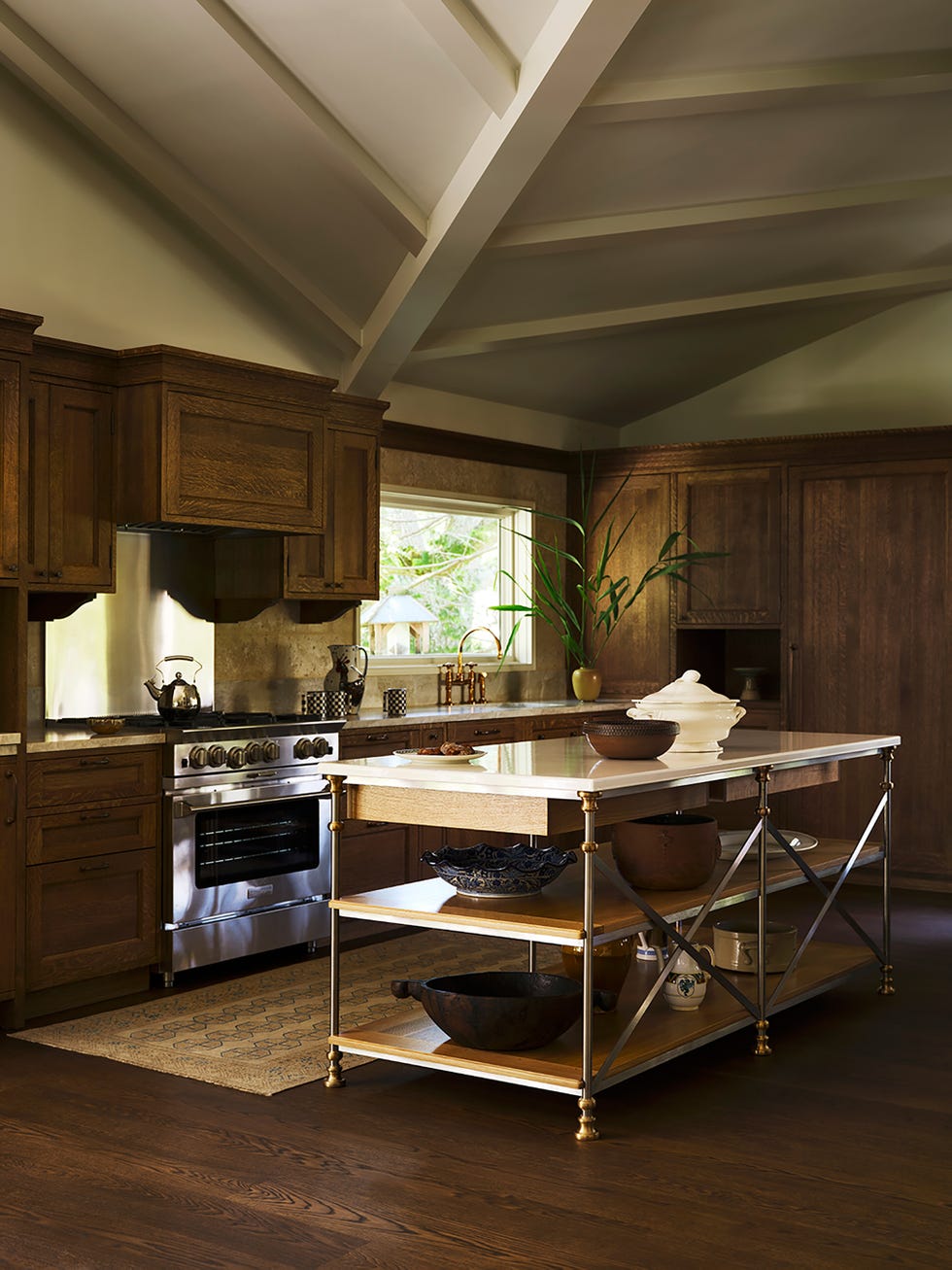
Custom stained-oak cabinetry with Merit hardware lines the kitchen, which also features Waterworks sink fittings. The vintage runner is from Rug & Kilim, via 1stDibs.
Throughout, the material palette emphasizes warmth and texture, with stained oak floors, terra-cotta tiles, and tactile Phillip Jeffries wall coverings. Each room is anchored by a custom handwoven rug from Beauvais, Patterson Flynn, or Marc Phillips. “Even though it’s in Southampton, it doesn’t read as a beach house—it feels unexpected,” he notes.
Now overlooking the garden, the relocated kitchen offered another opportunity to break from convention. “I strive not to do typical suburban kitchens,” Lonstein says. Instead, he designed a movable island on casters and topped with enameled lava stone. “If it were wood, it would feel a bit predictable. I wanted it to feel more collected.”
Inside a Hamptons Guest Cottage That’s Anything But Beachy Open Gallery
Another custom intervention is the living room’s oak bar, discreetly outfitted with a wine cooler, ice maker, refrigerator, and sink. “It’s fully functional, but encased in something that blends seamlessly with the surrounding decor and sensibility of the antiques,” he says. “Oak felt especially appropriate—so much English country furniture is done in it.”
In the end, Lonstein and his team completed the project in time for the owners to start welcoming visitors last summer. “They use it all the time, and guests love it,” he says. The only drawback? Weekenders may be reluctant to leave. “Everybody comes to the Hamptons, but when you walk in here, it transports you somewhere else.”

Geoffrey Montes is an associate editor at ELLE Decor with a serious love for all things real estate and design. Before that, he worked at Architectural Digest, Galerie, and Preservation magazines, covering everything from jaw-dropping listings to world-famous architects and design events like Salone del Mobile and Homo Faber.
Comments are closed.