
1. Weed Your Garden
Get ahead of the weeds. April is typically wet, creating ideal conditions for growth. “In May, stay caught up — or get caught up — on weeding,” says Rhonda Shoemaker, owner of Glorious Gardens. That means knowing what is and isn’t a weed. Shoemaker recommends downloading the PictureThis app to help identify plants. “Apps like that can really, really help, especially for people whom it isn’t their profession to know,” she says. The good news: homeowners typically see the same weeds repeat in their yards. “You’re not going to have 100 different types of weed,” Shoemaker says. “You’re going to have maybe 10, based on your soil and light.”
Pro tip: Use a dig knife instead of the traditional weaving tool. “You have more power and a wider blade, so you have a much better chance of actually getting the root of the weed out.”
Get a weekly dose of home and style inspiration
Subscribe to the St. Louis Design+Home newsletter to explore the latest stories from the local interior design, fashion, and retail scene.
We will never send spam or annoying emails. Unsubscribe anytime.
This site is protected by reCAPTCHA and the Google Privacy Policy and Terms of Service apply.
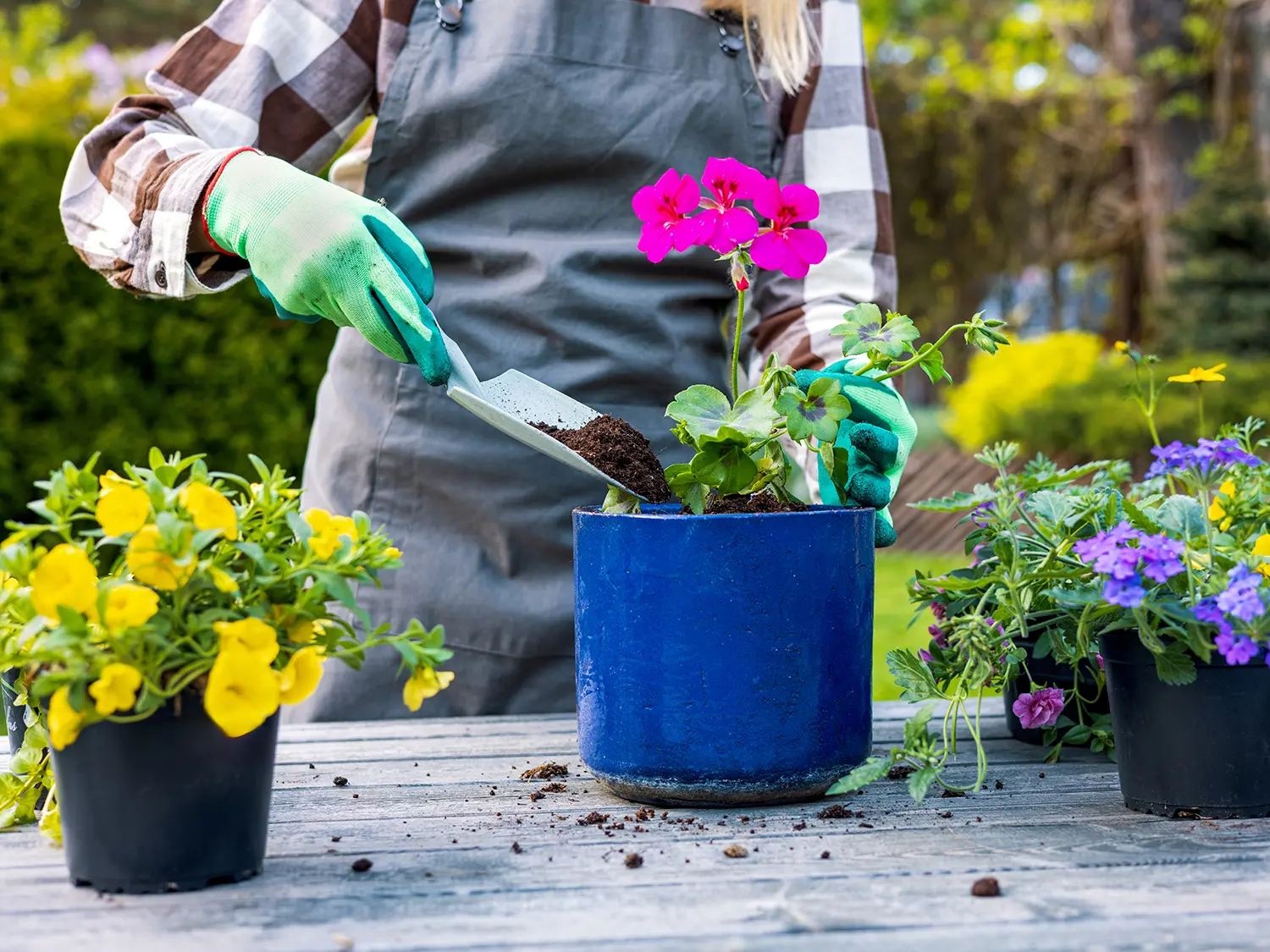
2 . Plant Annuals and Mow the Lawn
Start planting annuals. By May, homeowners are ready to plant annuals — including tropical varieties like canna, hibiscus, and other showy bloomers. “Once the weather stabilizes above 50 degrees consistently at night, we’re busy planting both planters and annuals in the ground,” says Shoemaker.
May is also a good time to dust off the lawn mower, especially for homeowners who participated in “No Mow April” — a conservation campaign that encourages skipping or minimizing mowing for the month to provide early-season food and habitat for pollinators. “A lot of municipalities adjust their normal rules about lawn heights during April because they’re aware of No Mow April and want to support insects finishing their winter life cycle,” Shoemaker says. “If you did that, you have a lot of mowing to catch up on.”
Pro Tip: For the first mow, Shoemaker recommends mowing high–two and a half to three inches–to allow more shade for the soil. “When you get sunlight and bare soil, that’s when you have more of an opportunity for weeds to emerge,” she says.
3. Prune and Mulch
Prune and mulch. May is a big month for pruning, thanks to all the spring blooming — especially among flowering shrubs, evergreens, and boxwoods. “It’s less damaging to prune after the flowers are done blooming,” says Shoemaker. For boxwoods specifically, wait until the new leaves have hardened to the touch, a sign that the plant is finished with its growth flush.
Mulching is the other major May task. “We don’t recommend wood mulch because it takes a long time to break down and doesn’t add to the organic matter of the soil,” Shoemaker says. Instead, she prefers organic compost or a triple-ground leaf mulch. “We like leaf mulch because the nutrients are more readily available as it decomposes into the soil,” she says.
Pro tip: Organic compost can be bought in a bag at a local nursery or through St. Louis Composting.
4. Deadhead Perennials
Deadhead spent perennials. By May, some perennials — like lungwort, celandine poppy, and bugloss — have finished blooming, which means it’s time to deadhead, or remove the spent flower stems. Keep in mind that deadheading can trigger a second flush of blooms in some perennials, so consider how each plant supports the wildlife you want to attract before you cut. Having that information will help you decide whether or not to cut off the stems, notes Shoemaker.
Pro tip: Know your garden goals.
Comments are closed.