
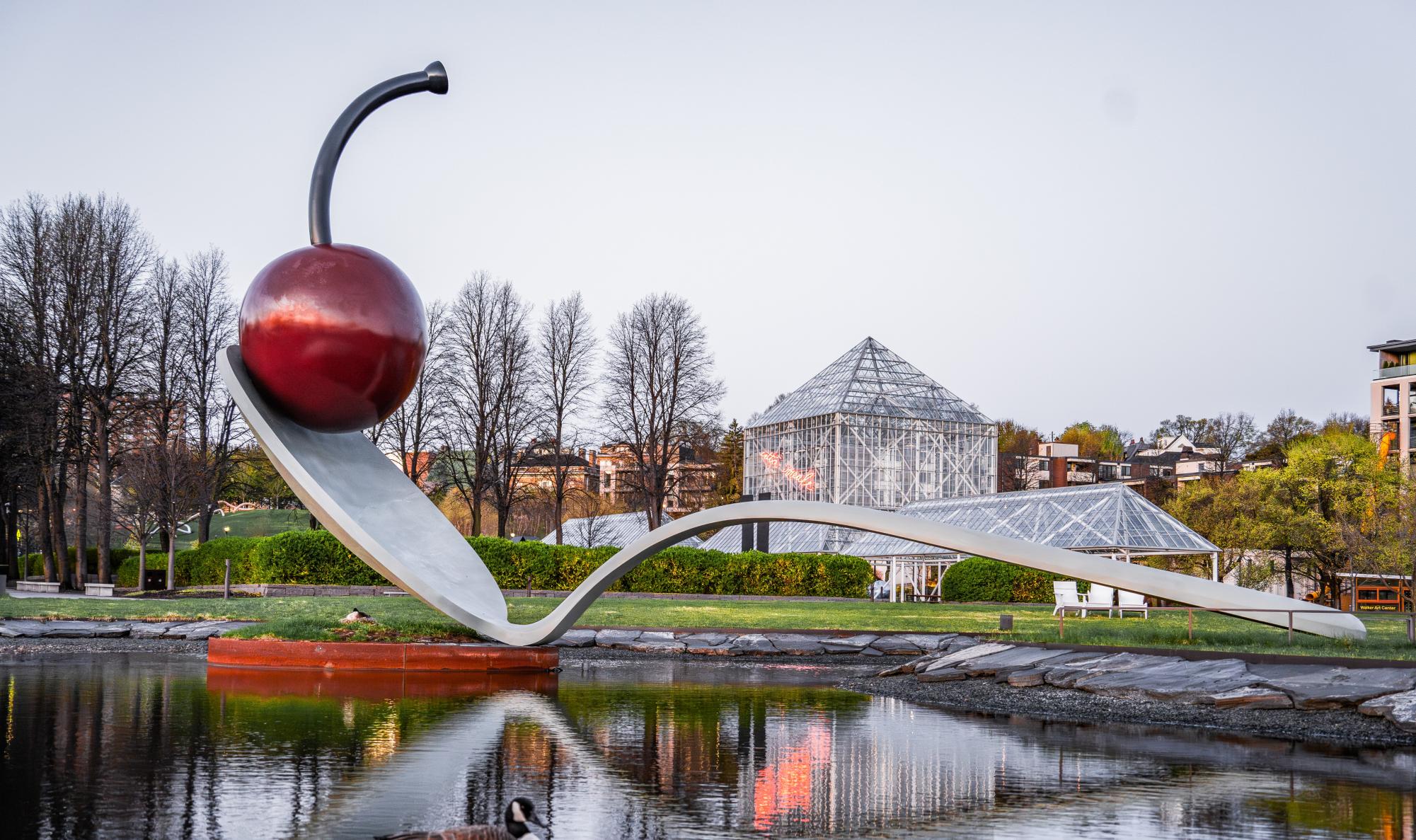
For decades, the Minneapolis Sculpture Garden has been one of the city’s most recognizable public spaces – a place where art, landscape and community meet. For a garden that feels like it has existed forever in the eyes of many visitors, staying relevant requires constant change.
Those changes can be subtle, appearing in the plants, sculptures and how people move through the garden. Together, they can make each visit feel new.
“It’s something that people are proud of to bring, you know, family and friends when they come to visit,” Kait Ryan said, horticulture manager for the Minneapolis Park and Recreation Board.
Ryan said one of the garden’s most dynamic qualities is how it’s seasonal. Unlike a museum, the experience is never static.
“You can visit at different points throughout the year, and you’re going to have a completely different experience,” Ryan said.
From spring blooms to fall color shifts, the landscape itself becomes part of the storytelling. Ryan describes what she calls “four gold moments” throughout the year, periods when the garden is transformed by bursts of yellow across different areas — from blooming forsythia hedges to meadow flowers and changing tree canopies.
Those changes help draw both first-time visitors and longtime residents back into the space. The garden’s ability to feel new is not just about what grows, but also about how the space is designed.
Different areas of the garden offer different experiences.
The Two-Way Mirror Punched Steel Hedge Labyrinth creates an intimate, enclosed environment, while the open lawn surrounding the iconic Spoonbridge and Cherry allows for large gatherings. Further north, a meadow filled with native plants introduces visitors to more sustainable landscaping practices.
Together, those spaces shape how people engage with both the art and each other.
“Landscaping really sets the tone for the experience,” Ryan said.
Behind the scenes, maintaining that experience takes effort — especially in a space that sees thousands of visitors each year.
At the Walker Art Center, staff work year-round to preserve the sculptures themselves. For Robert Frank, a collections and exhibitions support technician, that work is often hands-on.
“I’m typically outside all day, tending to the sculptures,” Frank said.
That includes washing sculptures, removing buildup from weather and applying protective wax coatings to bronze works during the summer months. Even the well-known Spoonbridge and Cherry requires detailed care, sometimes involving heavy equipment.
“We use like an 85-foot boom lift, I’m within an arm’s length of the cherry,” Frank said.
Despite the artwork’s visibility, much of that labor often goes unnoticed.
“I feel like most of my job is often overlooked,” Frank said.
Still, that work is essential to preserving the garden’s legacy while ensuring it remains inviting to new audiences.
The garden’s accessibility also plays a major role in its continued relevance. Unlike many traditional art spaces, it is free and open to the public.
University of Minnesota art professor Tetsuya Yamada said the garden’s accessibility changes how people engage with art.
That openness allows for more personal interaction. Visitors can move freely, experience large-scale works and interpret them in their own way, something that differs from more structured museum settings.
Public art spaces like the sculpture garden can serve many purposes, Yamada said, from offering visual experiences to reflecting social or personal histories.
“It’s a way of communicating,” Yamada said.
The communication between artist, space and visitor is part of what keeps the garden alive over time. For visitors returning year after year, that balance may be the garden’s greatest strength — a place that feels both timeless and new.
Comments are closed.