
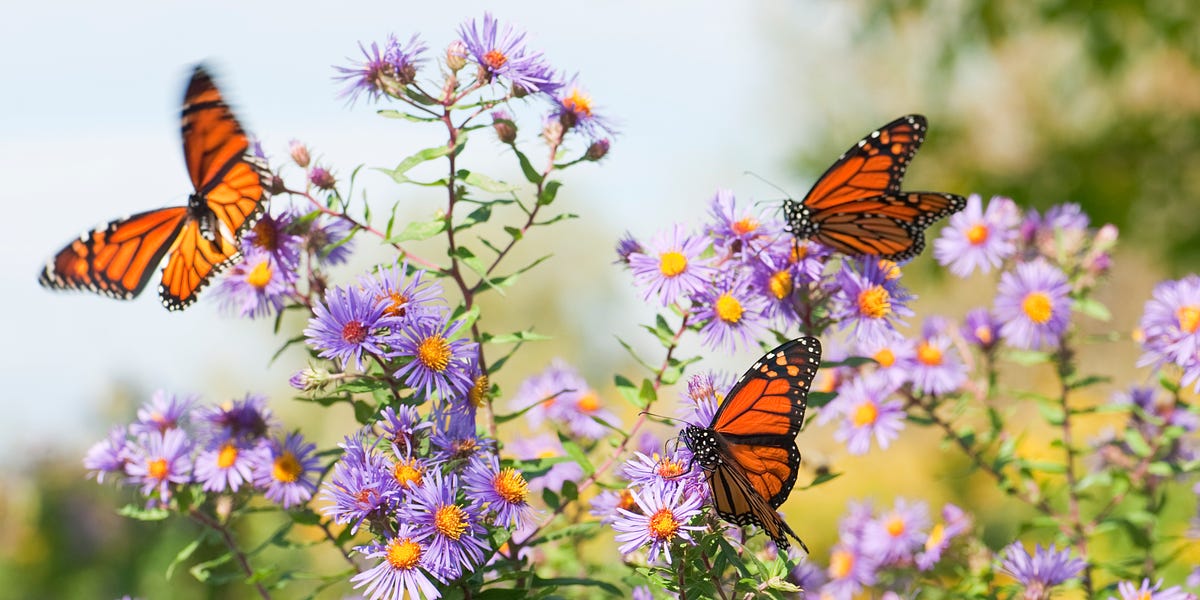

A real-time map lets you track when monarch butterflies will likely appear in your area.
The map uses user-reported sightings to show both first appearances and ongoing sightings.
Planting milkweed and flowers like zinnias and coneflowers can increase your chances of seeing monarchs in your yard.
There’s something magical about sitting in your garden and watching a monarch butterfly drift by. Each year, monarchs return to the same regions, following a predictable migration pattern. So if you’re wondering when monarchs might arrive in your area, there’s an online map that can help.
This real-time migration map, operated by Journey North, an organization that tracks wildlife migration, compiles sightings from users to show when and where monarchs are spotted throughout the year.
RelatedWhen monarch butterflies might arrive near you
To understand when the monarchs will arrive, it’s helpful to know their general migration path. To survive cold winters, monarchs east of the Rocky Mountains fly to Mexico, and monarchs west of the Rockies head to the California coast. They make their fall trip between September and November, and return north between March and June.
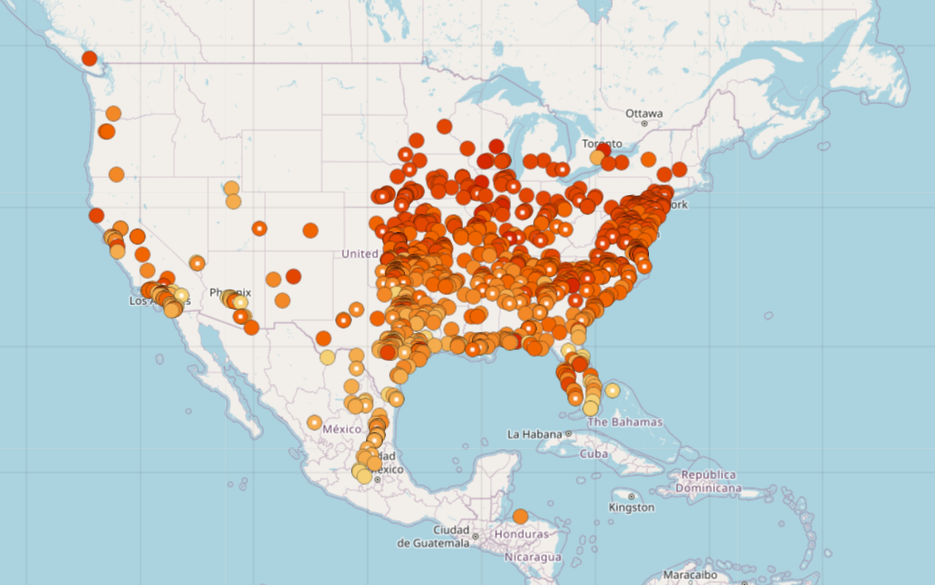
Journey North’s maps make it easy to see what all this means for sightings in your specific area. It has a map where users can add data points for the first monarch they see each year, and another map where users can record any monarch they see.
When you spot your first monarch, report your observation to Journey North to keep the map up to date.
While this year’s map is still incomplete, users across the U.S. have already reported seeing their first monarchs of the season as of April 28. Last year, first sightings peaked in May, June, and July. So if you haven’t seen one yet, your first butterfly might be just around the corner.
 Journey North
Journey North’s map of first monarch butterfly sightings as of April 28, 2026.
If you want to track even more creatures, Journey North also has maps for robins, orioles, bald eagles, hummingbirds, and more.
Of course, following the monarch’s migration isn’t the only way to boost your chances of sighting one this spring and summer. According to The Old Farmer’s Almanac, planting milkweed, which is essential for monarch reproduction, along with nectar-rich flowers like coneflowers, zinnias, and lantana, can help attract them to your yard.
The butterflies will thank you for it!

Juliana (she/her) is the deputy digital editor at Good Housekeeping, where she leads the lifestyle team and oversees coverage across entertainment, health, home, holidays, food, and travel. She brings more than a decade of experience to the role, including time as deputy features editor at HGTV Magazine and Food Network Magazine. Her bylines have appeared in Reader’s Digest, Elle Decor, Editorialist, Best Life, Bloomberg News, and more.
Comments are closed.