

After spring bulbs are finished and summer flowers have yet to open, it’s annuals and fast-growing perennials that keep your garden in bloom. Garden centers and nurseries offer plenty of choices, so when you need to fill in blank spots now, consider the following 12 plants that grow rapidly and bloom early for living color all season long.
Alyssum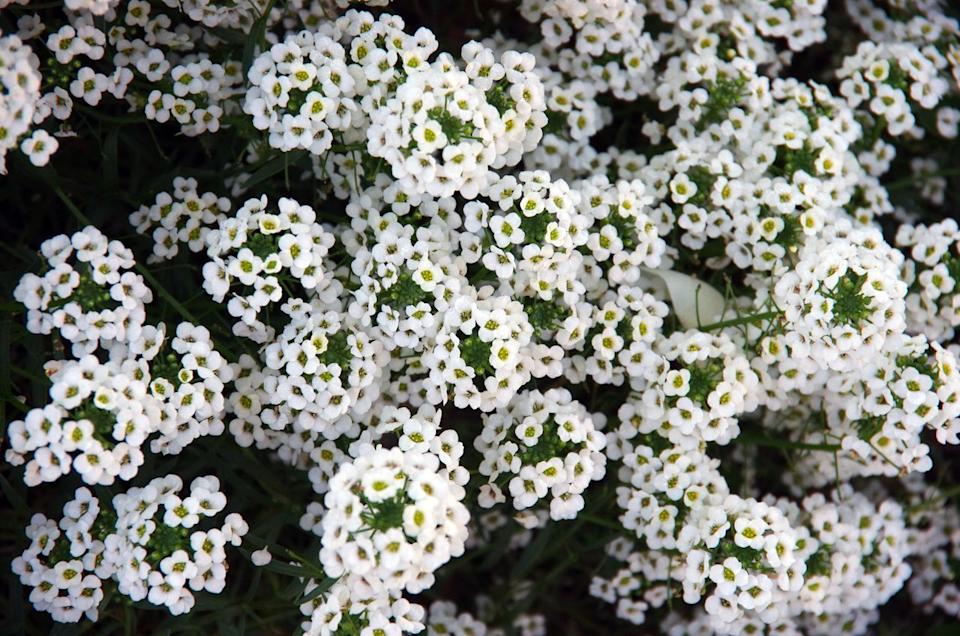
Credit: Getty Images / Simon McGill
Sweet alyssum (Lobularia maritima) is a low growing, short-lived perennial, ideal as a ground cover or front of the border. Small white, purple, or pink flowers cover these 3- to 10-inch-tall plants that rapidly spread 12 to 18 inches wide.
Plant alyssum as a in a spot that gets morning sun and afternoon shade, or you can plant it under later-blooming perennials and shrubs and let them provide the shade. Coax alyssum to regrow by letting it go to seed at the end of the growing season.
Catmint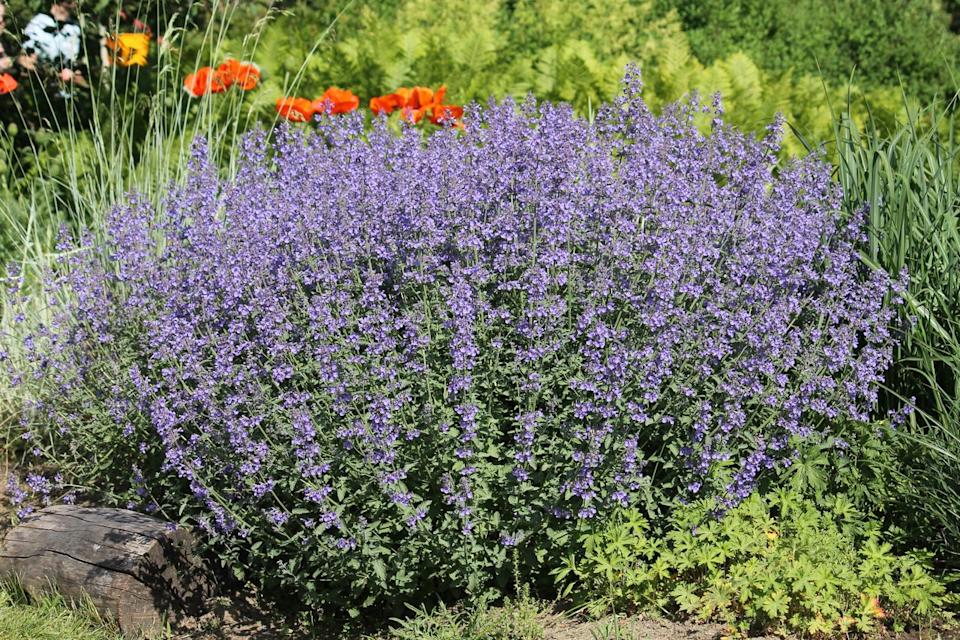
Credit: kasakovmaksim / Getty Images
Pink, white, and purple flower spikes of catmint (Nepeta spp.) open in early summer and bloom all season. This perennial grows quickly to fill an area up to 2 feet with a rounded, mounding form.
Its lacy, gray-green leaves pair nicely with perennials like roses, yarrow, coneflowers, daisies, and daylilies. Plant in full sun for best flowering.
Coleus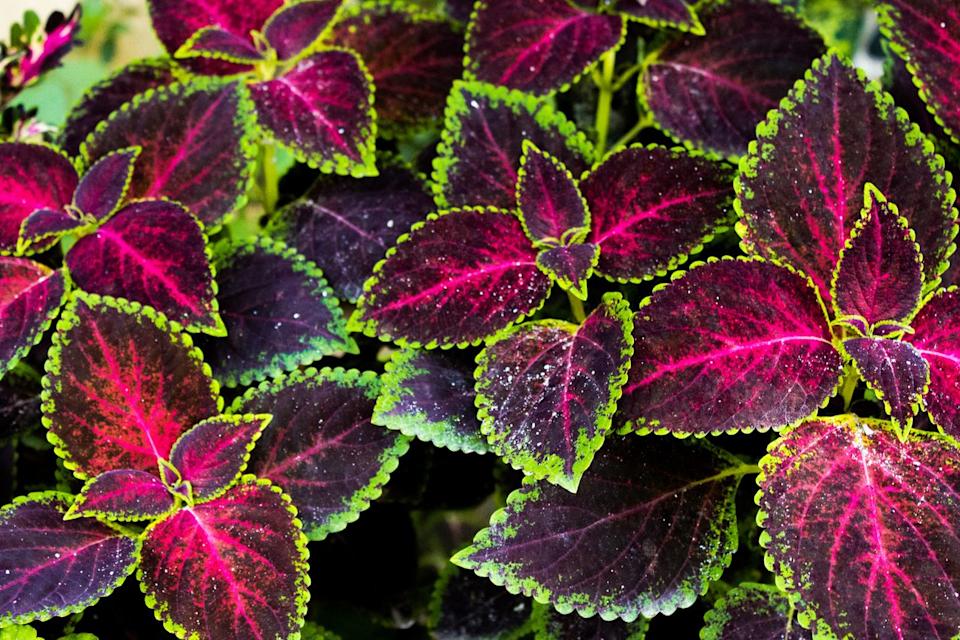
Credit: Susmit Pratik / Getty Images
From dwarf to shrub sized plants, there’s a good coleus (Coleus scutellarioides) for every garden. These tender perennials are usually grown as annual foliage plants for their colorful, textured leaves, Blue and white flowers form spikes but are secondary and often pinched out to encourage more leafy growth.
Coleus can add 1 1/2 inches of growth per week. It thrives equally well in pots. Plant in moist soil with morning sun and afternoon shade.
Foxglove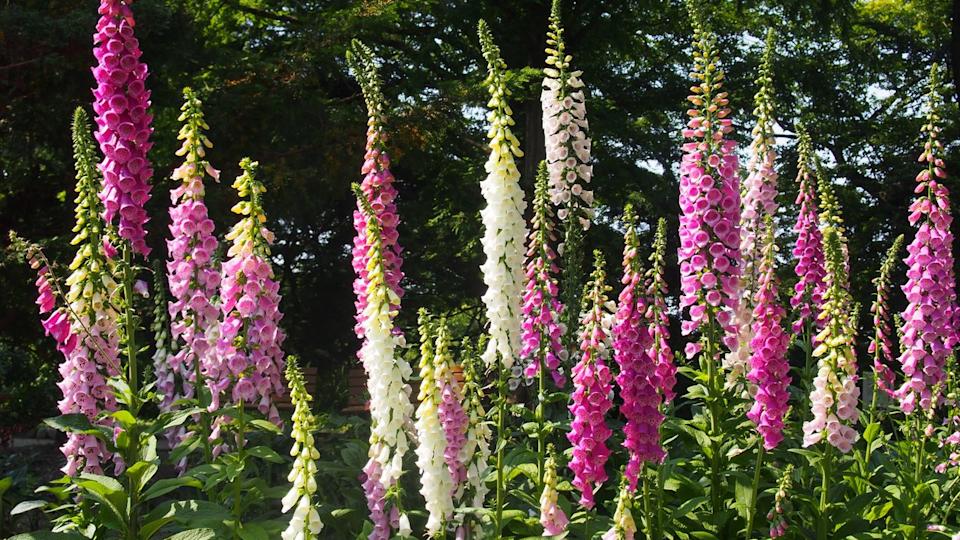
Credit: Eriko Tsukamoto / Getty Images
Foxgloves are showy, back of the border plants growing to 5 feet tall and 1 to 2 feet wide. Common foxglove (Digitalis pupurea) is a biennial, producing flowers the second year. Some hybrids bloom the first year, while perennial varieties bloom yearly but are short-lived. Your best bet for blooms is to purchase a plant budded out or already blooming.
Large tubular flowers in a rainbow of colors cover tall spikes in late spring through mid summer, making foxglove a standout in the early garden. Plant foxglove to add height in a spot that receives full sun to part shade.
Hostas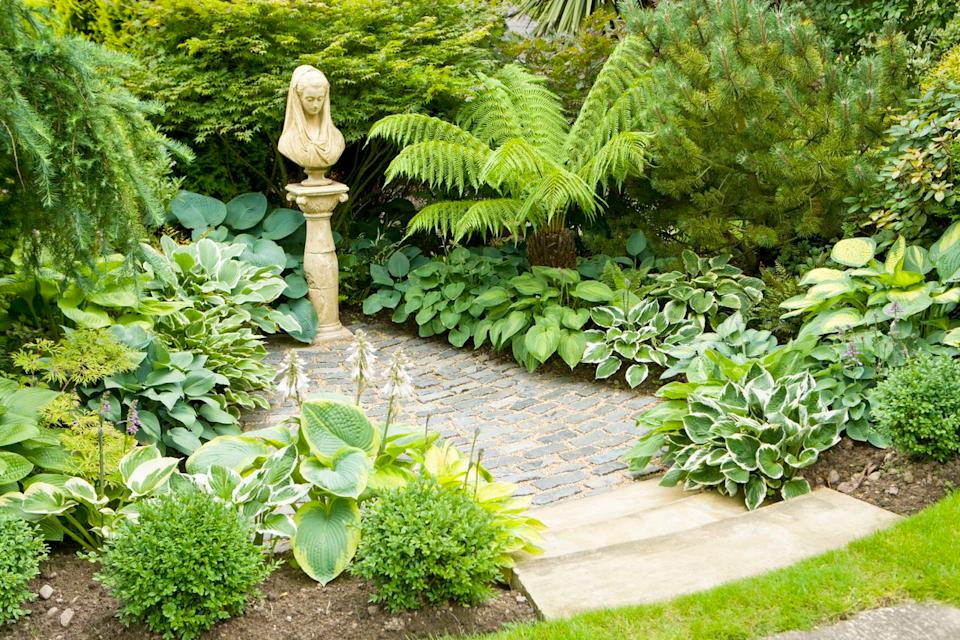
Depending on the variety hostas can be shade plants or can take a bit of sun.
Credit: Jason Smalley/Getty Images
Hostas (Hosta spp.) are hardy perennials grown for decorative foliage and one of the most popular shade plants in the U.S. From miniatures to giants at 4 to 5 feet tall with an even wider spread, hostas can double or triple in size in one season.
They break ground in early spring and are easily divided to fill other bare spots. These are primarily shade plants, but varieties have been cultivated to tolerate more sun.
Impatiens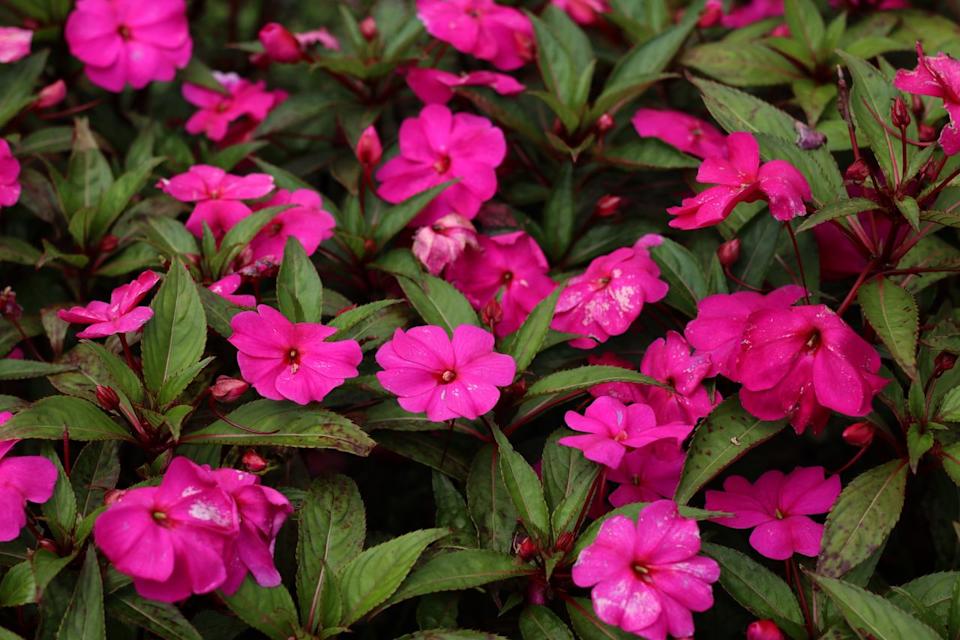
Credit: Rizky Panuntun / Getty Images
Impatiens (Impatiens walleriana) are popular plants for flower beds, borders, and containers, beloved for their rapid growth and wide range of colors. You’ll find them already in bloom at garden centers in flats, hanging baskets, and patio pots.
Impatiens will grow 20 inches tall with a similar spread and produce flowers consistently with regular feeding. Plant 6 to 8 inches apart and protect them from direct sunlight.
Iris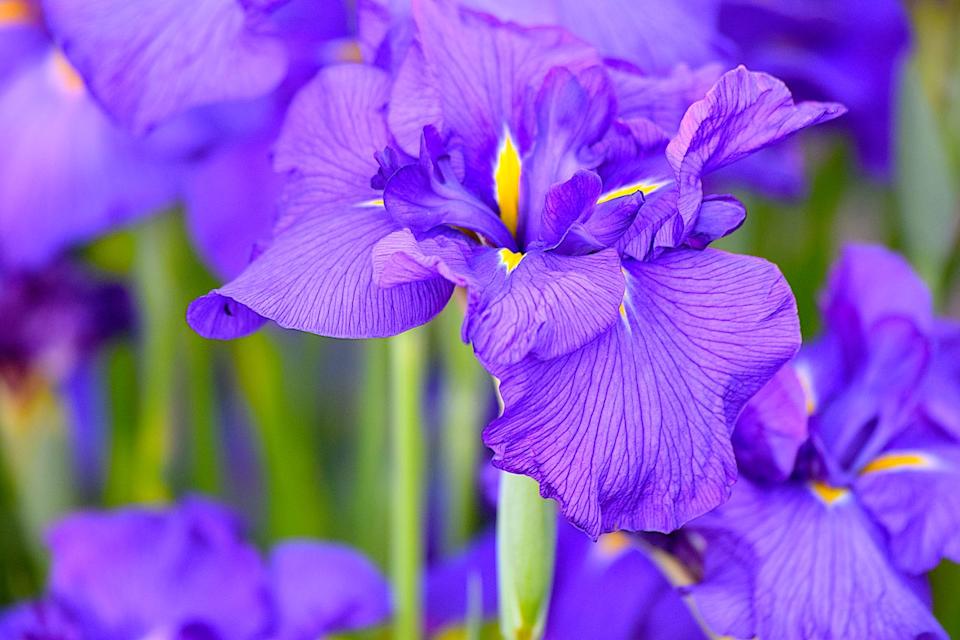
Credit: Philippe Gerber / Getty Images
From tiny native dwarf crested iris (Iris cristata) to tall showy bearded iris (Iris germanica), these impressive flowers cover the bloom season between tulips, narcissus, and daylilies. Bearded varieties are considered moderate growers, with each plant adding three to four new rhizomes annually.
Once the bloom period ends, tall swordlike foliage remains as a green place holder until it reblooms or dies back in autumn. Plant in full sun for best flowering.
Lantana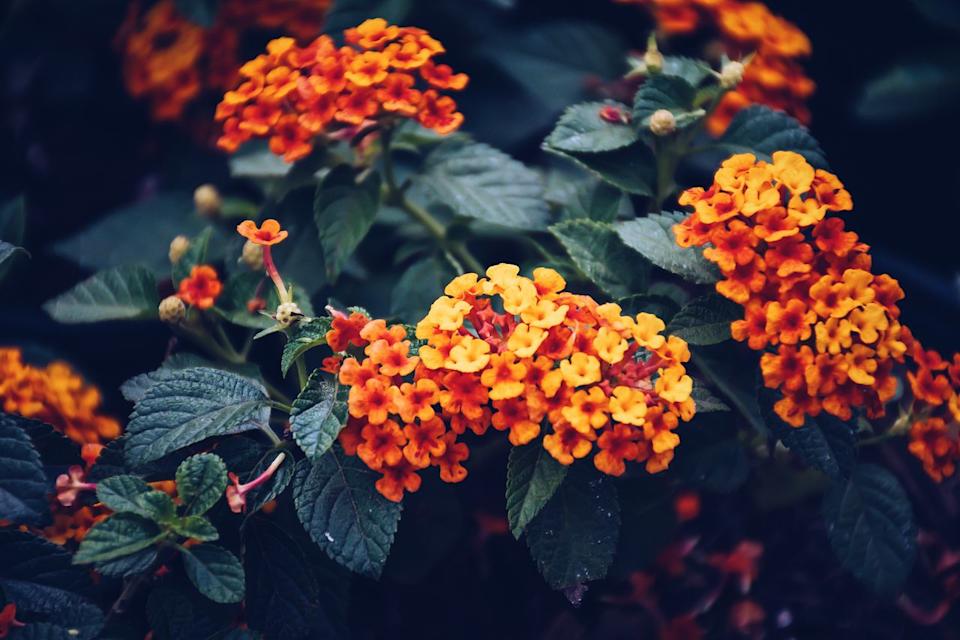
Credit: sakchai vongsasiripat/Getty Images
With attractive single and bi-color flowers high in nectar content, lantana (Lantana camara) draws bees, butterflies, and hummingbirds from late spring through summer.
From dwarf- to shrub-sized plants, this rapid grower works as ground cover or specimen plant, flowering all season with plenty of direct sun, warmth, and humidity. Consistent pruning will promote spread, with a branching of 1 to 2 inches weekly.
Nasturtium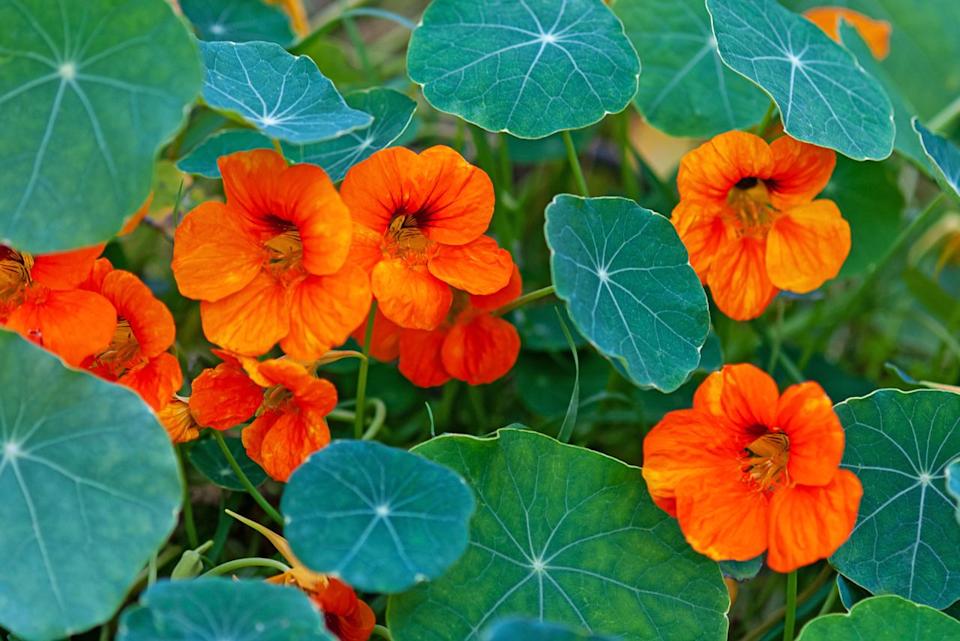
Credit: Nadya So / Getty Images
Nasturtiums (Tropaeolum spp.) are a versatile addition to any garden, blooming early in shades of yellow, orange, and red. They have a trailing growth habit, making them ideal for borders, hanging baskets, and rock walls, and can grow to a spread of 1 to 3 feet.
Prized as a insect pest repellent, they are planted in vegetable gardens to ward off aphids, caterpillars, squash bugs and cucumber beetles. These rapid growers bloom from late spring to first frost. For best flowering, plant in full sun in average soil.
Petunia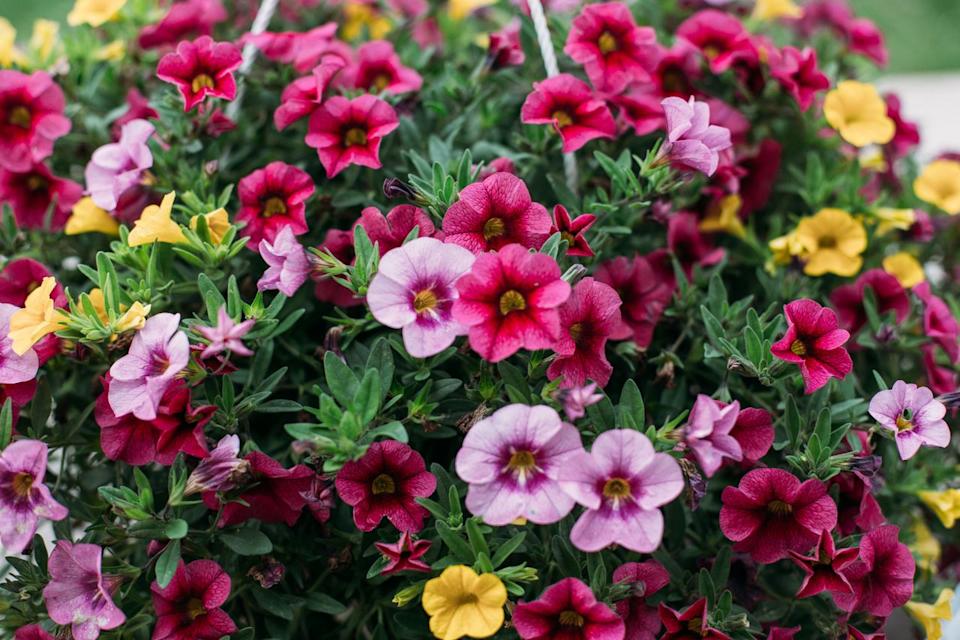
Credit: Os Tartarouchos/getty images
Petunias (Petunia spp.) are one of the fastest-growing, early-blooming flowers you can plant. Traditionally used in flower beds, borders, and containers, mounding wave varieties and smaller flowered superbells will put out consistent flowers in all colors from early spring until first frost. Flowers may be single or double.
Petunias will grow to quickly fill spaces up to 3 feet wide. Plant them in full sun after danger of frost has passed and pinch back to encourage consistent blooms.
Viola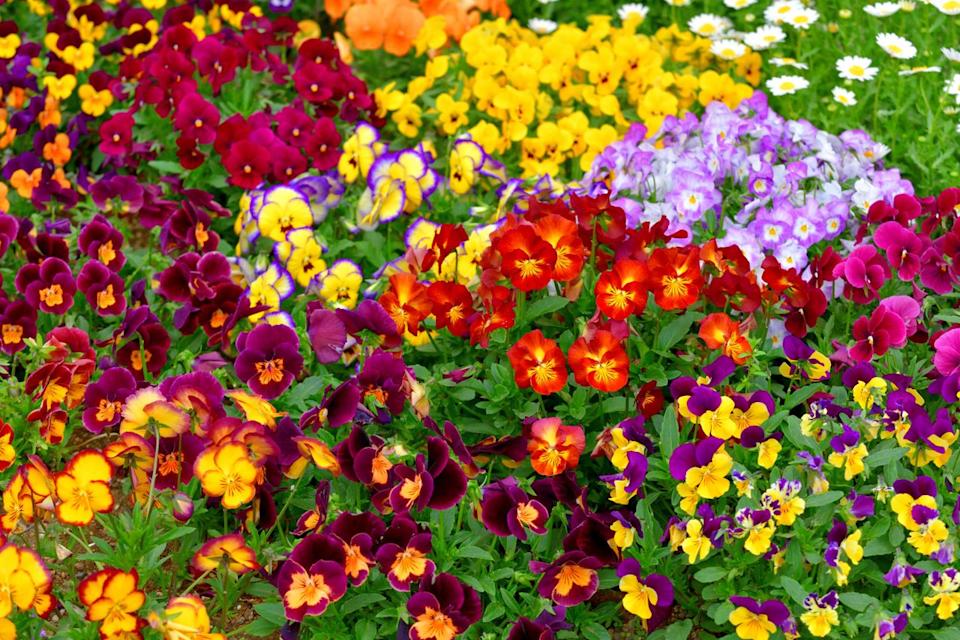
Credit: Photos from Japan, Asia, and othe of the World/Getty Images
Commonly called Johnny Jump-Ups (Viola tricolor), viola is one of the first plants you’ll find at your local garden center. This rapid grower bridges the gap between spring and summer, then summer and autumn, with profuse bi-color flowers showing the much loved “happy face” of pansy varieties.
At 4 to 10 inches tall and wide, violas are a perfect filler plant. You’ll get the best blooms by planting it in full to partial sun.
Wax Begonia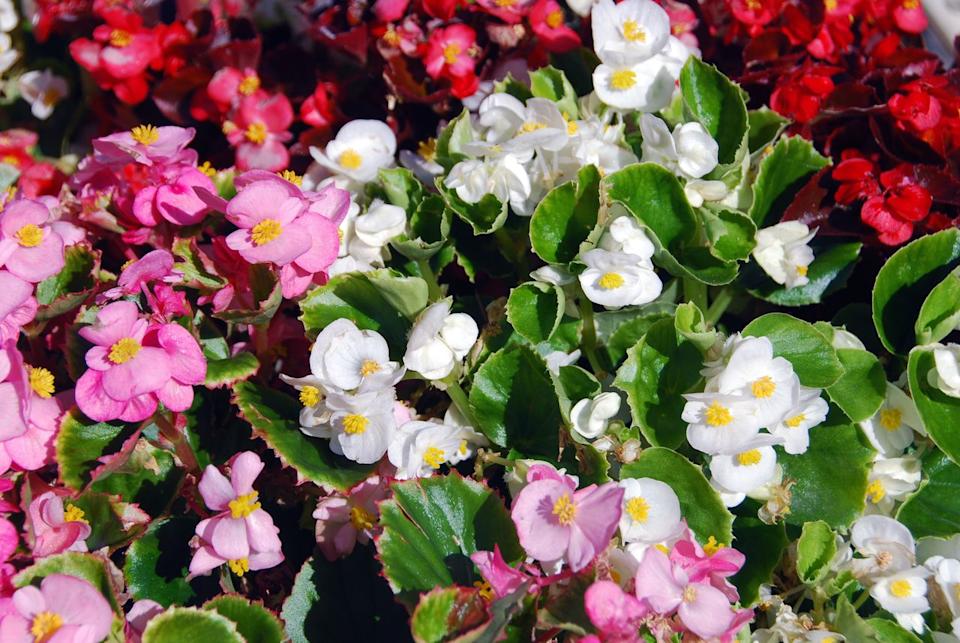
Credit: Maljalen / iStock / Getty Images
Wax begonias (Begonia semperflorens) are popular as mass plantings in beds and borders. They flower early and grow rapidly to 6 to 24 inches tall and wide. Their prolific flowers in reds, pinks, orange and white grow in a compact, mounding habit and bloom continuously without deadheading.
Grow them in full sun to part shade, depending on the cultivar. They’ll be drought tolerant once established.
Read the original article on The Spruce
Comments are closed.