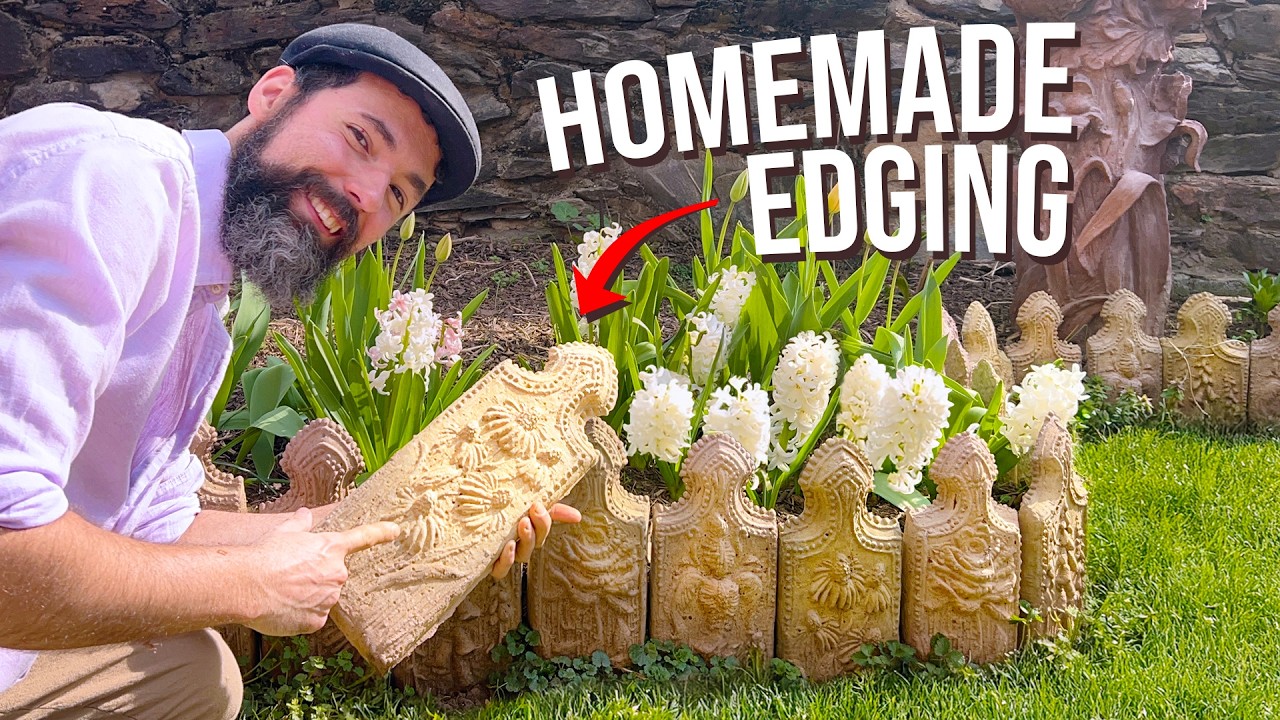
I made my own victorian Garden Edging from Scratch using materials easily found in home improvement stores. Support the channel: https://www.patreon.com/suburbanhomestead or buy my art https://www.etsy.com/shop/SiloeOliveira
Created by: Siloe Oliveira

37 Comments
Didn't know Victorians were into edging but I guess it tracks
I made castings 2 ways. I made shapes from scratch and also
I had broken pieces of molding that I filled in with plasticine. It's a craft product for making 3 dimensional pieces. Kids use it, snd it's fun. Very durable. When it's been just sitting it is cool and very firm. When working with it with your hands it gets warmed and becomes nucely soft just like clay with a bit of water. This never needs or uses water. It cannot be cleaned up with water.
I prepare the 3 dimensional piece, in my case it was "gingerbread" Victorian moldings forvdecorating exteriors of Victorian houses in San Francisco, California. Once the figure was completed, I built (or found) a box in which a mold could be made of the gingerbread. There needed to be an inch or more on rhe outside for sturdiness. I then placed my object relief side up, flat back down into the box. Then I poured liquid latex over the object and immediately added ground car tire into the liquid latex to create durability. The liquid had to cover the molding by at least an inch. Once set, the latex and rubber tire had created a negative of the molding and was flexible andvquite bendy and easy to remove from the original piece. With this latex negative mold, I poured my material. I tried plaster, and Durham's Rock Hard Wood Putty. The pieces dried and I was able to remove the latex mold easily. I reused the latex mold several times preferring the Durhams product because it was morevdurable than the plaster (which was the product they used back in Victorian times here). I hope this helps.
BTW I replaced some cornices and gingerbread trim on a house in San Francisco at the corner of 21st and Dolores in 1981. The pieces I prepared and put up are still there.
The results of your edging pieces are simply gorgeous, well done.
What a great idea!! Ty. So much to think about and work toward. Have you considered making silicone molds of your creations and selling them?? Mrs.
Hey there, I am a theatre prop making student so I literally study carving, sculpting and mold making, and may I say you did a GREAT job! Absolutely love how the designs turned out, they look stunning
Why weren't you using wood carving tools?
A very simple solution would be sand. I've done it. You press your prototype into sand then pour the concrete into the sand. It works trust me
Perfect! I’m DYI and a ceramics genius so I can make molds and glaze from pretty much anything. I concur and approve – good job!
Your joy in creating is obvious in every move you make! I really enjoy your videos and could watch you tinker forever!!
This video was suggested to me and I am so glad I clicked. I can't wait to see how you got to this point and what other beautiful whimsy you create.
very very cool!
So happy to have found this channel again! These videos bring me a sense of peace and also inspiration.
Your hand carved molds are beautiful! You should invest in a 3D printer or find a business that can create and print molds from your carvings. There are many of us that would love to have a set of these to make edging in our gardens. Please consider doing this. You are a gifted artist and this would be one more way for people to have a piece of your art in their life. Your videos and art always make me so happy! 👏🏼🥰🤩
Siloé you are a triumph! When i watch you here from the Cotswolds 🇬🇧, I am always so impressed at your ingenuity to create genuine beauty of past times in this modern throwaway world. Thank you. You make my little heart so very happy x
Love your results and appreciate you sharing the process. Thank you!!
I want to do this eventually. . I actually bought a bunch of regular brick molds to do some negative space symbols into cast bricks but just haven’t gotten to it yet. Something about being disabled and building a garden from a plain grass yard while also trying to grow a ton of food has filled my time! But eventually I will have something beautiful like this. You really did a great job, and those last four are beautiful together!
Wow, I will try that!!! What a great inspiration!
I came for the title, I stayed for the new project I'll be doing this summer
Your mold making title sounds more like a TEMU listing 😂😂
Maybe my favorite project you have done.
Incredible!😍
Ki , schrecklich 😢Bitte lieber mit Untertitel es ist so anstrengend zum anhören
Thank you for sharing your process. Watching was informative and highly entertaining.
🎉❤🎉
Here's some casting tips from an artist, hopefully this helps you.
I have three words for you… PLASTER OF PARIS. you can easily make a sturdy mould from plaster of Paris. Make you plaster mix, wearing gloves working quickly dip fingers in liquid plaster and flick it all over your master carving, flicking ensures no air bubbles. Once you have a nice 'skin coating' your plaster will be setting up so you can grab handfuls of plaster and pack it around to encase your mould. Once mould is made remove your master carving, allow plaster to dry out full 24hrs, then you need to seal it well, a water based floor varnish would work well. Spray paint in very thin coats would too. Then you have a durable plaster mould. Put a curl of wire into your cement pour leaving enough to grip once its cured, that will help you pull the cement out once done. To increase your working time with plaster use cold water, to increase it even more used iced water, literally put ice cubes into your water and get it super cold, this will keep it open and workable longer.
Another mothod I've used to copy an art deco plaster air vent cover, I only had one but needed two. I used the one vent cover I had and made a mould using gelatine. Need to make a water tight box, can seal around the master with plasticine or hot glue, then cover with gelatine. Once cooled it will be set, remove master. From here you could pour directly into gelatine with concrete but it's maybe a bit fragile for the amount of garden edging you require, but you could swing back and make a plaster mould from the gelatin mould. Both plaster and gelatine moulds give exceptional fine detailed results, it will be exactly like your master.
A word about expanding foam, it's not specifically air that cures the expanding foam it actually cures with water, that it gets from the air, but you could spritz your master with water after you applied a release Vaseline, then foam it and it will have some water directly where you want it to cure from the onset, I think that would give you the definition and proper cure you're looking for.
I hope this info is useful, good luck!
I've followed your channel for years, and I love how you elevate gardening to artistry, and also how when you try things that don't work out, you still share it so others can learn. Wonderful. And seeing the victorian era rope top edging really took me back to my childhood. They were super popular in London and my dad edged our whole garden with old ones (which back in the 80s probably cost practically nothing).
I've been doing a little bit of concrete. The molds are made of polyurethane. You can buy liquid polyurethane and make a mold according to your master model. Polyurethane is durable and castings are easy to take out)) Good luck!
That is beautiful. I love that you used varying color
Why didn't you use the cement edging you made, to make a mold? Michael's craft stores sells a product you could have just poured over the cement edging piece to make molds. You could have made multiple molds from one of the cement edging pieces you made and sped up the process.
They are absolutely beautiful.
So, the other side of the potting shed is done now as well. Can you share a video of the process? Looks fascinatingly cute.
You've rekindled my longtime dream of making my own intricate linoleum tiles. In theory, a book press should produce enough pressure to form the tiles, one at a time.
Wood carving tools work pretty well on this type of foam, plus they have a much smaller chance of breaking! Thank you for the information and inspiration!
Edit: also, you can use silicone caulk to make flexible molds, they're nice and strong as long as there at least 1/2" thick
Great video!! I really want to see the end result of your garden shed decor & makeover!!❤❤❤❤
I love the 1st two very much. Plaster of Paris is east you need for #3
the fact that the top comment isnt about edging really shows how the internet has changed.
Enjoyed this video and seeing your creative process.
I spent all my weekend edging too
Finding a new video on this channel makes my day every time. So much fun to watch. Love from Germany