
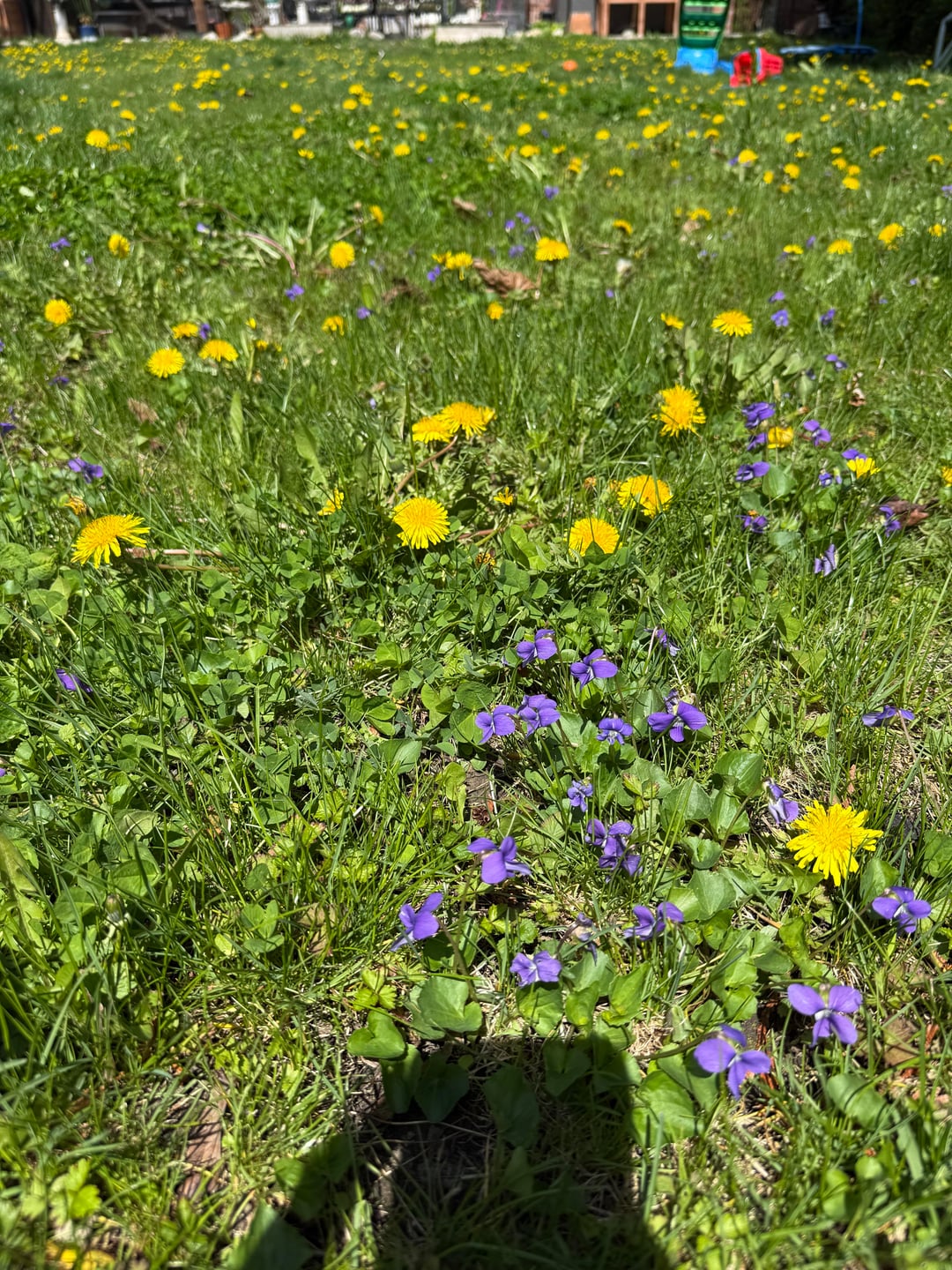
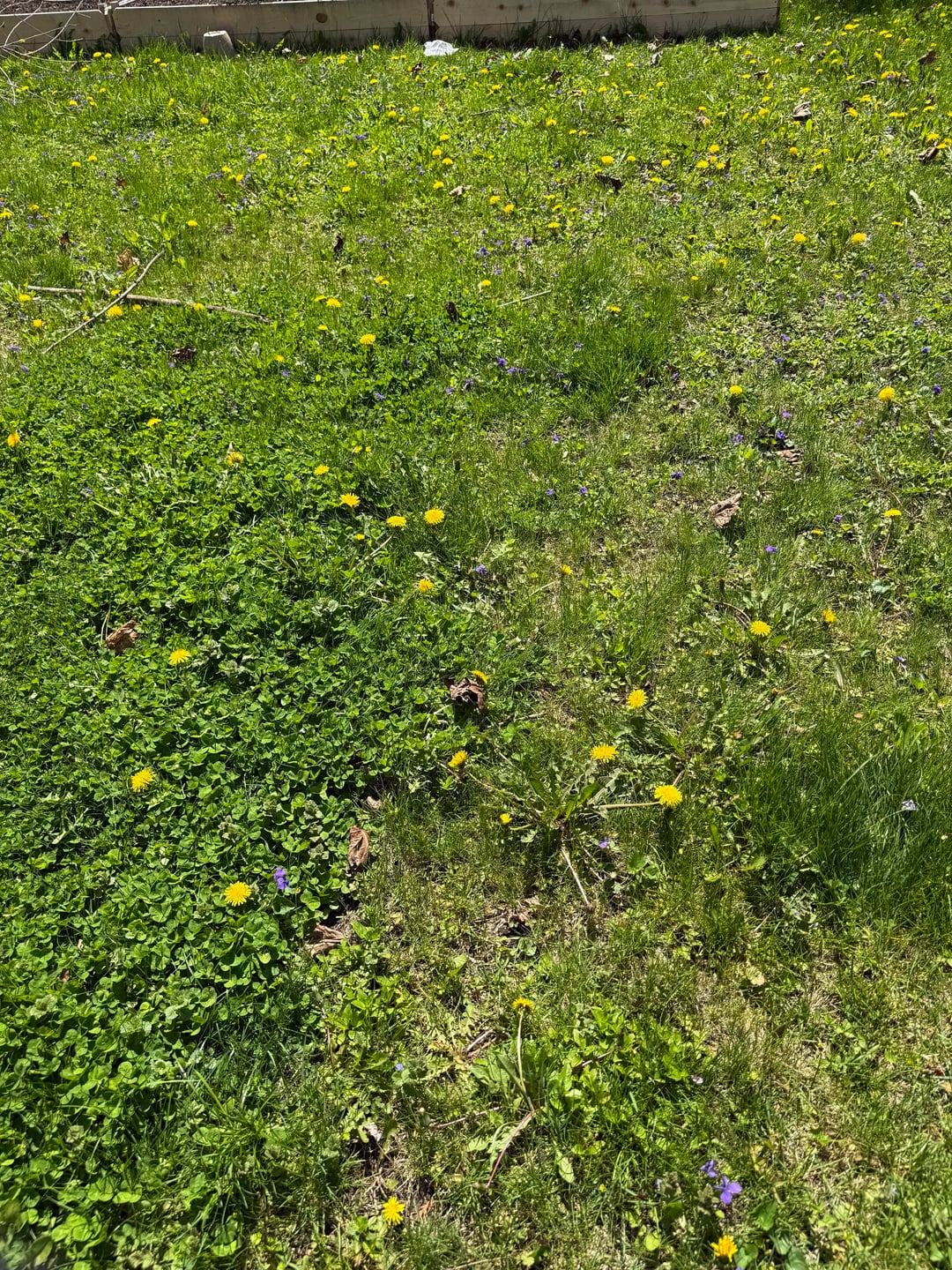
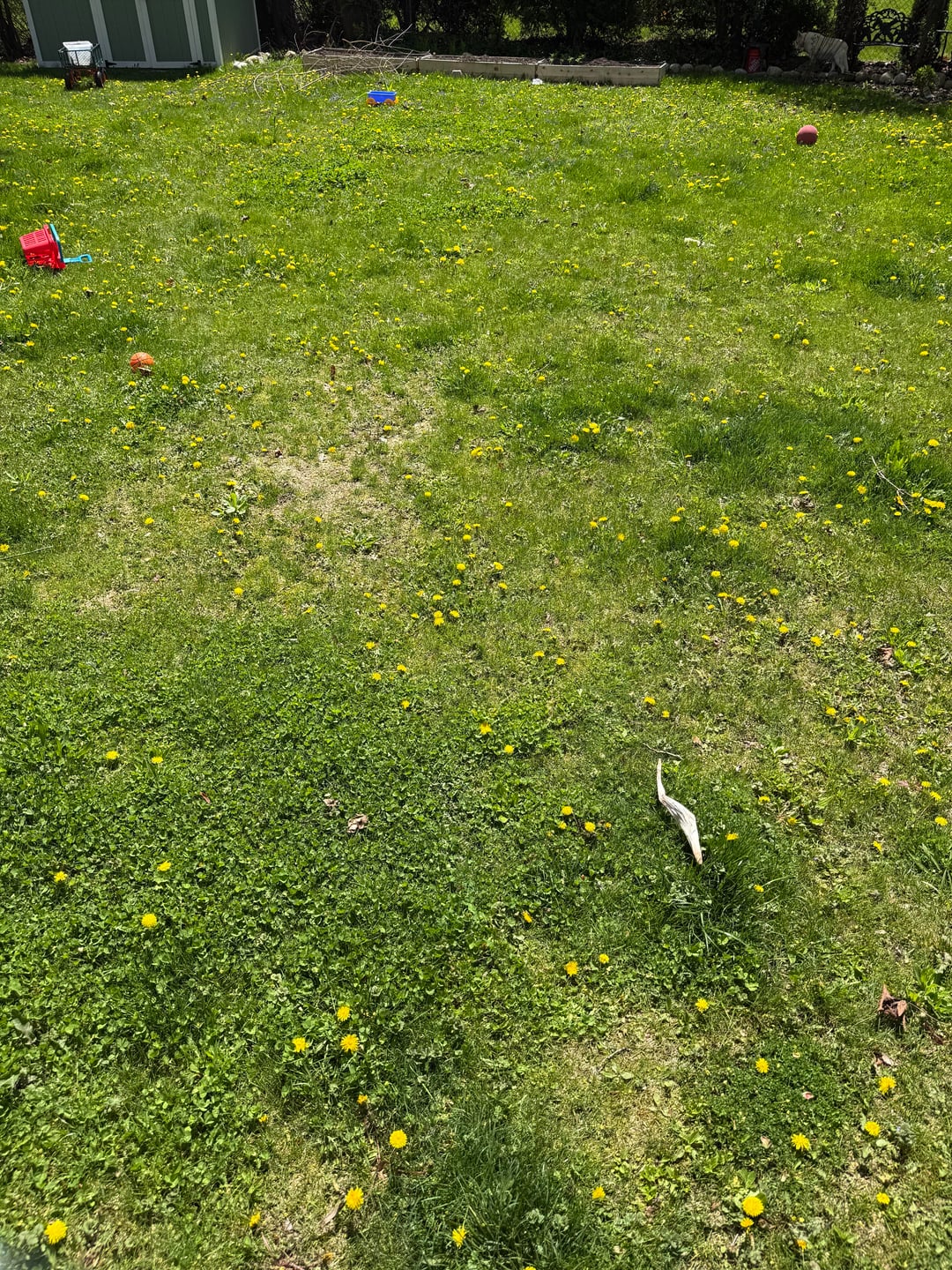
We recently paid to get our yard re-graded and I thought this would be a great opportunity for my husband to keep impeccable care of our yard. Especially since he likes to golf. I have learned that he does not care about the look of our yard. After three years of not fertilizing or reseeding any grass seeds some clover, violets and dandelions has started taking over. And I actually like it. He would only mow the yard every 2 to 3 weeks and it always looked terrible. Now that some ground cover like the clovers have some pretty big patches it stays lower to the ground. I also really enjoy the colors.
How could I continue adding more ground cover to this yard. I would like something that does not need maintenance since I have quite an extensive flower garden already. Would I be able just to sprinkle some seeds in the grass after the snow melts hoping it eventually out competes the grass? Should I just slowly remove the grass and sprinkle seeds in the bare spots and over the years hopefully it fills in?
Any plant suggestions for zone 6b?
by toulou11
6 Comments
absolutely nothing is less maintenance than a lawn.
the native violets here are a nice start. it might be easiest to dig up a bunch of rhe violets to put aside while you kill the rest.
you’ll have to research what other species to add.
There’s a lot of competition happening in that lawn, so anything planted would have to outcompete what’s already there. You can plant some pinks and reds in the bare spots to give new additions a reasonable chance. Probably some good local clovers you can look to at least.
I overseeded with clover this spring. Most of my lawn is covered in clover now. That’s the easiest change.
Most wildflowers do best when planted in fall. Many work in the spring, but only if you cold stratify the seeds in your fridge in March.
Just commenting to say your yard looks much like mine in Kansas City! We have lots of native violets, woodsorrel and (less ideally) dandelions here. It’s a complicated area to find new ground cover for because of our huge swings in seasons and climate extremes. Here are a few resources:
– [Grow Native](https://grownative.org) – lots of info about native plants that do well in our zone. They may have a section about replacing grass.
– [Prairie Up! ](https://prairieup.com)- another resourced focused on matrix planting, which is more toward completely removing grass and replacing with natives that do their own thing (far less maintenance in the long run). I’ve taken a few of Benjamin’s classes and they’re worth the cost.
– [Missouri Botanical Garden](https://www.missouribotanicalgarden.org/gardens-gardening/your-garden/help-for-the-home-gardener/advice-tips-resources/visual-guides/missouri-native-ground-covers) – they have tons of resources here and deep dives into plants, but a quick search for native ground covers offers up a lot of options.
I realize you may not be in missouri, but you’re seemingly in the ballpark. Hope these resources help! Lawns are a waste of time and an old standard set by the ruling class that we all need to move away from. Ultimately your best bet is to landscape the yard away to something more beautiful.
Okay, so this is what we did. Mow the grass as short as you can, spread clover seed and water daily. Clover will take over quickly. Repeat as needed. Also, creeping thyme, self heal (needs stratifying). If you kill your lawn you’ll also be affecting our wonderful pollinators..please don’t use chemicals.
Kill any grass you have by putting flat cardboard on top of it and leaving it there for a few weeks. When its all dead rake it out to just bare dirt then plant seeds for whatever.