
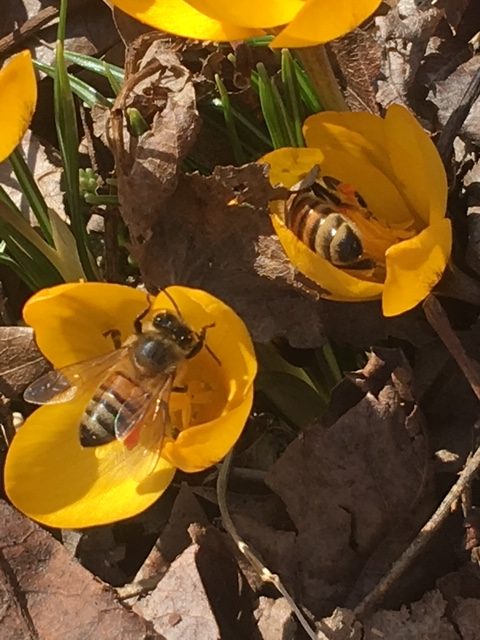
As you plan this summer’s garden, consider planting some plants for pollinators.
As always, the first step in planning any garden is to test your soil. Soil test kits are available at the Penn State Extension Office for $10 and will give you the results that enable you to add exactly what is needed to amend your soil to make it optimal for successfully growing the plants you wish to grow.
Testing your soil is easy: take a sample from 10 different areas of the garden, mix the small samples together in a container, spread it out to dry and remove the larger stones. When it is dry, put a cup of the sample mix into the provided bag and mail it in the pre-addressed package to Penn State’s lab.
You will need to take it to the post office to have the correct postage put on the package. Results come back in 10 days to two weeks, and if you’re not sure how to read it, help is as close as the Master Gardener hotline in the Penn State Extension office.
Gardens for pollinators should have many different plants included, with different bloom times to provide for many different species during as long a season as you can, preferably from early spring to late fall.
Honeybees can be found gathering pollen from winter aconites and snowdrops as early as late February if the temperatures are high enough (50+ degrees should do it) for flowers to bloom and bees to emerge.
In addition to flowering plants, keep in mind that some butterflies lay their eggs only on certain plants, and since their caterpillars stay on that plant for their entire caterpillar stage, they need enough of it to finish growing to pupation.
Black swallowtail butterflies, for instance, are pollinators and will nectar on bee balm, milkweed, coneflower and goldenrod (and others), but will lay eggs only on parsley, dill, fennel, carrots and Queen Anne’s lace.
So, in providing for the caterpillars of a species, you are also helping to maintain a pollinator (adult) population. Without caterpillars and the appropriate food plants, there can be no butterflies.
For some pollinator species, color matters. For instance, sometimes a pollinator will fly right over a pale lilac flower in favor of a bright red or orange one. Try to choose some brighter blooms, too.
As mentioned above, snowdrops and winter aconites can provide early pollen for honeybees, but try to make it a large planting so there are many flowers available at one time. These are easy to plant in drifts as they are ephemeral and will die back and disappear by the beginning of June or so, providing space for other, later blooming plants.
If you have space, try not to plant just one plant. A larger showing of color will attract more pollinators, so try to plant three or even five of a plant if you have the room in the garden. If not, go ahead and plant just the one, but try to be sure to have a large diversity of plants for a long and overlapping blooming period.
You want to try to always have something in bloom during the season as while some pollinators are active in early spring, some don’t emerge until late spring or even summer and will need food when they do.
A few popular and easy to find and grow, long-blooming summer flowering plants that are attractive to pollinators include:
• Mountain mint
• Yarrow
• Purple coneflower
• Coreopsis
• Joe Pye Weed
• Milkweed
• Butterfly weed
• Zinnias
• Lantana
• Salvia
• Sunflowers (stagger your seeding to extend the bloom times)
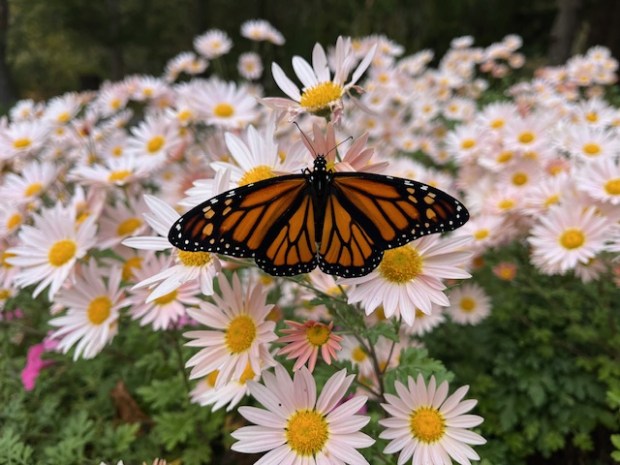 This Monarch butterfly found nourishment in late October on a Sheffield Daisy. (Dawn Ziegenfus Knepp)
As a few pollinators are active even in November on warm sunny days, try to extend the season into late summer and even quite late into fall by trying:
• Goldenrod
• Sheffield Daisy
• Cosmos
• Sedum (especially ‘Autumn Joy’)
• Chrysanthemums (the daisy flowering types, a couple of which bloom as late as early November)
Don’t use insecticides on your pollinator plants as these chemicals are not selective and will kill pest species and beneficial insects. If you have a problem, try hand picking eggs or caterpillars/nymphs of pest species (like spotted lanternfly or Japanese beetles) and dropping them in rubbing alcohol.
You might be surprised at how many pollinators you’ll find in your garden with the appropriate blooming plants. Enjoy the beauty of a wild style garden and know that you’re doing a good thing by supplying pollinators with beneficial nutrition.
More information on pollinators, native bees, pollinator gardens, beneficial insects, and butterflies is available at the Penn State Extension Master Gardeners of Berks County at berksmg@psu.edu or phone the office at 610-378-1327.
Dawn Ziegenfus Knepp is a Penn State Extension of Berks County Master Gardener volunteer.
Comments are closed.