
It’s April. That is all you need to know. Temperatures vary, so watch the weather.
Yesterday was Earth Day, and Arbor Day is tomorrow. What will you do about it? These special days remind all of us to do right by the Earth and improve our landscapes by making them more hospitable to all living creatures. I may be speaking to the choir, but we could all use reminders.
Plant native plants. Grow your own produce. Reduce your use of plastics, gasoline, electricity, and non-recyclables. Buy products with the least packaging. Re-use instead of dispose. Don’t let others tell you that your efforts are ineffective. Everything we do can help.
As a lazy gardener, I remind you that it is easiest to do one thing to celebrate. Plant a small native tree, treat it well, and you will have contributed. Feeling gracious? Plant a few native plants to share with the hungry caterpillars. Stop fixating on what a plant does for your landscape, and think about what that purchase can do for all the living things in your landscape.
Choose a tree from among the keystone genera, plants that feed and host 90 percent of moths and butterflies in our region. Examples are native oaks, willows, birches, pines, and cherries. Multiple websites will lead you to good choices. Here is just one: the Homegrown National Park website.
In my own flower beds, native white pines have self-sown from pine bark mulch. I potted up three to plant in different spots. I still need to decide where to put them. I hope to keep them pruned to a shrub height regardless. Pines are a good choice for the impatient because they grow relatively fast. I don’t really want any more massive pine trees, but I need a hedge and will accept something to train. That is part of the gardening challenge.
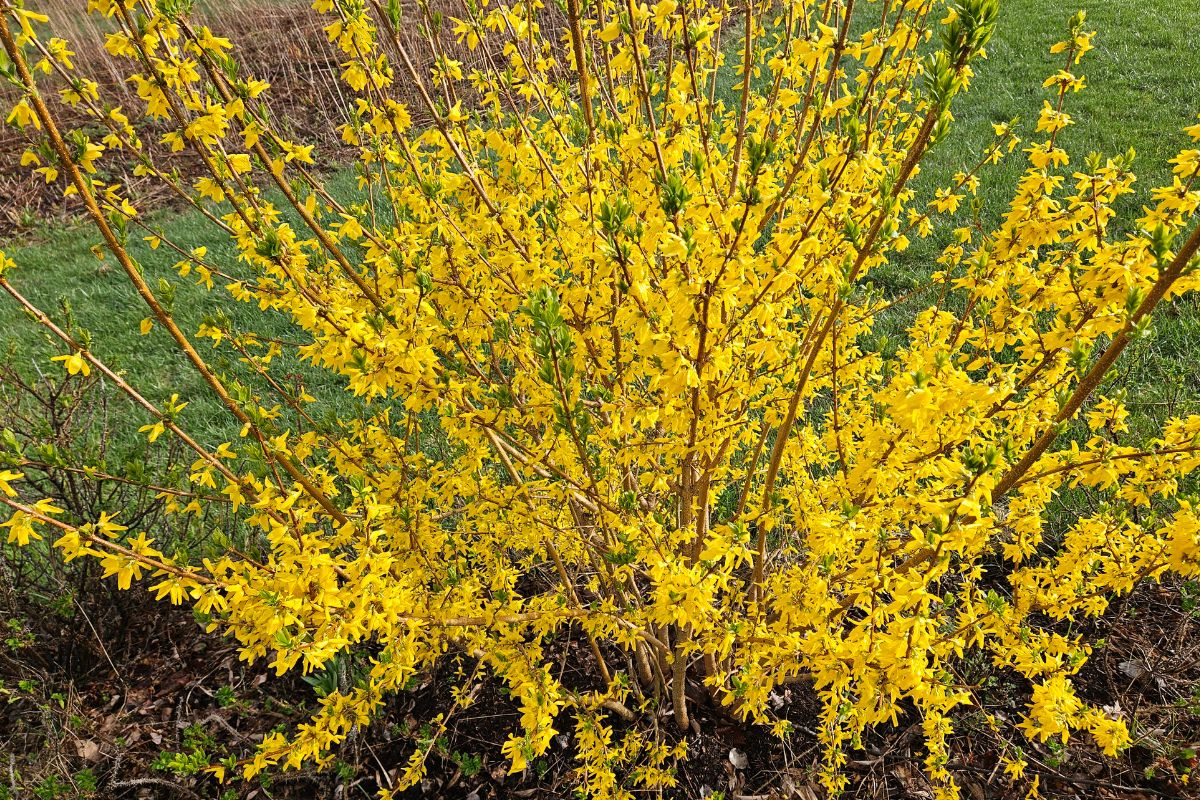
So what about those ubiquitous yellow plants that I see everywhere? Are they native? If you mean Forsythia, the answer is no. Here is a defense of Forsythia. Forsythia are not invasive but aggressive if ignored. Although the plants grow easily and sprout from stumps, they do not set seed and self-sow all over the woods like the truly invasive barberry, honeysuckle, and burning bush. Prune Forsythia after blooming to keep it contained. The bright flowers entice pollinators (although they do not feed them) and brighten the landscape when not much else is flowering. Plant with pussywillow (Salix discolor) and you have the show combined with the workhorse.
I am much happier pruning than weeding, although I should do both. Prune smoke bush (Cotinus coggyria) to two feet to prevent leggy gaps in foliage. News to me: This plant is related to native poison ivy!
As I investigated my shrub and flower borders, I discovered some cotoneaster that someone else had pruned. A low-growing and horizontal branching shrub, Cotoneaster makes a great escape perch for winter birds near my feeders. Part of the plant branches were not covered in snow this winter. It looks like a rabbit took advantage and nipped off the branch ends. Luckily, this hardy shrub will bounce back.
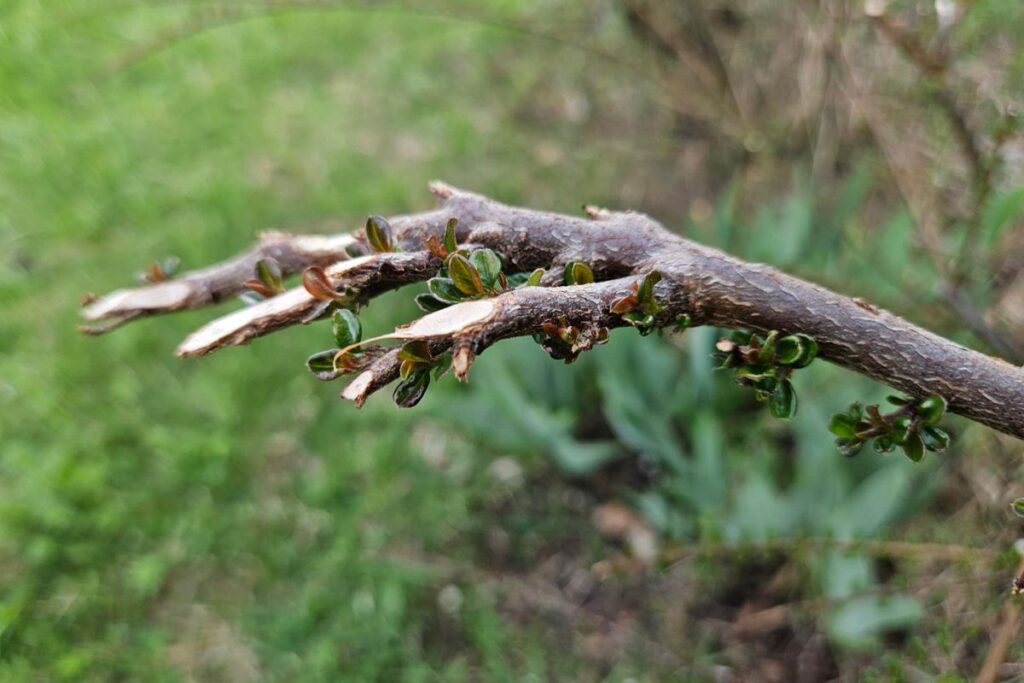 Cotoneaster offers refuge to birds through the winter and a tidy horizontal shape through the year. Rabbits will keep it pruned.
While we are outside still, edge borders now when the soil is soft. The spade, knife, or edging tool will cut through wandering runners of grass and weeds.
Divide summer- and fall-blooming perennials. Dig and divide perennials as soon as their new shoots appear—the earlier, the better. If you divide the clumps every three to five years, you rejuvenate plants and ensure abundant blooms. When dividing older perennials, discard the center of each clump and replant sections from the outer areas where shoots are more vigorous.
I saw my allium popping up amid the shasta daisy clump and took a knife to the shasta daisy to give the allium more room. I relocated the cut clump to a spot where I am fighting goutweed. I am interested in trying a native perennial in the location as well: Packera aurea. It is an aggressive early-flowering native that might knock out the goutweed.
Once you thin out some clumps, make space for early-blooming native or near-native perennials and ephemerals for early pollinators.
I recently learned about adding near-native plants to the landscape as a method to ease the effects of climate change on our wildlife. Our climate is warming, and not all of our native plants have the capacity to adapt. By introducing climate-adapted native plants from just south or west, we can maintain biodiversity and have a healthier ecosystem. Explore your options!
Don’t forget gardening companions. Plan to plant alyssum near aphid-prone plants to attract aphid predators. I know my Butterfly weed and other Asclepias attract aphids. I will plant accordingly.
There are a few native, fruiting plants that you might want to add to your property. Highbush blueberries are tolerant of partially shaded and moist locations. They grow along lake shores and woodland margins. Why not incorporate this plant as an ornamental that feeds wildlife (and you occasionally) into your property plan?
I still have a part of my property that I consider managed—the vegetable garden. We added a more permanent stone path between the raised beds this spring. I hope it reduces the habitat for jumping worms as well as the need for mowing maintenance.
Arugula, beets, and more peas have been planted outside. Indoors, tomato seedlings that are lightly brushed or fanned daily will create more sturdy transplants for early-June planting.
Check your seed starts and thin crowded seedlings with small scissors, like cuticle scissors. Snip excessive sprouted stems at the soil level instead of pulling the sprout. Pulling sprouts disturbs the delicate rooting of nearby seedlings.
Our frost this week reminds me that early-blooming native perennials and ephemerals will withstand the cold weather and still put out a show. Shop for some now to add to your landscape to support early pollinators and feed your desire for spring blooms.
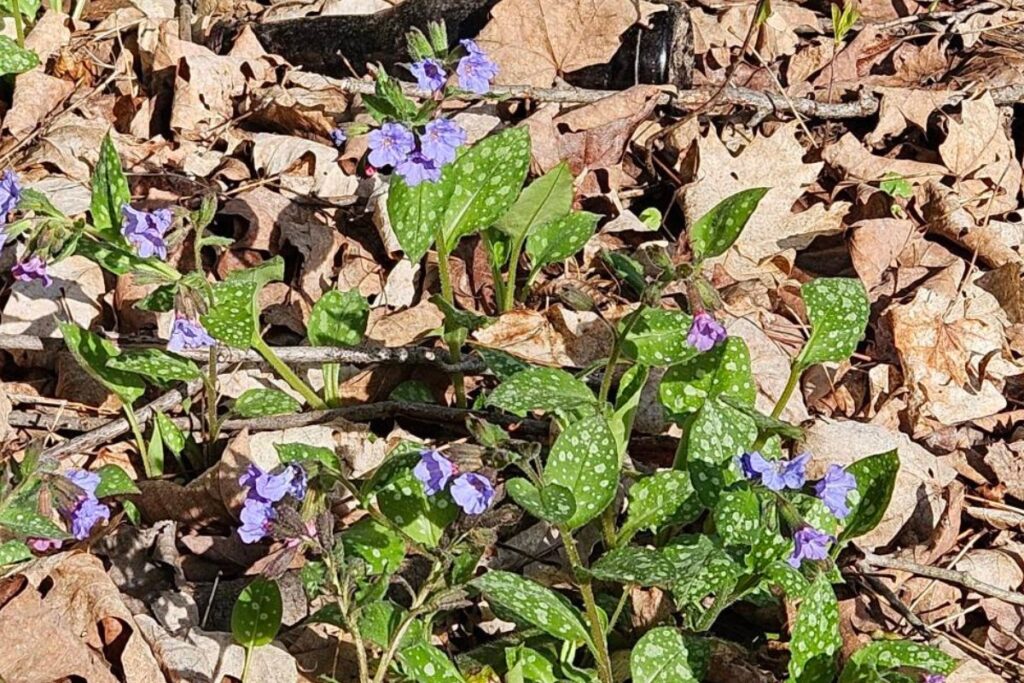 Pulmonaria puts forth blue or purple flowers in early spring along with interesting spotted leaves. This ephemeral plant dies back in mid-summer.
I promised an update on the houseplants that I repotted two weeks ago. Results are mixed. I did not use rooting hormone—probably a mistake. The repotted plants have not all died, but a few clumps are struggling. And yet, one clump has sent up a flower. I will take that as a win.
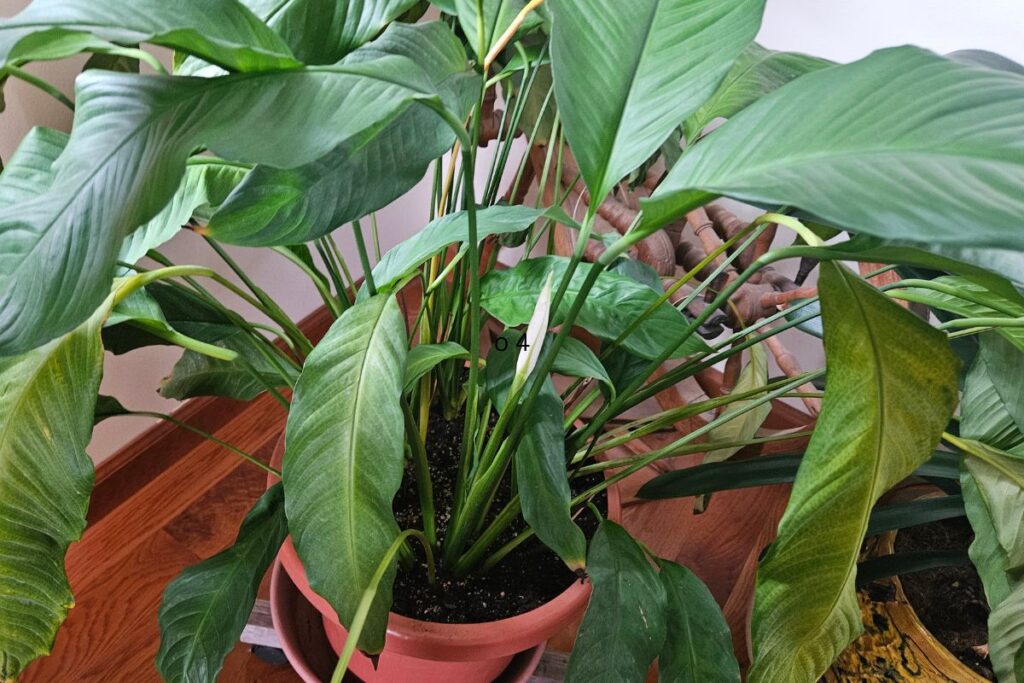 This Spathiphyllum, or peace lily, has started to send up a flower, but not all the clumps fared as well after the repotting.
When the fickle outdoor climate gets you down, seek out houseplants where you can control the climate. Remember: Foliage plants do well in a north window; flowering plants in an east, south, or west window. That is a lazy gardener’s solution.
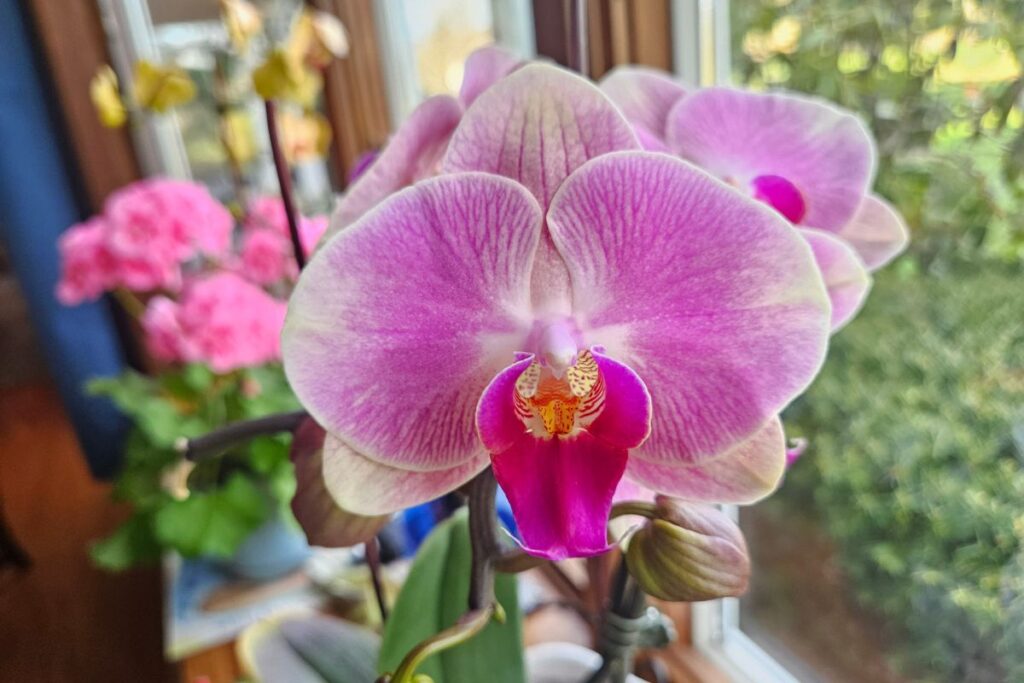 Houseplants like this orchid carry a gardener through the tribulations of slow springs and late frosts. Orchids grow well in an eastern window.
I call myself the Lazy Berkshire Gardener because I don’t want to work too hard in my gardens. I want to enjoy them. I find it easier to observe my landscape and let the compost happen, the water pool up, or daisies to self-sow. I look for ways to do the minimum task for the biggest impact. For example, mulching is better than spraying and much better than weeding all season. I look for beautiful, low-maintenance plants that thrive in or at least tolerate my garden conditions. Plus, I am willing to live with the consequences if I miss something.
Comments are closed.