
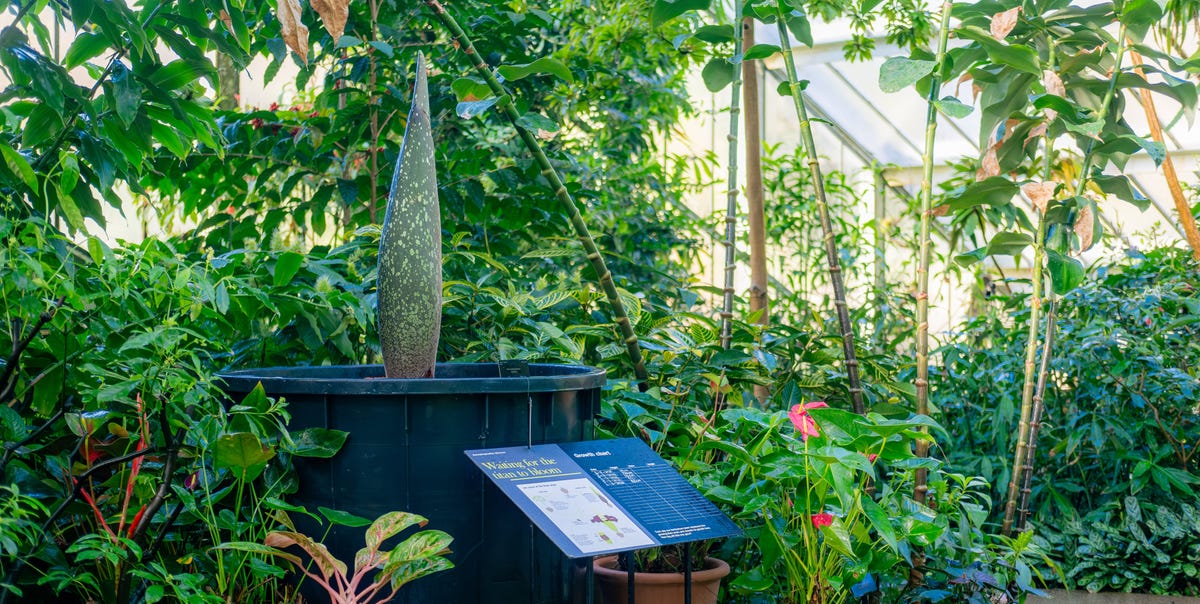
Something big – and unmistakably pungent – is about to bloom at Kew Gardens.
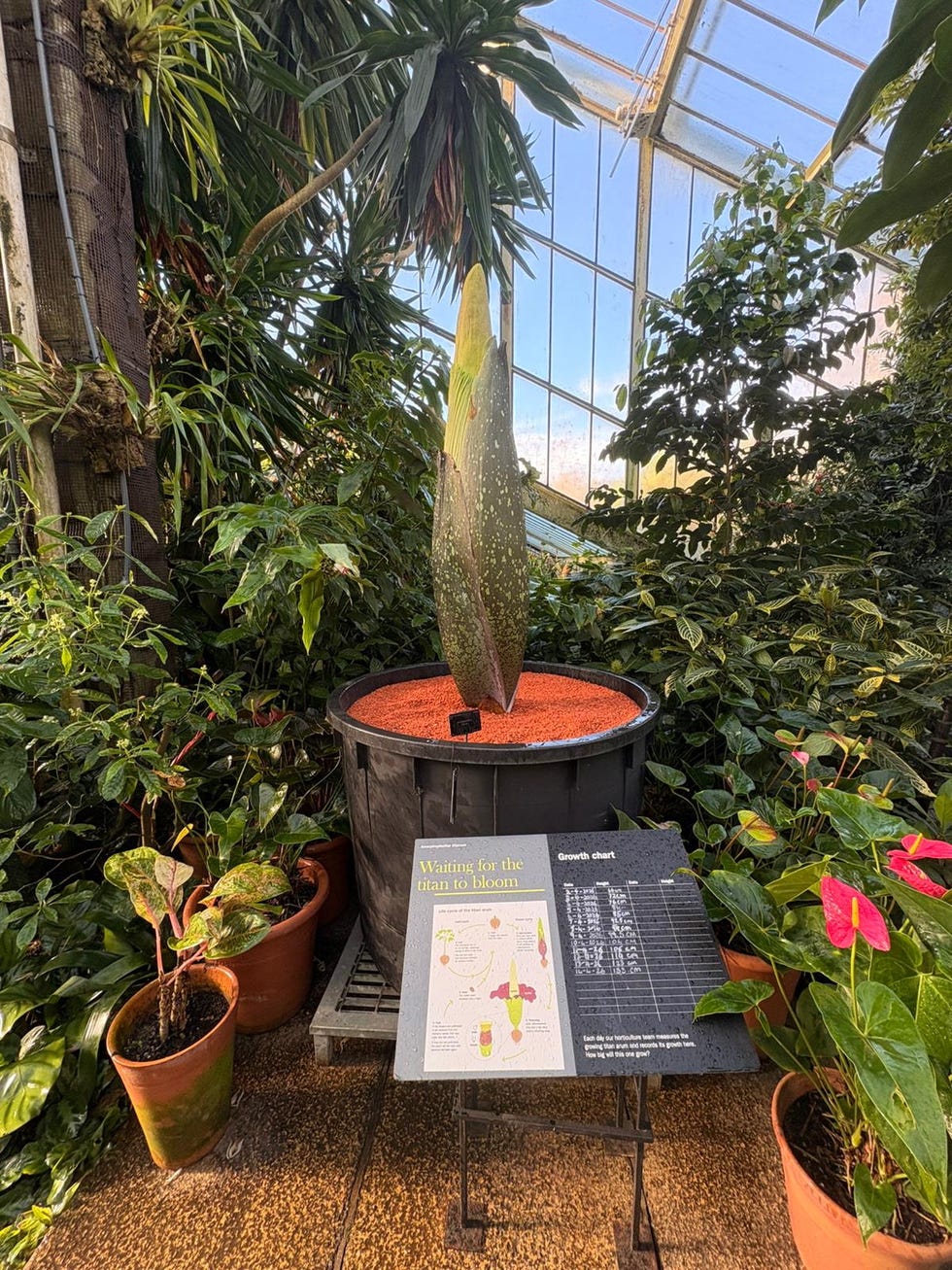
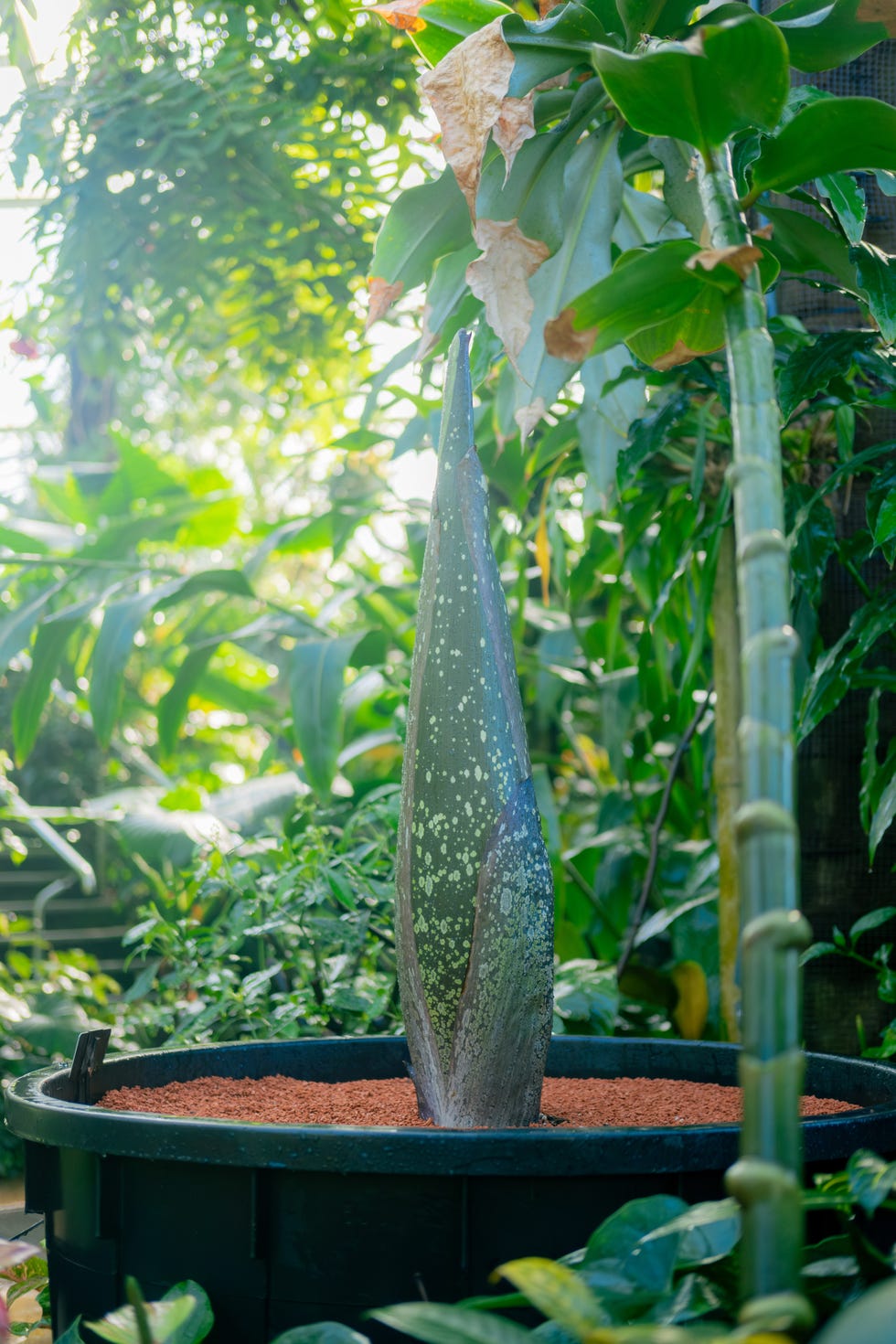
Horticulturists at the west London botanical garden say their first titan arum of the year, better known as the ‘corpse flower’, could open within days inside the Princess of Wales Conservatory.
When it does, it will bring with it one of the plant kingdom’s most curious calling cards: the shocking and putrid scent of rotting flesh.

RBG Kew
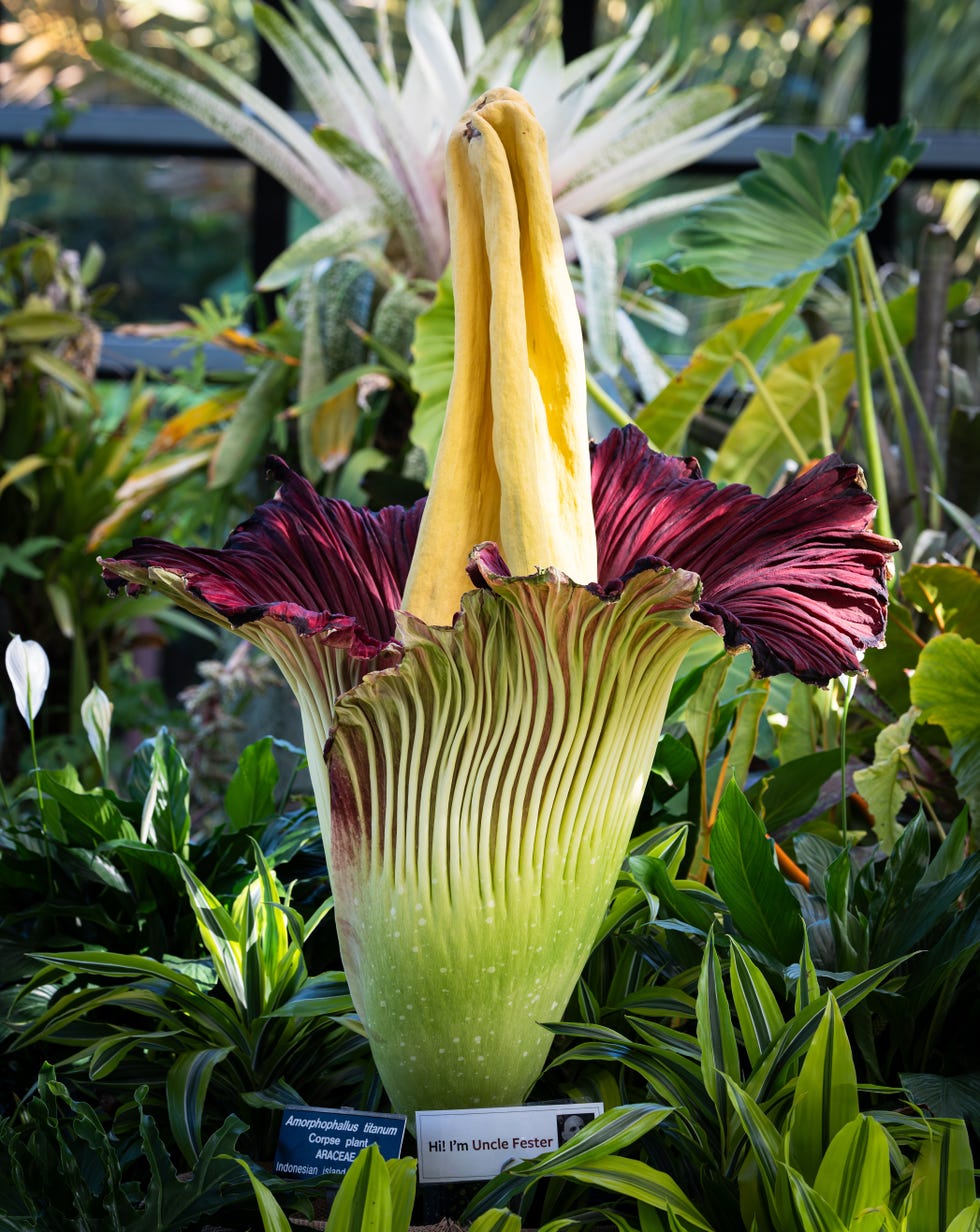
Native to the rainforests of Sumatra, the endangered Amorphophallus titanum is famed as much for its smell as its size. Its towering flowering structure – which can reach up to 3 metres in height, feeling adjacent the Little Shop of Horrors monster – is among the largest in the world. Yet the real intrigue lies in its fleeting and rather foul-smelling bloom, which lasts just 48 to 72 hours.
That narrow window, combined with the plant’s unpredictability, is what makes each flowering such an event.
 caliburn103
An example of the strange and rare blooms of the corpse flower. This one, pictured in San Diego Botanical Garden, is named Uncle Fester after its notoriously noxious odour
“It’s really hard to tell exactly when a titan arum will flower — they always keep us guessing until the very last minute,” says Solène Dequiret, manager of the Princess of Wales Conservatory. “But we are confident it is a matter of days before this specimen opens.”
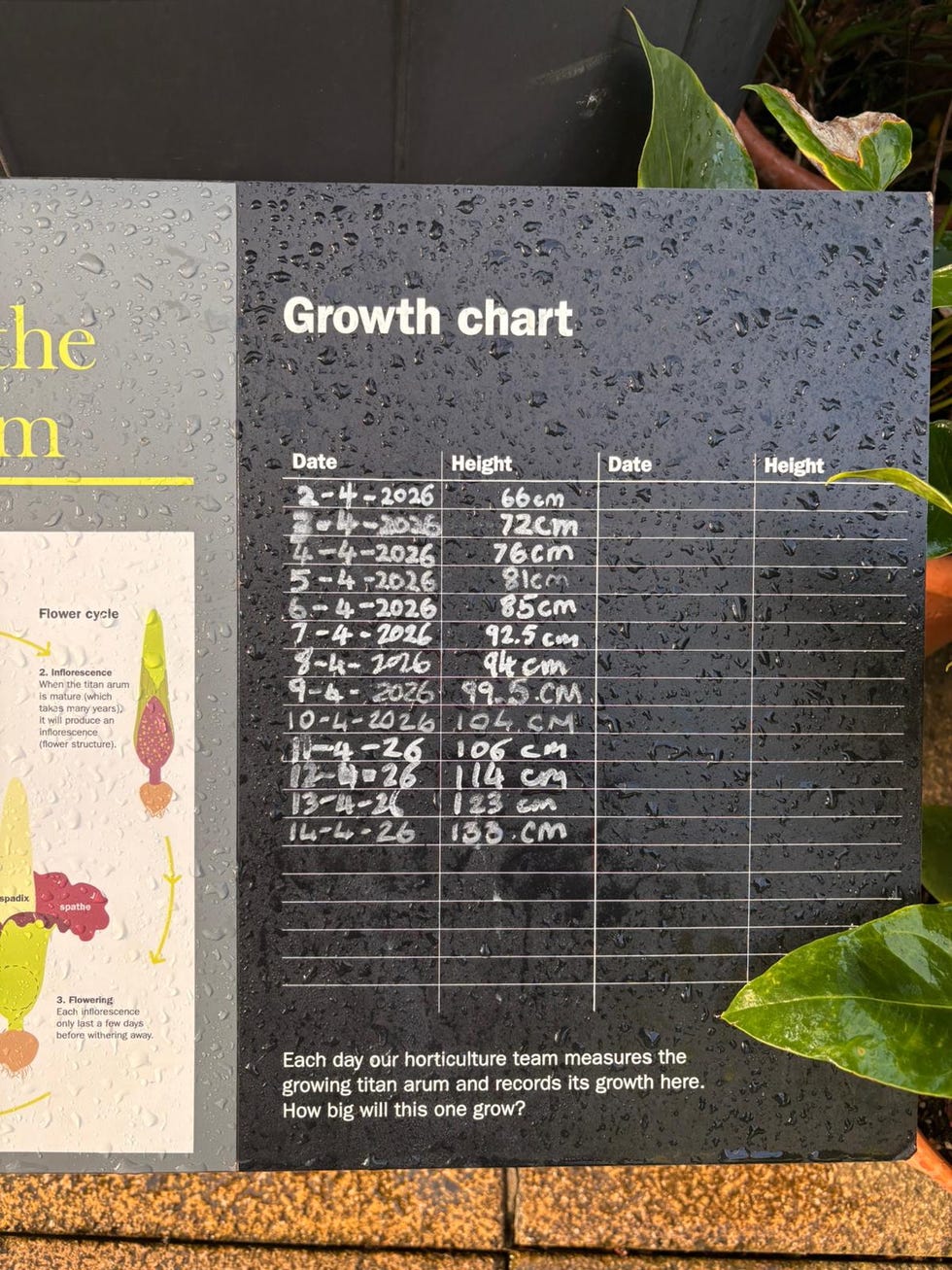
Kew’s current plant has been growing at an astonishing pace of around 8cm a day and now stands at more than 2.2 metres tall; a dramatic transformation from the 66cm bud that was moved into the conservatory’s carefully controlled tropical conditions earlier this month.
 RBG Kew
Kew’s titan arum’s impressively rapid growth chart
Visitors who arrive at just the right moment will not only witness a rare botanical spectacle, but also experience the plant’s most infamous feature: its powerfully noxious odour that mimics decaying meat, a clever evolutionary tactic designed to attract carrion flies and other pollinators.
Adding to the drama, the plant heats up as it blooms – a process that helps disperse its pungent scent further into the surrounding air.
“Simply put, there is no avoiding the titan arum once it has opened,” says Tom Pickering, head of glasshouse collections at Kew. “The moment you step into the glasshouse, its unmistakable stench hits you right in the face and overwhelms your senses.”
And yet, despite – or perhaps because of – its nose-wrinkling reputation, the corpse flower remains one of Kew’s most popular and perennial attractions. Crowds have long been drawn to its rare appearances, a tradition that stretches back to 1889, when the first titan arum flowered at Kew — the first time it had ever bloomed outside its native Sumatra.
SEBASTIAN KETTLEY
Today, around 40 titan arum specimens are kept behind the scenes in Kew’s Tropical Nurseries, forming part of an important conservation effort. In the wild, the species is classified as Endangered on the IUCN Red List, threatened by deforestation and land use change.
Because its seeds cannot be stored in Kew’s Millennium Seed Bank, the plant is preserved through careful cultivation in living collections. Horticulturists also collect and freeze pollen when possible, ensuring future blooms – however unpredictable – can continue.
For now, all eyes are on the conservatory, where anticipation is building by the day. Those hoping to catch the spectacle are advised to keep a close watch on Kew Gardens’ social media channels, where updates will be shared as the bloom opens.
It may not smell like a bed of roses, but it might just be one of the most extraordinary things to bloom this year.
 Maddy Ando
Homes Writer, House Beautiful and Country Living
Maddy is the Homes Writer at House Beautiful UK and Country Living UK, where she can be found writing about the latest interiors news and collating inspiring trend edits. She has previously worked for Good Housekeeping, Prima and Red, and has an MA in Classics and Ancient History from the University of Manchester and a BA in English Literature and Creative Writing from the University of East Anglia, where she was the editor-in-chief of the student newspaper.
Comments are closed.