
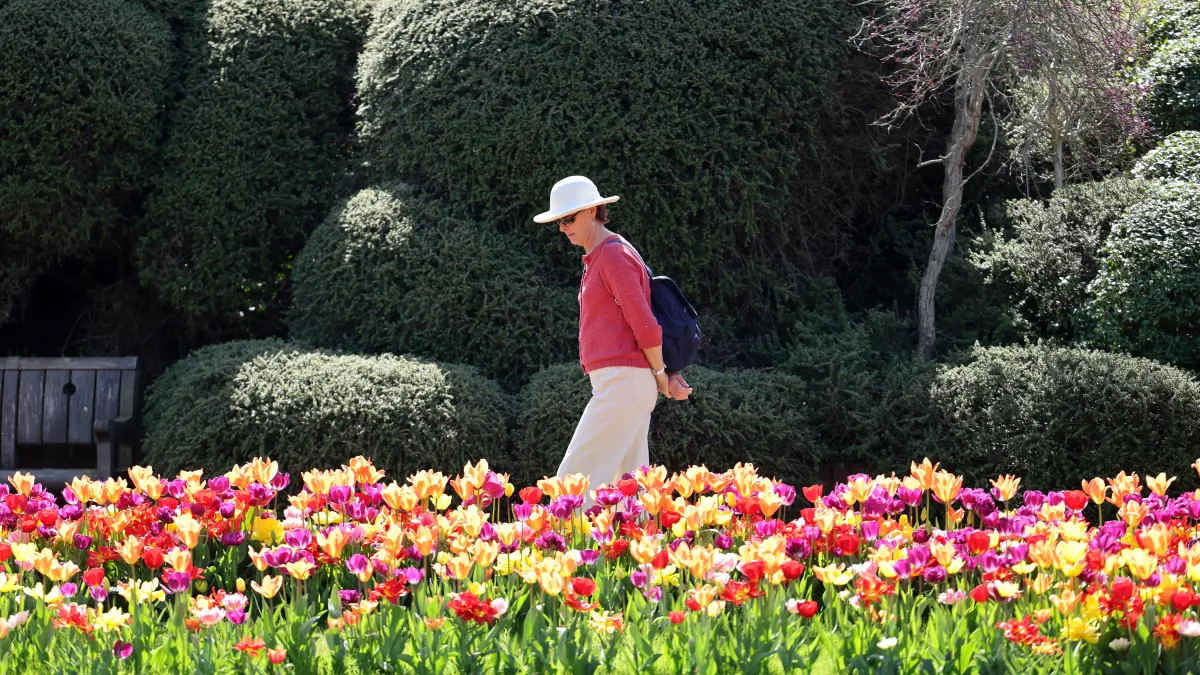
Social media’s gone gaga for gardening but forget blossoms and magnolia mania — the real star of the show is the tulip, which is shooting out of the ground earlier than ever as warmer days and cold nights make ideal conditions for speedy growth.
At Arundel Castle in West Sussex tulips arrived ten days earlier than expected this year, while at Hampton Court Palace the annual tulip festival opened before the Easter weekend. These record early blooms have encouraged a spike in visitors, with RHS Wisley reporting a 35 per cent rise in visitors over the past three weeks compared to the same period last year — that increase coincides with a stonking new display of more than 100,000 tulips planted on the banks of the Jellicoe Canal (www.rhs.org.uk).
What makes tulips such a draw? “They’re just such great value at a time when there’s not a lot else going on in the garden,” says Polly Wilkinson, an award-winning garden designer and the founder of Studio Pollyanna. Most tulips tend to flower once and, accordingly, Wilkinson says: “I’m an advocate for the permanence of a perennial but tulips are the one thing you can really have a bit of fun with in the garden.” But have you ever stopped to wonder what makes a good tulip?
London newsletter
The essential guide to London — curated, trusted, unmissable.
Sign up with one click
 “Tulips are the one thing you can really have a bit of fun with in the garden,” says Polly WilkinsonCal MacBeth
Wilkinson is joining a group of 11 judges at RHS Wisley over a six-week period to judge 92 tulip cultivators. It’s her third year on the RHS tulip judging panel. All deeply invested in tulips in one way or another, the judges meet in Wisley’s trial garden at the same time every Wednesday, weaving between the hundreds of visitors. The aim? To award new or returning tulips with the RHS Recommended AGM (award for garden merit). Essentially, if a plant has this prestigious award, it has been trialled and tested by experts and, according to the RHS, is “excellent for ordinary use” in our gardens.
With a breadth of knowledge represented, from bulb experts to specialist stockists, the judges, armed with clipboards, aren’t assessing by looks alone. They are judging Darwin hybrids, single lates and viridifloras, as well as some multi-headed cultivators, from bud right through the flowering period until they go over (die). “Yes, we love a graceful death,” Wilkinson says, “though some are arguably more beautiful in bud than in flower.” Tulips can change colour when they fade out too. “You might want to know, if you’re buying a variety with peach tones, that it turns red,” she says.
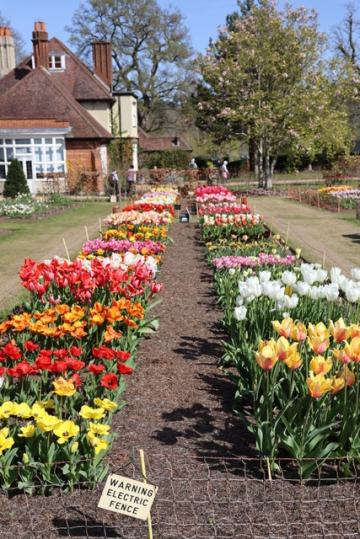 The trial bedsPolly Wilkinson
Being grown in the UK, weather and pest resistance are important judging categories. The most crucial feature, according to Wilkinson, is the length of flowering. “Three weeks is ideal as we want good value tulips — at least I certainly do when I’m planting them in clients’ gardens,” she says. Wilkinson lists a long list of traits the tulips must possess to win the coveted AGM and it’s not merely about the flower. There are the technicalities, impact and overall appearance: uniformity in size, height and shape.
For fairness, each tulip variety has been planted at the same time, in eight rows of five to make up a neat rectangle. It’s the horticultural version of the Bake Off technical challenge but, unlike the single star baker, the AGMs are unlimited. That doesn’t mean the award can’t be taken away — some tulips on trial are being retested to see if they should retain their award. The results are announced in September. If a tulip wins or retains its award, it could be planted in your garden this autumn.
Over the two-hour judging period there’s a collection of “oohs” — clearly representing a unanimous vote — and “oh dears”, with the odd “nice feathering around the edge” remark quickly qualified by a booming “it’s just not quite up to it”. The idea is for positive marking: someone points and remarks, “This one isn’t doing anything wrong.” I spot what Wilkinson was clearly referring to as an ugly tulip death, as well as a few fallen stems along the bed. The clear winners stand tall, uniform and bright, with “good petal overlap” making “lovely shadows”, before someone in the group proclaims: “AGM.” From the back of the pack Wilkinson replies: “No, I’m not ready for that, I’ll flirt with her a bit more in the coming weeks before fully committing.”
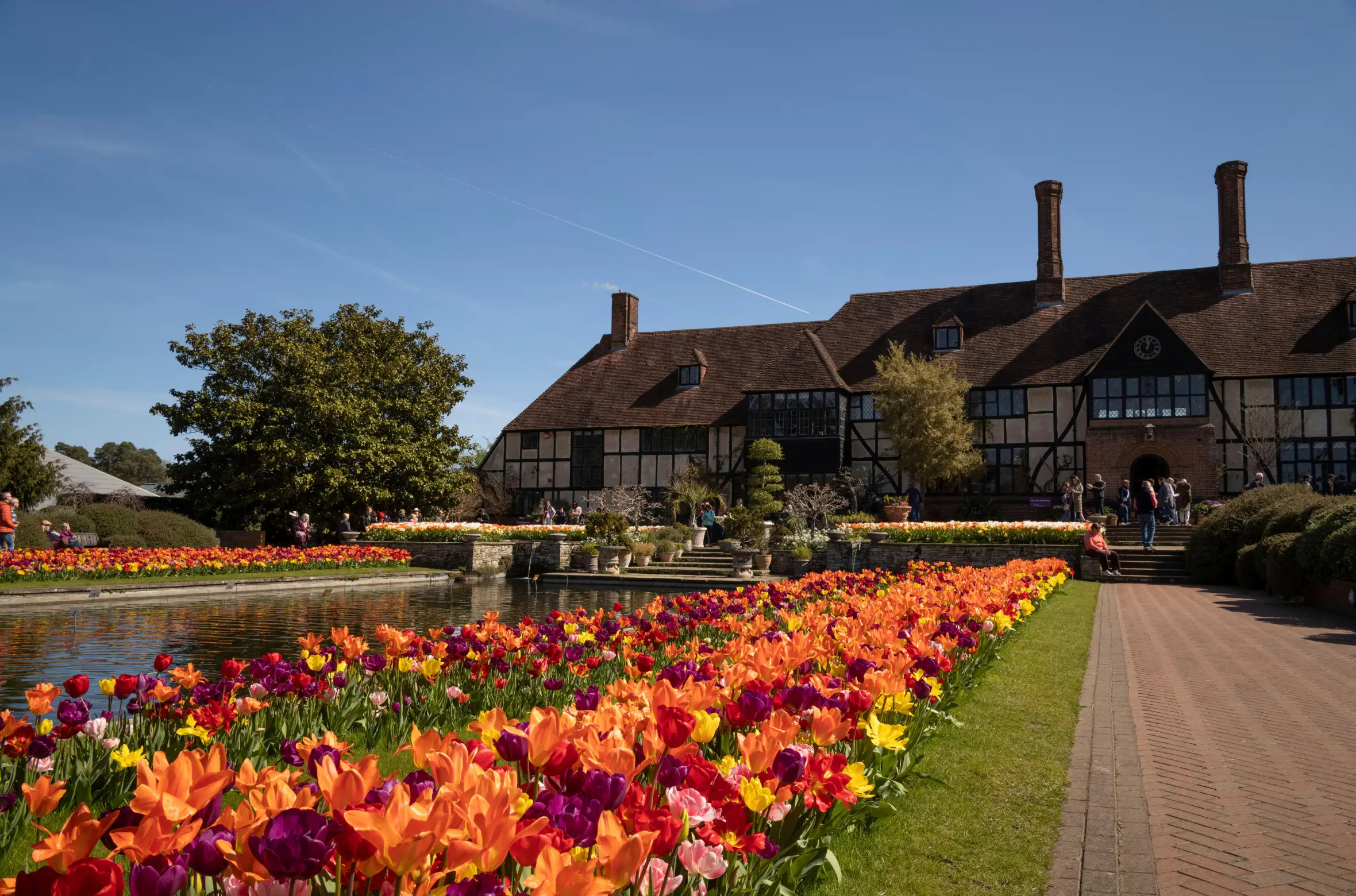 More than 100,000 tulips have been planted along the Jellicoe Canal at RHS Wisley this yearAlamy
Having judged for the past two weeks, it’s too early for Wilkinson to choose a favourite tulip. Which does she have her eyes on? “I’m not giving anything away but the fleshy ones are great aesthetically — ‘Apricot Impression’ and ‘Blushing Impression’ have beautiful peachy, pink tones.” Lapping up the spring sunshine at Wisley, Wilkinson points back over to the tulip trial area: “I’m most excited to see what ‘Chinatown’ does. It’s only in bud but it’s got this incredible flamelike bud which is sort of streaked with a gorgeous cream colour.” Wilkinson says this is the telltale sign of her favourite variety: “All the veridifloras have that striking green streak going through the petal.”
Anyone can go and see the tulips on trial and there’s even a people’s choice award that has already gathered more than 600 votes and whose winners will be announced in May. For the full list of winners, however, you’ll have to wait until September, the start of yet another exciting tulip-buying season.
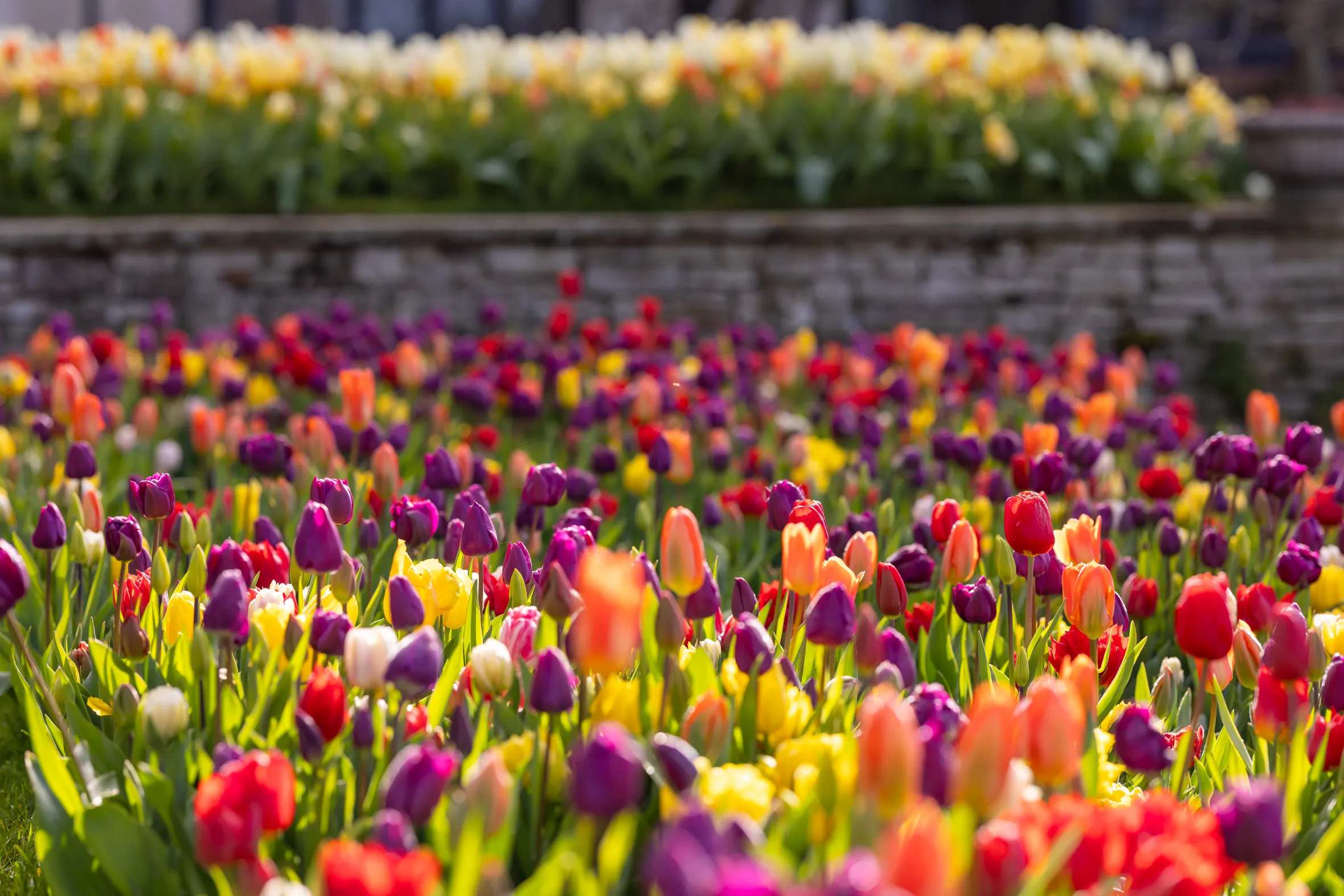 Think about size and height as well as colour when growing your own tulipsOliver Dixon
Tips for your own tulip show
By Polly Wilkinson
What people should be doing now is paying attention. Go and see the trials or visit your nearest RHS garden and pick your favourite tulips. Write them down and think of a colour scheme.
Get to know your different tulip species — and when they flower
Yes, it’s all well and good choosing the tulips you like the look of, but do you know how tall they are and when they will flower? Do a bit of homework on your earlies and lates — the RHS and nurseries like Crocus have brilliant websites where you can sort by early and late flowering species. Remember, having that succession of flowers in spring (and at all times in the garden) is key height-wise too. One thing that is a big mistake is to just choose the ones you like without looking at when they flower — then you might have all of them come up at once or be too spread out.
Think about size (and height)
We often just go for the colour we like the look of. But what about the size? It sounds obvious but the bigger the bulb, the bigger the flower will be. You might not know this but tulip bulbs come in two sizes: 10cm or 12cm. You might want both depending whether you’re planting in beds or pots. Height matters too — you might want to put shorter species in pots, and taller ones in borders.
Short on space? Grow in pots
This isn’t as obvious as you might think. People often forget that you need to refresh and replenish tulips every year, as it’s a bit of a gamble whether they’ll come back. It’s not a case of planting them once and it’s done. There are some perennial varieties which will last more than one year, such as Tulipa sylvestris (www.rhs.org.uk). I’m moving more towards growing tulips in pots because the frustrating thing is, if you want to stand a chance of them returning you have to let them die back fully. And that means ugly yellow foliage on show in your borders for quite a long time — the leaves act as solar panels, bringing all the energy back into the bulb. Species which will reflower are also much better from a cost and sustainability perspective.
Comments are closed.