
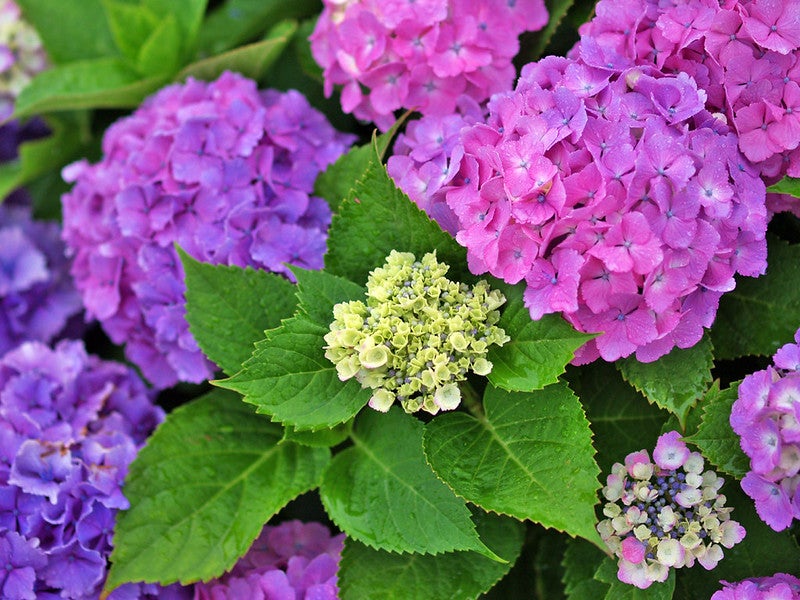
You can find hydrangeas all around the world, from gardens in Japan and rocky cliffs of Portugal to front lawns in Wisconsin.
The shrub, with its pillowy, cup-shaped blossoms, is named after the Greek words for “water” and “vessel.”
We have a bewildering amount of new hydrangea varieties to choose from here in the Midwest. Nobody knows this better than Natalie Carmolli, a public relations specialist for Proven Winners ColorChoice Flowering Shrubs.
Understanding Wisconsin, Together.
WPR’s “Wisconsin Today” newsletter keeps you connected to the state you love without feeling overwhelmed. No paywall. No agenda. No corporate filter.
“The reason that we keep coming up with new ones is kind of the same reason that you don’t have the very first cell phone you ever had in your life. They’re just better,” Carmolli said. “They perform better, they make your life easier and they’re all the more beautiful.”
Carmolli joined host Jill Nadeau on WPR’s “Garden Talk” to share her hydrangea wisdom.
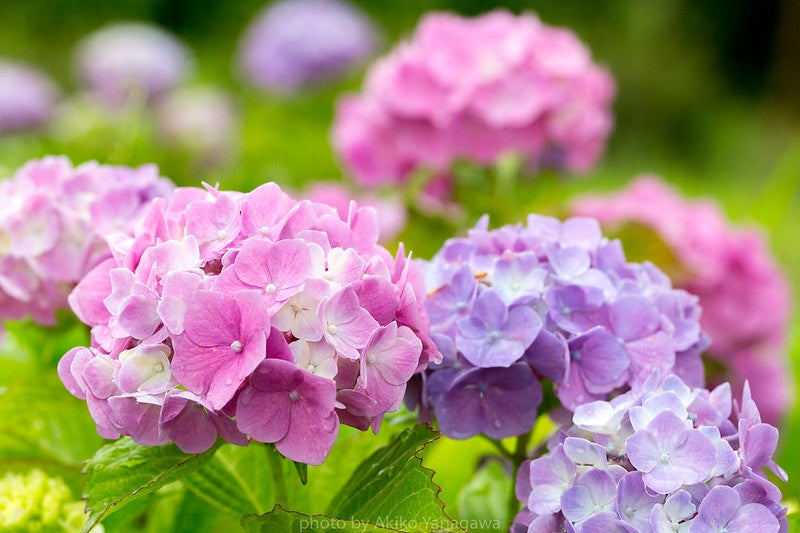 akiko yanagawa (CC BY-SA 2.0)
The following interview was edited for brevity and clarity.
Jill Nadeau: Why don’t we go into the different varieties and the basic groups of hydrangeas?
Natalie Carmolli: Let’s start with hydrangeas that bloom on new wood or stems that grow in the same season. Those are your Hydrangea arborescens, or smooth hydrangeas. Like Annabelle or Incredi-Ball.
There are panicle hydrangeas that also bloom on new wood. Those have those long, pointy, panicle-shaped blooms. Like Limelight or Pinky Winky hydrangeas. Those are your most sun-loving hydrangeas. If you have something where it’s going to sit out in the sun all day, those panicle hydrangeas are a great way to go.
JN: We’ve heard over the years that soil type impacts the color that you’re going to get. Is that true?
NC: Some hydrangeas are designed to turn color and some are not.
So we already talked about smooth hydrangeas and panicle hydrangeas. That’s also the same with oak leaf hydrangeas. They all have a naturally occurring color change. Nothing you do to the soil is going to adjust how they turn color. They do it on their own. Those are the ones that generally go from white to some form of green or pink.
But mountain hydrangeas and big leaf hydrangeas both can go from pink to blue, or anything in between, depending on how you treat the soil. Here in Michigan, I have very alkaline soil. I need to treat my soil with an acidifier that has aluminum in it.
The reason I say both is because aluminum is what turns your flowers blue, but the plant can’t take up the aluminum unless you have acidic soil. That said, your garden center is going to know exactly what package to hand you if you say, “I have a hydrangea I want to turn blue.”
Get a soil test first to see where your pH level is. Then bring that to your garden center, and they can help you determine what’s best to turn your hydrangea colors.
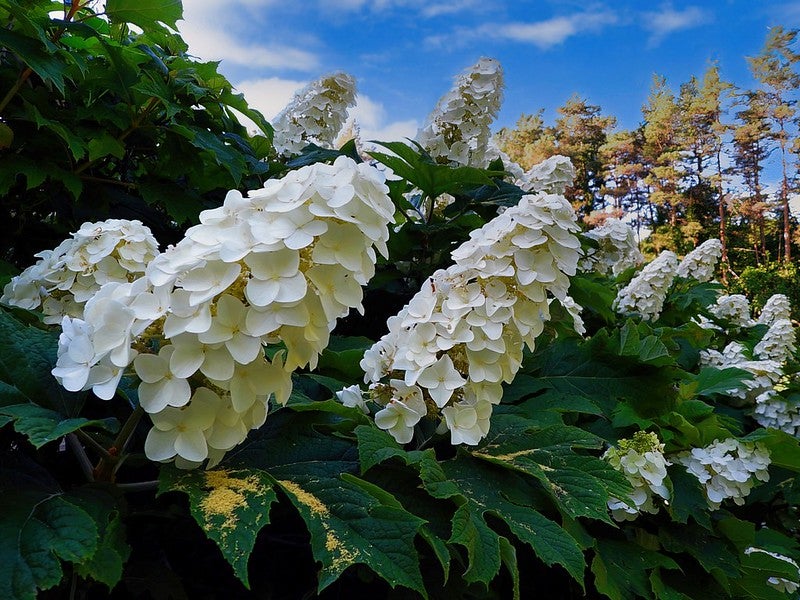 Oak leaf hydrangea. Jo Zimmy Photos (CC BY-NC-ND 2.0)
JN: We haven’t talked much about oak leaf hydrangea. We don’t see it as often, but they can have some beautiful foliage, can’t they?
NC: Oak leaf hydrangea is a native species, and that makes it so hardy and easy to grow because it’s naturally adapted to where it’s growing.
It has those deeply lobed leaves that are reminiscent of an oak tree leaf, and those long, pointed panicle shaped flowers again.
The leaves in the fall, as an extra treat, turn all different shades of orange, brown or bright red. You really get a full season treat. I love oak leaves because they’re going to be one of the first ones to bloom in your garden, too. They really reward you from the beginning all the way to the end of your season.
JN: On your website, you have all of these hydrangeas in containers. I never even thought about putting a hydrangea in a container, but you’re having success with that.
NC: We really are, and it just depends on giving them the right care. Of course, especially in Wisconsin where things get cold, you always want to make sure you have a weatherproof container, and that you’re choosing a variety that’s a couple of zones more hardy than where you live.
The most important thing to remember is that your container has good drainage. When your hydrangea goes dormant in the wintertime, that doesn’t mean it’s dead. Just pick up a snowball every month and put it on top of the hydrangea. It’ll give it enough moisture for the roots to stay healthy throughout that winter season and pop it back out in the spring.
Comments are closed.