
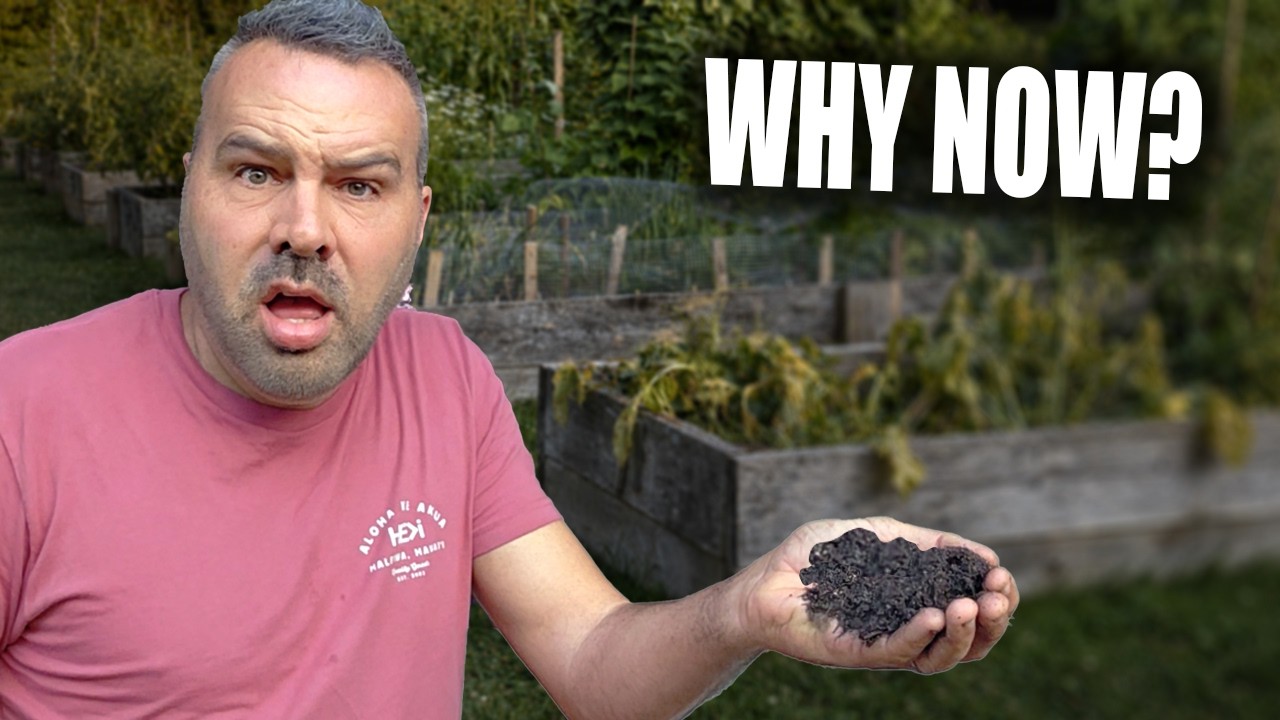
Most raised bed gardens start strong… and then something changes.
In this video, I’m breaking down why raised bed soil stops working over time—and what’s actually going on beneath the surface. Because it’s not just about nutrients… it’s about structure, biology, and how your soil evolves year after year.
I’ll also show you exactly what I do to bring soil back to life without overcomplicating it.
If your raised beds aren’t performing like they used to, this will explain why—and how to fix it.
MENTIONED PRODUCT
Neptune’s Harvest Liquid Humate: https://shop.nextlevelgardening.tv/collections/organic-fertilizer
RELATED VIDEOS
👉 How I Fill My Raised Beds (Step-by-Step): https://youtu.be/acJowCH9iEk?si=lGIWWhjafd1_p8I1
👉 Do You Actually Need Fertilizer? (Most Get This Wrong): https://youtu.be/7Z6JZXPCBJM?si=54JYO-ek4VD0Qj0E
🌿 RESOURCES
GardenGuide.com – Planting dates, watering, and more: https://www.gardenguide.com/
My book: Companion Planting for Beginners: https://amzn.to/42moGs5
CHAPTERS
0:00 Why Your Raised Bed Starts Failing
0:37 The 3-Year Problem Explained
1:28 Why Raised Beds Break Down Faster
2:16 What’s Happening Inside Your Soil
3:18 The First Warning Signs
4:45 When Plants Stop Performing
5:11 Why Fertilizer Won’t Fix It
6:11 The Right Way to Fix Your Soil
6:27 Step 1: Add Compost Back In
7:03 Step 2: Fix Compaction
7:24 Step 3: Feed the Soil (Not Just Plants)
7:55 Using Humates to Restore Soil Life
8:53 How to Maintain Healthy Soil
9:14 When You Might Need to Start Over
9:36 What Happens When You Fix It
9:49 What to Watch Next
37 Comments
I have raised beds going on 15 years old. Started them with dunnage dirt, old lumber, old straw, and lots of compost/soil. Every year I check PH, add lime or sulfur, and always add bone meal. In the spring, we refill the beds with manure/compost (chicken or steer), and sometimes add sand and/or perlite. We also like to add a good-quality potting soil mix on the top layer as we plant the next crop. Rotate crops every year. We have a great production of a variety of vegetables. I have around 1000 sq ft across 12 raised beds. I really want to get into compost teas.
My 12in raised beds are filled with 50% native sandy loam topsoil and 50% compost by volume when first built and maintain that ratio yearly as levels drop is not much. About one inch the first year. I keep about a 2 inch layer of ground up oak leave for mulch covering the top of my raised beds . I'm fortunate to have sandy loam native soil. Sometimes I think my soil drains too fast sometimes especially under drought conditions.
I think the Idea hight for raised beds is about 6 to 8 inches above the ground.
After more then 50 yrs of gardening I've put in my 1st raised beds this year. The bottom 1/2 of the bed is like the base of a hugelkultur mound top with good quality raised bed mix. I figure as the base breaks down I'll add the compost I make in the passive heated high tunnel. I use the hot compost method to help heat the high tunnel in my zone 5b. I keep at least 2 piles in the hot stage through the winter. I will use this to fill the top yearly. Because of the base breaking down and filling in I'll have to fill in more than 2 inches in the spring
I refresh the top 25-50% every year. Remove the top 25+%, put it on a tarp. Mix in fresh compost, worm castings, manures and perlite/vermiculite. Then I fluff up the remaining soil in beds. Then add the newly refreshed soil on top.
I'm stirring up what's in there- I started with dead wood branches in the bottom, 3 years ago. Interested to see how much has broken down. I know I have a good 3" of soil to add, at least! 🤔
I keep my garden soil set to 212 degrees so it never runs out of steam!!!
How do you add a few inches of soil if you have some perrenial plants in the bed? Dig up?
Very helpful video!!
You omitted one important element in your article, the water !!!! We have a problem as we have a deep well for domestic and irrigation, and it has a real problem of being waaaay tooo alkaline , and ground or raise beds only last about 3 years, and then NOTHING but weeds and grass will grow. the commercial irrigation water comes direct from behind Grand Coulee dam, no problem as the alkalinity in the wells comes from the water leeching down through the rocks. I have also wondered about gardens watered with commercial treated drinking water, floride, chlorine, and how that affect plants. I have basically given up trying to garden with our well water, we are rural and no commercial drinking water available.
How are your chickens doing? I hear them in the background.
I add a few inches of homemade compost to my raised beds every year. It looks like great stuff. But I noticed the surface of the compost turns into a slightly hard crust on the surface until I water it. Then it dries back to the crusty surface again. And cracks. Eventually this stops happening. But I'm wondering if I need to add sand or perlite to the finished compost before I add it to my raised beds to avoid this issue…..? 🤔
Thank you Brian. 🌷💚🙃
This is very helpful and makes total sense! Thank you @NextLevelGardening !
Great video, Brian!
What do you do in raised beds with perennials? I want to add organic matter but not disturb the established plants.
Does adding worms to your raised beds help keep the ground from getting too compacted?
My soil is just getting better every year. I fill top with compost every years to compensate decreased volume, and add woodchips with ammonia to the bottom.
I use open-bottom beds that maintain direct contact with my naive (clay) soil. My bed mix is about 1/2 screened topsoil and 1/2 cow & mushroom compost with mulch on top. As soil settles, I add compost/soil mix & mulch. I let everytbing break down no-till style and chop my spent plants at soil level so their roots help with soil structure.
It was like you have been watching me LOL 100% nailed it. Thank you and the comments also helped. I have a chance still!
That’s why I don’t use raised bed soil! Instead I get actual soil or dirt from a reputable nursery company. I am from India and what shocked me about the soil here it’s man made! Chuck that and go for real soil !!!!!!
Maybe I missed this…. Is this a spring or a fall task?
I re compost all my soil
I have 7 gallon fabric grow bags, and water with ollas, but i am pretty sure this vid applies to container gardening. I amend every year with alfalfa pellets, azomite, and a combination of bagged steer manure and mushroom compost. I am a few years in, and you hit my problem on the head. Compaction, dropping soil levels. I was considering adding coco coir to each container, but I will try adding the humate you suggested and see how things go. Very informative video, thanks!
I have a raised bed with strawberries that I planted a couple of months ago. What is the best way to maintain it since I won't be digging them up every year.
Very timely – thanks for the information.
Thank you. Your videos will definitely help with our new raised beds that we are installing.
Id also recommended putting in a fair amount of inorganic mineral-based topsoil so there is some medium in there that isn't constantly decaying.
Yap. Thats why farmers rip their ground before they plant
We have rabbits for perfect manure. Does not have to be composted before using and we also have chicken manure that we compost. Top off raised beds every year. We have pretty good luck with them. Also use shredded paper for the worms to feed on when we 1st build the beds.
How do I test for too much salt in the soil?
Does em1 will help ?
TLDW: add a couple inches of compost every year.
It seems pretty obvious to me that you need to add imputs to your soil, organic material as well as fertilizer and maybe even something like glacier dust to replenish micro nutrients.
What about worm castings? Is that a good thing to add?
Fantastic info. 5 stars.💥💥💥💥💥
I found this video very informative and useful, thank you! Would you consider making a future YouTube video on the use and benefits of worm castings please?
I'm late but here. Thank you for all of your great information Brian. I have learned so much from you.