
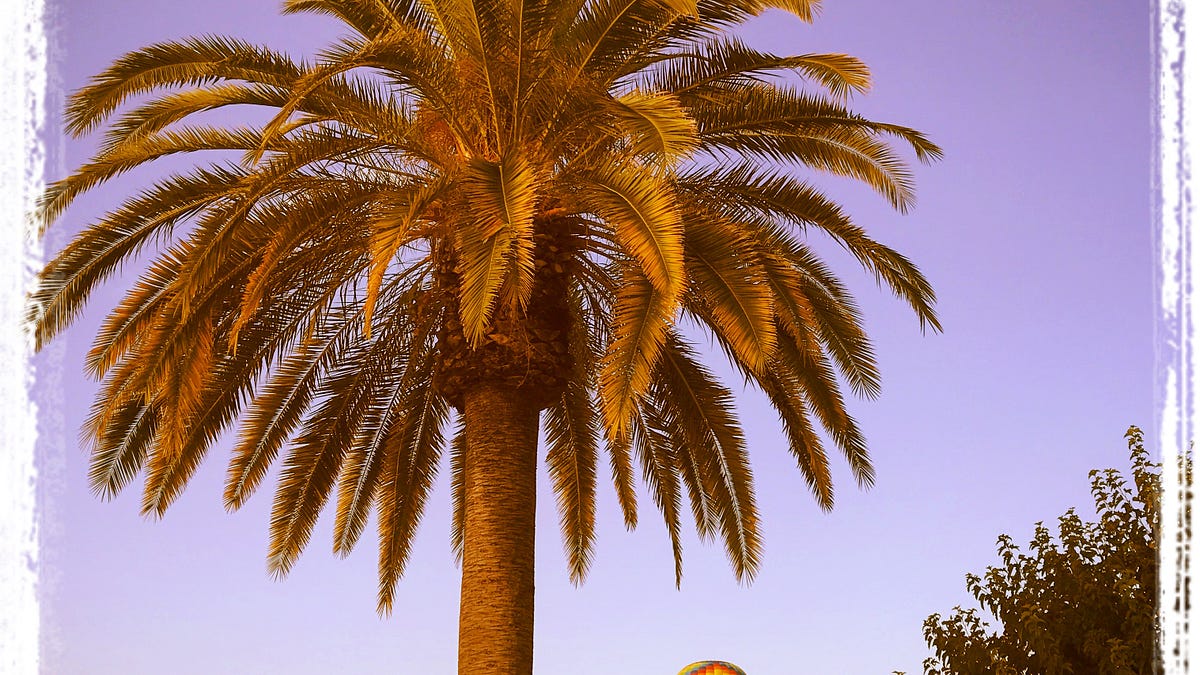
Earth Day is a reminder that caring for the place we live starts close to home — in our gardens, our neighborhoods and our local ecosystem. At Napa Valley Features, we believe local news and information sharing is part of that work.
Here’s a short video in celebration of Earth Day 2026 — Tim Carl Video
Napa Valley Features depends on paid subscriptions to keep doing this work. We know this is a difficult time for many, but strong local news and information is more important than ever. As we continue the mission of Napa Valley Features, we are also building new tools and community resources that readers can explore at NapaServe.org. Please consider becoming a paid subscriber, renewing your subscription or joining as a founding member. In May, we enter our fourth year, and we could not do it without your support.
Napa Valley Features brings you Green Wednesday, featuring articles from environmental voices and the UC Master Gardeners of Napa County. These contributors share research-based horticultural advice and insights on sustainability, ecology and climate topics relevant to our region.
Napa Valley Features is reader-supported. To receive new posts and support our work, consider becoming a paid subscriber.

In “Sharing the Garden With Wildlife,” Penny Pawl highlights the many pollinators, reptiles, amphibians and other creatures that share a home garden, showing how everyday garden spaces can support biodiversity.
“For the most part I live happily with the creatures in my garden. Most are beneficial and many are interesting.” — Penny Pawl
In “Choosing Trees for a Warmer Napa Valley,” Gail Pavlosky explains how rising heat, drought and the urban heat island effect are changing tree performance and why communities should start choosing species suited to warmer conditions now.
“By preparing now for the climate ahead, communities can help ensure that the trees lining our streets and shading our parks and yards continue to provide cooling shade, wildlife habitat and beauty for generations to come.” — Gail Pavlosky
By Penny Pawl, UC Master Gardener of Napa County
NAPA VALLEY, Calif. — I was just out in my garden where many flowers are in bloom. While looking at a flowering lavender, I counted six or seven honeybees feasting on the nectar in the blue flowers as well as a bumblebee checking out the whole garden. Butterflies were also flitting around, inspecting the flowers. I spotted both pipevine swallowtails and anise swallowtails.
One winter a mud dauber wasp and company took up residence on a shed door on the inside. Over the winter the population got smaller and in the spring they left. I never disturbed them and never knew where they went.
Pipevine swallowtails lay their eggs on the leaves of pipevine (Aristolochia spp.), also called Dutchman’s pipe. Anise swallowtails lay their eggs on wild fennel (Foeniculum vulgare). The pipevine swallowtail males are black and blue; the females, all black, are constantly laying eggs on my pipevine. The anise swallowtails have not laid eggs yet but I’m hopeful they will.
I often see young blue belly lizards sunning themselves and waiting to catch dinner. For many years, these lizards have lived inside a small shed on my property. They emerge under the door to catch some rays. I saw five of them the other day. The males are black on their backs, a sign that it’s spring and they are eager to mate. I have named them all “Lizzy.” Many of them also live outside the shed and my dog, Joy, knows where each one is. She never has personal contact, however.
 A western tiger swallowtail rests on a yellow starthistle — Tim Carl Photo
I don’t usually go out in the dark, so I don’t see the creatures of the night. However, I did meet a skunk one night in my nightgown while I was looking for my cat. I never backed up so fast in my life.
Bats and moths, both pollinators, fly around after the sun goes down. A few years ago, I put up a bat nest, following all the instructions, but I never had a tenant.
I recently read that we should leave moths alone as we need them to pollinate our crops. Moths are in the same family as butterflies and make up about 75% of the Lepidoptera species. Some like to get into closets and snack on wool, but they will leave polyester alone.
I am a champion of the tomato horn worm. Most people will kill them if they see them, but I prefer to put them on soil with a bottle over them and feed them tomato leaves. When they are ready, they burrow into the soil, emerging the following spring as night-flying sphinx moths. One of their favorite plants is Nicotiana.
I have a few large worm bins and creatures move into them all the time. The bottoms are lined with wire mesh so moles can’t enter, but sow bugs and other bugs come and go. I also see occasional garter snakes of varying sizes. I think they come to eat the small toads that live in my worm bins. Some of the toads will sit on my hand while I move things around. They also eat the flies that get into worm bins, and I would not be surprised if they snacked on a worm. Typically, the worms don’t come to the surface of the bin, and the toads don’t go down.
 A dark swallowtail butterfly feeds on yellow starthistle — Tim Carl Photo
One fly that I welcome in my worm bin is the soldier fly in its larval stage. The larvae munch away on the organic matter, decomposing it quickly, so I’m happy to see them. After they hatch, they seem to head right back to the bin and lay eggs.
Among the unwelcome visitors are snails and slugs. They are hermaphrodites (they have both male and female parts) and lay dozens of eggs multiple times a year.
One summer, I coexisted with a black widow spider. She lived in one corner of the worm bin, tending her eggs and web, and I stayed out of her way. I read that they only bite when frightened, and we learned to live with each other.
I have a similar relationship with the spiders around my house. When their webs get too big, I take them down and they rebuild. They help keep flies under some control. Most of these spiders are daddy-longlegs and they love my garage.
I did have one unfortunate experience with a brown recluse spider. I was cleaning at my mom’s home and felt a pain in my wrist. That’s when I saw the brown beast. After a couple of days, I had an open wound that was sore. When I went to the doctor, he immediately told me not to move from my seat, and he treated me with antibiotics right away. I still have a small scar. Luckily for us, they are rarely seen in California.
Although I live close to the Napa River, I no longer find bullfrogs, large toads, salamanders and some of the butterflies I used to see. This makes me sad. Did you know that you can lay a bullfrog on its back and it won’t move? I put many a frog back in the river just by doing that.
For the most part I live happily with the creatures in my garden. Most are beneficial and many are interesting. For instance, why does a lizard run in front of me when it goes to hide? If I were the lizard, I would head the other way. I also have moles and gophers but that is another story. I’m not sure I am winning that battle.

Composting Workshop: Join UC Master Gardeners of Napa County for a free backyard composting workshop on Saturday, April 25, from 10 a.m. to noon at Skyline Wilderness Park, 2201 Imola Avenue, Napa. No park entrance fee for registered workshop attendees. At the end of the workshop, you may purchase a discounted compost bin for $20. Register here.
Library Talk: Join UC Master Gardeners of Napa County and Napa County Library for a free talk on “Growing Corn: Our Field Test Favorites” on Thursday, May 7, from 7 p.m. to 8 p.m. via Zoom. Master Gardeners experimented with corn in home gardens and share their findings. Register here.
Tree Walk: Join UC Master Gardeners of Napa County on a free guided tree walk in Napa’s Fuller Park on Friday, May 8, from 10 a.m. to 11:30 a.m. Discover some of the many exotic and native trees in this historic park. Meet at the corner of Jefferson and Oak. Space is limited and registration is required for each participant.
Help Desk: The Master Gardener Help Desk is available to answer your garden questions. Use our online Plant Problem Help Form or email us at mastergardeners@countyofnapa.org. Include your name, address, phone number and a brief description of the problem. You can also visit us in person on Mondays and Fridays from 10 a.m. until 1 p.m. at the University of California Cooperative Extension Office, 1710 Soscol Avenue, Suite 4, Napa.
—
Penny Pawl is a UC Master Gardener of Napa County.

By Gail Pavlosky, UC Master Gardener of Napa County
NAPA VALLEY, Calif. — Urban trees provide shade, improve air quality and help moderate temperatures in California’s cities. Yet as climate change brings hotter weather and longer periods of drought, many commonly planted tree species may struggle.
In a lecture delivered to Master Gardeners, Dr. Igor Lacan, interim county director and Bay Area environmental horticulture and urban forestry adviser with the University of California Cooperative Extension, discussed how communities can adapt tree planting and management to meet the challenges of a warming climate.
Lacan’s presentation examined how climate trends, including rising temperatures, declining snowpack and increasing atmospheric dryness, are already reshaping urban environments. In Mediterranean regions such as the San Francisco Bay Area, these shifts are expected to intensify through the end of the century, bringing warmer temperatures, greater variability in rainfall and increasing drought stress.
These changing conditions are already affecting tree health. Heat and drought stress can impair tree physiology, reduce growth, and increase susceptibility to pests and disease.
 Tim Carl Photo
Napa Valley residents have seen how climate extremes can affect the landscape. Intense heat waves and recent wildfire seasons have placed additional strain on both natural ecosystems and neighborhood trees.
Sidewalks, rooftops and parking lots absorb heat during the day and slowly release it at night, making developed areas several degrees warmer than nearby open land or vineyards. This phenomenon, known as the urban heat island effect, can increase trees’ water needs and worsen the impacts of drought, placing additional stress on trees growing along streets, in parks and in residential areas.
Because precise long-term models for predicting tree performance remain limited, Lacan described a practical method known as “space-for-time substitution.” Rather than waiting decades to see which species survive, researchers compare a city’s projected future climate with the current climate of another, warmer city. By studying which trees already thrive under those conditions, communities can make more informed planting decisions today. Lacan emphasized that adaptation must begin now, especially for mature trees. Efficient irrigation before, during and after heat waves or drought can make a meaningful difference.

He encouraged communities and homeowners to consult SelecTree, an online urban tree selection guide developed by California Polytechnic State University that provides detailed information on hundreds of commonly planted landscape trees.
For irrigation guidance, Lacan recommended visiting the California Center for Urban Horticulture at the UC Davis. The site includes research on efficient irrigation systems such as R-SIG and trickle-drip systems, along with a calculator that helps determine how much water established trees need.
Maintaining healthy trees in Napa Valley’s neighborhoods will require thoughtful planning, selecting species that can tolerate warmer conditions and using water wisely. By preparing now for the climate ahead, communities can help ensure that the trees lining our streets and shading our parks and yards continue to provide cooling shade, wildlife habitat and beauty for generations to come.
Help Desk: The Master Gardener Help Desk is available to answer your garden questions. Use our online Plant Problem Help Form or email us at mastergardeners@countyofnapa.org. Include your name, address, phone number and a brief description of the problem. For best results attach a photo. You can also visit us in person on Mondays and Fridays from 10 a.m. until 1 p.m. at the University of California Cooperative Extension Office, 1710 Soscol Ave., Suite 4, Napa.
—
Gail Pavlosky is a UC Master Gardener of Napa County.
 Field Notes: ‘Giants Rising’ and a Community Forest Rising Along the Napa River
 Green Wednesday: Lilacs in Bloom and the Work to Protect Napa’s Water Future
 Green Wednesday: Tomato Planting Wisdom and Climate Resilience Efforts Across Napa
 Green Wednesday: Compost, Climate and Community Action
 Green Wednesday: Planting Fruit Trees and Climate Films at the Napa Library
 Green Wednesday: The Hidden Power of Fungi and NVUSD Climate Upgrades
 Green Wednesday: Soil Health and Smarter Fall Cleanup
 Green Wednesday: Dahlia Prep and Detoxing Your Home for Health and Climate
 Green Wednesday: Cunning Coyotes and a Deadly Tree Disease
—
The views, opinions and data presented in this article are those of the author and do not necessarily reflect the official policy, position or perspective of Napa Valley Features or its editorial team. Any content provided by our authors is their own and is not intended to malign any group, organization, company or individual.
Comments are closed.