
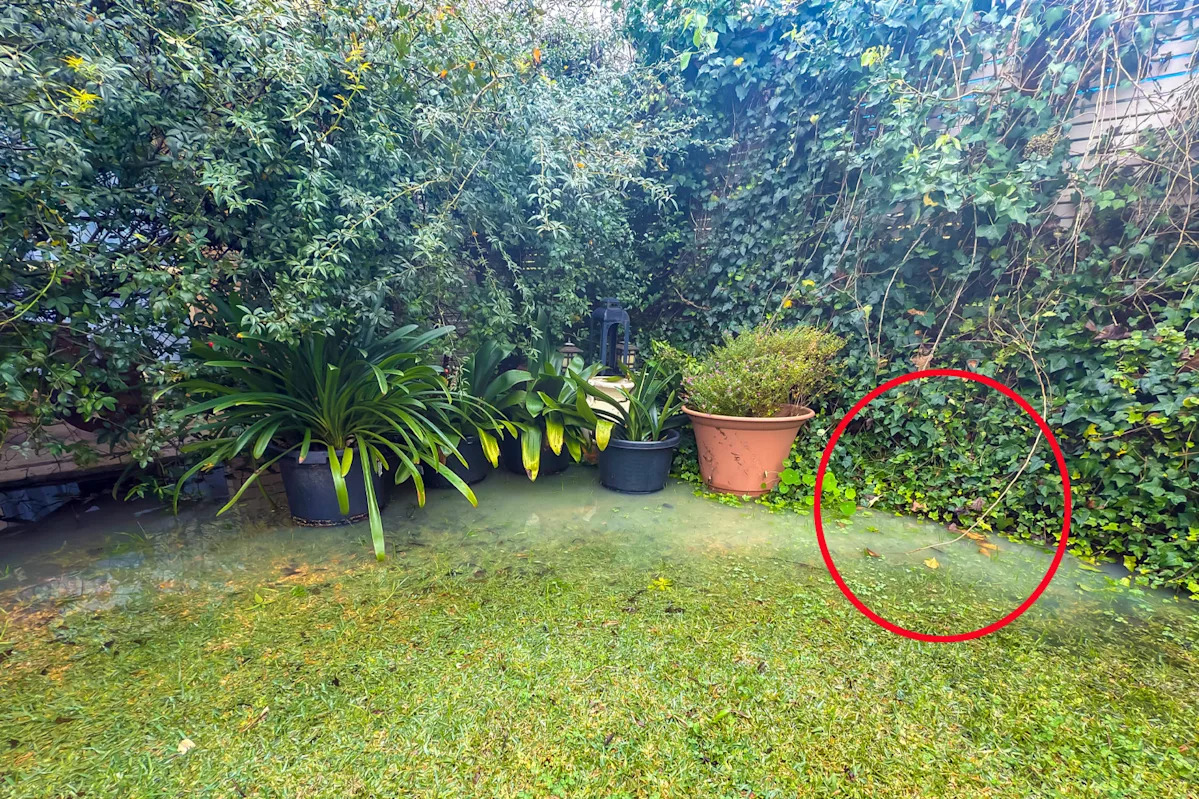
Thousands of backyards might be at risk of being taken over by a swarm of little critters as millipede season takes hold across parts of the country.
Native to Europe, Portuguese millipedes are an invasive species, and have been reported in huge numbers at properties in southern Australia, including South Australia, ACT, Tasmania and Victoria.
While not harmful to animals or humans, “they can be a significant domestic nuisance when they invade homes and gardens in their thousands,” Dr Owen Seeman, Collection Manager for Arachnida at Queensland Museum, told Yahoo News Australia.
They can “sometimes damage seedlings of crops” Professor Ary Hoffmann from Melbourne University previously said.
It’s currently mating season, and so Aussies should expect to see them in “sweeping droves” SA Museum’s Collection Manager for Terrestrial Invertebrates, Dr. Shasta Henry told 891 ABC Adelaide this week.
Mating season is typically from March to May, with peak egg-laying occurring in April and May. During this time, they’re often seen in abundance in backyards, especially after rain.
While native species tend to be widespread in low numbers, the black Portuguese millipedes are found in high numbers and have the potential to invade properties
Have you dealt with these critters, or any others, in your backyard? Contact newsroomau@yahoonews.com
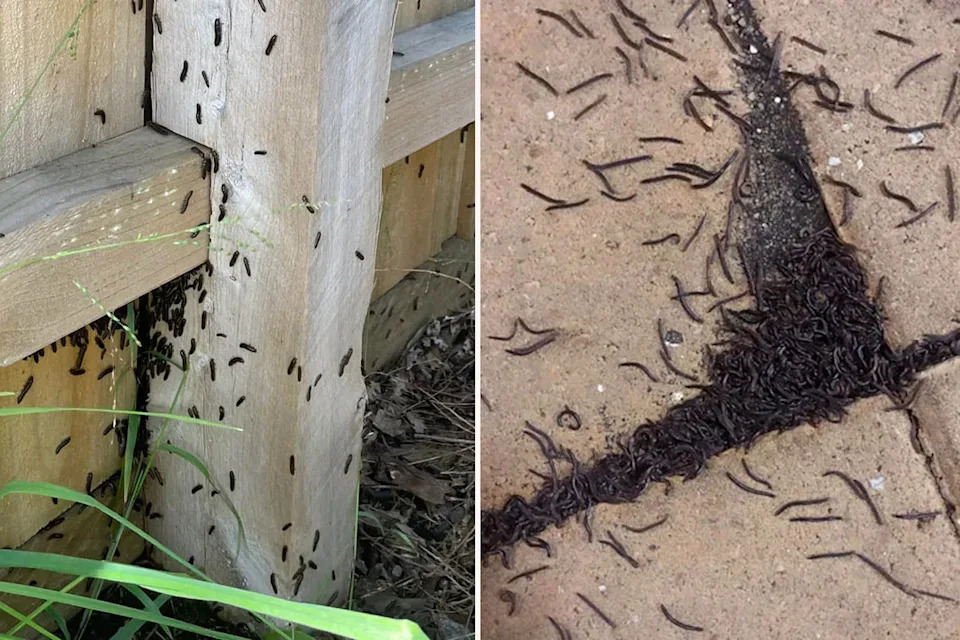
Two residnets in Melbourne previously experienced a swarm of critters in their back garden. Source: Reddit/Facebook
Previously, a Melbourne man discovered “masses” of millipedes in his back garden. He said thousands of them moved onto his property following a bout of rain.
Photos of the insects show hundreds of them piled up in the cracks between his pavers.
Meanwhile, another man said his place was suddenly swarmed by hundreds of them.
How to get rid of a millipede invasion?
Black Portuguese millipedes are mostly active at night and are attracted to light from inside homes. So it wouldn’t be uncommon to find them on your doorstep, Henry said.
According to Termico Pest Management Services in Perth, Portuguese millipedes do not breed indoors, but will travel up to 100 metres from the mulch and leaf litter in which they live.
If they do make it inside, “they are doomed,” Henry added, noting they will often die.
If you do end up with a swarm of millipedes, Prof Hoffman said you could “probably just leave them” as they’ll likely “disappear quite soon”.
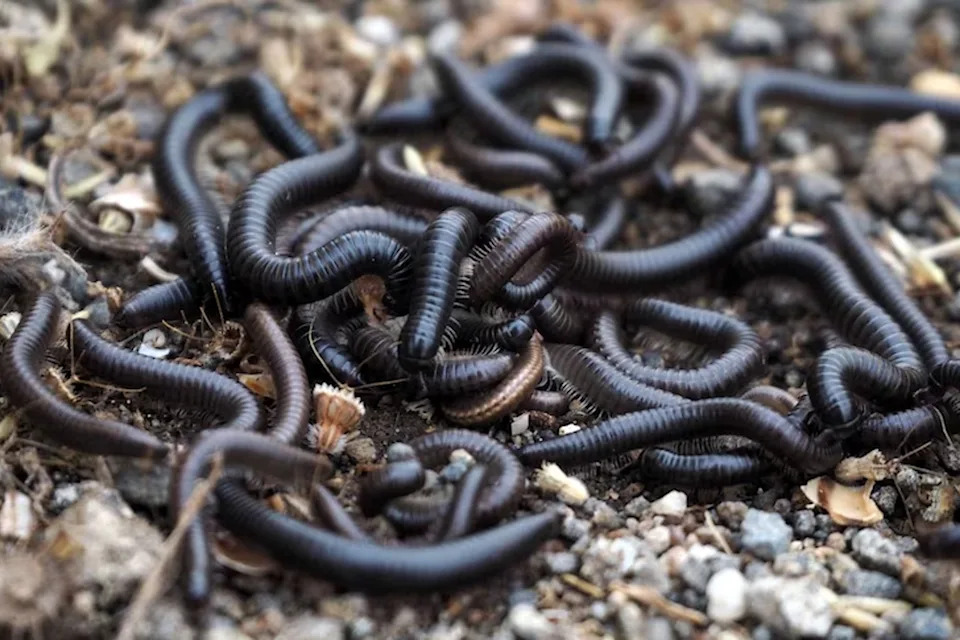
This time of year sees huge numbers of Portuguese millipedes. Source: ABC South East
But there are some ways you can help deter them.
Globe Pest Solutions suggests keeping the perimeter of the home clear of garden beds and mulch, which can attract them.
Potential entry points to the home should also be sealed.
When lights must be in use, they recommend closing blinds during mating season to make your home less attractive.
Do you have a story tip? Email: newsroomau@yahoonews.com.
You can also follow us on Facebook, Instagram, TikTok, Twitter and YouTube.
Comments are closed.