
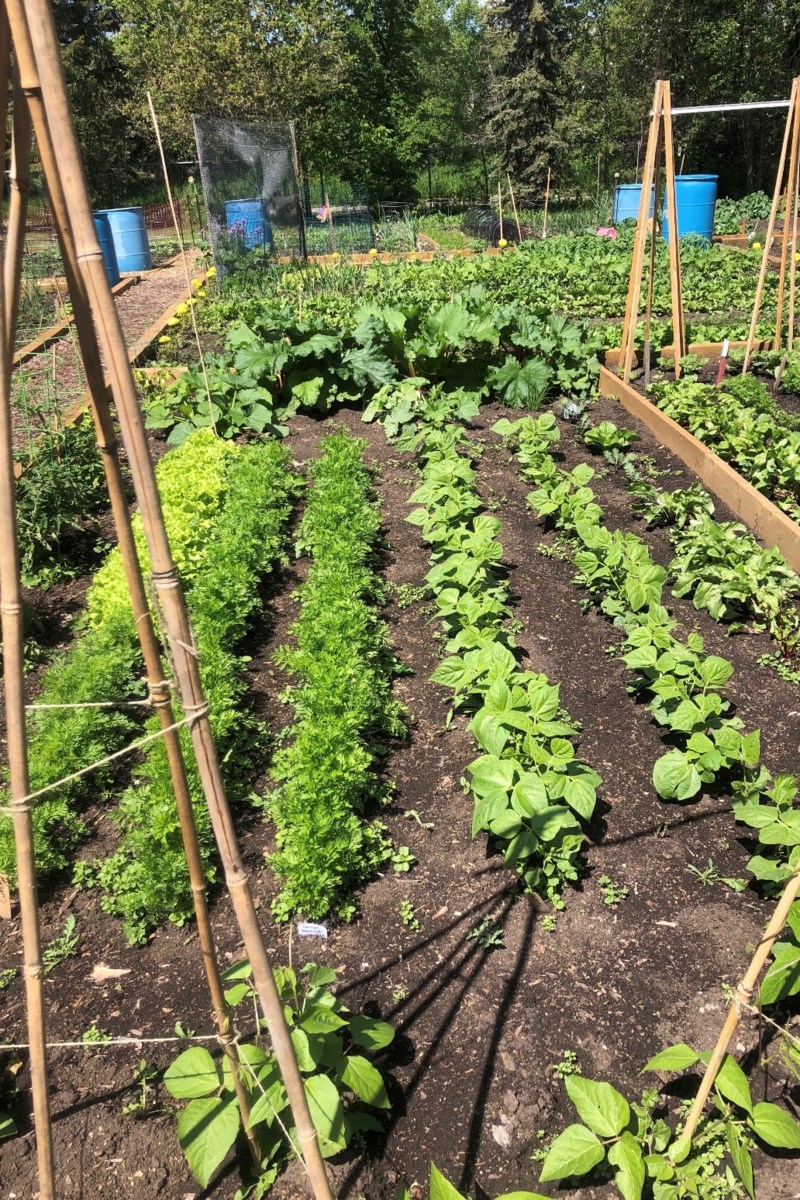
The St. Albert Community Garden is preparing for another season of volunteer work bees and shared harvests, provided the Alberta weather cooperates.
As winter slowly loosens its grip on St. Albert, members of the St. Albert Community Garden are waiting for warmer weather to begin another growing season, watching as lingering snow delays their return to the soil.
“It’s not inviting at this time,” said Sonia Parker, treasurer of the garden. “There’s still too much snow. You just kind of look at it and hope it melts soon.”
Despite the slow start to spring, Parker said gardeners are already preparing for the season ahead, anticipating the usual early work of getting soil ready, organizing shared tools and preparing plots once conditions allow.
Alberta’s unpredictable spring weather often means gardeners are left waiting for the ground to dry and warm before planting can begin in earnest.
Membership coordinator Rose Alm said the garden operates on a structured seasonal schedule, with clear expectations for member participation in upkeep and shared responsibilities.
“Everybody contributes in some way,” Alm said.
She noted that gardeners are expected to contribute to maintaining the space as part of its volunteer-run model. That shared approach is central to how the garden functions, with members taking part in regular maintenance and seasonal upkeep.
Alm said occasional challenges arise when individual plots are not properly maintained, though she stressed those cases are rare.
“It’s a very small number of people,” she said. “Most people want to be there. They enjoy it and they honour their commitments.”
For Parker, the reward is simple; “Watching it grow and enjoying fresh produce, that’s my favourite part.”
Common crops include beans, carrots, beets and tomatoes, though Parker said Alberta’s short growing season can make gardening unpredictable.
Frost can arrive early in the fall, posing a risk to more delicate plants.
“You really have to pay attention to the weather,” she said. “Some plants can handle it, but others, like tomatoes, won’t survive a frost.”
Even experienced gardeners face trial and error. Parker has scaled back experimenting with more difficult crops after mixed success.
“I’ve gone full circle,” she said. “Now I grow what I know works.”
Beyond food production, Parker said the garden also serves as a place for connection. Members often share surplus produce, exchange advice and step in to help when others need support.
She recalled a gardener who was unable to tend her plot due to injury and received assistance from several others who helped with watering and weeding.
“There’s usually someone willing to pitch in,” she said.
Some members also donate extra produce to local food banks, contributing to the wider community.
Community gardens also provide an option for residents without access to private yard space, including those living in condos or apartments.
“It’s a natural fit,” Parker said. “You still get to garden, even if you don’t have your own yard.”
As temperatures begin to rise, gardeners are preparing for the busy weeks ahead, with plots typically expected to be planted by early June.
For Parker, the appeal of the garden is as much about the experience as the harvest.
“It gets you outside,” she said. “It’s quiet, you hear the birds, and it doesn’t feel like you’re in the middle of the city.”
Comments are closed.