
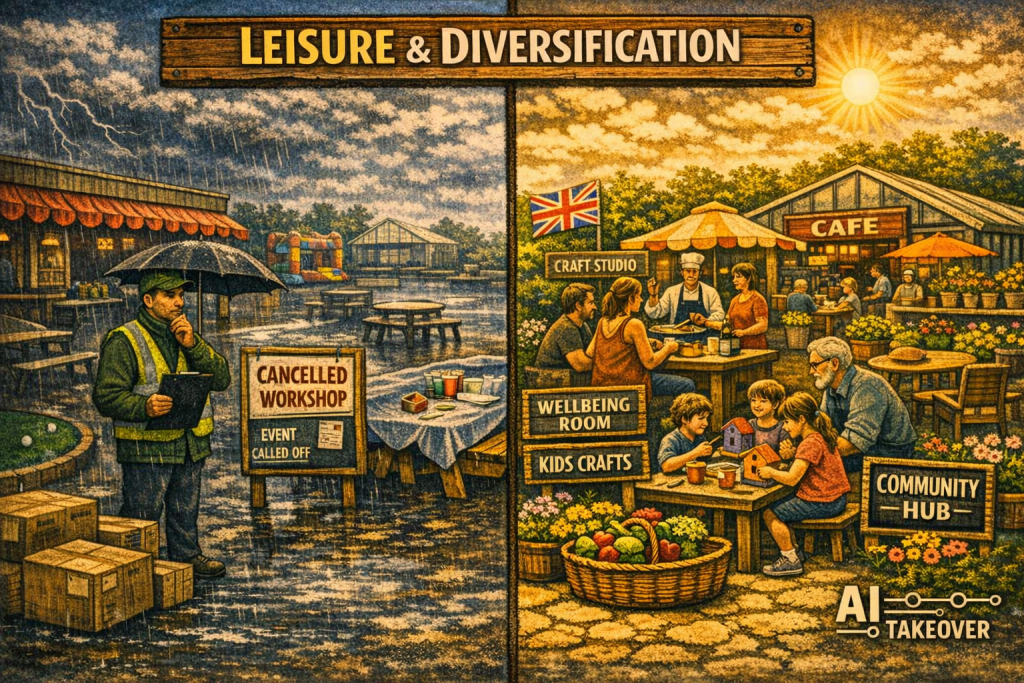
Each day in April, Garden Centre Retail will be posting an article ‘written’ by AI, following a list of topics that affect the garden retail landscape in the UK. Today’s topic tackles the leisure diversification we’re seeing in the UK garden retail sector.
Diversification into leisure activities has moved from an interesting add‑on to a strategic imperative for UK garden centres. As weather volatility disrupts traditional trading patterns and consumer expectations shift toward experiences rather than purely transactional shopping, leisure is becoming a powerful way to stabilise footfall, deepen customer engagement, and unlock new revenue streams. With rising costs and labour shortages putting pressure on margins, the centres that broaden their offer into leisure, thoughtfully and commercially, are better positioned to build resilience and long‑term growth.
What Garden Centres Are Experiencing
Many centres are already experimenting with leisure, from children’s play areas and seasonal events to craft workshops, cookery demonstrations, and wellness activities. But the experience is mixed. Some centres see strong uptake and repeat visits, while others struggle with inconsistent attendance, staffing challenges, or activities that fail to convert into retail sales. Weather remains a major influence, with outdoor leisure spaces under‑used during prolonged wet spells. At the same time, customers are becoming more discerning, expecting high‑quality experiences, well‑designed spaces, and activities that feel worth the trip. The result is a landscape where leisure holds huge potential but requires careful planning and execution.
Root Causes and Drivers
Several forces are pushing garden centres toward leisure diversification. Consumer behaviour has shifted significantly, with families, hobbyists, and older customers seeking experiences that combine learning, relaxation, and social connection. The rise of hybrid working has increased demand for local, daytime activities. Weather volatility has made traditional retail peaks less predictable, encouraging centres to create reasons to visit that are not weather‑dependent. Sustainability expectations are also influencing leisure choices, with customers drawn to activities that feel purposeful, such as upcycling workshops or wildlife gardening sessions. Meanwhile, competition from online retailers has made experiential differentiation essential. These drivers collectively make leisure diversification not just attractive, but strategically necessary.
Opportunities Hidden Inside the Challenge
Leisure opens the door to deeper customer relationships and more stable revenue. Activities such as workshops, talks, and seasonal events can position a centre as a hub of expertise and community. Indoor leisure spaces such as soft play, craft studios, small exhibitions, or wellness rooms provide year‑round footfall that is less vulnerable to weather. Partnerships with local makers, artists, or wellbeing practitioners can expand the offer without adding significant staffing burden. Leisure also strengthens the emotional connection customers feel with a centre, increasing loyalty and cross‑category spend. For centres with strong catering operations, leisure can significantly boost midweek trade. And as sustainability becomes a core value, educational experiences can reinforce a centre’s environmental credentials.
Practical Actions Garden Centres Can Take
Successful diversification begins with clarity about the centre’s identity and customer base. Centres benefit from choosing leisure activities that align naturally with their strengths, horticulture, food, craft, nature, or family experiences, rather than trying to be all things to all people. Investing in flexible spaces that can host multiple types of activities helps maximise utilisation and reduce risk. Clear pricing strategies are essential; customers will pay for high‑quality experiences, but the value must be obvious. Marketing plays a crucial role too, with consistent promotion across social media, email, and in‑store signage helping to build momentum. Operationally, centres should consider staffing models that support leisure without overstretching teams, such as using part‑time specialists or partnering with external providers. Finally, measuring the impact of leisure on footfall, dwell time, and retail conversion helps refine the offer over time.
What Leading Garden Centres Are Doing Differently
The most forward‑thinking centres are treating leisure as a core part of their brand, not an occasional add‑on. They design spaces with intention, creating environments that feel welcoming, modern, and aligned with their identity. Many are building year‑round event calendars that blend education, entertainment, and community engagement. Some are integrating leisure with retail more seamlessly, using workshops to showcase products, or designing play areas that encourage families to explore the wider centre. Others are developing signature experiences – seasonal trails, food‑led events, or curated learning programmes that differentiate them from competitors. Leading centres also take a commercial approach, ensuring leisure activities contribute meaningfully to revenue rather than simply adding operational complexity.
The Role of AI
AI is beginning to support leisure diversification in practical ways. Centres can use AI‑driven forecasting to identify the best times to schedule events, aligning them with likely footfall and weather patterns. AI tools can help analyse customer data to understand which activities resonate with different segments, enabling more targeted programming. In marketing, AI can generate tailored content for events, automate reminders, and optimise promotional timing. Some centres are exploring AI‑assisted booking systems that streamline administration and reduce no‑shows. While AI cannot replace the creativity and human touch that leisure requires, it can significantly improve planning, efficiency, and customer engagement.
A Forward Look: What to Expect Next
Leisure will continue to grow as a defining feature of successful garden centres. Customers will expect more curated, high‑quality experiences that feel worth their time and money. Indoor leisure spaces will become increasingly important as weather patterns remain unpredictable. Sustainability‑focused activities such as wildlife gardening, composting, and low‑waste living will gain traction. Technology will play a larger role in booking, personalisation, and marketing. Partnerships with local businesses and community groups will expand the range of experiences without increasing staffing pressure. Ultimately, leisure will become a key differentiator in a market where retail alone is no longer enough.
Diversification into leisure is not simply a trend; it is a strategic response to a changing market. Garden centres that embrace it thoughtfully, balancing creativity with commercial discipline, can build deeper customer loyalty, stabilise revenue, and strengthen their position as community destinations. By aligning leisure with their brand, investing in flexible spaces, and using tools like AI to enhance planning and engagement, centres can turn diversification into a powerful engine for long‑term resilience and growth.
Comments are closed.