
Key Points
Removing weeds protects your vegetable garden from losing nutrients, water, and sunlight, ensuring healthier crops.
Pull weeds early and often by hand or with tools to stop them from spreading and setting seeds.
Add mulch to prevent regrowth and keep your vegetable garden thriving.
Weeds are bad news for your vegetable garden. These pesky invaders will compete with your lettuce and cucumbers for nutrients, light, and water. Over time, this will lead to reduced crop yield—if left unchecked, they can choke out an entire plot.
It’s a frustrating situation, especially since weeds are so difficult to remove. Fortunately, there are tried-and-true methods for eradicating these problematic plants—and preventing them from returning. Here, we spoke to experts about exactly how to do it.
Meet Our Expert
Niki Jabbour, founder of Savvy Gardening and the author of The Year-Round Vegetable Gardener
Teri Speight, landscape gardener, gardening coach, podcast host, and co-author of The Urban Garden
Related: How to Keep Rabbits Out of Your Vegetable Garden, According to Experts
Pull the Weeds
Weeds have aggressive root systems and will set thousands of seeds if you let them—so it’s better to remove these plants sooner rather than later.
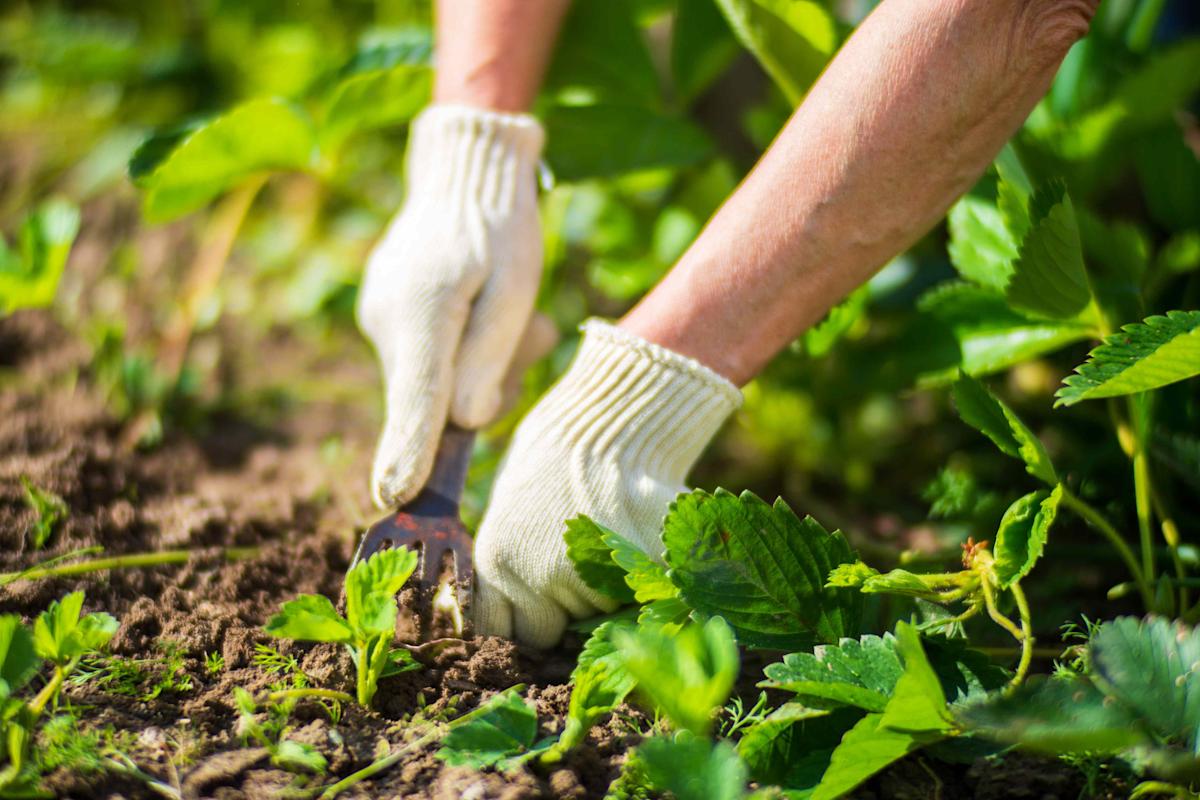
Experts recommend the tried-and-true method of digging up weeds—often by hand. “It might require digging down 6 to 8 inches or more,” says Teri Speight, a landscape gardener and gardening coach. “Carefully remove even the smallest bit of weed roots from the hole or existing space, and throw them away in the trash.” Never compost them.
She notes that it’s easiest to remove weeds after rain when the soil is moist. Niki Jabbour, founder of Savvy Gardening, says you can sometimes use tools to make the process go a bit faster, as pulling weeds by hand can be arduous.
“If there are lots of weeds popping up in my garden, I’ll use a long-handled collinear hoe to slice them off at the soil level,” she says. “Small weeds I leave on the soil surface to decompose and return their nutrients to the soil. If there are any flowers or seedheads on the weed plants, I dispose of them in the trash.”
If you stay on top of it, then weeds will be easier to get rid of. Weeds aren’t difficult to remove when they’re small, so plan on weeding every two weeks—this will prevent them from sizing up and settling in.
Layer Newspaper or Cardboard
Another way to kill weeds is by using newspaper or cardboard to block out their light source, effectively smothering them. For the former, Speight recommends layering six to eight sheets—wetting them thoroughly—and overlapping them by six inches so that no sunlight can get through.
“This allows the gardener to easily dig in a specific area to add additional plants and still have any bare spots covered,” she says.
Cardboard is better if you want to cover larger areas and requires a similar approach—simply wet it down and layer it so the pieces overlap. This will help prevent weeds from returning as well.
Add Mulch
After the weeds have been removed, add a layer of mulch to the soil surface. Jabbour suggests an organic material, like straw or shredded leaves. A 3-inch layer should be sufficient. “A good mulch with full coverage is one of the best deterrents for weeds,” adds Speight.
“This blocks light from reaching the soil surface, reducing weed seed germination,” she says. “It also helps the soil retain moisture and can slow the spread of soil-borne diseases. It’s a win-win-win strategy!”
Read the original article on Martha Stewart
Comments are closed.