
Jump straight to:
Why grow your own garden?
Take it from the experts: Growing your own food at home isn’t just beneficial to your wallet.
“Almost as important as saving money on your food is, what you grow is likely to be healthier,” said Maggie Mah, one of the University of California’s Master Gardeners who specialize in helping people grow their own food here in the Bay Area and nationwide. The food you grow is “going to be fresher,” she said.
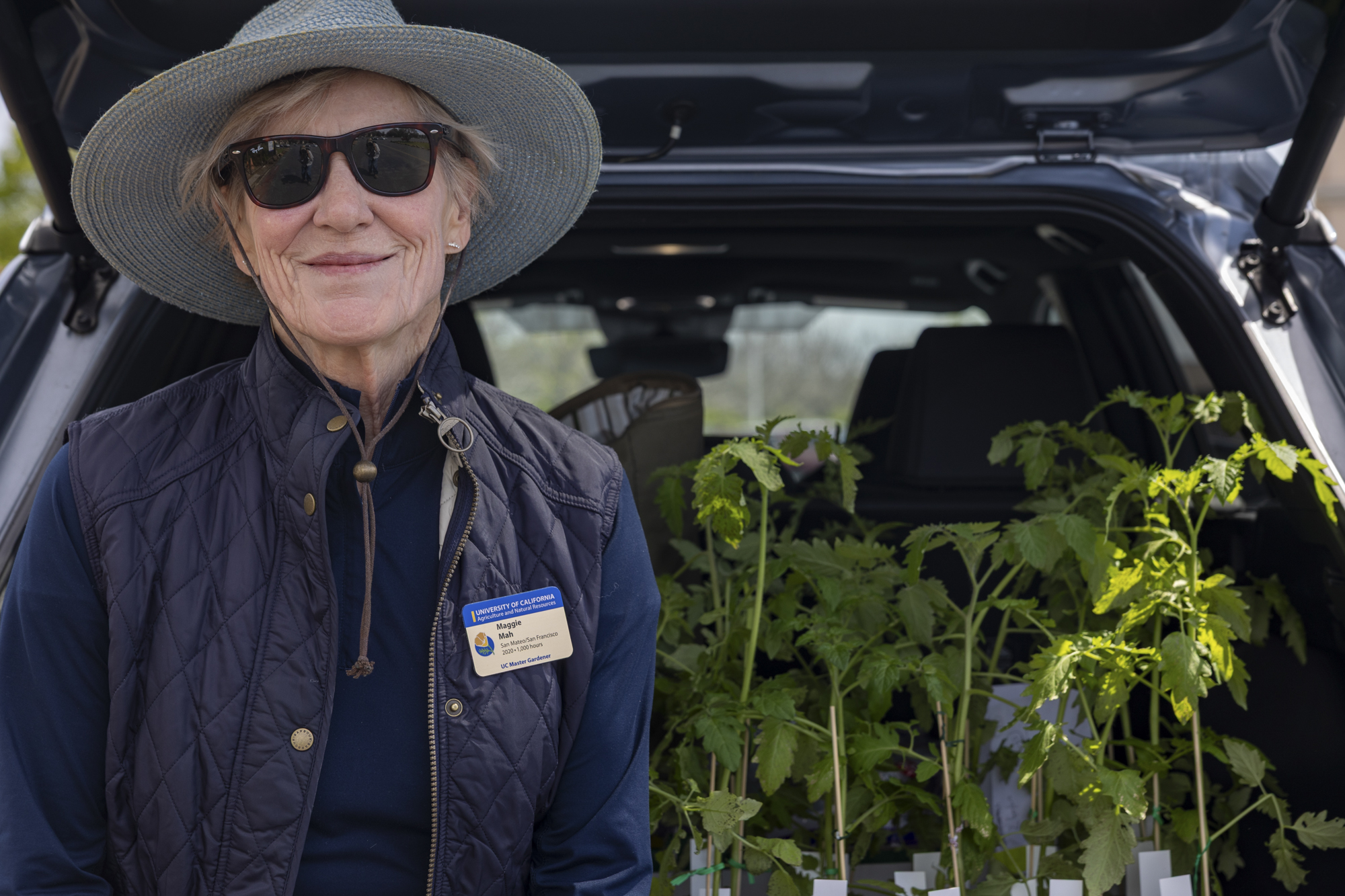 Maggie Mah, Marketing & Media Co-Chair and UC Master Gardener, stands beside her car with trays of tomato plants at the Gardening Education Center on April 15, 2026, in San Mateo. (Gustavo Hernandez/KQED)
You can also have greater control over the food itself, she said, by growing a pesticide-free garden and producing the fruits and veggies you know you’ll eat.
“But on top of that is really the sense of being empowered,” Mah said. “I find that it’s just great to be able to go out and pick big handfuls of green beans that I grew myself, or tomatoes or whatever it is.”
“It’s a sense of reclaiming yourself in this day and age,” she said.
Start small
The first thing you should do, Mah said, is assess how much space you have and let that determine your gardening potential — and your path forward.
And don’t worry: You don’t need all that much space. All it takes is some access to the outdoors, even if that’s just a windowsill or railing which can hold a pot big enough for basics like herbs, some lettuce, tomatoes or even potatoes.
Then, advised Mah, decide what you want to grow. If your square footage is small, consider plants that produce a lot of fruits or veggies relative to their size — like tomatoes, rather than a space-intensive plant like a watermelon.
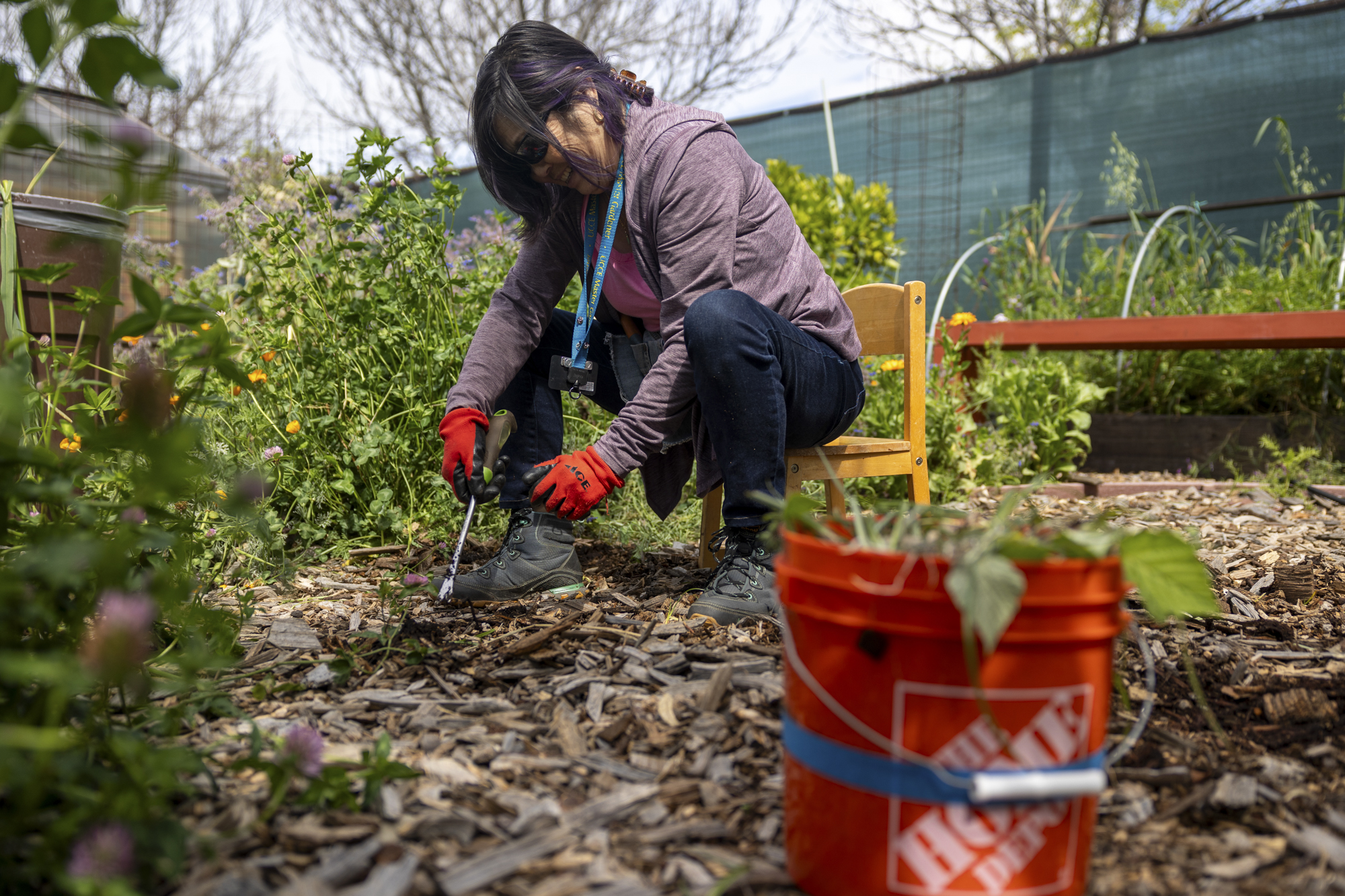 Helen Lew removes deep-rooted weeds while seated in a demonstration garden at the Gardening Education Center on April 15, 2026, in San Mateo. (Gustavo Hernandez/KQED)
And if you’re really pressed for space, remember you can always utilize vertical space for crops like pole beans or squash. You could even try inter-cropping or companion planting, which is pairing similar plants to make the most of your space.
“Start small, and then as you build success and you build learning about your particular location and what works and what doesn’t work, you can really build upon that,” Mah said.
Plants like tomatoes or broccoli thrive even in somewhat small pots or buckets. And lettuces need just a few inches of soil. Arugula in particular is a very quick, easy and nutritious crop, Mah said.
“You throw the seeds in the ground and a couple of days later, you’ve got arugula — and you can keep on harvesting it,” Mah said.
Assess conditions
While you can work with different space limitations, one nonnegotiable when it comes to growing your own food is consistent access to sun, Mah said. “It takes six to eight hours of sun to be successful growing pretty much anything,” she said.
Also, “you don’t want to plant something that’s going to take a bunch of months to be able to harvest,” Mah said — so you’ll want to look for varieties that mature quickly, and that might depend on exactly where you’re located.
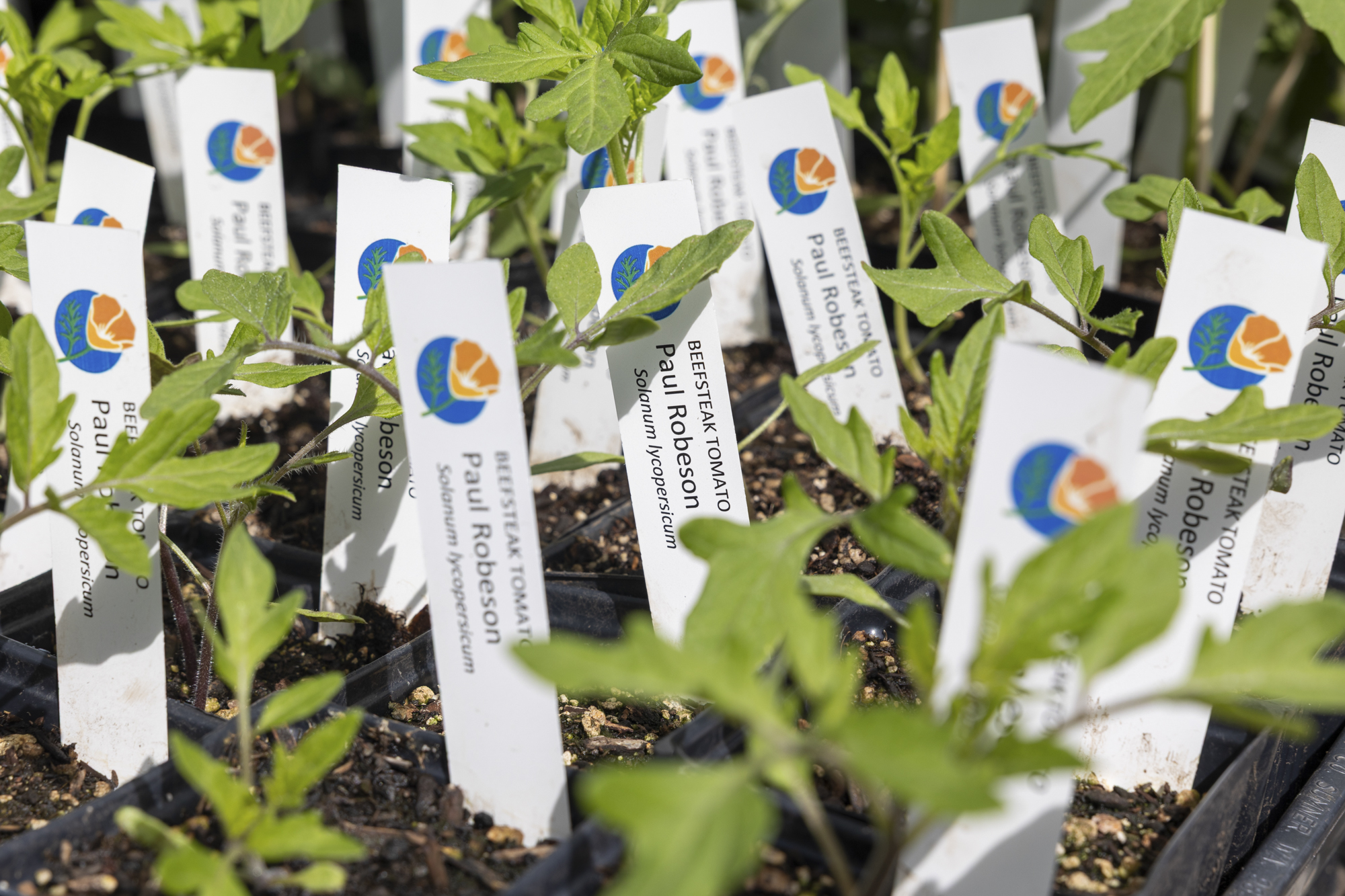 Paul Robeson tomato seedlings grow among dozens of varieties cultivated at the Gardening Education Center on April 15, 2026, in San Mateo. (Gustavo Hernandez/KQED)
You can find that information on the seed packet itself — but be aware that how quickly your food will grow is entirely location-dependent. And the Bay Area’s fog and microclimates, which can create dramatically different temperatures just a few miles away, can heavily influence a plant’s timeline.
Before choosing a plant, you should also consult a planting calendar, Mah said, and make sure you’re planting something that can grow at this time of year. The calendars are location-specific and often available where seeds and plants are sold or lent, so be sure you’re looking at information for your specific geographic region.
Prep your soil
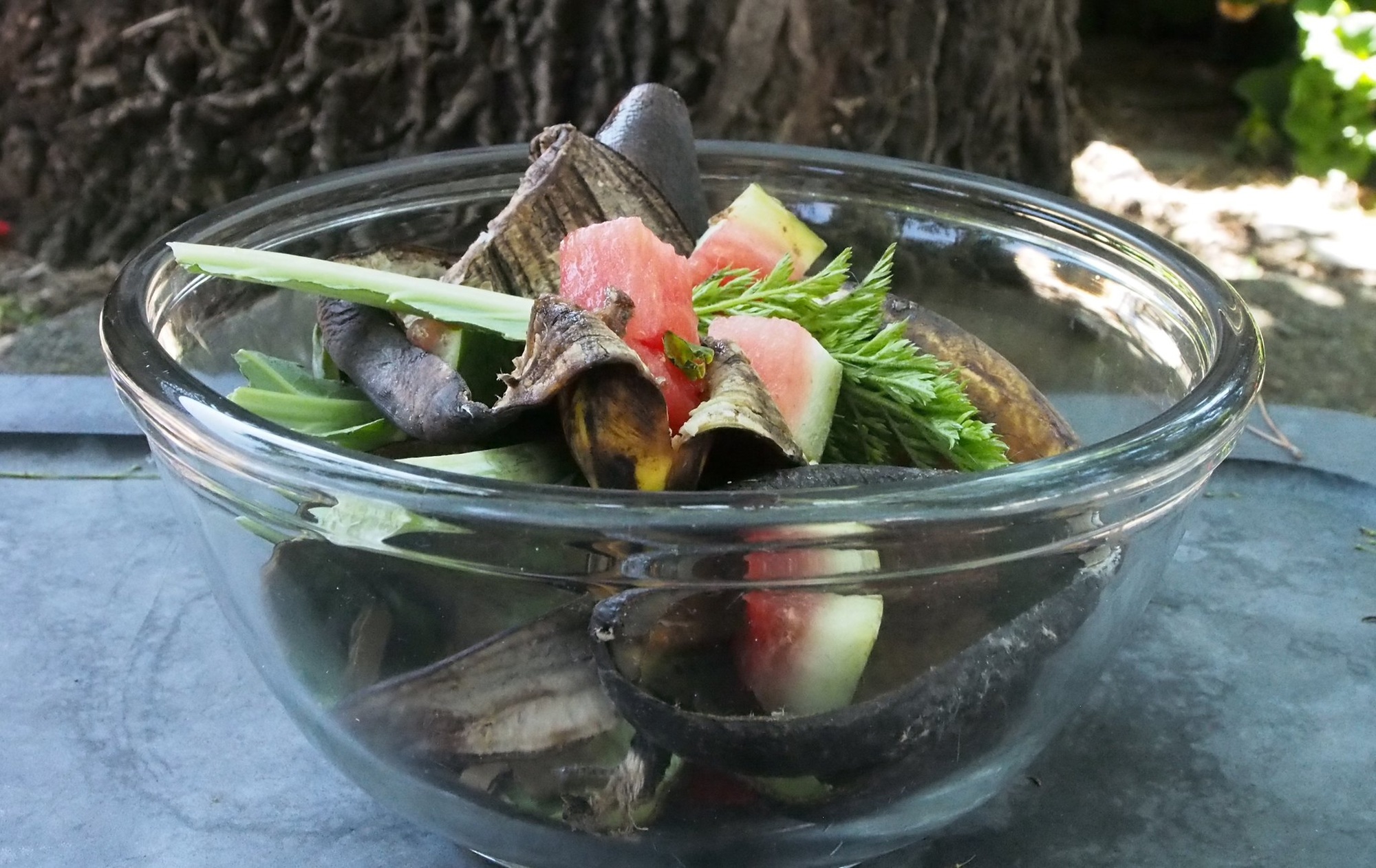
Once you’ve decided on a plant, make sure your soil is prepared. You can get soil and — more importantly — compost from many different sources. Compost is decomposed organic material that helps add nutrients to your soil and boosts its health, and as a result, boosts the growth potential for your plants.
For one, you can get free compost via giveaway programs like the one for Berkeley residents at the Berkeley Marina.
Eddie Mendoza, who works at the marina, said the compost is usually delivered on Fridays from the Central Valley and that the supply lasts through the weekend. They sometimes also have woodchips and mulch available, which can also boost the health of your soil or help with drainage, he said.
 The Velveteen Bean produces and sells small-batch compost and teaches people how to build and maintain their own compost piles. (Brian Hicks/Flickr)
But you have to bring your own tools to the marina — Mendoza suggested you pack a shovel and a few buckets — and it’s best to get there early, especially during peak weekends during the summer, he said.
“By Monday morning, it’s all gone,” he said.
You can even make your own compost pile, although Mah warned it might take a few months if starting from scratch. It’s easier than many people imagine, said Maggie Owsley, whose East Bay group The Velveteen Bean produces and sells small-batch compost and teaches people how to build and maintain their own compost piles.
“There’s a myth that you need a huge bag of compost to start seeds, to start a garden,” Owsley said. “You actually can do a lot with what you’re making at home or what your neighbors are making.”
Decide whether you’ll choose seeds or plants — and get to know your local resources
Seeds are the least expensive option when it comes to starting your garden — but be aware that where they lack in cost, they more than make up in time. So only go the seed route if you’re not in a hurry to harvest, said Odette Pollar, executive director of the East Bay-based Plant Exchange.
If you have the time, “seeds are always the easiest, the least expensive way to go,” she said.
While you can purchase seeds at a garden store, you could also head to your local seed lending library for free seeds, where you’ll be highly encouraged to then harvest seeds from whatever resulting plant you grow and donate them back to the library (more on this below). The San Francisco Public Library system maintains a Seed Lending Library at its Potrero Branch, as does the Oakland Public Library and many Peninsula libraries.
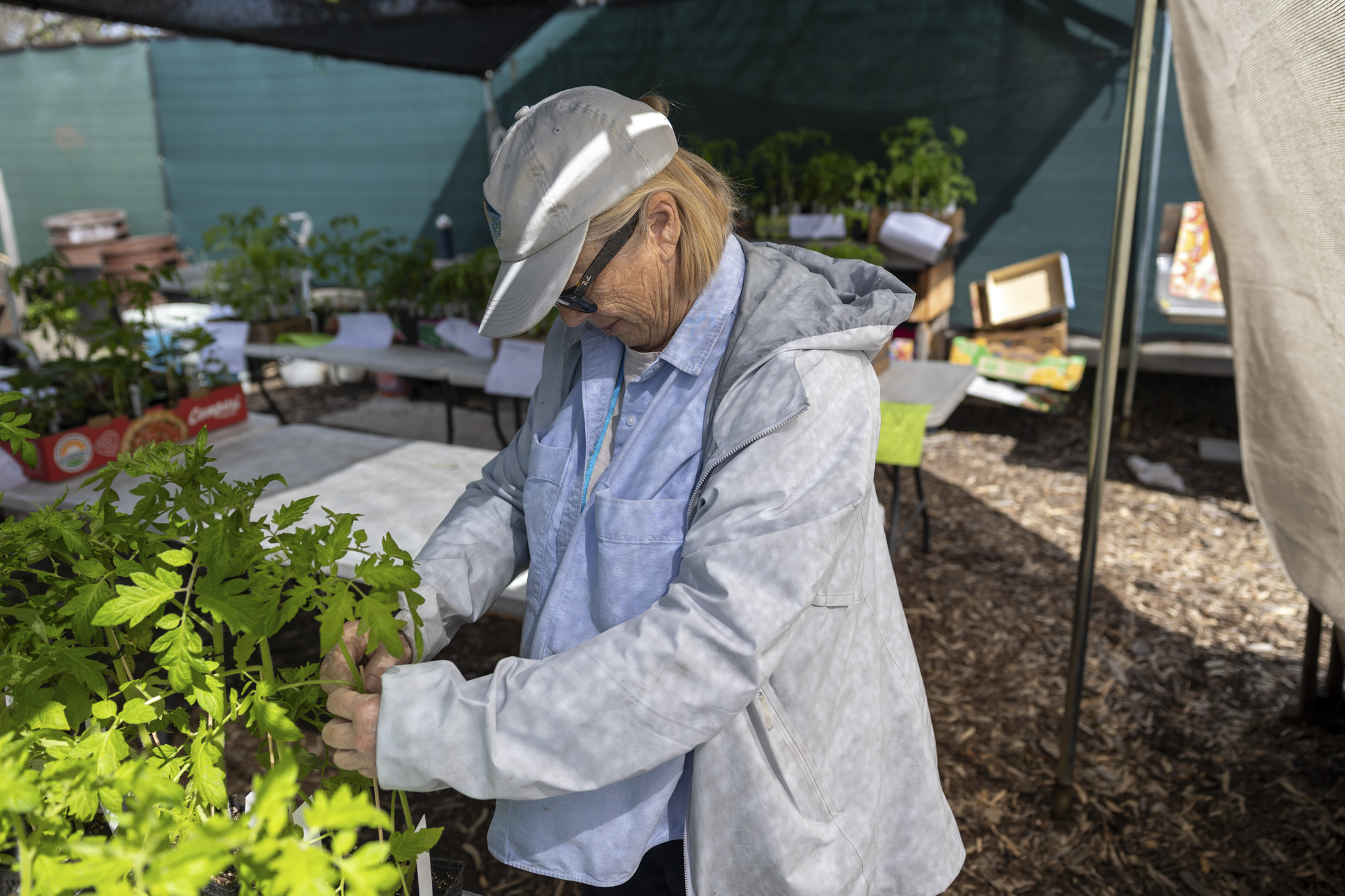 Anne Blenman Hare, a UC Master Gardener since 2003, trims tomato plant stems at the Gardening Education Center on April 15, 2026, in San Mateo. (Gustavo Hernandez/KQED)
The Berkeley Ecology Center, too, now hosts the Bay Area Seed Interchange Library, which is open Wednesday through Saturday from 12 to 6 p.m. and also does periodic seed exchange events, where participants can come learn about seed saving and shop for free seeds.
“It’s really cool to see these little things go in the dirt and you think, oh, this is never going to happen,” Mah said. “Then, all of a sudden, ‘boom.’ It’s really fun.”
There is one advantage to starting with a plant: “You know they were alive when you brought them home,” Pollar said. You can get plants for relatively cheap at nurseries or at large stores like Home Depot.
Comments are closed.