
Credit: Jiojio/Getty Images
Key Takeaways
Gardeners favor creeping phlox as a fast-growing, low-maintenance groundcover that forms a dense, weed-blocking carpet.
This versatile perennial thrives in sunny spots, suits slopes and borders, and blooms from spring into early summer with some reblooming.
It’s easier to control than aggressive spreaders and needs only basic care like well-draining soil, occasional watering, and minimal upkeep.
Whether you’re throwing out the whole traditional grass lawn or want to try something new on a small patch of your property, groundcover is an excellent option. For those unfamiliar, groundcover lives up to its name by growing densely and low to the ground—sort of like an earthy quilt—while suppressing weeds.
While any choice is a sustainable replacement for grass, prioritizing groundcover that grows quickly and requires minimal upkeep will save you headaches down the road. We asked gardeners to share their absolute favorite option, and they kept coming up with the same pick.
Meet Our Expert
Halina Shamshur, resident botany expert at Plantum
Tammy Sons, horticulturist and founder of TN Nursery
Related: This Low-Maintenance Groundcover Actually Prevents Weeds, According to Gardening Pros
The Easiest, Fastest-Growing Groundcover, According to Gardeners
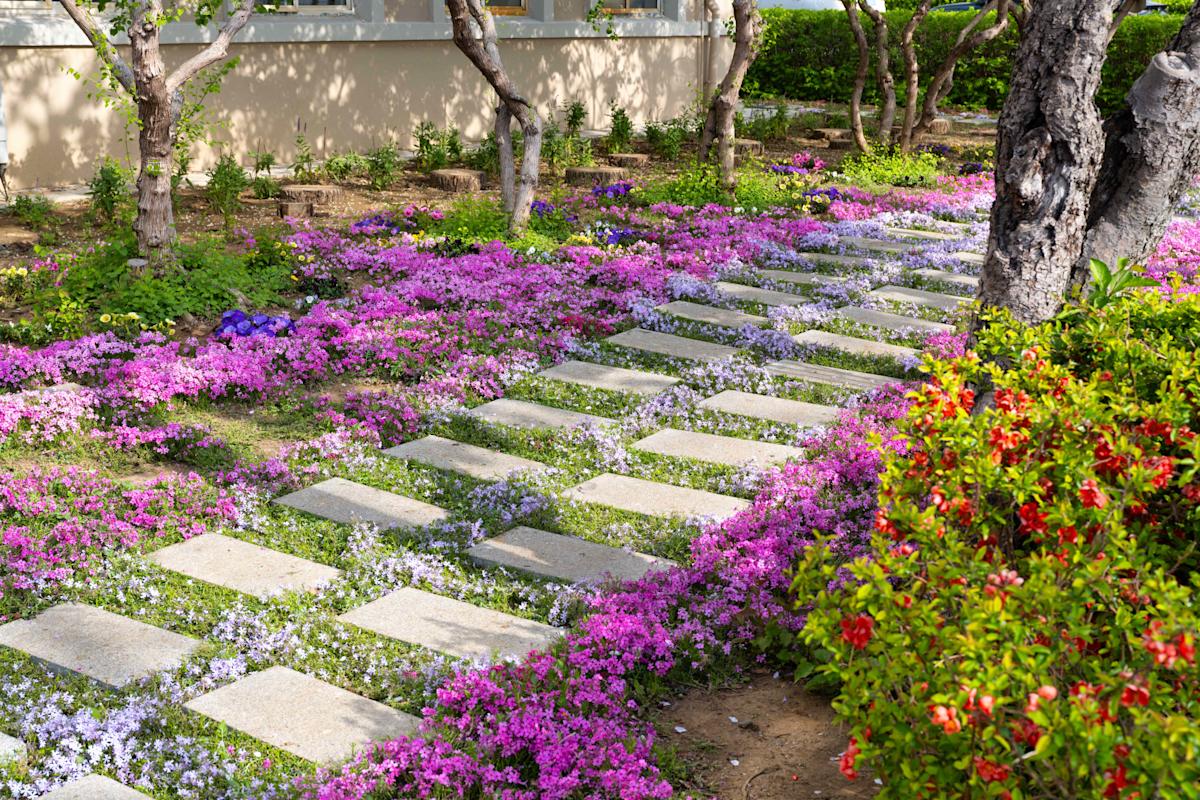
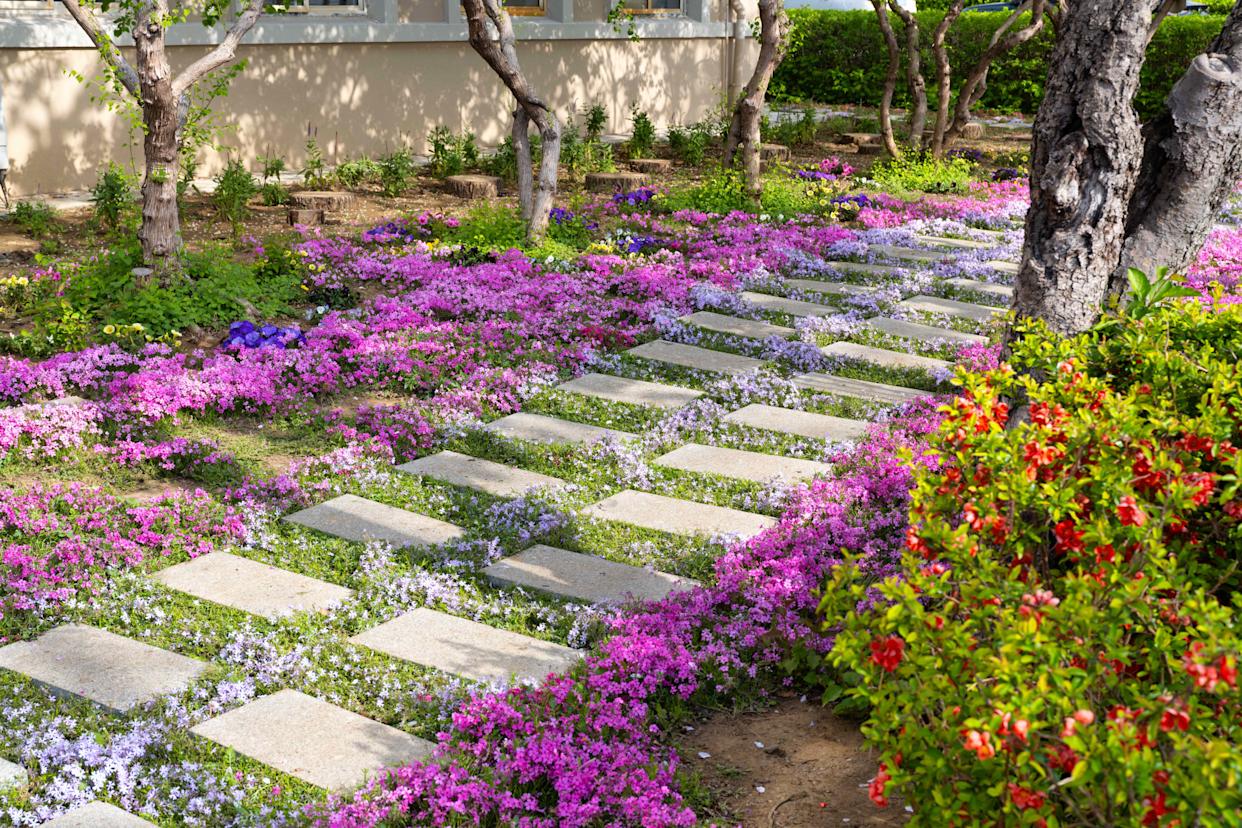
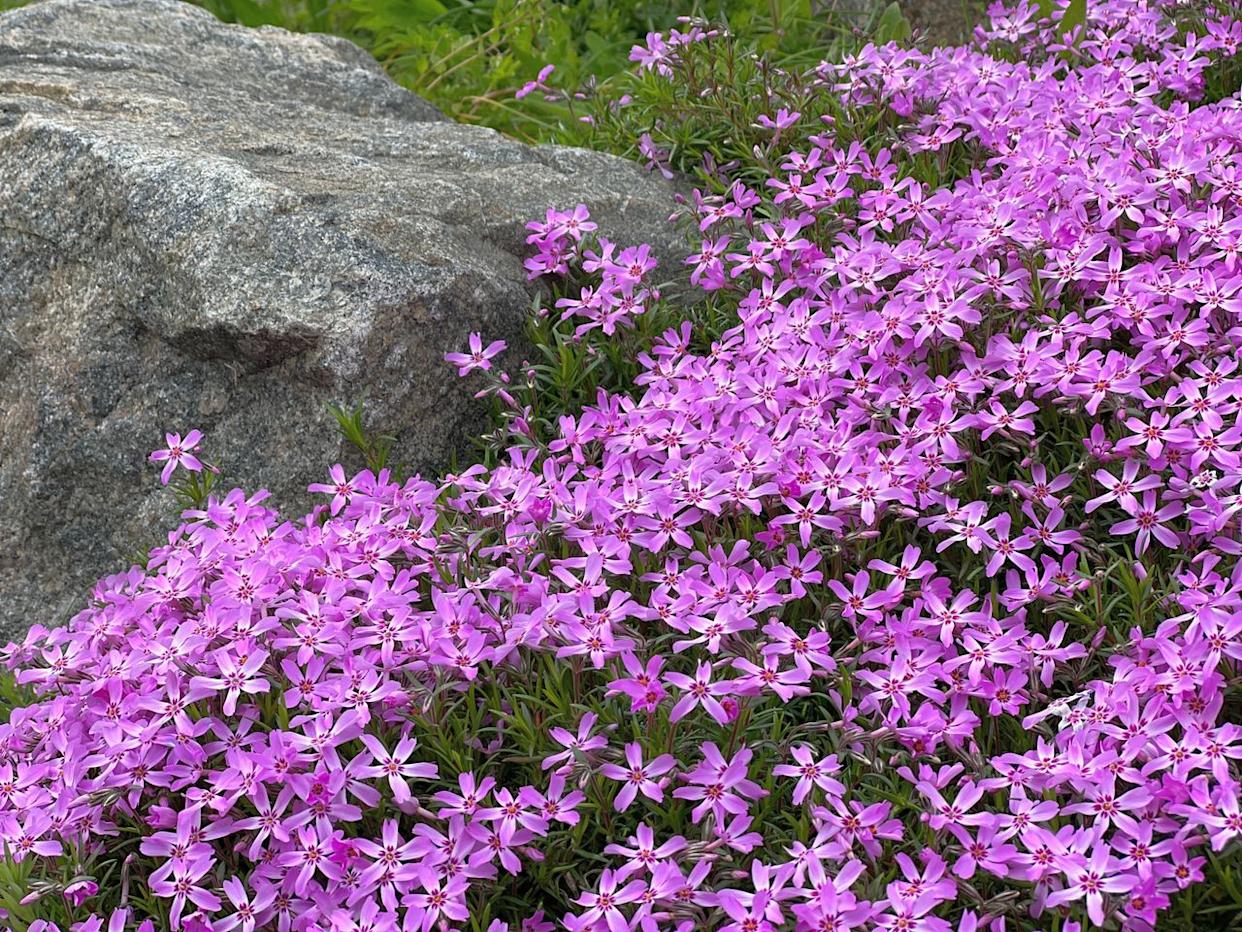
The prevailing choice among gardeners for the best low-maintenance, fastest-growing groundcover is creeping phlox (Phlox subulata). This sun-loving perennial is drought-tolerant, super easy to grow and maintain, and creates a flowery carpet that stretches across yards, garden beds, rocky terrains, and even over stone walls.
Credit: Olena Lialina/Getty Images
Varieties and Versatility
There are many varieties of phlox and various colors to suit your preferences in the garden. “My favorites are ‘Emerald Blue’, ‘Scarlet Flame’ and ‘Fort Hills’ for their accessibility at local nurseries and preference for color schemes,” says landscape designer Sara Mairead.
She adds that it’s a notably versatile perennial and is an especially nice addition along garden borders since it secures the beds from runoff. It also thrives on slopes and embankments, in rock gardens, and along pathway edges, creating a thick layer that weeds are not easily able to penetrate.
Blooming and Planting
Halina Shamshur, resident botany expert at Plantum, agrees that creeping phlox is a big winner when it comes to low-maintenance groundcover. Beauty is one of its biggest appeals. She says it flowers for a long time—from spring to early summer—and that it’ll even bloom again toward the end of summer.
She recommends spacing the plants about eight to 12 inches apart and then letting them grow into each other to create a dense carpet. And the low maintenance aspect is definitely a compelling reason to plant it.
Manageability
Another reason why creeping phlox is a favorite among gardeners is because it’s easier to control compared to other groundcovers, notes Tammy Sons, horticulturist and founder of TN Nursery. “It’s far less aggressive than something like periwinkle or ivy, and is more manageable, although it will spread to cover slopes, edges of beds, or difficult empty patches at a good pace,” she says.
Best Care Practices
This easy-breezy groundcover prefers full or partial sun, well-draining soil, and dryish conditions. Other than that, it’s a “set-it-and-forget-it” perennial that requires no special care. “In hot, dry summers, you’ll need to water it regularly—about once or twice a week,” Shamshur says. “Just avoid waterlogging, which can lead to root rot and various fungal diseases.”
If you add fertilizer to the soil at planting, you won’t need to feed the plant in the first year (in fact, excess fertilizer can impact flowering). From the second year on, use fertilizers with low nitrogen content.
As for pruning, Mairead says this “can be light to encourage new growth, but not necessary for this plant to thrive. The growing habits of this plant in the winter allow it to die back, with new growth greening out again once the spring season hits in the new year.”
Related: 5 Types of Lawn Grass to Consider for Your Yard
Read the original article on Real Simple
Comments are closed.